Tag Archives: SDGs

Unleashing digital transformation to achieve the sustainable development goals

Featuring a few snippets from one of my latest co-authored papers on the use of sustainable technologies in different industry sectors. A few sections have been adapted to be presented as a blog post.

Suggested citation: Varriale, V., Camilleri, M. A., Cammarano, A., Michelino, F., Müller, J., & Strazzullo, S.(2024). Unleashing digital transformation to achieve the sustainable development goals across multiple sectors. Sustainable Development, https://doi.org/10.1002/sd.3139

Abstract: Digital technologies have the potential to support the achievement of the Sustainable Development Goals (SDGs). Existing scientific literature lacks a comprehensive analysis of the triple link: “digital technologies – different industry sectors – SDGs”. By systematically analyzing extant literature, 1098 sustainable business practices are identified from 578 papers. The researchers noted that 11 digital technologies are employed across 17 industries to achieve the 17 SDGs. They report that artificial intelligence can be used to achieve affordable and clean energy (SDG 7), responsible consumption and production (SDG 12) as well as to address climate change (SDG 13). Further, geospatial technologies may be applied in the agricultural industry to reduce hunger in various domains (SDG 2), to foster good health and well‐being (SDG 3), to improve the availability of clean water and sanitation facilities (SDG 6), raise awareness on responsible consumption and production (SDG 12), and to safeguard life on land (SDG 15), among other insights.

Literature review: The integration of digital technologies has emerged as a transforma-tive force in advancing sustainability objectives across diverse sectorsand industries. Digital technologies offer unprecedented opportunitiesto enhance resource efficiency, optimize processes, and foster innovation, thereby facilitating progress toward the attainment of the SDGs (Birkel & Müller, 2021; Camilleri et al., 2023; Cricelli et al., 2024). Table 1 sheds light on digital technologies that can be used to achieve the sustainable development goals.
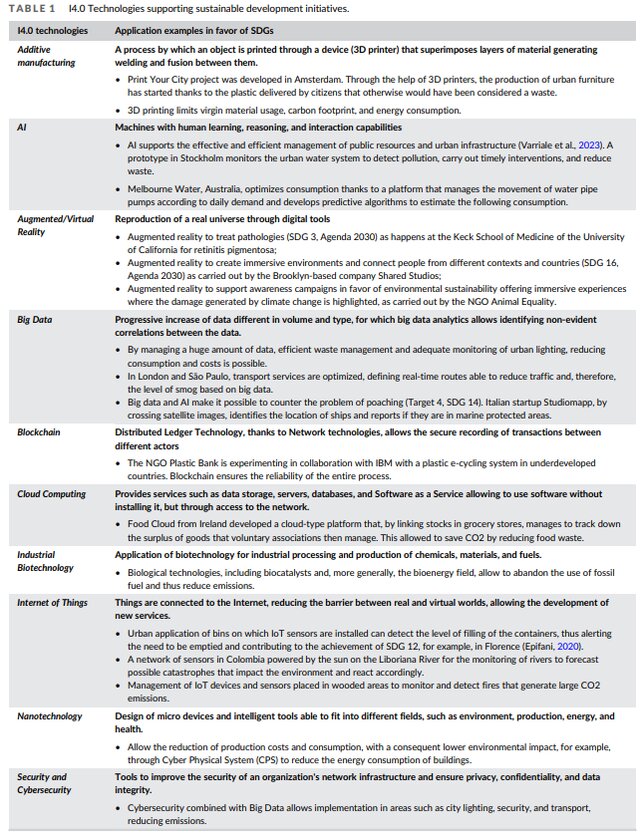
Table 2 provides a list of digital technologies (Perano et al., 2023). These disruptive innovations were used as keywords in the search string through SCOPUS.

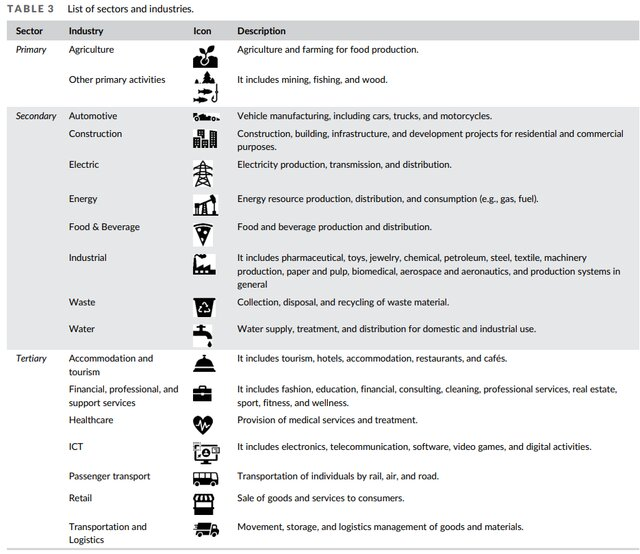
Table 3 identifies sectors and industries based on the SIC code classification (United Kingdom Government, 2024).
Theoretical implications: This article offers a comprehensive overview of the intersection between digitalization and sustainability across various industry sectors. It also considers their peculiar characteristics. The research analyzed 578 articles and identified 1098 sustainable business practices (SBPs), which were categorized into a three-dimensional framework connecting digital technologies, sectors & industries, as well as SDGs. This approach provides a new and innovative perspective on combining sustainability and digitalization by highlighting both promising and established areas of digital technology implementation. Theoretically, this study presents a clear and comprehensive picture of how digital technologies are adopted in different industries to achieve the SDGs. It classifies SBPs into three dimensions: (a) digital technology, (b) sectors & industries, and (c) SDGs. The goal is to present an up-to-date and thorough representation of digital technologies used to achieve the SDGs, based on information from scientific articles.

This contribution sheds light on key opportunities for the application of digital technologies. It identifies specific areas where they can be most effective. Unlike other research studies, this study uses a database of SBPs that can be applied across different industry sectors, to explain how practitioners can enhance their sustainability performance and achieve the SDGs. The three-dimensional framework illustrated in this article allows stakeholders to better understand how to adapt their business strategies and day-to-day operations to increase their sustainability credentials and to reduce their environmental impacts.

Managerial and policy implications: This research provides a comprehensive overview of the implementation of digital technologies across various industries and sectors. It raises awareness on how they can be utilized to achieve the SDGs. It highlights established applications of technologies and also identifies new ones. The proposed framework associates various digital technologies with specific industry sectors. It clearly explains who they can be employed to achieve the SDGs. Hence, this research and its findings would surely benefit practitioners, managers, and policy-makers.

The rationale behind this contribution is to build a robust knowledge base about the use of sustainable technologies among stakeholders. This way, they will be in a better position to improve their corporate responsibility credentials. Managers can use this study’s proposed framework to gain a deeper understanding of SBPs at three levels. In a nutshell, this research posits that SBPs can support practitioners in their strategic and operational decisions while minimizing the risks associated with adopting technologies that are less effective in addressing sustainability challenges. Additionally, this paper offers valuable insights for policymakers. It implies that research funds ought to be allocated toward specific sustainable technologies. This way, they can support various industry sectors in a targeted manner, and foster the development of digital transformation for the achievement of different SDGs.

The full paper (a prepublication version) is available from: https://www.researchgate.net/publication/382632705_Unleashing_digital_transformation_to_achieve_the_sustainable_development_goals_across_multiple_sectors

Leave a comment

Filed under artificial intelligence, Big Data, environment, Industry 4.0, Sustainability, sustainable development

Quality Education for Smart, Inclusive and Sustainable Growth

imagesThe promotion of quality education has re-emerged as an important policy objective across many countries during the past decade. For instance, the aims of Europe 2020 strategy (that was launched in 2010) were to improve the EU’s competitiveness and productivity that underpin a sustainable social market economy (EU, 2010 a,b). The strategy identified three priorities as the main pillars of this strategy:

  • Smart growth—developing an economy based on knowledge and innovation;
  • Sustainable growth—promoting a more resource efficient, greener and more competitive economy; and
  • Inclusive growth—fostering a high-employment economy delivering economic, social and territorial cohesion (Pasimeni & Pasimeni, 2015).

Significant investments have already been made across the globe to raise relevant competencies that help to improve social outcomes (e.g. social inclusion, social equity and social capital) since these are known to affect educational and labour market success.

In a similar vein, the fourth United Nations’ Sustainable Development Goal (SDG4) and its 10 targets represent an ambitious and universal agenda to develop better skills for better lives. Five of its 10 targets are concerned with improving the quality of education for individual children, young people and adults, and to give them better and more relevant knowledge and skills. During the last few decades; major progress has been made towards increasing access to education at all levels; from school readiness among young children through achieving literacy and numeracy at primary school, increasing enrolment rates in schools particularly for women and girls to equipping young adults with knowledge and skills for decent work and global citizenship (UNSDG4, 2015). In this light, the SDG4’s targets are the following (UNSDG4, 2015):

Quality education

By 2030, ensure that all girls and boys complete free, equitable and quality primary and secondary education leading to relevant and Goal-4 effective learning outcomes;

By 2030, ensure that all girls and boys have access to quality early childhood development, care and pre-primary education so that they are ready for primary education;

By 2030, ensure equal access for all women and men to affordable and quality technical, vocational and tertiary education, including university;

By 2030, substantially increase the number of youth and adults who have relevant skills, including technical and vocational skills, for employment, decent jobs and entrepreneurship;

By 2030, eliminate gender disparities in education and ensure equal access to all levels of education and vocational training for the vulnerable, including persons with disabilities, indigenous peoples and children in vulnerable situations;

By 2030, ensure that all youth and a substantial proportion of adults, both men and women, achieve literacy and numeracy;

By 2030, ensure that all learners acquire the knowledge and skills needed to promote sustainable development, including, among others, through education for sustainable development and sustainable lifestyles, human rights, gender equality, promotion of a culture of peace and non-violence, global citizenship and appreciation of cultural diversity and of culture’s contribution to sustainable development;

Build and upgrade education facilities that are child, disability and gender sensitive and provide safe, nonviolent, inclusive and effective learning environments for all;

By 2020, substantially expand globally the number of scholarships available to developing countries, in particular least developed countries, small island developing States and African countries, for enrolment in higher education, including vocational training and information and communications technology, technical, engineering and scientific programmes, in developed countries and other developing countries. By 2030, substantially increase the supply of qualified teachers, including through international cooperation for teacher training in developing countries, especially least developed countries and small island developing states (UNSDG4, 2015).

However, The Programme for International Student Assessment (PISA) the world’s most widely used global metric to measure the quality of learning outcomes, as well as its adult version, the Programme for the International Assessment of Adult Competencies (PIAAC), underlined that although many countries may have  their children in school; only a proportion of them achieve adequate levels of proficiency by the end of lower secondary education (PISA, 2012). This finding does not augur well for economic, social and sustainable development.

Bolder efforts are required to make even greater strides to achieve the sustainable development goal of quality education for all. A centralised educational policy may help to achieve the desired outcomes. Well-laid out curricula are capable of successfully developing the full potential of lifelong learners. In addition, the government’s policies of taxation and redistribution of income may also help to counteract inequalities in some segments of society.

The provision of quality education introduces certain mechanisms that equip people with relevant knowledge and skills that they need for today’s labour market. Active employment policies are required to help unemployed people find work. The overall objective of the employability programmes is the reintegration of jobseekers and the inactive individuals into the labour market as well as the provision of assistance to employed persons to secure and advance in their job prospects.


Leave a comment

Filed under Education, sustainable development