Category Archives: sustainable supply chains

Restaurants communicating about sustainable practices: Guidelines for ESG reporting of food and beverage operations

The following content was drawn from one of my academic articles published through the International Journal of Hospitality Management. It has been adapted for a blog post.

Stakeholders including the regulatory authorities, among others, are increasingly encouraging hospitality businesses to publish information about their environmental, social and governance (ESG) activities. In many cases, they are already preparing ESG disclosures that shed light on their sustainable production and consumption policies and practices.

The environmental dimension

Generally, many hospitality chains are already monitoring the usage of their energy, water, raw materials and other resources, to minimize their running costs. For example, their restaurants could turn off certain appliances when not in use, invest in efficient lighting, appliances, cooking methods, as well as in water conservation practices (Madanaguli et al., 2022). In addition, they could generate their energy from renewable sources. Other aspects that are related to ESG’s ‘E’ dimension include environmental protection measures, sustainable sourcing of food items and their components (as the responsible procurement of items from local suppliers would reduce their environmental impact), as well as waste minimization efforts before, during and after food consumption, among others laudable practices (Elkhwesky, 2022). Hospitality businesses may avail themselves of food waste tracking systems to optimize their production and consumption activities, and to identify areas for improvement (Okumus et al., 2020). Such systems could help them reduce food scraps that will probably end up in landfills, if they recycle them into compost, that may be used for local farming or landscaping.

Very often, they gather and hold records about their recycling efforts as well as on their generated waste and emissions that can ultimately affect biodiversity and eco-systems including climate change, water and marine resources (Klaura et al., 2023). If this is the case, their captured data can be utilized to identify inefficiencies in their restaurants and to better understand how sustainable practices (like the ones mentioned in the above text) could reduce their costs as well as their overall financial performance. Moreover, it enables them to be in a good position to disclose information about their sustainability credentials.

Restauranteurs should prioritize purchasing from local sources to support the domestic economy and reduce transportation emissions. Food and beverage preparers could utilize seasonal menus to ensure that the dishes they serve and/or their ingredients are fresh and in-season. This reasoning is congruent with the farm-to-fork or farm-to-table initiatives adopted by various hotels and restaurants (Bux and Amicarelli, 2023). Frequently, hospitality businesses are opting for organic certified products and food components, to reduce the environmental impact associated with conventional agricultural practices. In a similar vein, many practitioners are investing in ant-based and insect-based items as more consumers are recognizing their nutrition benefits (Motoki et al., 2022). A number of colleagues are recognizing that such protein foods would result in lower externalities on the environment.

In this day and age, it is imperative that food and beverage service providers utilize sustainable food items in their menus. They are pressured by stakeholders to use eco-friendly packaging made from recycled, biodegradable, compostable, and/or reusable materials for food delivery and takeaway services as opposed to single-use plastic waste that pollute the natural environment. In sum, the hospitality businesses’ environmental responsibilities comprise sustainable sourcing of food items, sound inventory management, innovative food preparation practices, responsible consumption of food, and the use of eco-friendly packaging, to minimize their environmental footprint, and contribute to broader sustainability goals.

The social dimension

Most practitioners are taking into account non-financial information about hospitality businesses’ labor practices related to their own employees as well as to other workers employed by organizations in the value chain (including distributors, suppliers, subcontractors, et cetera) (Bullock et al., 2024). Report preparers may usually gather information about the conditions of employment of human resources, training and development records, health and safety measures, work life balance initiatives, living wage policies as well as on issues related to equal opportunities, diversity and inclusion in their workplace environment. A number of contributions reported that there is scope for hospitality owner-managers to delegate responsibilities to employees to enhance their morale and job satisfaction (Camilleri, 2022Gewinner, 2020). Frequently, they indicated that it is in their businesses’ interest to provide regular training and development opportunities on sustainable practices like food hygiene and safety, meal portion control as well as on food waste management, among others (Okumus, 2020). Notwithstanding, they are expected to communicate about their active engagement with suppliers. It is within their responsibility to ensure that they treat their marketplace stakeholders in a fair manner. They are expected to forge long lasting, mutual relationships with trustworthy suppliers and partners, who are recognized as responsible employers by stakeholders in society.

Hospitality businesses ought to be encouraged to source food items from local suppliers to promote community well-being. They should prioritize suppliers that are renowned for their dependability, responsible human resources management and environmental sustainability practices. Working closely with reliable suppliers could help improve the efficient sourcing of products and may result in timely delivery of fresh items (Vaughan, 2024). The practitioners’ engagement with suppliers would increase their chances of receiving food products and ingredients in an optimal condition, to reduce the likelihood of spoilage and of overstocking their inventories.

In addition, the social dimension may usually involve aspects related to the businesses’ engagement with customers as well as with societal stakeholders. Hospitality practitioners can promote their sustainable procurement and food production practices with customers. The food and beverage businesses’ communications and corporate disclosures about their sustainable credentials can influence their consumers’ behaviors. They could even induce their patrons to reduce food loss and waste in their households.

Report preparers could make reference to responsible marketing practices. They can raise awareness about their transparent pricing and on how they avoid deceptive or misleading tactics (Aschemann-Witzel et al., 2023). They might communicate about their commitment to protect their consumers’ personal data. It this case, practitioners may reveal that they are using secure systems to prevent data breaches and unauthorized access to information. In addition, they could publicize the provision of accessible facilities for disabled patrons. Furthermore, they may shed light on their cultural sensitivity, as well as on their engagement with local communities through food donation programs to philanthropic and charitable institutions, among other socially responsible behaviors. Their proactive collaboration with local communities, NGOs, and other stakeholders can help them achieve the sustainable development goal related to the responsible production and consumption (of food) to reduce the accumulation of waste originating from their operations (UNEP, n.d.). Conversely, they may decide to monetize their waste resources by utilize sharing economy platforms and functional mobile apps to sell surplus/excessive food to consumers, at reduced prices.

In a nutshell, the hospitality practitioners’ social responsibility aspects cover aspects related to their engagement with responsible suppliers, employees, customers and with the community at large. Restauranteurs are expected to communicate about their organizations’ responsible food production and consumption practices with a wide array of stakeholders. Their corporate reporting can add value to their business in terms of increased profits, as they benefit from an improved brand image and corporate reputation, among other positive outcomes.

The governance dimension

Listed hotel chains are frequently disseminating content about their corporate governance efforts, as they publish rules, regulations, collective agreements with trade unions and codes of conduct through offline and online channels (Yu et al., 2025). Such information would usually serve as formal guidelines for their organizations’ modus operandi. They also shed light on how the businesses are directed and controlled among internal and external stakeholders. Ultimately, it is in the organizations’ interest to build stakeholder relationships and to maintain open lines of communication with different parties, including with creditors, investors, shareholders, employees, customers, suppliers, regulatory institutions and with local communities, among others.

There is scope for hospitality businesses to report about governance aspects including details about their organizations’ standards of integrity, accountability, board structure, executive compensation, and shareholder rights among other matters in their ESG reports. Such disclosures would probably make also reference to their businesses’ ethical dispositions as well as to risk management practices (e.g. compliance with health and safety, security issues, financial and operational aspects, reputation management, etc.) as these issues can help them build brand equity, instill trust in their activities and enhance their corporate reputation.

Specific disclosures about governance matters related to responsible food production and responsible consumption may include reference to accountable and transparent leadership that prioritizes the prevention of food loss and waste. The higher echelons of the organization ought to implement clear policies and procedures that ensure sustainable supply chain management. They are expected to monitor responsible food and beverage operations, at all times, from the procurement stage, through food preparation and consumption, in order to reduce food loss and waste. Food and beverage service providers ought to comply with relevant national legislation (where they operate their business) as well as with food safety and hygiene standards to protect their consumers’ health and wellbeing. They should handle, prepare and store their food and its components, in clean environments, to minimize spoilage, contamination and waste. This argumentation is congruent with substantive legislative instruments that are present in different jurisdictions, which require restaurants, among other entities, to implement sustainable measures that improve resource efficiency and prevent the generation of waste (EU, 2023aGovUK, 2024NEA, 2024).

A number of regulatory standards encourage practitioners to utilize food labeling that feature expiration dates (as well as nutrition information), to reduce food loss (Clodoveo et al., 2022). They may establish dedicated committees or sustainability champions to lead responsible food and beverage operations and initiatives that are intended to achieve continuous improvements in preventative and mitigative measures that reduce waste generated from hospitality businesses. Such practices may require ongoing training and development of employees on food and beverage practices like offering reduced portions and implementing efficient inventory management, to minimize food waste as much as possible.

Hospitality businesses may refer to the industry standards (that are duly mentioned in this paper), and they can even obtain certifications from some of them, including Green Key Certification, International Standards Organization’s ISO 14001: Environmental Management Systems (EMS), among others, to improve their sustainability credentials for their food and beverage operations. These regulatory instruments can play a critical role in fostering ESG accounting, reporting, auditing and assurance. Fig. 1 clearly illustrates key elements that can be disclosed in ESG reports.

Fig. 1. The environmental, social and governance (ESG) dimensions (Camilleri & Carroll, 2024).

Regulatory instruments including standards and metrics for ESG reporting

Currently, several governments and intergovernmental institutions are encouraging big businesses to report information about their environmental, social and governance performance, in addition to their financial statements. Many of them are developing rules, regulations and guiding principles for corporations and listed enterprises. With regards to the materiality of their disclosures, report preparers need to take into account pertinent information (in terms of the reliability and completeness of the content they feature in their ESG reports) including on aspects related to critical issues related to sourcing of food and its ingredients, inventory management, preparation of meals (such as hygiene standards, use of local and organic ingredients), as well as other relevant details about measures that were undertaken to reduce food loss and waste. Hospitality businesses are expected to be transparent in their disclosures, to track progress vis-a-vis their efforts to reduce waste (year after year), and to identify areas that should be improved. Their ESG disclosures could also link food loss reduction initiatives with broader sustainability and financial performance metrics. This could enable them to evaluate their social, economic and environmental impacts of responsible food and beverage operations, and to develop comprehensive strategies and courses of action, for the future, to address their deficits.

Large entities, including hospitality chains as well as international food and beverage franchises, are usually expected by their stakeholders to prepare non-financial reports about their ESG performance in accordance with certifiable standards and/or eco-labels. They are bound to comply with relevant legislation about sustainability accounting, disclosures, audit and assurance practices applicable in specific jurisdictions where they operate their business,

For example, the European Union’s (EU’s) Non-Financial Reporting Directive (NFRD) Directive 2014/95/EU was one of the regulatory instruments that encouraged large undertakings to disclose non-financial information relating to ESG matters in their annual reports. Subsequently, the European Union built on the foundations of NFRD when it launched its Corporate Sustainability Reporting Directive (CSRD). Arguably, the latter directive has improved the harmonization and standardization of ESG disclosures (across the EU), in terms of their transparency, consistency, comparability and reliability aspects. While the NFRD was primarily focused on large public-interest entities (PIEs), the CSRD has extended reporting obligations to more companies, including large private companies and subsidiaries of non-EU parent companies operating within the EU member states (EU, 2023b). Business practitioners, including hospitality firms are encouraged to utilize renowned international standards to prepare their ESG disclosures. They may refer to Global Reporting Initiative’s (GRI’s) and/or to the Sustainability Accounting Standards Board’s (SASB’s) standards, among others. Whilst the former was not specifically designed to disclose information about food and beverage operations, GRI’s principles can still be applied in the hospitality industry sector.

Organizations could utilize the Global Reporting Initiative’s (GRI’s) guidelines to prepare non-financial reports that shed light on their ESG initiatives (Koseoglu et al., 2021Li et al., 2025). They could refer to GRI’s Standards that are intended to support organizations in various aspects of their operations. Several GRI standards and guidelines can be used to address and reduce food loss and food waste in hotels and restaurants. While GRI does not have a specific standard solely focused on food waste, various standards cover aspects related to sustainability, waste management, and social responsibility that can be applied in this context. GRI has formulated topic standards related to the management approach (GRI 103 2016), procurement practices (GRI 204 2016), waste (GRI 306 2020), supplier environmental assessment (GRI 308 2016), labor/management relations (GRI 402 2016), occupational health and safety (GRI 403 2018), training and education (GRI 404 2016), marketing and labeling (GRI 417 2016): among others, that could be used to assess the businesses’ credentials, with regards to their responsible production and sustainable consumption of food. 

Key takeaways

The underlying rationale behind this contribution is to promote responsible food and beverage operations within the hospitality industry. The sustainable sourcing of food products and their ingredients, their sound inventory management and control, the responsible preparation, production and consumption of food, can ultimately lead to a reduction in food loss and waste in hospitality settings including from hotels, restaurants and cafes, among others. The good practices that were mentioned in this article clearly address the environmental impact as well as social and economic dimensions, thereby promoting a holistic approach for the sustainability of food and beverage service providers.

This research raises awareness on the significance of non-financial accountability standards in the hospitality industry context. It makes reference to some of the most popular regulatory instruments and standards, including those set by the GRI, SASB and FLW among others, to promote ESG disclosures in corporate sustainability reports. Indeed, practitioners can utilize the standards mentioned in this paper, to account, measure and disclose their ESG performance. Arguably, such standards are instrumental to provide stakeholders with the necessary information to trace, evaluate and compare the sustainability efforts of hospitality firms.

This contribution builds on previous research that identified laudable food and beverage operations in the hospitality industry’s value chain; from the procurement of resources required for food production, leading to the point when surplus food and leftover items are reused, recycled or upcycled. It clarifies that excessive, edible and unspoilt food could be donated to food banks and/or to those in need, or even sold at discounted pricing through sharing economy platforms. Moreover, it also indicates that inedible foods can be converted into sustainable resources like garden compost or could be transformed into biogases, including methane (through anaerobic digester systems), that may be utilized for different purposes.

This research identifies and explains several ESG dimensions associated with food and beverage operations. It sheds light on several regulatory instruments comprising principles and standards, that may be adopted by practitioners to guide them in their ESG disclosures of their sustainable initiatives. Notwithstanding, this article puts forward a novel theoretical model that illustrates various responsible practices related to each of three (3) ESG dimensions. It clearly indicates that the hospitality businesses’ kitchen behaviors can be measured and accounted for in ESG reports, to provide stakeholders with a true and fair view of their sustainability credentials.

Future research directions

There is scope for further research focused on the main themes of this contribution. Academic colleagues may conduct primary research activities to explore the hospitality practitioners’ good practices, or lack thereof. They may reveal how they are planning, organizing, implementing and measuring the effectiveness of their responsible value chain activities. Prospective researchers may avail themselves of various methodologies and sampling frames, to explore this topic in depth and breadth. They could identify specific organizations including sustainability champions, that have a proven track record in: (i) reducing materials and resources, as well as in reusing and recycling surplus or leftover foods; (ii) utilizing sharing economy platforms and mobile apps to sell surplus foods at discounted prices; (iii) donating food to community projects; and/or iv) recycling inedible foods for compost purposes, among other options.

New submissions to journals could promote the positive multiplier effects of engaging in responsible food and beverage operations in terms of operational efficiencies and cost savings, improved corporate image and reputation, and the like. They could raise awareness on the business case for responsible food production and consumption behaviors. Alternatively, future researchers could prepare theoretical and/or discursive papers that clearly explain how, where, when and why hospitality firms are accounting their sustainable ESG activities. They may refer to specific standards and metrics presented in this article.

In addition, they may prepare comparative analyses of different ESG reporting frameworks (e.g., GRI and SASB among others). Their research might reveal the strengths and weaknesses of each framework and could possibly evaluate their standards and metrics in detail. Scholars could explore the enablers and barriers associated with ESG accounting, reporting, auditing, and assurance. They may focus on organizational aspects, financial and technological issues, regulatory interventions, and/or on cultural influences that could either support or hinder the widespread adoption of sustainable food and beverage initiatives in the hospitality sector.

Suggested citation: Camilleri, M. A. (2025). Sustainability accounting and disclosures of responsible restaurant practices in environmental, social and governance (ESG) reports. International Journal of Hospitality Management126, https://doi.org/10.1016/j.ijhm.2024.104051

Leave a comment

Filed under ESG Reporting, food loss, food waste, Hospitality, hotels, Integrated Reporting, restaurants, Sustainable Consumption, sustainable production, sustainable supply chains

Sustainability accounting and disclosures of responsible restaurant practices in environmental, social and governance (ESG) reports

This is an excerpt from one of my latest open-access articles published via International Journal of Hospitality Management

Suggested citation: Camilleri, M.A. (2025). Sustainability accounting and disclosures of responsible restaurant practices in environmental, social and governance (ESG) reports, International Journal of Hospitality Management, 126, https://doi.org/10.1016/j.ijhm.2024.104051
Currently, humanity is generating more than one billion tons of food waste, including packaging, biodegradable edible food scraps, fruits and vegetables, among others. Together, these items accumulate about one hundred and thirty-two (132) kilograms per capita and almost one-fifth (1/5) of all food available to consumers (Department of Energy, 2024). Out of the total food that was wasted in 2022, sixty per cent (60 %) was produced by private households, twenty-eight per cent (28 %) originated from food and beverage service providers including hotels, restaurants, pubs and cafes, and twelve percent (12 %) came from retail stores (UNEP, 2024).

Frequently, food items and their ingredients are wasted because of a decline in quality, due to contamination, overstocking and/or spoilage issues, as they are not consumed before their expiry date, resulting in their decay (Pearson et al., 2025). Notwithstanding, the preparers of food tend to over-produce perishable items that are uneaten by consumers. Such spoilt products and surplus food will usually end up in municipal landfills, resulting in negative repercussions for our fragile natural environments, bio diversities and ecosystems (EuroStat, 2023). In other words, the piling up of food waste is inevitably causing pollution and irreparable damage| including global greenhouse gas emissions (GHG) that can exacerbate climate change for our planet.

At the time of writing, food loss and waste are triggering eight to ten per cent (8–10 %) of annual (GHG) emissions and are taking up the equivalent of almost a third of the world’s agricultural land. The disposal, handling and accumulation of food waste is costing the global economy about USD 1 trillion (UNEP, 2024). Therefore, the reduction of food loss is critical to increase the efficiency of the globe’s food systems, to improve food security for every nation and its citizens, whilst decreasing production costs in the value chain.

In this light, the rationale of this contribution is to raise awareness on responsible food and beverage operations in the hospitality industry. Primarily, it identifies sustainable practices that are intended to reduce food loss and waste from the value chain through sustainable sourcing of food products, by implementing sound inventory management systems as well as by promoting ecofriendly behaviors during responsible food preparation and consumption practices. A thorough review of the extant literature suggests that, currently, there are just a few articles that shed light on responsible food and beverage operations (Oke et al., 2023Yong et al., 2024), although a number of institutions and organizations are raising the agenda on sustainable food production behaviors among practitioners (EU, 2021HOTREC, 2017).

Secondly, this article highlights the importance of sustainability accounting and reporting during each stage of food preparation, production and consumption (Huang et al., 2023Lee et al., 2024Lin et al., 2024). It clearly explains in a pragmatic manner how environmental, social and governance (ESG) accountability standards, like the ones formulated by Global Reporting Initiative (GRI), Sustainability Accounting Standards Board (SASB) and the Food Loss and Waste Accounting and Reporting Standard (FLW Standard) among others, could be applied in the hospitality industry context.

Therefore, the research objectives of this contribution are threefold: (i) It identifies and discusses about sustainable practices that hotels, restaurants and cafes can implement to minimize food loss and waste; (ii) It sheds light on different regulatory instruments including guiding principles and standards, that can be utilized for ESG accounting, disclosures, audit and assurance of food and beverage services, including those operated by hospitality practitioners; (iii) It advances a theoretical model that clearly summarizes different aspects related to ESG dimensions.

This paper is also available through ResearchGate, Academia, Social Science Research Network (SSRN) and Open Access Repository.

Leave a comment

Filed under CSR, ESG Reporting, food loss, food waste, Hospitality, hotels, restaurants, Sustainable Consumption, sustainable production, sustainable supply chains

Leveraging Industry 4.0 technologies for sustainable value chains and responsible operations management

Featuring a few snippets from one of my latest co-authored papers on the use of digital technologies for lean and sustainable value chains. A few sections have been adapted to be presented as a blog post.

Suggested citation: Strazzullo, S., Cricelli, L., Troise, C. & Camilleri, M.A. (2024). Leveraging Industry 4.0 technologies for sustainable value chains: Raising awareness on digital transformation and responsible operations management, Sustainable Development, https://doi.org/10.1002/sd.3211

Abstract

Practitioners, policy makers as well as scholars are increasingly focusing their attention on the promotion of sustainable practices that reduce the businesses’ impacts on the environment. In many cases, they are well aware that manufacturers and their suppliers are resorting to lean management processes and Industry 4.0 (I4.0) technologies such as big data, internet of things (IoT), and artificial intelligence (AI), among others, to implement sustainable production models in their operational processes. This research utilizes an inductive approach to better understand how I4.0 technologies could result in increased organizational performance in terms of resource efficiencies, quality assurance as well as in environmentally sustainable outcomes, in the context of the automotive industry. The findings shed light on the relationship between I4.0 technologies, sustainable and lean practices of automakers of combustion engines, hybrid models and/or electric vehicles (EVs). In conclusion, this contribution puts forward an original conceptual framework that clearly explains how practitioners can avail themselves of disruptive technologies to foster continuous improvements in their value chain.

Keywords: Industry 4.0, digital transformation, lean management, sustainable supply chain, responsible operations management, resource efficiencies.

Introduction

The manufacturing industries are characterized by their increased emphasis on the development of sustainable practices that are facilitated by digital technologies. Companies are under pressure from a wide range of stakeholders, including by regulatory institutions and by individual customers, among others (Wellbrock et al., 2020). In parallel, in recent years, most businesses have gradually introduced Industry 4.0 (I4.0) technologies in their manufacturing processes, as they shifted to smart factory models (Atif, 2023; Choi et al., 2022; Varriale et al., 2024). However, they cannot disregard their corporate responsibilities on economic, environmental and social aspects (Sunar & Swaminathan, 2022). Many researchers contend that sustainability behaviors ought to be integrated with I4.0 processes (Ghobakhloo, 2020), in order to enhance the effectiveness, efficiencies and economies of their Supply Chains (SC) (Núñez-Merino et al., 2020). To be competitive in this context, SCs are implementing lean management models to improve their operations.

The sustainability of SC is related to the notion of Lean Supply Chain Management (LSCM) that refers to the elimination of non-value-added activities in order to enhance the manufacturing firms’ performance (Centobelli et al., 2022; Núñez-Merino et al., 2020). The proponents of LSCM suggest that the generation of waste can be reduced through responsible management strategies (Deshpande & Swaminathan, 2020). Arguably, the minimization of externalities can ultimately affect all stakeholders of SCs, ranging from the business itself, its suppliers as well as its consumers (Khorasani et al., 2020). Notwithstanding, the stakeholders’ pressures on organizations has led them to change their operational approaches to comply with new environmental regulations and to respond to the growing demands of customers for sustainable products and services (Adomako et al., 2022; Camilleri et al., 2023).

As a result, many commentators are also raising awareness on the Sustainable Supply Chain Management (SSCM) concept (Sonar et al., 2022; Yadav et al., 2020). Very often, they claim that SSCM is an important organizational model that can increase corporate profits and boost market shares. The SSCM proposition is based on the reduction of risks from unwanted environmental impacts, thereby improving the overall efficiency of SCs (Negri et al., 2021). Previous contributions have clearly demonstrated how LSCM and SSCM are closely related to one another (Azevedo et al., 2017). More recent studies have deepened the link between the lean management paradigm and I4.0 (Oliveira-Dias et al., 2022; Tissir et al., 2022). The  integration of these two concepts has led to the formulation of new definitions such as “Lean 4.0” and “Digital Lean Manufacturing”, among others.

Given the increased complexity of operations, many researchers debate that the introduction of lean practices may not be enough to address extant competitive pressures. Although lean management can improve the operational efficiencies of SCs and may add value to their organization, there is still scope for practitioners to continue ameliorating their extant processes. Lean initiatives are reaching a point where they are becoming common practice in different contexts. Many manufacturers are adopting them to reduce their costs. However, the success of lean production practices relies on the management’s strategic decisions and on operational changes they are willing to undertake. Arguably, both SSCM and LSCM are aimed at fostering more flexible, fast, customized, and transparent operations management in manufacturing and distribution systems. Some studies have already clarified how digital technologies can help practitioners to improve achieve these objectives (Ghobakhloo, 2020; Varriale et al., 2024).

Several academic studies have not considered the fact that SCs are becoming more technologically savvy. As technologies continue to evolve, they are transforming the modus operandi of many businesses. Today’s organizational processes are increasingly utilizing different types of innovative solutions. Undoubtedly, manufacturers ought to keep up with the latest advances in technology and with the changing market conditions. Besides, a number of firms are opting to outsource their manufacturing processes to low-cost developing countries. In this light, this research builds on theoretical underpinnings focused on the link between SSCM and LSCM. However, it differentiates itself from previous contributions, as it clarifies how these two paradigms can be connected to I4.0.

Notwithstanding, for the time being, there is still a lack of agreement among academia, policy makers and expert practitioners about what constitutes lean, sustainable systems in today’s manufacturing landscape. Although there a number of stakeholders who are already engaging in LSCM and SSCM practices to meet the new challenges and opportunities presented by I4.0 and the digital age, others are still lagging behind, or are considering SSCM and LSCM and digital technologies as silos, as they see no link between these approaches (Narkhede et al., 2024).

For example, at the time of writing, several automotive manufacturers claim that they are integrating lean and sustainable practices. Very often, they indicate that they utilize I4.0’s disruptive technologies. Yet, a number of academic commentators argue that some of these practitioners unsustainable manufacturing processes and waste management behaviors are contributing to the negative impacts to the degradation of the natural environment, thereby accelerating climate change (Liu & Kong, 2021; Sonar et al., 2022).

Lately, academic colleagues have sought to highlight the synergies between I4.0 technologies, lean management principles and sustainable practices (Centobelli et al., 2022; Cerchione, 2024). The majority of contributions provide a conceptual study of the potential relationship between I4.0, sustainable and lean SCs. However, to date, limited research have integrated lean SC, SSC and I4.0 technologies. This paper represents one of the first attempts to investigate the connection between SSCM, LSCM and I4.0 paradigms, in depth and breadth, in the context of the automotive industry. For the time being, there is still limited research that raises awareness on sustainable and lean supply chain systems that are benefiting from disruptive technologies (Cerchione, 2024; Guo et al., 2022). Hence, this contribution addresses this knowledge gap. Specifically, it seeks to explore these research questions (RQs):

RQ1: Which I4.0 technologies and to what extent are they supporting the manufacturing businesses in their adoption of sustainable and lean management practices?

RQ2: How is the automotive industry’s SC benefiting from the utilization of disruptive technologies, as well as from sustainable and lean management practices?

The underlying goal of this contribution is to raise awareness on how manufacturing businesses including automotive corporations utilize I4.0 technologies, implement lean management as well as sustainable practices to improve their SCs performance. An inductive approach is utilized to address the above RQs. Rich qualitative data were captured through semi-structured interviews with expert practitioners who hold relevant experience in planning, organizing, leading and controlling responsible operations management initiatives in the automotive industry, and who are already deploying a wide array of I4.0 technologies in their manufacturing processes.

The researchers adopt a hermeneutic approach to outline the thematic analysis (TA) of their interpretative findings. They identify the main intersections between SSCM, LSCM and I4.0 paradigms. Moreover, they provide a conceptual framework that clearly explicates how practitioners can avail themselves of I4.0 technologies to advance sustainable and lean management practices in different phases of the supply chain, including in the sourcing of materials, inventory control, manufacturing processes, logistics/distribution of products, as well as in their after sales services.

Literature review

Companies can create value when they have the competences, capabilities and resources to create products. (Khan et al., 2016). They ought to be flexible and responsive to their customers’ needs, particularly in a competitive environment, like the automotive industry. Indeed, customers tend to evaluate the companies based on the products they sell  and on their unique selling propositions  (Kumar Singh & Modgil, 2020). The lean management principles can therefore help manufacturers to implement the philosophy of continuous improvements in their operational performance (Marodin et al. 2016), in order to add value to their customers, and to increase the likelihood of repeat business (Liker, 2004; Papadopoulou & Özbayrak, 2005).

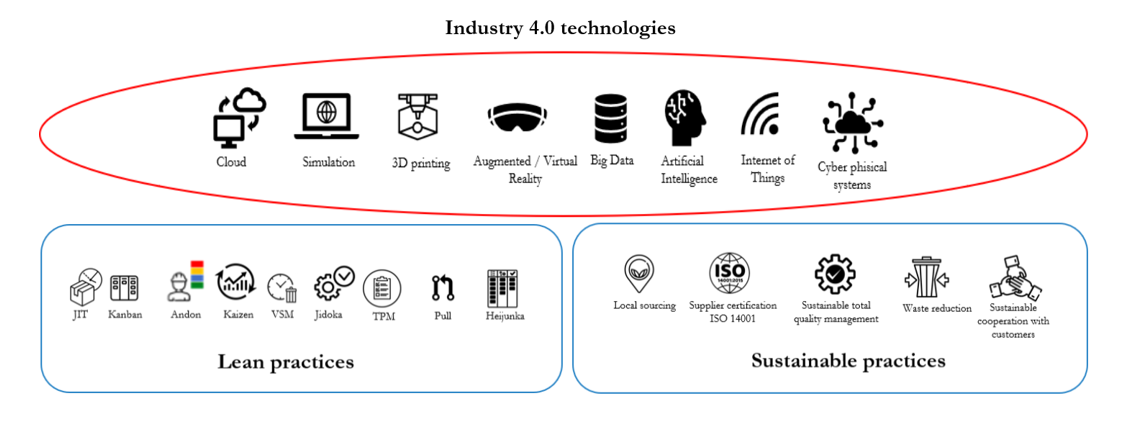
Such ongoing improvements are not only relevant during production (e.g. within the automotive workshops) but may also be implemented throughout the entire SC, including in customer-facing environments (Cagliano et al., 2006). There are a number of lean management approaches that can be taken on board by different manufacturers including by automakers. Table 1 provides a list of lean practices (that could also be adopted within the automotive industry):

Table 1. A non-exhaustive list of lean management terms

Lean PracticesDefinitionsReferences
AndonAndon is a quality control signaling system that provides notifications on issues relating to the maintenance of certain operational processes. An alert can be activated automatically through automated systems or manually by employees. As a result, Andon systems can pause production so that operational issues can be rectified.(Saurin et al., 2011)
HeijunkaHeijunka is intended to improve operational flows by reducing the unevenness in production processes and by minimizing the chance of overburden. It can used to process orders according to fluctuations in demand, and to respond to changes by levelling production by volume or by type, thereby utilizing existing capacity in the best possible way.(Nordin et al., 2010)
JidokaJidoke refers to automated systems that are monitored and supervised by humans. It is used to improve the product quality and to prevent any malfunctions during manufacturing processes.(Liker & Morgan, 2006)
Just in time (JIT)A JIT system is an inventory management strategy that is based on forecasted demand. It aligns purchasing and procurement tasks with production schedules. Companies employ this lean strategy to increase their efficiency by reducing overproduction, unnecessary waiting times, excessive inventory, product defects and unwanted waste. JIT is evidenced when materials and goods are ordered, only when they are required.(Mayr et al., 2018; Sanders et al., 2016)  
KaizenKaizen is a lean production management approach that promotes continuous improvements in manufacturing processes on a day-by-day basis. This notion is based on the idea that ongoing positive changes will gradually result in significant improvements in the long run. Organizations adopting Kaizen will motivate their employees to consistently boost their productivity, reduce waste, lower defects and to be accountable in their jobs.(Valamede & Akkari, 2020)
KanbanKanban involves a scheduling system that can improve operational efficiencies in lean manufacturing environments. One of its main advantages is to limit the buildup of excess materials and resources at any point in time during operational processes. Practitioners ought to ensure that they are maintaining a predefined inventory level for production purposes.(Valamede & Akkari, 2020)
Pull Production (PP)PP is a lean management methodology that is intended to control production processes in order to limit overproduction, reduce surpluses and to minimize warehouse costs. PP can be used to determine the optimal quantity that should be produced. Production occurs when and where it is needed, according to demand.(Sanders et al., 2017b)
Total Productive Maintenance (TPM)TPM is a holistic maintenance approach that is used to improve operational efficiency and product quality, by eliminating failures and defects. Moreover, it promotes a safe working environment to prevent accidents from happening. It also aims to motivate employees to improve their job satisfaction, productivity and organizational performance(Mayr et al., 2018; Valamede & Akkari 2020)
Value Stream Mapping (VSM)VSM (is also known as material- and information-flow mapping) is a lean management method that involves the analysis of extant operations to better plan operational procedures, for the future. It is a visual tool that describes (in detail) all critical steps in specific manufacturing processes.(De Raedemaecker et al., 2017; Wagner et al., 2017)

Table 2 describes some of the most prevalent sustainability practices that are being employed in the automotive industry, as well as in other manufacturing contexts.

Table 2 Sustainable practices adopted by manufacturing businesses

Sustainable PracticesDefinitionsReferences
Sustainable Total Quality Management (STQM)STQM is a management approach that relies on the participation of all members of staff to create long-term value to their organization and to society at large, by considering the triple bottom line objectives in terms of profit, people and planet.(Yadav et al., 2020)  
Local sourcingLocal sourcing is related to the procurement of products, resources or materials from producers and suppliers located in close proximity to the manufacturing facility, rather than acquiring them from international sources. This approach encourages companies to purchase their requirements from local suppliers to reduce costs and to minimize their impact on the environment.(Zailani et al., 2015)  
Sustainable cooperation with customers“Sustainable cooperation with customers” involves the businesses’ engagement activities with customers. Organizations can increase their customers’ awareness about social responsible issues and environmentally sustainable initiatives.(Eltayeb et al., 2011; Purba Rao, 2018)  
Sustainable employee engagement“Sustainable employee engagement” is associated with the organizations’ relationship with its employees. Employers are expected to treat their employees well with dignity and respect. It is in their interest to foster an organizational climate that rewards their hard in a commensurate manner.(Robinson et al., 2003)
Supplier certification International Standards Organization’s (ISO’s) Environmental Management Standard (ISO14001)ISO14001 is one of the most widely used environmental management standard. It encourages manufacturing practitioners to continuously improve their operations to minimize their impact on the environment. It clearly recommends that environmental management issues ought to be embedded within the organizations’ strategic planning processes and that business leaders should pledge their commitment to implement sustainable initiatives that are aimed to protect the environment and to mitigate climate change.  (Camilleri, 2022; Potoski & Prakash 2005)  
Waste and emissions reductionsThe “waste and emissions reductions” constitute one of the most important aspects of sustainable production. Manufacturing businesses ought to reduce the generation of externalities including the accumulation of waste and emissions resulting from their operations. They are expected to strictly comply with the relevant legislation to protect the environment and to prevent any detrimental effects from waste and emissions on eco systems.(Vijayvargy & Agarwal, 2014)

Table 3 sheds light on some of I4.0 technologies that are being employed within the automotive industry.

Table 3. I4.0 technologies that are utilized in the automotive industry

I4.0 TechnologiesDefinitionsReferences
Three-Dimensional (3D) printing3D printing is based on additive technology that can create solid objects from computer-aided design (CAD) software, or via 3D models.(Kamble et al. 2018)  
Artificial Intelligence (AI)AI is concerned with computers and machines that are capable of mimicking human reasoning, human learning and even human behaviors. Basically, it involves a set of machine learning and deep learning technologies that can be used to analyze, predict and forecast data, to categorize objects, to process natural language, to make recommendations, and to retrieve intelligent data retrieval.(Chae and Goh 2020; Ghobakhloo 2020)  
Augmented Reality (AR)AR enables its users to view virtual content that comprises multiple sensory modalities that may include visual, vocal, haptic, olfactory, and other somatosensory stimuli in a real-world environment.(Mayr et al., 2018; Rüßmann et al., 2015)
Big Data (BIG DATA)BIG DATA refers to data sets that are too large or complex to be dealt with via conventional data processing software. Supposedly, big data software can rapidly handle large volumes as well as a variety of information.(Swaminathan, 2018; Vaidya et al., 2018)
BlockchainA blockchain is a distributed ledger technology that allows its users to track and store records (blocks). The blocks hold transactional data that are securely linked together via cryptographic hashes that are timestamped. Each block is linked to the other.(Pun et al., 2021)
Cloud computingCloud computing refers to on-demand computer resources that can be utilized to share and store data in an agile and flexible manner, beyond company boundaries, through multiple locations.(Tao & Qi 2019; Vaidya et al. 2018)
Cyber Physical Systems (CPSs)  CPSs are related to physical and software systems that are deeply intertwined to operate spatial and temporal scales. They are controlled and/or monitored by algorithms to interact with each other in ways that change with context. They exhibit multiple and distinct behavioral modalities.(Adamides & Karacapilidis, 2020; Kamble et al., 2018; Wang et al., 2016)  
Internet of Things (IoT)IoT are physical objects (or groups of objects) with sensors that can enable them to process and exchange data with other devices and systems via the Internet or other communications networks.(He & Xu, 2014)  
Virtual simulation (VS)VS refers to computational system-based modeling that relies on real-time data to mirror the physical world. Virtual models can include machines, products, and humans. A simulation provides a preliminary analysis of different processes (and phases) that make up the operational processes, thereby presenting performance estimates for production management.(Li et al., 2018)

Discussion

This research sought to examine the role of I4.0 technologies in supporting sustainable and lean initiatives in SCs. To this end, an inductive study involving a thematic analysis was conducted to answer the underlying RQs. Interestingly, the findings clearly indicate that utilization of I4.0 technologies are opening up new opportunities in the automotive industry. They confirm that carmakers are changing their modus operandi in terms of their procurement of resources, production practices, and of how they are servicing their customers. It shows that a myriad of digital technologies (including big data, simulation and IoT, among others) are facilitating the implementation of lean programs, thereby improving productivity outcomes, whilst decreasing operational costs.

Moreover, it reported that certain disruptive technologies can be utilized to create value to environmental sustainability in terms of waste minimization practices through recycling procedures, reductions in CO2 emissions, lower energy consumption levels, et cetera, thereby diminishing the businesses’ impact on the natural environments. This research noted that the automakers’ implementation of sustainable practices is not as conspicuous as that of their lean management practices, in the academic literature, even though most of them are increasingly producing sustainable vehicles including hybrids and EVs.

In addition, the findings indicate that there is still scope for manufacturing firms to avail themselves of I4.0 systems to consistently improve their operations in SCs. The results reported that big data can be used to pursue continuous improvements and Kaizen approaches to improve efficiencies, lower costs and reduce waste. They revealed that practitioners are collaborating with marketplace stakeholders and utilizing JIT systems to responsibly source materials and resources when they are required. Moreover, they found that organizations are availing themselves of Andon and Jidoka automated systems to monitor and control different manufacturing processes in the supply chain, to ensure the smooth running of operations.

Theoretical implications

This contribution convergences Industry 4.0 and responsible supply chain practices with lean management approaches. It raises awareness on how manufacturers including those operating in the automotive industry, can improve their quality standards through specific tools (e.g. Andon and Jidoka) and techniques (like Kaizen and Kanban, among others), to enhance their efficiencies, reduce costs and eliminate non-value-added activities. It explains that there is scope for sustainable businesses to invest in disruptive technologies and long-term cultural change to achieve continuous improvements in their supply chains. It clarifies that the intersection of LSCM, SSCM and I4.0 can potentially revolutionize operations management, as practitioners can benefit from digital technologies like real-time data, cloud, AI, CPS, blockchain technologies to consistently ameliorate their production systems in a sustainable manner.

Arguably, businesses can avail themselves of big data analytics, simulations and digital twins, to anticipate demand fluctuations, optimize inventory levels, reduce lead times. These data-driven innovations enable them to proactively respond to changing market conditions and disruptions, identify potential disruptions early, and to mitigate risks. In addition, they could invest in Blockchain digital ledger technologies to trace materials, components and products to ensure responsible sourcing of goods, increase the sustainability of their operations and reduce the businesses’ environmental impact.  

Alternatively, they can utilize CPS systems to automate tasks, improve quality control and to reduce errors from their production processes. These approaches would probably lead to better resource utilization, waste management and circular economy approaches like recyclability, reusability and repairability of assets to extend their lifecycles. Hence, practitioners can align I4.0 paradigm with the lean principles of pull production and just-in-time systems as well as with sustainable supply chain management. For the time being, few researchers have delved into these promising areas of study. Even fewer contributions have investigated these issues in the automotive industry context. This contribution addresses these knowledge gaps in academia. It advances a comprehensive theoretical framework that clearly sheds light on the link between I4.0, strategic lean management approaches and sustainability outcomes including improved resource efficiencies and reduced externalities, among others.

Managerial implications

Regarding the implications for practitioners, this contribution raises awareness on the importance of using technologies to improve the efficiency, economy and effectiveness of SCs, in a sustainable manner. The interpretative findings of this research identified a set of I4.0 technologies and practices that can improve the performance of SCs in the automotive industry. Among the various I4.0 technologies, the informants identified: IoT, simulation, cloud, and big data as some of the most effective tools to enhance the organizational performance of manufacturing businesses. Generally, they indicated that their companies were relying on insights from big data to continuously improve their operations. Evidently, they captured data as they tracked different processes of their operations, in real time. Subsequently, the gathered data is analyzed to discover any areas for improvement. For example, big data could reveal that modifications may be required if certain processes and procedures are not adding value to the company, or if they are translating to operational inefficiencies and/or to unwanted waste.

Most interviewees showed that they utilized simulations, cloud systems and IoT to adopt JIT, Kaizen, Jidoka, local sourcing, and waste reduction initiatives. They explained how they benefitted from these technologies to optimize their operations, in terms their procurement of materials, as well as in other areas including in distribution and marketing activities. For instance, the findings clearly reported that IoT can support the implementation of local sourcing of resources, by minimizing the vulnerabilities and logistical costs associated with long SCs and could improve efficiency by providing valuable information about machine health, including predictive maintenance requirements, at logistics centers or warehouses.

This research reported that these tools enabled practitioners to monitor the operational performance in all phases of their SC, including from the selection of suppliers until the delivery of after-sales services to their valued customers. As mentioned above, the utilization of systems such as big data, analytics and the use of cloud technologies for data storage are adding value to the companies’ SC. Data-driven technologies facilitate the exchange of information between marketplace stakeholders (e.g. with intermediaries). They can foster lean management approaches by increasing throughput, addressing bottlenecks, streamlining processes and by reducing delays, resulting in improved productivity, operational efficiencies, better time management and in lower risks for SCs.

Macroenvironmental factors, including political, economic, social, and technological issues could also impact on the businesses’ I4.0 digital transformation and implementation of sustainable operations management. The transition towards a zero-waste model could prove to be a costly, long-term investment for businesses including those operating in the automotive industry. Although financial investments in new technologies could possibly improve operational efficiencies (Camilleri, 2019), there could still be a low demand for them, particularly if I4.0 systems require behavioural changes by their users.

The full list of references are included in the last part of this open-access article: https://doi.org/10.1002/sd.3211

This research is also available via Researchgate: https://www.researchgate.net/publication/384191949_Leveraging_Industry_40_technologies_for_sustainable_value_chains_Raising_awareness_on_digital_transformation_and_responsible_operations_management

Leave a comment

Filed under Business, digital transformation, Industry 4.0, lean management, Operations Management, Sustainability, sustainable supply chains