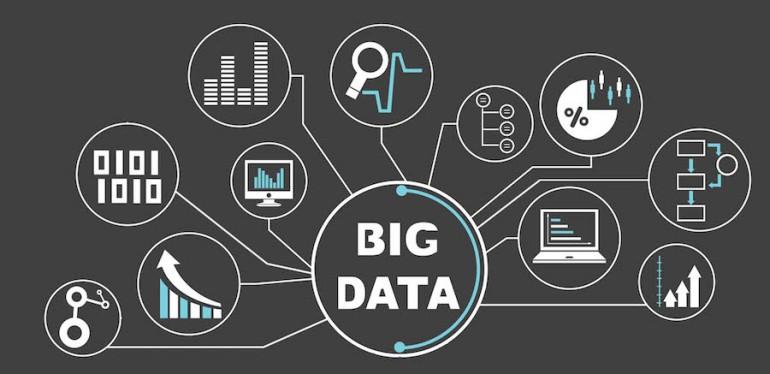
Using Big Data for Customer-Centric Marketing

Big data

The latest advances in information and communications technologies have brought significant improvements for the processing and storage of digital information. Nowadays, users can easily access multiple sources of data that is readily available through websites, social media networks as well as from mobile devices, including smart phones and tablets. These developments have inevitably led to endless opportunities for marketers to leverage themselves by using big data analytics.

Big data has expanded in recent years. As a matter of fact, digital data has dwarfed analogue content and continues to grow at an exponential rate. This data is being collected and stored in massive amounts by search engines and eCommerce conglomerates. In addition, more information is being gathered through social media networks. In fact, all individuals leave a digital trail of data as they move about in the virtual and physical worlds. This phenomenon is called, “data exhaust”. Initially, this term was used to describe how Amazon.com used predictive analytics in order to suggest items for customers. Hence, predictive analytics anticipates human behaviours that have not happened yet. Evidently, it is based on large amounts of current and past indicative data that has been collected from multiple sources. Yet, at the moment, such analytics cannot determine when and why individuals may change their preferences for certain brands. Another new addition to big data is called preventative analytics. This latter one is aimed at reducing the likelihood of contingent situations, risk and uncertainty. It may be particularly relevant in the fields of healthcare, public services and law enforcement.

Data is the new currency for connecting people, ideas and products. Today, digital information is being gathered in innovative, new ways that have dramatically changed and improved consumers’ experience. For instance, online businesses are commonly utilising browser cookies to track websites that are visited by internet users. Once individual users leave these sites, some of the products or services they had viewed; will be shown to them again and again in native advertisements, across different websites. Therefore, businesses are using browsing session data, combined with the consumers’ purchase history to deliver “suitable” items for consumers. Many brands are becoming quite proficient in personalising their offerings – as they collect, classify and use large data volumes on consumers’ behaviours.

This year, more brands shall be using mobile devices and networks to acquire sensory data. As more customers are increasingly carrying smartphones with them, they are (or may be) getting used to receiving compelling offers that instantaneously pop up on their mobile devices. This type of geo-based marketing message is delivered at the right time and the right place. Of course, firms will need more than transaction history and loyalty schemes to be effective at this. They will inevitably require socio-demographic and geo-data that other businesses are not capturing. Moreover, anonymous cookieless data-capture methods are connecting consumer data with matching geo-location-based data. It may appear that these methods are empowering marketers to hyper-target consumers with real-time mobile ad campaigns before, during and after in-store activity. Geo-location capabilities are not only enabling advertisers to capitalise on leads, in real time; but they can also offer valuable insights on shopping habits and consumer behaviours. This information is valuable to brands as they seek to acquire relevant information on their consumers’ digital behaviours and physical movements.

Notwithstanding, businesses have become even more interactive through the proliferation of near-field communication (NFC). Basically, NFCs are embedded chips situated inside smart devices. These chips exchange data with retailers’ items possessing NFC tags. It is envisaged that mobile wallet transactions using this NFC technology are expected to reach $110 billion by 2017 (CNBC, 2013). The latest Android and Microsoft smartphones already include these NFC capabilities. Indeed, these technological developments can enable businesses to provide a deeper personalisation of content as well as bespoken offers to individuals. Consumers use apps that may involuntarily indicate their geo-location to third parties. As a result, data collection has greatly benefited from geo-data services like satellites, near-field communication and global positioning systems. These systems track users’ movements that measure traffic and other real-time phenomena. Arguably, the emergence of such data-driven, digital technologies are adding value to customer-centric marketing endeavours. Unsurprisingly, sensor analytics, geo-location and social data-capture were some of the big trends that were recently announced during the 2015 Consumer Electronics Show.

Big data is fundamentally shifting how marketers collect, analyse and utilise data to reach out to customers. It is helping companies to get new insights into how consumers behave. The challenge for marketers is not to become dependent on big data and analytics to drive business strategies, but rather to recognise its value as a tool for customer satisfaction. Therefore, big data should inform, not consume marketing efforts. Perhaps, new marketing decision-making ought to harness big data for increased targeting and re-targeting of individuals and online communities. Lately, on-demand, real-time marketing has become more personalised. Every customer contact with a brand is a moment of truth, in real-time. Businesses who are not responding with seamless externally-facing solutions will risk losing their loyal customers to rivals.

This contribution suggests that a strategic approach to data management can generate leads and conversions. It also maintains that an evolving digital ecosystem will lead to superior levels of customer service, engagement and repeat business.

Leave a comment

Filed under Marketing

Europe’s Energy Efficiency Targets

euThe European Union’s (EU) Member States are required to draft National Energy Efficiency Plans (NEEAPs) that report on adopted measures (or planned to be adopted) to implement the main elements of the Energy Efficiency Directive (EED, 2012/27/EU). All EU countries are required to achieve a certain amount of final energy savings over the period (01 January 2014 – 31 December 2020) by using energy efficiency obligations schemes or other targeted policy measures to drive energy efficiency improvements in households, industries and transport sectors. The Energy Efficiency Directive (EED) entered into force on the 4th December 2012 in order to establish a common framework of measures for energy efficiency within the EU. EED laid down specific rules to remove barriers in the energy market and to overcome certain market failures that impede energy efficiency. It also provides for the establishment of indicative national energy efficiency targets for 2020. All the EU-28 countries are urged to use energy more efficiently at all stages of the energy chain – from the transformation of energy, through its distribution until its final consumption.

EED measures may also translate to significant energy savings for consumers. For instance, this directive proposed that consumers ought to access easy and free-of-charge data on their real-time (and historical) energy consumption to enable them to monitor their energy consumption patterns. Moreover, this directive also recommended that large enterprises should carry out an energy audit at least every four years, with the first energy assessment should be held before the 5th December 2015. It also suggested that SMEs could be incentivised to undergo energy audits to help them identify the potential for reduced energy consumption. As from the 1st January 2014, the directive advised the public sector to lead by example by renovating 3% of the buildings owned and occupied by the central governments and by including energy efficiency considerations in public procurement. EED has even set realistic deadlines for further improvements in energy efficiencies in energy generation, the monitoring of efficiency levels of new energy generation capacities, national assessments for co-generation and district heating potential and measures.

It goes without saying that the requirements laid down in the EED directive are minimum requirements that do not prevent any Member State from maintaining or introducing more stringent measures. As from 2013, every member state have to report on the progress achieved towards national energy efficiency targets in accordance with Part 1 of Annex XIV.

Links:

EU (2012) DIRECTIVE on energy efficiency, amending Directives 2009/125/EC and 2010/30/EU and repealing Directives 2004/8/EC and 2006/32/EC

http://eur-lex.europa.eu/legal-content/EN/TXT/?uri=CELEX:32012L0027


Leave a comment

Filed under Corporate Sustainability and Responsibility

The EU’s directive on the disclosure of non-financial information

eu

On the 29th September 2014, the European Council has introduced amendments to Accounting Directive (2013/34/EU) that mandates corporate business to disclose their non-financial performance. The EU Commission proposed non-binding guidelines on the details of what non-financial information ought to be disclosed by big businesses operating from by EU countries. This legislation respects environmental, human rights, anti-corruption and bribery matters as expressed in the UN Guiding Principles on Business and Human Rights (the “Ruggie Principles”) and OECD’s Guidelines for Multinational Enterprises (ECCJ, 2014).

This recent EU directive has marked a step forward towards the hardening of human rights obligations for large “public interest entities” with more than 500 employees. At the moment there are approximately 6,000 large undertakings and groups across the EU. Public interest entities include all the undertakings that are listed on an EU stock exchange, as well as some credit institutions, insurance undertakings and other businesses so designated by Member States.

In a nutshell, these non-financial disclosures should shed light on the corporate businesses’ social and environmentally responsible policies and practices. They will feature a brief description of the undertaking’s business model, including their due diligence processes resulting from their impact of their operations. This EU directive encourages corporates to use relevant non-financial key performance indicators on environmental matters including; greenhouse gas emissions, water and air pollution, the use of (non) renewable energy and on health and safety.

With regards to social and employee related matters, the corporate firms ought to implement ILO conventions that promote fair working conditions for employees. The corporate disclosure of non-financial information can include topics such as; social dialogue with stakeholders, information and consultation rights, trade union rights, health and safety and gender equality among other issues. Businesses should also explain how they are preventing human rights abuses and/or fighting corruption and bribery.

Through this directive the EU commission emphasises materiality and transparency in non financial reporting. It also brought up the subject of diversity at the corporate board levels. It has outlined specific reference criteria that may foster wider diversity in the composition of boards (e.g. age, gender, educational and professional background). The EU Commission has even suggested that this transparency requirement complements the draft directive about women on boards.

This new directive still allows a certain degree of flexibility in the disclosures’ requirements. As a matter of fact, it does not require undertakings to have policies covering all CSR matters. Yet, businesses need to provide a clear and reasoned explanation for not complying with this directive. Therefore, non-financial disclosures do not necessarily require comprehensive reporting on CSR matters (although this is encouraged by the Commission), but only the disclosure of information on policies, outcomes and risks (ECCJ, 2014). Moreover, this directive gives undertakings the option to rely on international, European or national frameworks (eg. the UN Global Compact, ISO 26000) in the light of the undertaking’s characteristics and business environment.

It is envisaged that the first CSR reports will be published in financial year 2017 (ECCJ, 2014).

Links:

http://ec.europa.eu/finance/accounting/non-financial_reporting/index_en.htm

Click to access eccj-assessment-eu-non-financial-reporting-may-2104.pdf

http://europa.eu/rapid/press-release_MEMO-14-301_en.htm?locale=en
 

1 Comment

Filed under Corporate Sustainability and Responsibility

Anticipating a surge in social media usage during 2015

smm2
Firms are increasingly facing internal and external pressures to enhance their digital presence in social media platforms. This year, many businesses ought to focus on relationship-based interactions and employ inbound marketing techniques for the following reasons:
1. Consumers are Digitally-Empowered
The rapid proliferation of social media has significantly modified the nature of human activities, habitats, and interactions. Real-world social relationships have also migrated to the virtual world, resulting in online communities that bring people together from many contexts. This movement into the digital dimension allows individuals to share knowledge, entertain one another, and promote dialogues among different cultures. The question is no longer if people are signing in; the question is what they are signing in to and why they use certain applications to do so. From a consumer’s perspective, the use of information communication technologies may offer a number of benefits, including efficiency, convenience, richer and participative information, a broader selection of products, competitive pricing, cost reduction, and product diversity. Social media tend to enhance those benefits as consumers are able to communicate more proactively. For example, through social networking and online reviews, consumers can seek out others’ opinions about specific products. In doing so, they are valuing peer judgments in addition to the firms’ promotions; this trend may indicate a shift in the locus on the persuasive power of word-of-mouth marketing.
2. Social Media and Consumer Engagement
If many customers are on social media, then firms should also engage with customers on social media. Firms should seek to develop digital relationships by using promotional strategies that emphasise the co-creation of content and meaning. To this end, consumer reviews can be particularly helpful. Of course, firms have always communicated with their customers, whether online or through personal selling. However, today’s customers are able to respond to firms through digital communication tools. This recent development may create pressures on firms to adopt a more digital presence.
Therefore, the evolution of Web 2.0 represents a social revolution whereby firms are increasingly engaging with their customers online. It may appear that this is a ubiquitous phenomenon that is related to significant global advances in information communication technologies as well as to lower costs for internet access and usage. These developments have set the stage for major shifts in digital marketing strategies and tactics, particularly with respect to the integrated marketing communications dimensions.
3) Building Brand Equity through Content Marketing
The web is an extremely powerful tool for marketers who are interested in creating stronger brands. Many businesses are already using social media as a channel of communication with their customers. Lately, savvy marketers are focusing their attention on content and inbound marketing as they strive to enhance their visibility online. The right content on corporate websites, blogs and social media can build the brands’ image and reputation. Carefully designed landing pages often use persuasive content which can ultimately bring good prospects through the buying funnel. Therefore, marketers are encouraged to try different formats of content as they engage with their potential customers.
Digital marketers should feature content which should be a good fit for their target customers as well as for their corporate objectives. Their marketing content may be displayed on: web pages; online articles and guest posts; blog posts social media posts, eBooks, presentations; customer review content, product FAQs; videos and micro-videos; pictures, infographics, and animated GIFs among other media. Businesses are increasingly creating a broad range of online content for many reasons. Quality content has the ability to educate, inform, generate leads and entice customers. Therefore, it comes as no surprise that the notion of content marketing is gaining ground, particularly in the C-Suite.
4) Viral Marketing and Word-of-Mouth Campaigns
It is widely believed that the word-of-mouth “buzz” about products may lead to conversions, product adoptions and sales. Therefore, firms are increasingly relying on social networks and “viral” marketing strategies. The term viral marketing describes the phenomenon by which consumers mutually share and spread marketing-relevant information online. Of course, it is in the businesses’ interest to leverage themselves through word-of-mouth (WOM) publicity on social networks. Such digital marketing stimuli may result in social contagion by means of e-mails, posts, likes, tweets et cetera. Therefore the dispersion of all marketing messages will then rely on the consumers themselves.
It goes without saying, publicity is more cost efficient than traditional mass-media advertising. Very often, successful marketing campaigns may trigger a strong emotional response in recipients. The effects of viral messages may possibly contain primary emotions (including surprise, joy, sadness, anger, fear, and disgust among others) on the recipients’ emotional responses to the creative ads and may even result in subsequent forwarding behaviours.
In conclusion, this article suggests that social media and digital marketing have already transformed the way how businesses engage with customers. Perhaps there’s an opportunity out there for businesses to differentiate themselves through interactive marketing. For instance, social media may provide simpler, faster and effective platforms that can reach different consumer segments. Notwithstanding, viral marketing tactics seem to offer a means of marketing communications at relatively low-cost, with a significantly reduced-response time and an increased potential for market impact.


Leave a comment

Filed under Marketing

Digital Marketing trends to look out for during 2015

social

(This contribution also appeared on Business2Community.com)

As 2014 is winding down, it’s time for businesses to start planning their marketing strategy in a business scenario that is continuously changing at the speed of technology. Firms should adapt themselves to the online marketing environment. Many marketers are already chasing their daily meanderings in terms of “likes”, “shares”, “tweets”, click-through rates and ever more immediate metrics. All these interesting developments on internet allow businesses to differentiate themselves to get ahead of their rivals. Smart marketers regularly collect social data to offer more personalised, relevant and wanted content toward customers. Interestingly, 78% of marketers believe that data-driven marketing via digital channels is the path to new growth (American Marketing Association, 2014). In a sense, web 2.0 has helped businesses to share relevant information about their branded products, service features and propositions that may have generated leads and conversions. Nowadays, some of the best businesses are focusing their attention on inbound marketing techniques as they diligently segment their audiences and target them with online advertising through different social platforms:

  1. Social Media Marketing: It is in the businesses’ interest to get to know about the demographic profile of customers. In addition they should be aware of the latest contemporary trends and conversations that are happening on social networks. Businesses ought to present themselves in a way that feels native and endemic to customers. One of the main ways that companies are establishing authority and trust among their consumers is by consistently creating high quality content that may provide useful and interesting insights to audiences. Through integrated marketing communications involving social media channels, companies are steadily building a strong rapport with customers, which will inevitably help them to develop brand equity.
  2. Ad Re-Targeting: Today, businesses use content marketing tactics by producing valuable, engaging content that is designed for specific customers. Content on social media is becoming more conversational in nature. Consumers value those brands that show their human face. They consider them as trustworthy and authentic. Therefore, businesses communicate with their targeted audiences to build fruitful relationships with loyal followers. Several marketers are increasingly becoming quite proficient in re-targeting customers. Retargeting works by utilising browser cookies that track websites that are visited by internet users. Once the users leave these sites, the products or services they viewed will be shown to them again in advertisements, across different websites. Therefore, ad retargeting works to increase the overall conversion rate by reminding consumers of the product or service they had viewed. This keeps the brand and the product at the top of the consumers’ minds. Many studies have indicated that simple exposure to brand names and logos may ultimately lead to purchase decisions. Even if there’s no instantaneous purchase, an increased brand awareness can really pay off in the long run.
  3. Search Engine Optimisation: The goal of Google, Bing and other search engines is to provide their users with the most relevant and highest quality content. It goes without saying that, these days social signals may play a key role in organic search rankings. As more people share content through social media channels, it is very likely that the most popular content will be featured in search engine results. It’s no coincidence that the top-ranking search results tend to have lots of social shares, while those ranked lower have fewer. Moreover, social shares may often serve as a stamp of approval or can be considered as a trust signal for visitors. That’s why so many businesses are installing social share plugins and encouraging consumers to share their content, as much as possible.
  4. Mobile Marketing: We are living in an era that is characterised by mobile readiness, responsive designs as well as the revival of ‘going local,’ Businesses are encouraged to produce content that “scales down” on mobiles. Such content may include marketing emails, eNewsletters, websites, social posts and the like. According to (Forbes, 2013), “87% of connected devices sales by 2017 will be tablets and smartphones”. Whether businesses opt to create an alternative mobile version of a website or decide to utilise responsive web design, it’s important for them to provide a positive experience for those internet users that are browsing via mobile devices.
  5. Video Marketing: When it comes to potential reach, video is peerless. YouTube is currently receiving more than one billion unique visitors every month – that’s more than any other channel, apart from Facebook. For the record, “one out of three Britons view at least one online video a week – that’s a weekly audience of more than 20 million people in the UK alone” (Guardian, 2014). Of course, it’s vital for businesses to offer content that is easy to digest; if not, consumers will simply move on. Apps such as Twitter’s Vine (with its six-second maximum clip length) have dramatically increased the opportunity for businesses to upload social videos having authentic content.

In a nutshell, this contribution suggests that next year many businesses will increasingly resort to digital marketing tactics to reach their individual consumers. eMarketer (2014) anticipates that in the next 12 months,  the marketing budget that is allocated to social media will rise to 13.2% (from 9.4%). It is imperative that marketers learn how to  engage with online visitors through effective, relevant content. Notwithstanding, it may appear that electronic marketing has changed consumers’ mindsets and behavioural attitudes toward businesses. Perhaps, there’s an opportunity for businesses to leverage themselves through faster adaptations, shorter lead times and always-on, real-time marketing.

2 Comments

Filed under Marketing

Re-conceiving Corporate Sustainability and Responsibility for Education

employees

(This contribution also appeared on CSRwire)

During their learning journey, individuals acquire knowledge and skills that ought to be relevant for their prospective employment. The provision of their education is the responsibility of national governments. Yet, business and industry seldom offer continuous professional development and training to their human resources that supplement formal education (although they are rarely involved in setting outcomes of curriculum programmes). Very often, companies have to respond to challenging issues such as skill mismatches where candidates lack certain competencies that may be too deep to bridge through corporate training courses. Perhaps, global businesses may compensate to a certain extent as they can shift their operations elsewhere to tap more qualified employees. However, the constraints on their growth can be halted by the broad impact of inadequate education and training in some industries or regions. Therefore, corporations may possibly become a key player in addressing unmet needs in education. Several companies have the resources and the political influence to help improve educational outcomes which will in turn help them to nurture local talent. Leading businesses are already devising Corporate Sustainability and Responsibility (CSR) programmes that are actively supporting education across many contexts:

For instance; Cisco (a provider of networking equipment), has created more than 10,000 networking academies in 165 countries. 4.75 million individuals have improved their employment prospects as they attended training to become network administrators. At the same time, these individuals have increased the demand for Cisco’s equipment. Similarly, SAP and Verizon have often partnered with local universities and education institutions in order to deliver courses, career coaching and customised degrees on site for employees. The companies have discovered that employees that pursue such programmes are more likely to remain loyal to their company. Naturally, it is in the interest of employees to attend educational programmes that may ultimately lead to their career progression and better prospects. Moreover, continuous professional development and training may considerably reduce high employee turnover. Interestingly, SAP employs people with autism in technology-focused roles. In doing so, SAP concentrates on these individuals’ unique strengths. This way, the company can gain access to a wider pool of untapped talent that will help to foster a climate of creativity and innovation. In a similar vein, Intel has also invested in training programmes and partnerships that strengthen education. The company has recognised that its business growth is constrained by a chronic shortage of talent in science, technology, engineering, and maths (STEM) disciplines. Through programmes like Intel Math and Intel Teach, the global multinational has delivered instructional materials, online resources, and professional development tools for hundreds of thousands of educators across the United States. The students’ have acquired STEM and other 21st century skills, including critical thinking with data as well as scientific inquiry. This is a relevant example of a corporate business that has successfully addressed its workforce needs. Intel has recognised specific skill gaps in its central areas like technology and engineering. Accordingly, the company has committed itself for further investment in education. The company has created higher education curricula in demand areas like microelectronics, nanotechnology, security systems and entrepreneurship. Undoubtedly, Intel’s efforts affected millions of US students. At the same time, the company has increased its productivity and competitiveness. In addition, there are many big businesses that contribute in stewardship, charitable and philanthropic causes. In the past, the GE Foundation has supported systemic improvements in urban school districts that were close to GE’s business. These investments have surely helped to close the interplay between corporate sustainability and responsibility (CSR) and corporate philanthropy, while strengthening GE’s long-term talent pipeline.

In a nutshell, this contribution redefines the private sector’s role in the realms of education. It posits that there are win-win opportunities for companies and national governments as they cultivate human capital. Indeed, companies can create synergistic value for both business and society. In the main, such a strategic approach can result in new business models and cross-sector collaborations that will inevitably lead to operational efficiencies, cost savings and significant improvements to the firms’ bottom lines. Notwithstanding, the businesses’ involvement in setting curricula may also help to improve the effectiveness of education systems in many contexts. Businesses can become key stakeholders in this regard. Their CSR programmes can reconnect their economic success with societal progress.

Leave a comment

Filed under Corporate Sustainability and Responsibility, Education, Marketing

National Governments’ Regulatory Roles in Corporate Sustainability and Responsibility

The governments are usually considered as the main drivers of CSR policy. However, there are other actors within society, such as civil organisations and industry. It is within this context that a relationship framework has been suggested by Mendoza (1996) and Midttun (2005). Inevitably, it seems that there was a need for a deeper understanding of the governments’ role and function in promoting CSR. Societal governance is intrinsically based on a set of increasingly complex and interdependent relationships. There are different expectations and perceptions within each stakeholder relationship, which have to be addressed to develop an appropriate CSR policy. Essentially, this relational approach is based on the idea that recent changes and patterns affecting the economic and political structure may transform the roles and capacities of various social agents (Albareda et al., 2009). The exchange relationships among different actors and drivers which are shaping CSR policy and communications are featured hereunder in Figure 1.

Figure 1

According to Golob et al. (2013) CSR communication is concerned with the context / environment within which CSR communication practices take place. The authors went on to say that it is necessary to observe CSR communication processes between organisations, (new) media and stakeholders. Apparently, several governments have chosen to draw business further into governance issues without strictly mandating behaviour and specifying penalties for non compliance. For example, the UK government’s Department Innovation and Skills, DBIS website states: “The government can also provide a policy and institutional framework that stimulates companies to raise their performance beyond minimum legal standards. Our approach is to encourage and incentivise the adoption of CSR, through best practice guidance, and where appropriate, intelligent (soft) regulation and fiscal incentives”, (DBIS, 2013).

Similarly, in the context of high unemployment levels and social exclusion in Denmark, Ms Karen Jesperson, the Minister of Social Affairs (2003) had unveiled the campaign entitled, “It concerns us all”, which drew attention to the ways in which CSR could assist in addressing public policy problems (Boll, 2005). In a similar vein, the Swedish governments’ CSR initiative had called on the companies’ commitment in upholding relevant international standards. In Australia, the former prime minister, John Howard had formed the Business Leaders’ Roundtable as a means of encouraging business leaders to think about how they could assist government in solving the social problems (Crane et al., 2009). Arguably, the governments can facilitate CSR implementation by setting clear frameworks which guide business behaviour, establishing non-binding codes and systems, and providing information about CSR to firms and industries. For instance, the UK and Australian governments came up with the notion of CSR as a response to mass unemployment. They set public policies which have encouraged companies to engage in CSR practices by providing relevant work experience and training opportunities to job seekers (see Moon and Richardson 1985, Moon and Sochacki, 1996). Similarly, the EU institutions have frequently offered trainee subsidies and grants for education, including vocational training for the companies’ human resources development (EU, 2007). Governments’ role is to give guidance on best practice. Japan is a case in point, where there are close relationships between government ministries and corporations. The firms in Japan report their CSR practices as they are required to follow the suggested framework of the Ministry of Environment (Fukukawa and Moon, 2004). Apparently, there is scope for the respective governments to bring their organisational, fiscal and authoritative resources to form collaborative partnerships for CSR engagement. National governments may act as a catalyst in fostering responsible behaviours.

For instance, India has taken a proactive stance in regulating CSR as it enforced corporate spending on social welfare (India Companies Act, 2013). With its new Companies Bill, India is pushing big businesses to fork out at least two per cent of their three year annual average net profit for CSR purposes. Clause 135 of this bill casts a duty on the Board of Directors to specify reasons for not spending the specified amount on CSR (EY, 2013). It mandates companies to form a CSR committee at the board level. The composition of the CSR committee has to be disclosed in the annual board of directors’ report. The board will also be responsible for ensuring implementation of CSR action plan. The annual Director’s Report has to specify reasons in case the specific amount (2% of the Profit after Tax) has not been utilised adequately. IB (2014) has recently estimated that around 8,000 companies in India will be shortly accounting for CSR-related provisions in their financial statements. These provisions would closely translate to an estimated discretionary expenditure between $1.95 billion to $2.44 billion for CSR activities. In a similar vein, the European Parliament passed a vote to require mandatory disclosure of non-financial and diversity information by certain large companies and groups on a ‘report or explain’ basis. This vote amended Directive 2013/34/EU and affects all European-based ‘Public Interest Entities’ (PIEs) of 500 employees or more as well as parent companies (EU, 2014).


This is an extract of a paper that will appear in the Corporate Reputation Review, Vol. 18 (2).

Leave a comment

Filed under Corporate Sustainability and Responsibility

Environmental Responsibility in the Hospitality Sector

In a recent media release Hyatt has reiterated its commitment to environmental stewardship with a focus on energy, waste and water reduction, sustainable building, supply chain management as well as stakeholder engagement. In Hyatt’s Corporate Responsibility Report, the listed hotel corporation has unveiled an aggressive set of environmental goals for the year 2020, all designed to strengthen Hyatt’s collective ability to collaborate, inspire and further its commitment to environmental stewardship. Hyatt has also defined a suite of measurable and actionable targets. Hyatt hotels aim to create a more sustainable future for themselves and for their neighbours. The hotel group posits that the conservation efforts have reaped fruit, resulting in major reductions in greenhouse gas emissions and water and energy usage by property across their portfolio. Hyatt maintains that its commitment to environmental stewardship touches every aspect of its business, from the way how the hotels are built and operated, to the way they collaborate with their global supply chain, to the way the hotel chain influences change through the passion and commitment of its employees around the world.

Setting Focus Areas
Hyatt 2020 Vision focuses on significantly expanding the global chain’s strategic scope, especially in areas where past efforts have not had as much of an impact due to occupancy fluctuations and rapid business growth in developing markets. With this in mind, the hotel chain’s three strategic priorities include the following;
• “Use Resources Thoughtfully: Hyatt is committed to examining how its hotels source, consume and manage natural resources to serve their guests. Hyatt will identify ways for Hyatt hotels to reduce energy consumption and greenhouse gas emissions, use less water, produce less waste and make more environmentally responsible purchasing decisions. As a highlight, Hyatt has set the goal to reduce water use per guest night by 25 percent, and within water-stressed areas, Hyatt has set a 30 percent reduction goal. Additionally, Hyatt is elevating its recycling efforts by challenging every hotel to reach a 40 percent diversion rate, as well as by setting a recycling goal for renovation waste.
Build Smart: Hyatt will work closely with stakeholders to increase the focus on building more efficient, environmentally conscious hotels across the enterprise. Beginning in 2015, all new construction and major renovation projects contracted for Hyatt managed hotels will be expected to follow enhanced sustainable design guidelines. Hyatt will lead this initiative by mandating that all new construction and major renovation projects for wholly owned full service hotels and resorts achieve LEED certification, or an equivalent certification.
Innovate and Inspire: This goal reflects Hyatt’s commitment to be a catalyst for bringing more hearts, hands and minds to the table to help advance environmental sustainability around the world. This includes Hyatt’s commitment to create a funding mechanism to support the innovation, ideation and acceleration of sustainable solutions within its hotels that can be replicated across the Hyatt portfolio, as well as the broader hospitality industry” (Hyatt Corporate Responsibility Report, 2013/2014).

Reporting Progress
Hyatt’s reported some of its major milestones, including:

• “The launch of Ready to Thrive, Hyatt’s global corporate philanthropy program focused on literacy and career readiness, which included a $750,000 investment in career readiness programs in Brazil.
• Building 11 libraries and supporting reading and writing programs in 30 schools through a new partnership with Room to Read, impacting 30,000 students in India.
• Donating 35,000 books to kids in need across the globe through We Give Books and Room to Read.
• Donating more than 100,000 volunteer hours in 2013 – a 69 percent increase from 2012.
• More than 80 percent of Hyatt hotels recycling at least one or more waste streams.
• A reduction in resource use intensity in each of Hyatt’s three regions compared to 2006 – up to a 20 percent reduction in greenhouse gas emissions, up to a 13 percent reduction in energy and up to a 15 percent reduction in water.
• Development of responsible seafood sourcing goals based on a global purchasing audit in partnership with World Wildlife Fund.
• Required more than 40,000 of its global associates — including housekeepers, front office, concierge, guest services, key service and security personnel, and all management-level colleagues — to complete Human Trafficking Prevention Training. Hyatt also implemented a standard for all of its hotels to have training measures in place” (Hyatt Corporate Responsibility Report, 2013/2014).

Sources:
Hyatt Thrive: http://thrive.hyatt.com/en/thrive.html
Hyatt Corporate Responsibility Report (2013-2014): http://thrive.hyatt.com/content/dam/Minisites/hyattthrive/Hyatt%20Corporate%20Responsibility%20Report-2013-2014.pdf

1 Comment

Filed under Corporate Sustainability and Responsibility

Generating Synergistic Value for Business and Society

images

Synergistic value integrates insights from the stakeholder theory [1] [2] [3] and the resource based view theory [4] [5].

The stakeholder theory [1] provides opportunities to align business practices with societal expectations and sustainable environmental needs. Businesses ought to reconcile disparate stakeholders’ wants and needs (e.g. employees, customers, investors, government, suppliers etc.). Firms can create synergistic value opportunities by forging alliances with internal and external stakeholders.  This may lead to an improvement in mutual trust and understanding. As a result, there are also benefits for corporate reputation, brand image, customer loyalty and investor confidence. This societal engagement also responds to third party pressures, it lowers criticisms from the public and minimises regulatory problems by anticipating legal compliance.

The synergistic value model [6] as featured in Figure 1. presents the potential effect of the government’s relationship on the organisation’s slack resources. Moreover, scarce resources are a facilitator for quality and innovation. Therefore, discretionary expenditures in laudable practices may result in strategic CSR [7] outcomes  including; effective human resources management, employee motivation, operational efficiencies and cost savings (which often translate in healthier financial results) [6]. business-comment_05_temp-1359037349-510143a5-620x348(source: Camilleri, 2012)

This promising notion suggests that there is scope for governments in their capacity as regulators to take a more proactive stance in promoting responsible behaviours. They can possibly raise awareness of social and sustainable practices through dissemination of information; the provision of training programmes and continuous professional development for entrepreneurs [6]. They may assist businesses by fostering the right type of environment for responsible behaviours; through various incentives (e.g. grants, tax relief, sustainable reporting guidelines, frequent audits et cetera) [6].


Synergistic value implies that socially responsible and environmentally-sound behaviours will ultimately bring financial results – as organisational capabilities are positively linked to organisational performance. Synergistic value is based on the availability of slack resources, stakeholder engagement and regulatory intervention which transcend strategic CSR benefits for both business and society.

References:

[1] Freeman, E.E. (1994). The Politics of Stakeholder Theory: Some Future Directions Business Ethics Quarterly, 4(4), 409

[2] Jones, T. M. (1995). Instrumental stakeholder theory: A synthesis of ethics and economics. Academy of Management Review, 20(2), 404–437.

[3] Donaldson, T., and Preston, L. E. (1995). The stakeholder theory of the corporation: Concepts, Evidence and implications. Academy of Management Review, 20(1), 65–91.

[4] Orlitzky, M., Siegel, D. S. and Waldman, D. A. (2011). Strategic Corporate Social Responsibility and Environmental Sustainability. Business & Society, 50(1), 6-27.

[5]McWilliams, A. and Siegel, D. 2011. Creating and capturing value: Strategic corporate social responsibility, resource-based theory and sustainable competitive advantage. Journal of Management, 37(5), 1480-1495.

[6] Camilleri, M. A. (2012). Creating shared value through strategic CSR in tourism.. University of Edinburgh. https://www.era.lib.ed.ac.uk/handle/1842/6564 accessed 10th July 2014.

[7] Werther, W. and Chandler, D. (2006). Strategic Corporate Social Responsibility: Stakeholders in a Global Environment. London: Sage Publications.

[8] Porter, M. E. and Kramer, M.R. (2011) Creating shared value. Harvard business review 89.1/2 (2011): 62-77.


Links:

http://www.timesofmalta.com/articles/view/20131010/business-comment/Unleashing-shared-value-through-content-marketing.489766

http://www.timesofmalta.com/articles/view/20130523/business-comment/Leveraging-organisational-performance-through-shared-value-propositions.470940

http://www.timesofmalta.com/articles/view/20130124/business-comment/Creating-shared-value-for-long-term-sustainability.454548

2 Comments

Filed under Marketing

Employment: new European Skills Passport will facilitate recruitment in hospitality sector

On the 17th June, the European Commission has launched the European Hospitality Skills Passport. This skills passport was developed to bridge the gap between job-seekers and employers in the European hospitality and tourism sector. This incentive promotes mobility of European workers, especially young people, in a sector that still has high growth potential. Interestingly, this tool compares hospitality workers’ skills in order to facilitate their recruitment in tourism and hospitality. It is hoped that this passport will shortly be extended to other sectors in the future.

The Skills Passport is hosted on the European Job Mobility Portal EURES, and is available in all EU official languages. It is an initiative of the European Commission in collaboration with HOTREC the umbrella association representing hotels, restaurants, cafés and similar establishments in Europe; and EFFAT, the European Federation of Trade Unions in the Food, Agriculture and Tourism sectors.

Tutorial for employers

Tutorial for jobseekers


Source: http://europa.eu/rapid/press-release_IP-14-678_en.htm

Leave a comment

Filed under Human Resources