Sustainability accounting and disclosures of responsible restaurant practices in environmental, social and governance (ESG) reports

This is an excerpt from one of my latest open-access articles published via International Journal of Hospitality Management

Suggested citation: Camilleri, M.A. (2025). Sustainability accounting and disclosures of responsible restaurant practices in environmental, social and governance (ESG) reports, International Journal of Hospitality Management, 126, https://doi.org/10.1016/j.ijhm.2024.104051

Currently, humanity is generating more than one billion tons of food waste, including packaging, biodegradable edible food scraps, fruits and vegetables, among others. Together, these items accumulate about one hundred and thirty-two (132) kilograms per capita and almost one-fifth (1/5) of all food available to consumers (Department of Energy, 2024). Out of the total food that was wasted in 2022, sixty per cent (60 %) was produced by private households, twenty-eight per cent (28 %) originated from food and beverage service providers including hotels, restaurants, pubs and cafes, and twelve percent (12 %) came from retail stores (UNEP, 2024).

Frequently, food items and their ingredients are wasted because of a decline in quality, due to contamination, overstocking and/or spoilage issues, as they are not consumed before their expiry date, resulting in their decay (Pearson et al., 2025). Notwithstanding, the preparers of food tend to over-produce perishable items that are uneaten by consumers. Such spoilt products and surplus food will usually end up in municipal landfills, resulting in negative repercussions for our fragile natural environments, bio diversities and ecosystems (EuroStat, 2023). In other words, the piling up of food waste is inevitably causing pollution and irreparable damage| including global greenhouse gas emissions (GHG) that can exacerbate climate change for our planet.

At the time of writing, food loss and waste are triggering eight to ten per cent (8–10 %) of annual (GHG) emissions and are taking up the equivalent of almost a third of the world’s agricultural land. The disposal, handling and accumulation of food waste is costing the global economy about USD 1 trillion (UNEP, 2024). Therefore, the reduction of food loss is critical to increase the efficiency of the globe’s food systems, to improve food security for every nation and its citizens, whilst decreasing production costs in the value chain.

In this light, the rationale of this contribution is to raise awareness on responsible food and beverage operations in the hospitality industry. Primarily, it identifies sustainable practices that are intended to reduce food loss and waste from the value chain through sustainable sourcing of food products, by implementing sound inventory management systems as well as by promoting ecofriendly behaviors during responsible food preparation and consumption practices. A thorough review of the extant literature suggests that, currently, there are just a few articles that shed light on responsible food and beverage operations (Oke et al., 2023Yong et al., 2024), although a number of institutions and organizations are raising the agenda on sustainable food production behaviors among practitioners (EU, 2021HOTREC, 2017).

Secondly, this article highlights the importance of sustainability accounting and reporting during each stage of food preparation, production and consumption (Huang et al., 2023Lee et al., 2024Lin et al., 2024). It clearly explains in a pragmatic manner how environmental, social and governance (ESG) accountability standards, like the ones formulated by Global Reporting Initiative (GRI), Sustainability Accounting Standards Board (SASB) and the Food Loss and Waste Accounting and Reporting Standard (FLW Standard) among others, could be applied in the hospitality industry context.

Therefore, the research objectives of this contribution are threefold: (i) It identifies and discusses about sustainable practices that hotels, restaurants and cafes can implement to minimize food loss and waste; (ii) It sheds light on different regulatory instruments including guiding principles and standards, that can be utilized for ESG accounting, disclosures, audit and assurance of food and beverage services, including those operated by hospitality practitioners; (iii) It advances a theoretical model that clearly summarizes different aspects related to ESG dimensions.

This paper is also available through ResearchGate, Academia, Social Science Research Network (SSRN) and Open Access Repository.

Leave a comment

Filed under CSR, ESG Reporting, food loss, food waste, Hospitality, hotels, restaurants, Sustainable Consumption, sustainable production, sustainable supply chains

Why are people using generative AI like ChatGPT?

The following text is an excerpt from one of my latest articles. I am sharing the managerial implications of my contribution published through Technological Forecasting and Social Change.

This empirical study provides a snapshot of the online users’ perceptions about Chat Generative Pre-Trained Transformer (ChatGPT)’s responses to verbal queries, and sheds light on their dispositions to avail themselves from ChatGPT’s natural language processing.

It explores their performance expectations about their usefulness and their effort expectations related to the ease of use of these information technologies and investigates whether they are affected by colleagues or by other social influences to use such dialogue systems. Moreover, it examines their insights about the content quality, source trustworthiness as well as on the interactivity features of these text-generative AI models.

Generally, the results suggest that the research participants felt that these algorithms are easy to use. The findings indicate that they consider them to be useful too, specifically when the information they generate is trustworthy and dependable.

The respondents suggest that they are concerned about the quality and accuracy of the content that is featured in the AI chatbots’ answers. This contingent issue can have a negative effect on the use of the information that is created by online dialogue systems.

OpenAI’s ChatGPT is a case in point. Its app is freely available in many countries, via desktop and mobile technologies including iOS and Android. The company admits that its GPT-3.5 outputs may be inaccurate, untruthful, and misleading at times. It clarifies that its algorithm is not connected to the internet, and that it can occasionally produce incorrect answers (OpenAI, 2023a). It posits that GPT-3.5 has limited knowledge of the world and events after 2021 and may also occasionally produce harmful instructions or biased content.

OpenAI recommends checking whether its chatbot’s responses are accurate or not, and to let them know when and if it answers in an incorrect manner, by using their “Thumbs Down” button. They even declare that their ChatGPT’s Help Center can occasionally make up facts or “hallucinate” outputs (OpenAI, 2023aOpenAI, 2023b).

OpenAI reports that its top notch ChatGPT Plus subscribers can access safer and more useful responses. In this case, users can avail themselves from a number of beta plugins and resources that can offer a wide range of capabilities including text-to-speech applications as well as web browsing features through Bing.

Yet again, OpenAI (2023b) indicates that its GPT-4 still has many known limitations that the company is working to address, such as “social biases and adversarial prompts” (at the time of writing this article). Evidently, works are still in progress at OpenAI.

The company needs to resolve these serious issues, considering that its Content Policy and Terms clearly stipulate that OpenAI’s consumers are the owners of the output that is created by ChatGPT. Hence, ChatGPT’s users have the right to reprint, sell, and merchandise the content that is generated for them through OpenAI’s platforms, regardless of whether the output (its response) was provided via a free or a paid plan.

Various commentators are increasingly raising awareness about the corporate digital responsibilities of those involved in the research, development and maintenance of such dialogue systems. A number of stakeholders, particularly the regulatory ones, are concerned on possible risks and perils arising from AI algorithms including interactive chatbots.

In many cases, they are warning that disruptive chatbots could disseminate misinformation, foster prejudice, bias and discrimination, raise privacy concerns, and could lead to the loss of jobs. Arguably, one has to bear in mind that, in many cases, many governments are outpaced by the proliferation of technological innovations (as their development happens before the enactment of legislation).

As a result, they tend to be reactive in the implementation of substantive regulatory interventions. This research reported that the development of ChatGPT has resulted in mixed reactions among different stakeholders in society, especially during the first months after its official launch.

At the moment, there are just a few jurisdictions that have formalized policies and governance frameworks that are meant to protect and safeguard individuals and entities from possible risks and dangers of AI technologies (Camilleri, 2023). Of course, voluntary principles and guidelines are a step in the right direction. However, policy makers are expected by various stakeholders to step-up their commitment by introducing quasi-regulations and legislation.

Currently, a number of technology conglomerates including Microsoft-backed OpenAI, Apple and IBM, among others, anticipated the governments’ regulations by joining forces in a non-profit organization entitled, “Partnership for AI” that aims to advance safe, responsible AI, that is rooted in open innovation.

In addition, IBM has also teamed up with Meta and other companies, startups, universities, research and government organizations, as well as non-profit foundations to form an “AI Alliance”, that is intended to foster innovations across all aspects of AI technology, applications and governance.

The full list of references is available here: https://www.sciencedirect.com/science/article/pii/S004016252400043X?via%3Dihub

Suggested citation: Camilleri, M. A. (2024). Factors affecting performance expectancy and intentions to use ChatGPT: Using SmartPLS to advance an information technology acceptance framework. Technological Forecasting and Social Change201, https://doi.org/10.1016/j.techfore.2024.123247

Leave a comment

Filed under academia, chatbots, ChatGPT, Generative AI

Leveraging Industry 4.0 technologies for sustainable value chains and responsible operations management

Featuring a few snippets from one of my latest co-authored papers on the use of digital technologies for lean and sustainable value chains. A few sections have been adapted to be presented as a blog post.

Suggested citation: Strazzullo, S., Cricelli, L., Troise, C. & Camilleri, M.A. (2024). Leveraging Industry 4.0 technologies for sustainable value chains: Raising awareness on digital transformation and responsible operations management, Sustainable Development, https://doi.org/10.1002/sd.3211

Abstract

Practitioners, policy makers as well as scholars are increasingly focusing their attention on the promotion of sustainable practices that reduce the businesses’ impacts on the environment. In many cases, they are well aware that manufacturers and their suppliers are resorting to lean management processes and Industry 4.0 (I4.0) technologies such as big data, internet of things (IoT), and artificial intelligence (AI), among others, to implement sustainable production models in their operational processes. This research utilizes an inductive approach to better understand how I4.0 technologies could result in increased organizational performance in terms of resource efficiencies, quality assurance as well as in environmentally sustainable outcomes, in the context of the automotive industry. The findings shed light on the relationship between I4.0 technologies, sustainable and lean practices of automakers of combustion engines, hybrid models and/or electric vehicles (EVs). In conclusion, this contribution puts forward an original conceptual framework that clearly explains how practitioners can avail themselves of disruptive technologies to foster continuous improvements in their value chain.

Keywords: Industry 4.0, digital transformation, lean management, sustainable supply chain, responsible operations management, resource efficiencies.

Introduction

The manufacturing industries are characterized by their increased emphasis on the development of sustainable practices that are facilitated by digital technologies. Companies are under pressure from a wide range of stakeholders, including by regulatory institutions and by individual customers, among others (Wellbrock et al., 2020). In parallel, in recent years, most businesses have gradually introduced Industry 4.0 (I4.0) technologies in their manufacturing processes, as they shifted to smart factory models (Atif, 2023; Choi et al., 2022; Varriale et al., 2024). However, they cannot disregard their corporate responsibilities on economic, environmental and social aspects (Sunar & Swaminathan, 2022). Many researchers contend that sustainability behaviors ought to be integrated with I4.0 processes (Ghobakhloo, 2020), in order to enhance the effectiveness, efficiencies and economies of their Supply Chains (SC) (Núñez-Merino et al., 2020). To be competitive in this context, SCs are implementing lean management models to improve their operations.

The sustainability of SC is related to the notion of Lean Supply Chain Management (LSCM) that refers to the elimination of non-value-added activities in order to enhance the manufacturing firms’ performance (Centobelli et al., 2022; Núñez-Merino et al., 2020). The proponents of LSCM suggest that the generation of waste can be reduced through responsible management strategies (Deshpande & Swaminathan, 2020). Arguably, the minimization of externalities can ultimately affect all stakeholders of SCs, ranging from the business itself, its suppliers as well as its consumers (Khorasani et al., 2020). Notwithstanding, the stakeholders’ pressures on organizations has led them to change their operational approaches to comply with new environmental regulations and to respond to the growing demands of customers for sustainable products and services (Adomako et al., 2022; Camilleri et al., 2023).

As a result, many commentators are also raising awareness on the Sustainable Supply Chain Management (SSCM) concept (Sonar et al., 2022; Yadav et al., 2020). Very often, they claim that SSCM is an important organizational model that can increase corporate profits and boost market shares. The SSCM proposition is based on the reduction of risks from unwanted environmental impacts, thereby improving the overall efficiency of SCs (Negri et al., 2021). Previous contributions have clearly demonstrated how LSCM and SSCM are closely related to one another (Azevedo et al., 2017). More recent studies have deepened the link between the lean management paradigm and I4.0 (Oliveira-Dias et al., 2022; Tissir et al., 2022). The  integration of these two concepts has led to the formulation of new definitions such as “Lean 4.0” and “Digital Lean Manufacturing”, among others.

Given the increased complexity of operations, many researchers debate that the introduction of lean practices may not be enough to address extant competitive pressures. Although lean management can improve the operational efficiencies of SCs and may add value to their organization, there is still scope for practitioners to continue ameliorating their extant processes. Lean initiatives are reaching a point where they are becoming common practice in different contexts. Many manufacturers are adopting them to reduce their costs. However, the success of lean production practices relies on the management’s strategic decisions and on operational changes they are willing to undertake. Arguably, both SSCM and LSCM are aimed at fostering more flexible, fast, customized, and transparent operations management in manufacturing and distribution systems. Some studies have already clarified how digital technologies can help practitioners to improve achieve these objectives (Ghobakhloo, 2020; Varriale et al., 2024).

Several academic studies have not considered the fact that SCs are becoming more technologically savvy. As technologies continue to evolve, they are transforming the modus operandi of many businesses. Today’s organizational processes are increasingly utilizing different types of innovative solutions. Undoubtedly, manufacturers ought to keep up with the latest advances in technology and with the changing market conditions. Besides, a number of firms are opting to outsource their manufacturing processes to low-cost developing countries. In this light, this research builds on theoretical underpinnings focused on the link between SSCM and LSCM. However, it differentiates itself from previous contributions, as it clarifies how these two paradigms can be connected to I4.0.

Notwithstanding, for the time being, there is still a lack of agreement among academia, policy makers and expert practitioners about what constitutes lean, sustainable systems in today’s manufacturing landscape. Although there a number of stakeholders who are already engaging in LSCM and SSCM practices to meet the new challenges and opportunities presented by I4.0 and the digital age, others are still lagging behind, or are considering SSCM and LSCM and digital technologies as silos, as they see no link between these approaches (Narkhede et al., 2024).

For example, at the time of writing, several automotive manufacturers claim that they are integrating lean and sustainable practices. Very often, they indicate that they utilize I4.0’s disruptive technologies. Yet, a number of academic commentators argue that some of these practitioners unsustainable manufacturing processes and waste management behaviors are contributing to the negative impacts to the degradation of the natural environment, thereby accelerating climate change (Liu & Kong, 2021; Sonar et al., 2022).

Lately, academic colleagues have sought to highlight the synergies between I4.0 technologies, lean management principles and sustainable practices (Centobelli et al., 2022; Cerchione, 2024). The majority of contributions provide a conceptual study of the potential relationship between I4.0, sustainable and lean SCs. However, to date, limited research have integrated lean SC, SSC and I4.0 technologies. This paper represents one of the first attempts to investigate the connection between SSCM, LSCM and I4.0 paradigms, in depth and breadth, in the context of the automotive industry. For the time being, there is still limited research that raises awareness on sustainable and lean supply chain systems that are benefiting from disruptive technologies (Cerchione, 2024; Guo et al., 2022). Hence, this contribution addresses this knowledge gap. Specifically, it seeks to explore these research questions (RQs):

RQ1: Which I4.0 technologies and to what extent are they supporting the manufacturing businesses in their adoption of sustainable and lean management practices?

RQ2: How is the automotive industry’s SC benefiting from the utilization of disruptive technologies, as well as from sustainable and lean management practices?

The underlying goal of this contribution is to raise awareness on how manufacturing businesses including automotive corporations utilize I4.0 technologies, implement lean management as well as sustainable practices to improve their SCs performance. An inductive approach is utilized to address the above RQs. Rich qualitative data were captured through semi-structured interviews with expert practitioners who hold relevant experience in planning, organizing, leading and controlling responsible operations management initiatives in the automotive industry, and who are already deploying a wide array of I4.0 technologies in their manufacturing processes.

The researchers adopt a hermeneutic approach to outline the thematic analysis (TA) of their interpretative findings. They identify the main intersections between SSCM, LSCM and I4.0 paradigms. Moreover, they provide a conceptual framework that clearly explicates how practitioners can avail themselves of I4.0 technologies to advance sustainable and lean management practices in different phases of the supply chain, including in the sourcing of materials, inventory control, manufacturing processes, logistics/distribution of products, as well as in their after sales services.

Literature review

Companies can create value when they have the competences, capabilities and resources to create products. (Khan et al., 2016). They ought to be flexible and responsive to their customers’ needs, particularly in a competitive environment, like the automotive industry. Indeed, customers tend to evaluate the companies based on the products they sell  and on their unique selling propositions  (Kumar Singh & Modgil, 2020). The lean management principles can therefore help manufacturers to implement the philosophy of continuous improvements in their operational performance (Marodin et al. 2016), in order to add value to their customers, and to increase the likelihood of repeat business (Liker, 2004; Papadopoulou & Özbayrak, 2005).

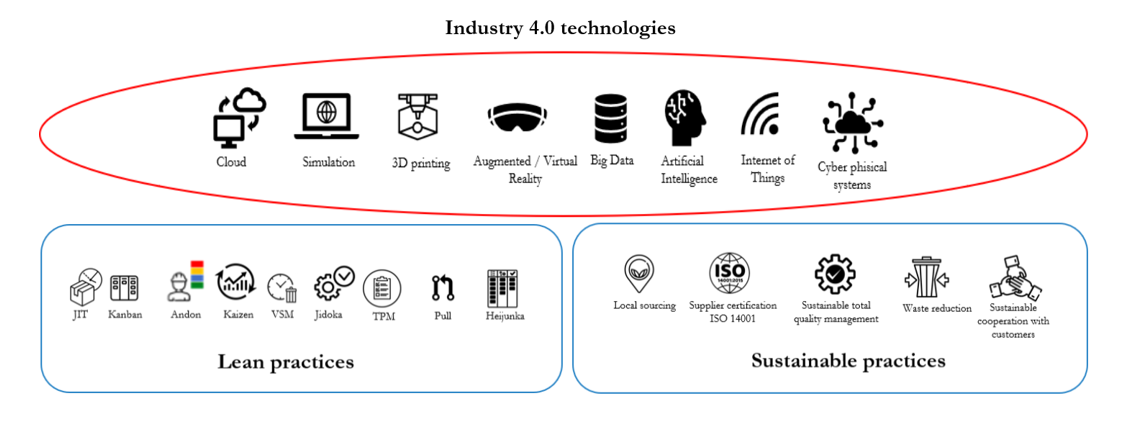
Such ongoing improvements are not only relevant during production (e.g. within the automotive workshops) but may also be implemented throughout the entire SC, including in customer-facing environments (Cagliano et al., 2006). There are a number of lean management approaches that can be taken on board by different manufacturers including by automakers. Table 1 provides a list of lean practices (that could also be adopted within the automotive industry):

Table 1. A non-exhaustive list of lean management terms

Lean PracticesDefinitionsReferences
AndonAndon is a quality control signaling system that provides notifications on issues relating to the maintenance of certain operational processes. An alert can be activated automatically through automated systems or manually by employees. As a result, Andon systems can pause production so that operational issues can be rectified.(Saurin et al., 2011)
HeijunkaHeijunka is intended to improve operational flows by reducing the unevenness in production processes and by minimizing the chance of overburden. It can used to process orders according to fluctuations in demand, and to respond to changes by levelling production by volume or by type, thereby utilizing existing capacity in the best possible way.(Nordin et al., 2010)
JidokaJidoke refers to automated systems that are monitored and supervised by humans. It is used to improve the product quality and to prevent any malfunctions during manufacturing processes.(Liker & Morgan, 2006)
Just in time (JIT)A JIT system is an inventory management strategy that is based on forecasted demand. It aligns purchasing and procurement tasks with production schedules. Companies employ this lean strategy to increase their efficiency by reducing overproduction, unnecessary waiting times, excessive inventory, product defects and unwanted waste. JIT is evidenced when materials and goods are ordered, only when they are required.(Mayr et al., 2018; Sanders et al., 2016)  
KaizenKaizen is a lean production management approach that promotes continuous improvements in manufacturing processes on a day-by-day basis. This notion is based on the idea that ongoing positive changes will gradually result in significant improvements in the long run. Organizations adopting Kaizen will motivate their employees to consistently boost their productivity, reduce waste, lower defects and to be accountable in their jobs.(Valamede & Akkari, 2020)
KanbanKanban involves a scheduling system that can improve operational efficiencies in lean manufacturing environments. One of its main advantages is to limit the buildup of excess materials and resources at any point in time during operational processes. Practitioners ought to ensure that they are maintaining a predefined inventory level for production purposes.(Valamede & Akkari, 2020)
Pull Production (PP)PP is a lean management methodology that is intended to control production processes in order to limit overproduction, reduce surpluses and to minimize warehouse costs. PP can be used to determine the optimal quantity that should be produced. Production occurs when and where it is needed, according to demand.(Sanders et al., 2017b)
Total Productive Maintenance (TPM)TPM is a holistic maintenance approach that is used to improve operational efficiency and product quality, by eliminating failures and defects. Moreover, it promotes a safe working environment to prevent accidents from happening. It also aims to motivate employees to improve their job satisfaction, productivity and organizational performance(Mayr et al., 2018; Valamede & Akkari 2020)
Value Stream Mapping (VSM)VSM (is also known as material- and information-flow mapping) is a lean management method that involves the analysis of extant operations to better plan operational procedures, for the future. It is a visual tool that describes (in detail) all critical steps in specific manufacturing processes.(De Raedemaecker et al., 2017; Wagner et al., 2017)

Table 2 describes some of the most prevalent sustainability practices that are being employed in the automotive industry, as well as in other manufacturing contexts.

Table 2 Sustainable practices adopted by manufacturing businesses

Sustainable PracticesDefinitionsReferences
Sustainable Total Quality Management (STQM)STQM is a management approach that relies on the participation of all members of staff to create long-term value to their organization and to society at large, by considering the triple bottom line objectives in terms of profit, people and planet.(Yadav et al., 2020)  
Local sourcingLocal sourcing is related to the procurement of products, resources or materials from producers and suppliers located in close proximity to the manufacturing facility, rather than acquiring them from international sources. This approach encourages companies to purchase their requirements from local suppliers to reduce costs and to minimize their impact on the environment.(Zailani et al., 2015)  
Sustainable cooperation with customers“Sustainable cooperation with customers” involves the businesses’ engagement activities with customers. Organizations can increase their customers’ awareness about social responsible issues and environmentally sustainable initiatives.(Eltayeb et al., 2011; Purba Rao, 2018)  
Sustainable employee engagement“Sustainable employee engagement” is associated with the organizations’ relationship with its employees. Employers are expected to treat their employees well with dignity and respect. It is in their interest to foster an organizational climate that rewards their hard in a commensurate manner.(Robinson et al., 2003)
Supplier certification International Standards Organization’s (ISO’s) Environmental Management Standard (ISO14001)ISO14001 is one of the most widely used environmental management standard. It encourages manufacturing practitioners to continuously improve their operations to minimize their impact on the environment. It clearly recommends that environmental management issues ought to be embedded within the organizations’ strategic planning processes and that business leaders should pledge their commitment to implement sustainable initiatives that are aimed to protect the environment and to mitigate climate change.  (Camilleri, 2022; Potoski & Prakash 2005)  
Waste and emissions reductionsThe “waste and emissions reductions” constitute one of the most important aspects of sustainable production. Manufacturing businesses ought to reduce the generation of externalities including the accumulation of waste and emissions resulting from their operations. They are expected to strictly comply with the relevant legislation to protect the environment and to prevent any detrimental effects from waste and emissions on eco systems.(Vijayvargy & Agarwal, 2014)

Table 3 sheds light on some of I4.0 technologies that are being employed within the automotive industry.

Table 3. I4.0 technologies that are utilized in the automotive industry

I4.0 TechnologiesDefinitionsReferences
Three-Dimensional (3D) printing3D printing is based on additive technology that can create solid objects from computer-aided design (CAD) software, or via 3D models.(Kamble et al. 2018)  
Artificial Intelligence (AI)AI is concerned with computers and machines that are capable of mimicking human reasoning, human learning and even human behaviors. Basically, it involves a set of machine learning and deep learning technologies that can be used to analyze, predict and forecast data, to categorize objects, to process natural language, to make recommendations, and to retrieve intelligent data retrieval.(Chae and Goh 2020; Ghobakhloo 2020)  
Augmented Reality (AR)AR enables its users to view virtual content that comprises multiple sensory modalities that may include visual, vocal, haptic, olfactory, and other somatosensory stimuli in a real-world environment.(Mayr et al., 2018; Rüßmann et al., 2015)
Big Data (BIG DATA)BIG DATA refers to data sets that are too large or complex to be dealt with via conventional data processing software. Supposedly, big data software can rapidly handle large volumes as well as a variety of information.(Swaminathan, 2018; Vaidya et al., 2018)
BlockchainA blockchain is a distributed ledger technology that allows its users to track and store records (blocks). The blocks hold transactional data that are securely linked together via cryptographic hashes that are timestamped. Each block is linked to the other.(Pun et al., 2021)
Cloud computingCloud computing refers to on-demand computer resources that can be utilized to share and store data in an agile and flexible manner, beyond company boundaries, through multiple locations.(Tao & Qi 2019; Vaidya et al. 2018)
Cyber Physical Systems (CPSs)  CPSs are related to physical and software systems that are deeply intertwined to operate spatial and temporal scales. They are controlled and/or monitored by algorithms to interact with each other in ways that change with context. They exhibit multiple and distinct behavioral modalities.(Adamides & Karacapilidis, 2020; Kamble et al., 2018; Wang et al., 2016)  
Internet of Things (IoT)IoT are physical objects (or groups of objects) with sensors that can enable them to process and exchange data with other devices and systems via the Internet or other communications networks.(He & Xu, 2014)  
Virtual simulation (VS)VS refers to computational system-based modeling that relies on real-time data to mirror the physical world. Virtual models can include machines, products, and humans. A simulation provides a preliminary analysis of different processes (and phases) that make up the operational processes, thereby presenting performance estimates for production management.(Li et al., 2018)

Discussion

This research sought to examine the role of I4.0 technologies in supporting sustainable and lean initiatives in SCs. To this end, an inductive study involving a thematic analysis was conducted to answer the underlying RQs. Interestingly, the findings clearly indicate that utilization of I4.0 technologies are opening up new opportunities in the automotive industry. They confirm that carmakers are changing their modus operandi in terms of their procurement of resources, production practices, and of how they are servicing their customers. It shows that a myriad of digital technologies (including big data, simulation and IoT, among others) are facilitating the implementation of lean programs, thereby improving productivity outcomes, whilst decreasing operational costs.

Moreover, it reported that certain disruptive technologies can be utilized to create value to environmental sustainability in terms of waste minimization practices through recycling procedures, reductions in CO2 emissions, lower energy consumption levels, et cetera, thereby diminishing the businesses’ impact on the natural environments. This research noted that the automakers’ implementation of sustainable practices is not as conspicuous as that of their lean management practices, in the academic literature, even though most of them are increasingly producing sustainable vehicles including hybrids and EVs.

In addition, the findings indicate that there is still scope for manufacturing firms to avail themselves of I4.0 systems to consistently improve their operations in SCs. The results reported that big data can be used to pursue continuous improvements and Kaizen approaches to improve efficiencies, lower costs and reduce waste. They revealed that practitioners are collaborating with marketplace stakeholders and utilizing JIT systems to responsibly source materials and resources when they are required. Moreover, they found that organizations are availing themselves of Andon and Jidoka automated systems to monitor and control different manufacturing processes in the supply chain, to ensure the smooth running of operations.

Theoretical implications

This contribution convergences Industry 4.0 and responsible supply chain practices with lean management approaches. It raises awareness on how manufacturers including those operating in the automotive industry, can improve their quality standards through specific tools (e.g. Andon and Jidoka) and techniques (like Kaizen and Kanban, among others), to enhance their efficiencies, reduce costs and eliminate non-value-added activities. It explains that there is scope for sustainable businesses to invest in disruptive technologies and long-term cultural change to achieve continuous improvements in their supply chains. It clarifies that the intersection of LSCM, SSCM and I4.0 can potentially revolutionize operations management, as practitioners can benefit from digital technologies like real-time data, cloud, AI, CPS, blockchain technologies to consistently ameliorate their production systems in a sustainable manner.

Arguably, businesses can avail themselves of big data analytics, simulations and digital twins, to anticipate demand fluctuations, optimize inventory levels, reduce lead times. These data-driven innovations enable them to proactively respond to changing market conditions and disruptions, identify potential disruptions early, and to mitigate risks. In addition, they could invest in Blockchain digital ledger technologies to trace materials, components and products to ensure responsible sourcing of goods, increase the sustainability of their operations and reduce the businesses’ environmental impact.  

Alternatively, they can utilize CPS systems to automate tasks, improve quality control and to reduce errors from their production processes. These approaches would probably lead to better resource utilization, waste management and circular economy approaches like recyclability, reusability and repairability of assets to extend their lifecycles. Hence, practitioners can align I4.0 paradigm with the lean principles of pull production and just-in-time systems as well as with sustainable supply chain management. For the time being, few researchers have delved into these promising areas of study. Even fewer contributions have investigated these issues in the automotive industry context. This contribution addresses these knowledge gaps in academia. It advances a comprehensive theoretical framework that clearly sheds light on the link between I4.0, strategic lean management approaches and sustainability outcomes including improved resource efficiencies and reduced externalities, among others.

Managerial implications

Regarding the implications for practitioners, this contribution raises awareness on the importance of using technologies to improve the efficiency, economy and effectiveness of SCs, in a sustainable manner. The interpretative findings of this research identified a set of I4.0 technologies and practices that can improve the performance of SCs in the automotive industry. Among the various I4.0 technologies, the informants identified: IoT, simulation, cloud, and big data as some of the most effective tools to enhance the organizational performance of manufacturing businesses. Generally, they indicated that their companies were relying on insights from big data to continuously improve their operations. Evidently, they captured data as they tracked different processes of their operations, in real time. Subsequently, the gathered data is analyzed to discover any areas for improvement. For example, big data could reveal that modifications may be required if certain processes and procedures are not adding value to the company, or if they are translating to operational inefficiencies and/or to unwanted waste.

Most interviewees showed that they utilized simulations, cloud systems and IoT to adopt JIT, Kaizen, Jidoka, local sourcing, and waste reduction initiatives. They explained how they benefitted from these technologies to optimize their operations, in terms their procurement of materials, as well as in other areas including in distribution and marketing activities. For instance, the findings clearly reported that IoT can support the implementation of local sourcing of resources, by minimizing the vulnerabilities and logistical costs associated with long SCs and could improve efficiency by providing valuable information about machine health, including predictive maintenance requirements, at logistics centers or warehouses.

This research reported that these tools enabled practitioners to monitor the operational performance in all phases of their SC, including from the selection of suppliers until the delivery of after-sales services to their valued customers. As mentioned above, the utilization of systems such as big data, analytics and the use of cloud technologies for data storage are adding value to the companies’ SC. Data-driven technologies facilitate the exchange of information between marketplace stakeholders (e.g. with intermediaries). They can foster lean management approaches by increasing throughput, addressing bottlenecks, streamlining processes and by reducing delays, resulting in improved productivity, operational efficiencies, better time management and in lower risks for SCs.

Macroenvironmental factors, including political, economic, social, and technological issues could also impact on the businesses’ I4.0 digital transformation and implementation of sustainable operations management. The transition towards a zero-waste model could prove to be a costly, long-term investment for businesses including those operating in the automotive industry. Although financial investments in new technologies could possibly improve operational efficiencies (Camilleri, 2019), there could still be a low demand for them, particularly if I4.0 systems require behavioural changes by their users.

The full list of references are included in the last part of this open-access article: https://doi.org/10.1002/sd.3211

This research is also available via Researchgate: https://www.researchgate.net/publication/384191949_Leveraging_Industry_40_technologies_for_sustainable_value_chains_Raising_awareness_on_digital_transformation_and_responsible_operations_management

Leave a comment

Filed under Business, digital transformation, Industry 4.0, lean management, Operations Management, Sustainability, sustainable supply chains

Unleashing digital transformation to achieve the sustainable development goals

Featuring a few snippets from one of my latest co-authored papers on the use of sustainable technologies in different industry sectors. A few sections have been adapted to be presented as a blog post.

Suggested citation: Varriale, V., Camilleri, M. A., Cammarano, A., Michelino, F., Müller, J., & Strazzullo, S.(2024). Unleashing digital transformation to achieve the sustainable development goals across multiple sectors. Sustainable Development, https://doi.org/10.1002/sd.3139

Abstract: Digital technologies have the potential to support the achievement of the Sustainable Development Goals (SDGs). Existing scientific literature lacks a comprehensive analysis of the triple link: “digital technologies – different industry sectors – SDGs”. By systematically analyzing extant literature, 1098 sustainable business practices are identified from 578 papers. The researchers noted that 11 digital technologies are employed across 17 industries to achieve the 17 SDGs. They report that artificial intelligence can be used to achieve affordable and clean energy (SDG 7), responsible consumption and production (SDG 12) as well as to address climate change (SDG 13). Further, geospatial technologies may be applied in the agricultural industry to reduce hunger in various domains (SDG 2), to foster good health and well‐being (SDG 3), to improve the availability of clean water and sanitation facilities (SDG 6), raise awareness on responsible consumption and production (SDG 12), and to safeguard life on land (SDG 15), among other insights.

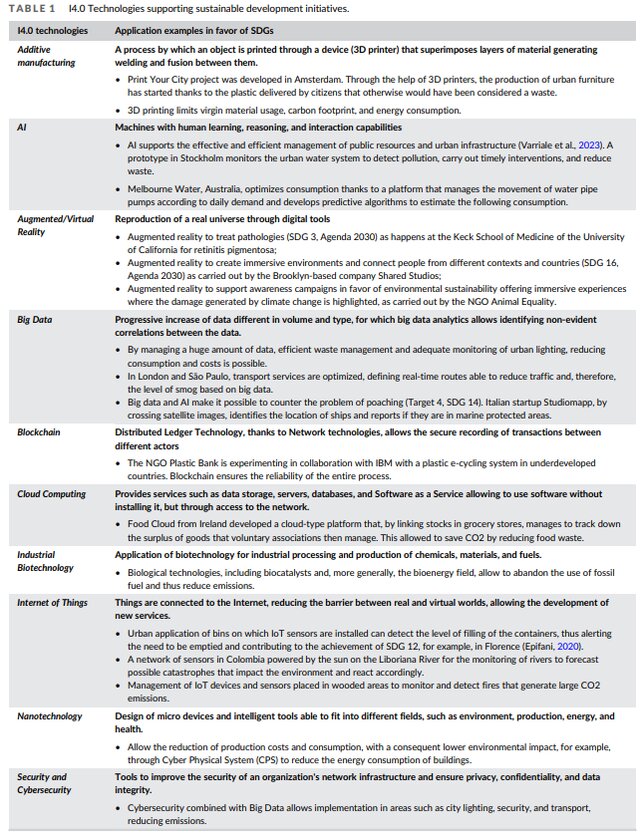
Literature review: The integration of digital technologies has emerged as a transforma-tive force in advancing sustainability objectives across diverse sectorsand industries. Digital technologies offer unprecedented opportunitiesto enhance resource efficiency, optimize processes, and foster innovation, thereby facilitating progress toward the attainment of the SDGs (Birkel & Müller, 2021; Camilleri et al., 2023; Cricelli et al., 2024). Table 1 sheds light on digital technologies that can be used to achieve the sustainable development goals.

Table 2 provides a list of digital technologies (Perano et al., 2023). These disruptive innovations were used as keywords in the search string through SCOPUS.

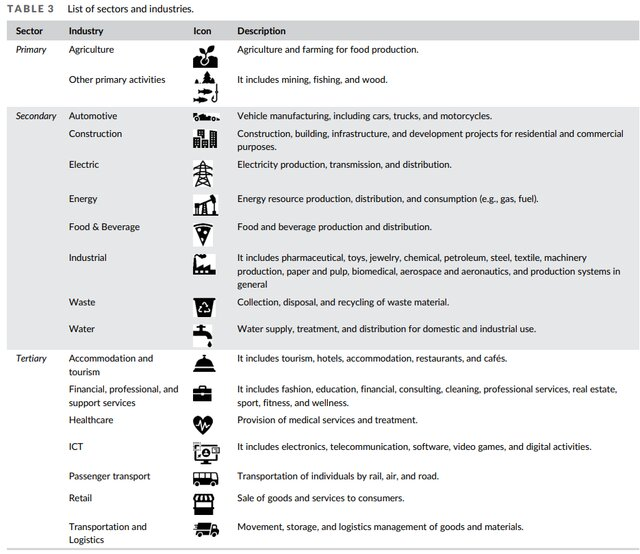
Table 3 identifies sectors and industries based on the SIC code classification (United Kingdom Government, 2024).

Theoretical implications: This article offers a comprehensive overview of the intersection between digitalization and sustainability across various industry sectors. It also considers their peculiar characteristics. The research analyzed 578 articles and identified 1098 sustainable business practices (SBPs), which were categorized into a three-dimensional framework connecting digital technologies, sectors & industries, as well as SDGs. This approach provides a new and innovative perspective on combining sustainability and digitalization by highlighting both promising and established areas of digital technology implementation. Theoretically, this study presents a clear and comprehensive picture of how digital technologies are adopted in different industries to achieve the SDGs. It classifies SBPs into three dimensions: (a) digital technology, (b) sectors & industries, and (c) SDGs. The goal is to present an up-to-date and thorough representation of digital technologies used to achieve the SDGs, based on information from scientific articles.

This contribution sheds light on key opportunities for the application of digital technologies. It identifies specific areas where they can be most effective. Unlike other research studies, this study uses a database of SBPs that can be applied across different industry sectors, to explain how practitioners can enhance their sustainability performance and achieve the SDGs. The three-dimensional framework illustrated in this article allows stakeholders to better understand how to adapt their business strategies and day-to-day operations to increase their sustainability credentials and to reduce their environmental impacts.

Managerial and policy implications: This research provides a comprehensive overview of the implementation of digital technologies across various industries and sectors. It raises awareness on how they can be utilized to achieve the SDGs. It highlights established applications of technologies and also identifies new ones. The proposed framework associates various digital technologies with specific industry sectors. It clearly explains who they can be employed to achieve the SDGs. Hence, this research and its findings would surely benefit practitioners, managers, and policy-makers.

The rationale behind this contribution is to build a robust knowledge base about the use of sustainable technologies among stakeholders. This way, they will be in a better position to improve their corporate responsibility credentials. Managers can use this study’s proposed framework to gain a deeper understanding of SBPs at three levels. In a nutshell, this research posits that SBPs can support practitioners in their strategic and operational decisions while minimizing the risks associated with adopting technologies that are less effective in addressing sustainability challenges. Additionally, this paper offers valuable insights for policymakers. It implies that research funds ought to be allocated toward specific sustainable technologies. This way, they can support various industry sectors in a targeted manner, and foster the development of digital transformation for the achievement of different SDGs.

The full paper (a prepublication version) is available from: https://www.researchgate.net/publication/382632705_Unleashing_digital_transformation_to_achieve_the_sustainable_development_goals_across_multiple_sectors

Leave a comment

Filed under artificial intelligence, Big Data, environment, Industry 4.0, Sustainability, sustainable development

The use of Industry 4.0 for social innovation

Featuring snippets from one of my coauthored articles on the intersection of technology adoption and sustainable development.

Suggested citation: Cricelli, L., Mauriello, R., Strazzullo, S. & Camilleri, M.A. (2024). Assessing the impact of Industry 4.0 technologies on the social sustainability of agrifood companies, Business Strategy and the Environmenthttps://doi.org/10.1002/bse.3874

Abstract: Industry 4.0 technologies present new opportunities for the sustainable development of companies in the agrifood industry. The extant literature on this topic suggests that innovative technologies can support agrifood companies in addressing environmental, economic, and social sustainability issues. While the environmental and economic benefits of technological innovations in the agrifood industry have been widely investigated, few studies sought to explore the impact of the adoption of Industry 4.0 technologies on long-standing social issues. This research addresses this knowledge gap, The data were gathered from 116 Italian agrifood companies that utilized Industry 4.0 technologies. The findings from structural equations modelling partial least squares (SEM-PLS) show that adopting Industry 4.0 technologies helps agrifood companies to improve human resources management, supply chain management, and stakeholder relationships. Finally, this contribution puts forward implications for practitioners, as it raises awareness on the benefits of using technological innovations to promote social sustainability outcomes.

Keywords: Industry 4.0, Technological skills, technological strategy, technological maturity, supply chain management, sustainable supply chain management.

This figure illustrates the model underlying the research hypotheses of this contribution.

An excerpt from the conclusion: recent studies suggest that the adoption of I.40 technologies may have significant social implications for agrifood companies, affecting labour management, supply chain accountability, and relationships with key stakeholders, including governments and consumers (Chandan et al., 2023; Prause, 2021; Rijswijk et al., 2021). Despite this, available literature focuses on the relationship between environmental and economic benefits, while social sustainability implications are currently underinvestigated, especially from an empirical perspective.

This study aimed to help bridge this gap by providing evidence of the impact of I4.0 technologies on the social sustainability of companies in the agrifood industry. To this end, we use data from 116 Italian agrifood companies to validate a theoretical model explaining how the adoption of I4.0 technologies influences the social sustainability of agrifood companies. Specifically, this study focuses on agrifood companies performing cultivation activities, which face unique and relevant social sustainability challenges related to labour, supply chain, and stakeholders’ management. Also, by including companies cultivating a variety of product categories, this study provides some valuable theoretical and practical contributions.

From a theoretical perspective, this study offers two main contributions. First, it validates a conceptual model assessing the impact of I4.0 technologies on the social sustainability of agrifood companies. This advances the literature by providing a framework that can guide future studies on the social implications of technological innovation in the agrifood industry. Second, this study is one of the few to provide empirical evidence of the impact of I4.0 technologies on different aspects of the social sustainability of agrifood companies. This helps explain how technological innovation may influence social sustainability in the agrifood industry and identify further research opportunities. Results show that the development of I4.0 technological skills has a positive impact on all three dimensions of social sustainability. This is consistent with recent literature suggesting that the adoption of I4.0 technologies promotes the development of managerial skills, shifting the role of agricultural workers from executors to decision-makers. Furthermore, the development of I4.0 technological skills enables the use of advanced solutions, which can support operators in the execution of physically demanding tasks (Alves et al., 2023; Lioutas et al., 2021). I4.0 technological skills also positively affect the sustainable management of the supply chain and stakeholder relations, although the reasons are currently under-investigated.

Finally, the results highlight the complexity of the relationship between I4.0 technological strategy and social sustainability. The results reveal a negative relationship between I4.0 technological strategy and sustainable stakeholders’ management, somewhat contradicting recent studies suggesting that an adequate technological innovation strategy is a crucial stepping stone in assisting agrifood companies regain the trust of consumers and society. Advancing an explanation, we hypothesize that the adoption of I4.0 absorbs resources and attention that could have been otherwise directed to address stakeholders’ demands. Finally, a positive relationship was found between I4.0 technological maturity and human resources management, confirming that I4.0 technologies may help companies create healthier work environments, in combination with the development of I4.0 technological skills.

As for practical implications, this study can help managers of these companies analyse and reap the social benefits of adopting I4.0 technologies. Findings show that the introduction of innovative technologies represents a significant opportunity to develop employees’ skills and improve the quality of working conditions, balancing the workloads of field operators. Automation could effectively support cultivation activities, while the use of predictive models could reduce the impact of unpredictable natural factors. Moreover, acquiring advanced and transversal technological skills could provide benefits that go beyond the management of cultivation activities. The use of data provided by modern information systems could simplify communication and coordination with partners and enhance supply chain security, with positive effects on the relationships with stakeholders, including governments and consumers.

Finally, the results suggest managers carefully assess how the company’s I4.0 technological strategy and maturity affect the various dimensions of social sustainability. The findings warn about the risk of focusing exclusively on the company’s needs and losing sight of the interests of supply chain partners and external stakeholders. Despite its contributions, this work is not exempt from limitations. Concerning the sample, this study is based on data obtained from companies operating in specific stages of the Italian agrifood industry. In particular, the study focuses on companies performing cultivation activities in a highly industrialized context. Thus, while adequate to the scope of the study, the sample has limitations. First, it does not include companies that perform product processing and distribution activities. Companies in the meat industry are also excluded. This affects the generalizability of the results, as the study does not provide information on the advantages that I4.0 technologies can offer to such companies.

Furthermore, by focusing on a single country, the study does not account for socioeconomic factors that might affect the results. Future studies can extend the analysis by carrying out crosscountry investigations or by focusing on different geographic areas. Another limitation of the study concerns the use of sociodemographic variables. While providing useful information to outline the profile of the respondents and validate the information sources, the available observations prevented us from capturing any differences in the perceptions of respondents based on variables such as gender or age. Future contributions could focus on assessing how sociodemographic variables mediate individuals’ perception of the impact of I4.0 technologies on the social sustainability of agrifood companies.

In conclusion, we reflect on possible limitations in the theoretical model. Specifically, the absence of previous studies investigating the impact of I4.0 technologies on the social sustainability of agrifood leads to a lack of established metrics and indicators. In this study, we address this shortcoming by referencing established theories such as the RBV to model the technological capability of the company, and the literature on CSR to investigate the multiple facets of social sustainability in the agrifood industry. Despite our efforts to identify all relevant variables, this may have caused us to overlook some important factors. Thus, we elicit future research to extend the analysis and provide additional elements to our framework. Lastly, we point out that this study investigates the impact of I4.0 technologies on the social sustainability of agrifood companies holistically. Therefore, future contributions could obtain different results by focusing on individual technologies or specific applications.

A pre-publication version of the article is available in its entirety through Researchgate. The full list of references can be accessed here: https://www.researchgate.net/publication/381655799_Assessing_the_impact_of_Industry_40_technologies_on_the_social_sustainability_of_agrifood_companies

Leave a comment

Filed under Industry 4.0, Stakeholder Engagement, Strategic Management, Strategy, Sustainability, technology

Ethical considerations of service organizations in the information age

This is an excerpt from one of our latest contributions published through The Service Industries Journal. It features snippets from the ‘Introduction’, ‘Theoretical Implications’, ‘Practical Implications’ as well as from the ‘Limitations and Future Research Avenues’ sections.

Suggested Citation: Camilleri, M.A., Zhong, L., Rosenbaum, M.S. & Wirtz, J. (2024). Ethical considerations of service organizations in the information age, The Service Industries Journal, Forthcoming. https://www.tandfonline.com/doi/full/10.1080/02642069.2024.2353613

Introduction

Ethics is a broad field of study that refers to intellectual and moral philosophical inquiry concerned with value theory. It is clearly evidenced when individuals rely on their personal values, principles and norms to resolve questions about appropriate courses of action, as they attempt to distinguish between right and wrong, good and evil, virtue and vice, justice and crime, et cetera (Budolfson, 2019; Coeckelbergh, 2021; Ramboarisata & Gendron, 2019). Several researchers contend that ethics involves a set of concepts and principles that are meant to guide community members in specific social and environmental behaviors (De Bakker et al., 2019; Hermann, 2022). Very often, commentators argue that a persons’ ethical dispositions are influenced by their upbringing, social conventions, cultural backgrounds, religious beliefs, as well as by regulations (Vallaster et al., 2019).

Individuals, groups, institutions, non-government entities as well as businesses are bound to comply with the rule of law in their society (Groß & Vriens, 2019). As a matter of fact, the businesses’ organizational cultures and modus operandi are influenced by commercial legislation, regulations and taxation systems (Bridges, 2018). For-profit entities are required to adhere to the companies’ acts of the respective jurisdictions where they are running their commercial activities. They are also expected to follow informal codes of conduct and to observe certain ethical practices that are prevalent in the societies where they are based. This line of reasoning is synonymous with mainstream “business ethics” literature, that refer to a contemporary set of values and standards that are intended to govern the individuals’ actions and behaviors in how they manage and lead organizations (DeTienne et al., 2021).

Employers ought to ensure that they are managing their organization in a fair, transparent and responsible manner, by treating their employees with dignity and respect (Saks, 2022). They have to provide decent working environments and appropriate conditions of employment by offering equitable extrinsic rewards to their workers, that are commensurate with their knowledge, skills and competences (Gaur & Gupta, 2021). Moreover, it is in the employers’ interests to nurture their members of staff’s intrinsic motivations if they want them to align with their organizational values and corporate objectives (Camilleri et al., 2023). Notwithstanding, all businesses, including those operating in service industries have ethical as well as environmental, social and governance (ESG) responsibilities to bear towards other stakeholders in society (Aksoy et al., 2022).

This article raises awareness on a wide array of ethical considerations affecting service organizations in today’s information age. Specifically, its research objectives are threefold: (i) It presents the findings from a rigorous and trustworthy systematic review exercise, focused on “ethics” in “service(s)” and/or “ethical services”. This research involves a thorough scrutinization of the most-cited articles published in the last five (5) years; (ii) It utilizes a thematic analysis to determine which paradigms are being associated with service ethics. The rationale is to identify some of the most contemporary topics related to ethical leadership in service organizations. (iii) At the same time, it puts forward theoretical and practical implications that clarify how, why, where, when and to what extent service providers are operating in a legitimate and ethical manner.

A thorough review of the literature reveals that, for the time being, there are just a few colleagues who have devoted their attention to relevant theoretical underpinnings linked to the service ethics literature (Liu et al., 2023; Wirtz et al., 2023). For the time being, there is still limited research that has outlined popular research themes from the most cited articles published in the past five (5) years. It clearly differentiates itself from previous studies as this contribution’s rigorous and transparent systematic review approach clearly recognizes, appraises and describes the methodology that was used to capture and analyze data focused on the provision or lack thereof of ethical services. In addition, unlike other descriptive literature reviews, this paper synthesizes the findings from the latest contributions on this topic and provides a discursive argumentation on their implications. Hence, this article addresses a number of knowledge gaps in academic literature. In conclusion, it identifies the limitations of this review exercise, and outlines future research avenues to academia.

Theoretical implications

This contribution raises awareness of the underexplored notion of service ethics. A number of commentators are making reference to various theories and concepts to clarify how they can guide service organizations in their ethical leadership. In many cases, a number of theories indicate that decision makers ought to be just and fair with individuals or entities in their actions.  Appendix A features a list of ethical theories and provides a short definition for them. For instance, the justice theory suggests that all individuals including service employees should have the same fundamental rights based on the values of equality, non-discrimination, inclusion, human dignity, freedom and democracy. Human rights as well as employee rights and values ought to be protected and reinforced by the respective jurisdictions’ rule of law, for the benefit of all subjects (Grégoire et al., 2019).

Business ethics literature indicates that just societies are characterized by fair, trustworthy, accountable and transparent institutions (and organizations). For instance, the fairness theory raises awareness on certain ethical norms and standards that can help policy makers as well as other organizations including businesses, to ensure that they are continuously providing equal opportunities to everyone. It posits that all individuals ought to be treated with dignity in a respectful and equitable manner (Wei et al., 2019).

This is in stark contrast with the favoritism theory that suggests that certain individuals including employees, can receive preferential treatment, to the detriment of others (Bramoullé & Goyal, 2016). This argumentation is synonymous with the nepotism theory. Like favoritism, nepotism is a phenomenon that is manifested when institutional and organizational leaders help and support specific persons because they are connected with them in a way or another (e.g. through familial ties, friendships, financial, or social factors). Arguably, such favoritisms clearly evidence their conflict(s) of interest, compromise or cloud their judgements, decisions and actions in workplace environments and/or in other social contexts. Many business ethics researchers contend that decision makers ought to be guided by the principle of beneficence (Brear & Gordon, 2021), as they should possess the competences and abilities to recognize between what is morally right and ethically wrong.

This research confirms that frequently, organizational leaders have to deal with difficult and challenging situations, where they are expected to make hard decisions (Islam et al., 2021a; Islam et al., 2021b; Latan et al., 2019; Naseer et al., 2020; Schwepker & Dimitriou, 2021). In such cases, the most reasonable ethical approach would be to follow courses of action that will result in the least possible harm to everyone (Heine et al., 2023). The service organizations’ members of staff are all expected to be collaborative, productive and efficient in their workplace environment. This line of reasoning is related to the attributional theory (Bourdeau et al., 2019) and/or to the consequentialism theory (Budolfson, 2019). Very often, the proponents of these two theories contend that while honest, righteous and virtuous behaviors may yield positive outcomes for colleagues, subordinates and other stakeholders, wrong behaviors can result in negative repercussions to them (Deci & Ryan, 1987; Francis & Keegan, 2020; Lee et al., 2020; Paramita et al., 2021)

Other researchers who contributed to the ethics literature related to the utilitarianism theory, suggest that people tend to make better decisions, when they focus on the consequences of their actions. Hence, they will be in a better position to identify laudable behaviors and codes of conduct that add value to their organization (Coeckelbergh, 2021; Michaelson & Tosti-Kharas, 2019; Ramboarisata & Gendron, 2019). Very often, they argue that there are still unresolved issues in social sciences including the unpredictability of events and incidents from happening (Du & Xie, 2021), and/or the difficulty in measuring the consequences when/if they occur. For example, this review indicated that various authors discussed about the challenges, risks and possible dangers of adopting various technologies including AI, big data, et cetera (Breidbach & Maglio, 2020; Chang et al., 2020; Flavián & Casaló, 2021; Rymarczyk, 2020). In many cases, they hinted that the best ethical choice is to identify which decisions and actions could lead to the greatest good, in terms of positive, righteous and virtuous outcomes (Budolfson, 2019; Gong et al., 2020; Paramita et al., 2021).

Various academic authors who contributed to the formulation of the virtues theory held that there are persons including organizational leaders, whose characters, traits and values drive them to continuously improve and to excel in their duties and responsibilities (Coeckelbergh, 2021; Fatma et al., 2020; Lee et al., 2020). They frequently noted that the persons’ affective feelings as well as their intellectual dispositions enable them to develop a positive mindset, to make the best decisions and to engage in the right behaviors (Gong et al., 2020; Huang & Liu, 2021; Yan et al., 2023). This is congruent with the theory of positivity too, as it explains how the individuals’ optimistic feelings may result in their happiness and wellbeing. Some commentators imply that such positive emotions can influence the individuals’ state of minds and can foster their resilience to engage in productive behaviors (Paramita et al., 2021).

This argumentation is in stark contrast with the emotional labor theory that is manifested when disciplined employees suppress their emotions by engaging in posturing behaviors in order to conform to the organizational culture (Mastracci, 2022). This phenomenon was evidenced in Naseer et al.’s (2020) contribution. In this case, the authors indicated how the employees’ overidentification with unethical organizations can have a negative impact on their engagement, thereby resulting in counterproductive work practices. In addition, Islam et al. (2021b) also suggested that abusive supervision led employees to undesirable outcomes like knowledge hiding behaviors and to low morale in workplace environments.

Several commentators who are focused on psychological issues argue that the individuals’ intrinsic motivations are closely related to their self-determination (Deci & Ryan, 1987). Very often, they contend that individuals should have the autonomy and freedom to make life choices, in order to improve their well-being in the future. The findings from this research reported that organizational leaders who delegated responsibilities to their members of staff, have instilled trust and commitment in their employees, and also improved their intrinsic motivations (Francis & Keegan, 2020; Lee et al., 2020; Schwepker & Dimitriou, 2021).

Hence, organizational leaders of service businesses ought to be aware that there is scope for them to empower their human resources, to help them make responsible choices and decisions relating to their work activities, in a discrete manner (Bourdeau et al., 2019; Islam et al., 2021a; Tanova & Bayighomog, 2022). The employees’ higher levels of autonomy and independence can influence their morale (Paramita et al., 2021; Ramboarisata & Gendron, 2019) and reduce stress levels (Schwepker & Dimitriou, 2021). Various researchers confirmed that employees would be more productive if they were empowered with duties and responsibilities (e.g. Nauman et al., 2023).

This argumentation is congruent with the conservation of resources theory, as business leaders are expected to look after their human resources’ cognitive and emotional wellbeing, if they want to foster their organizational commitment to achieve their corporate objectives. Indeed, their ethical leadership can lead to win-win outcomes, particularly if their employees replicate responsible and altruistic behaviors with one another, and if they strive in their endeavors to develop a caring environment in their organization (Parsons et al., 2021; Saks, 2022). This reasoning is closely related to the social cognition theory that presumes that individuals acquire emotional knowledge and skill sets such as intuition or empathy, among others, through social interactions, including when they are at work (Čaić et al., 2019; Campbell et al., 2020; Rauhaus et al., 2020).

Practical implications

The findings from this research confirm that various service organizations are becoming acquainted with ethical leadership and with social issues in management. Evidently, several listed businesses and large undertakings in service industries are increasingly proving their legitimacy and license to operate, by engaging in ethical behaviors that promote responsible human resources management. Very often, they are fostering an organizational climate that encourages ongoing dialogue, communication and collaboration among members of staff; they empower employees with duties and responsibilities to make important decisions; provide them with equitable compensation that is commensurate with qualifications and experience; and implementing work-life balance policies. Generally, these laudable measures are resulting in motivated, committed and productive employees.

On the other hand, unethical behaviors including abusive organizational practices and coercive leadership styles are generating bitterness and feelings of resentment among employees. The lack of ethical leadership can lead to demotivation, low morale, job stress and even to counterproductive behaviors including wrongdoings like knowledge hiding and abusive supervision in workplace environments. This research reported about irresponsible practices of service businesses operating in the sharing economy, as a number of hospitality companies are subcontracting their food delivery services to independent contractors, who are not safeguarding the rights of their employees. Very often, the workers of the gig economy are offered precarious jobs and unfavorable conditions of employment. Generally, they are not paid in a commensurate manner for their jobs, are not eligible for health or retirement benefits, and cannot affiliate themselves with trade unions.

This discursive review shed light on the service businesses’ dealings with employees and with other stakeholders. It also narrated about their relationships with customers as well as on their ethical and digital responsibilities towards them. For example, it indicated that many businesses are gathering and storing data of customers. Frequently, they are using their personal and transactional information to analyze and interpret shopping behaviors. They may do so to build consumer profiles and/or to retarget them with promotional content. The findings of this research imply that it is the responsibility of service businesses to inform new customers that they are capturing and retaining data from them, when and if they do so (even though in many cases, they are aware that many online users can quickly unsubscribe to marketing messages and/or are becoming adept in blocking advertisements from popping-up in their screens). The authors  contend that service providers ought to explicitly ask their customers’ consent (through opt-in or opt-out choices) to ensure that the former can avail themselves of their consumers’ data.

Currently, certain jurisdictions are not in a position to protect consumers from entities that could use their personal information for different purposes as they did not enact substantive data protection legislation. The European Union’s General Data Protection Regulation (GDPR) or California Consumer Privacy Act (CCPA), are two examples of data regulations that are intended to safeguard the consumers’ interests in this regard. Online users ought to be educated and guided through regulations, policies and data literacy programs, to protect them from potentially unethical technological applications and practices of big data algorithms and advanced analytics. At the moment, various stakeholders including policy makers and academia, among others, are calling for responsible AI governance and for the formulation of (quasi) regulatory frameworks, in order to maximize the benefits of AI and to minimize its negative impacts to humanity.

This research raises awareness about the importance of disclosing corporate governance procedures, and of regularly reporting CSR/ESG credentials with regulatory stakeholders and with other interested parties. In many cases, the majority of service businesses are genuinely following ethical norms and principles that go beyond their commercial and legal obligations. They should bear in mind that their sustainability accounting, transparent ESG disclosures, as well as their audit and assurance mechanisms, can ultimately reduce information asymmetry among stakeholders, whilst enhancing their reputation and image with interested parties. Their ongoing corporate communications can ameliorate stakeholder relationships and could increase their organizational legitimacy in the long run.

Limitations and future research avenues

The notion of service ethics is gaining traction in academic circles. Indeed, it is considered as a contemporary and timely topic for service researchers specializing in business administration and/or business ethics. In fact, the findings from the bibliographic analysis demonstrate that there were more than eleven thousand (11,000) documents focused on service(s), ethics and ethical service(s), published in the last 5 years. This research adds value to the extant literature as it sheds light on the most cited articles focused on these topics. Yet, it differentiates itself from previous papers, as it identifies the themes of fifty (50) of the most cited papers in this promising area of research, describes the methodology that was employed to capture and analyze the data on this topic, and scrutinizes their content, before synthesizing the findings of this contribution.

This article presents the findings of a rigorous review and evaluation of the latest literature revolving on ethical leadership of service organizations. The authors are well aware that, in the past, other academic colleagues may have referred to synonymous keywords to service ethics or ethical services, including ethical business, business ethos, business ethics, business code of conduct, and even corporate social responsibilities of service businesses, among other paradigms. Therefore, future researchers may also consider using these keywords when they investigate ethical behaviors in services-based sectors. It is hoped that they will delve into the research themes, fields of studies and theoretical bases that were identified in this contribution including on the service organizations’ ethical leadership, as proposed in the following table. This research confirms that it is in the interest of service entities to foster a fair and just working environment, particularly for the benefit of their employees, as well as for other stakeholders including for regulatory institutions, creditors, shareholders and customers, among others.

A future agenda for service ethics research

(Developed by the authors)

Indeed, there is scope to investigate further the service organizations’ roles in today’s societies, as they are being urged by policy makers and other interested parties to communicate about their responsible organizational behaviors, in various contexts. Entities operating in service industries including small and medium-sized businesses as well as micro enterprises are increasingly acquainting themselves with sustainability accounting, non-financial reporting and ongoing assurance exercises, as comprehensive CSR/ESG disclosures can enable them to prove their legitimacy and license to operate with stakeholders. Moreover, prospective researchers are invited to continue raising more awareness about ethical leadership among service organizations, particularly when they are adopting disruptive innovations.

The full list of references are available from the open-access article (published through The Service Industries Journal) and via ResearchGate.

Leave a comment

Filed under Business, Corporate Social Responsibility, ESG Reporting, ethics

Metaverse education: Opportunities and challenges for immersive learning

The following content was adapted from one of my latest contributions on the Metaverse’s immersive technology.

(Credit: Onurdongel)

Suggested citation: Camilleri, M.A. (2023), “Metaverse applications in education: a systematic review and a cost-benefit analysis”, Interactive Technology and Smart Education, Vol. ahead-of-print No. ahead-of-print. https://doi.org/10.1108/ITSE-01-2023-0017

Online users are connecting to simulated virtual environments through various digital games like Fortnite, Minecraft, Roblox, and World of Warcraft, among others. Very often, gamers are utilizing virtual reality (VR) and augmented reality (AR) technologies to improve their gaming experiences. In many cases, they are engaging with other individuals in the cyberspace and participating in an extensive virtual economy. New users are expected to create electronic personas, called avatars (that represent their identity in these games). They are allowed to move their avatars around virtual spaces and to use them to engage with other users, when they are online. Therefore, interactive games are enhancing their users’ immersive experiences, particularly those that work with VR headsets.

Academic researchers as well as technology giants like Facebook (Meta), Google and Microsoft, among others, anticipate that the Metaverse will shortly change the way we experience the Internet. Whilst on the internet, online users are interacting with other individuals through websites, including games and social media networks (SNSs) in the Metaverse they engage with the digital representations of people (through their avatars), places, and things in a simulated universe. Hence, the Metaverse places its users in the middle of the action. In plain words, it can be described as a combination of multiple elements of interactive technologies, including VR and AR where users can experience a digital universe. Various industry practitioner including Meta (Facebook) argue that this immersive technology will reconfigure the online users’ sensory inputs, definitions of space, and points of access to information.

AR and VR devices can be used to improve the students’ experiences when they engage with serious games. Many commentators noted that these technologies encourage active learning approaches, as well as social interactions among students and/or between students and their teachers. Serious games can provide “gameful experiences”, if they share the immersive features that captivate them, like those relating to the entertaining games. If they do so, it is very likely that students would enjoy their game play (and game-based learning). Similarly, the Metaverse can be used to increase the students; motivations and learning outcomes.

For the time being, there is no universal definition that encapsulates the word “Metaverse”. The term has been used in a 1992 science fiction novel Snow Crash. Basically, it is a blend of two words, in which parts of them, namely “meta” and “universe” were combined to create the “Metaverse” notion. While meta means beyond, universe is a term that is typically used to describe an iteration of the internet that consists of persistent, immersive 3D virtual spaces that are intended to emulate physical interactions in perceived virtual worlds (like a universe).

Although, there are various academic contributions that have explored the utilization of online educational technologies, including AR and VR, in different contexts,  currently, just a few researchers who have evaluated of the latest literature on this contemporary topic, to reveal the benefits and costs of using this disruptive innovation in the context of education. Therefore, this contribution closes this gap in academic literature. The underlying objective of this research is to shed light on the opportunities and challenges of using this immersive technology with students.

Opportunities

    Immersive multi-sensory experiences in 3D environments

    The Metaverse could provide a smooth interaction between the real world and the virtual spaces. Its users can engage in activities that are very similar to what they do in reality. However, it could also provide opportunities for them to experience things that could be impossible for them to do in the real world. Sensory technologies enable users to use their five senses of sight, touch, hearing, taste and smell, to immerse themselves in a virtual 3D environment. VR tools are interactive, entertaining and provide captivating and enjoyable experiences to their users. In the past years, a number of educators and students have been using 3D learning applications (e.g. like Second Life) to visit virtual spaces that resemble video games. Many students are experienced gamers and are lured by their 3D graphics. They learn when they are actively involved. Therefore, the learning applications should be as meaningful, engaging, socially interactive and entertaining as possible.

    There is scope for educators and content developers to create digital domains like virtual schools, colleges and campuses, where students and teachers can socialize and engage in two-way communications. Students could visit the premises of their educational institutions in online tours, from virtually anywhere. A number of universities are replicating their physical campus with virtual ones. The design of the virtual campuses may result in improved student services, shared interactive content that could improve their learning outcomes, and could even reach wider audiences. Previous research confirms that it is more interesting and appealing for students to learn academic topics through the virtual world.

    Equitable and accessible space for all users

    Like other virtual technologies, the Metaverse could be accessed from remote locations. Educational institutions can use its infrastructure to deliver courses (free of charge or against tuition fees, as of now). Metaverse education may enable students from different locations to use its open-source software to pursue courses from anywhere, anytime. Hence, its democratized architecture could reduce geographic disparities among students, and increases their chances of continuing education through higher educational institutions in different parts of the world.

    In the future, students including individuals with different abilities, may use the Metaverse’s multisensory environment to immerse themselves in engaging lectures.

    Interactions with virtual representations of people and physical objects

    Currently, individual users can utilize the AR and VR applications to communicate with others and to exert their influence on the objects within the virtual world. They can organize virtual meetings with geographically distant users, attend conferences, et cetera. Various commentators argued that the Metaverse can be used in education, to learn academic subjects in real-time sessions in a VR setting and to interact with peers and course instructors. The students and their lecturers will probably use an avatar that will represent their identity in the virtual world. Many researchers noted that avatars facilitate interactive communications and are a good way to personalize the students’ learning experiences.

    Interoperability

    Unlike other VR applications, the Metaverse will enable its users to retain their identities as well as the ownership of their digital assets through different virtual worlds and platforms, including those related to the provision of education. This means that Metaverse users can communicate and interact with other individuals in a seamless manner through different devices or servers, across different platforms. They can use the Metaverse to share data and content in different virtual worlds that will be accessed through Web 3.0.

    Challenges

      Infrastructure, resources and capabilities

      The use of the Metaverse technology will necessitate a thorough investment in hardware to operate the university virtual spaces. The Metaverses requires intricate devices, including appropriate high-performance infrastructures to achieve accurate retina display and pixel density for realistic virtual immersions. These systems rely on fast internet connections with good bandwidths as well as computers with adequate processing capabilities, that are equipped with good graphic cards. For the time being, VR, MR and AR hardware may be considered as bulky, heavy, expensive and cost-prohibitive, in some contexts.

      The degree of freedom in a virtual world

      The Metaverse offers higher degrees of freedom than what is available through the worldwide web and web2.0 technologies. Its administrators cannot be in a position to anticipate the behaviors of all persons using their technologies. Therefore, Metaverse users can possibly be exposed to positive as well as to negative influences as other individuals can disguise themselves in the vast virtual environments, through anonymous avatars.

      Privacy and security of users’ personal data

      The users’ interactions with the Metaverse as well as their personal or sensitive information, can be tracked by the platform operators hosting this service, as they continuously record, process and store their virtual activities in real-time. Like its preceding worldwide web and Web 2.0 technologies, the Metaverse can possibly raise the users’ concerns about the security of their data and of their intellectual properties. They may be wary about data breaches, scams, et cetera. Public blockchains and other platforms can already trace the users’ sensitive data, so they are not anonymous to them.  Individuals may decide to use one or more avatars to explore the Metaverse’s worlds. They may risk exposing their personal information, particularly when they are porting from one Metaverse to another and/or when they share transactional details via NFTs. Some Metaverse systems do not require their users to share personal information when they create their avatar. However, they could capture relevant information from sensors that detect their users’ brain activity, monitor their facial features, eye motion and vocal qualities, along with other ambient data pertaining to the users’ homes or offices.

      They may have legitimate reasons to capture such information, in order to protect them against objectionable content and/or unlawful conduct of other users. In many cases, the users’ personal data may be collected for advertising and/or for communication purposes. Currently, different jurisdictions have not regulated their citizens’ behaviors within the Metaverse contexts. Works are still in progress, in this regard.

      Identity theft and hijacking of user accounts

      There may be malicious persons or groups who may try use certain technologies, to obtain the personal information and digital assets from Metaverse users. Recently, a deepfake artificial intelligence software has developed short audible content, that mimicked and impersonated a human voice.

      Other bots may easily copy the human beings’ verbal, vocal and visual data including their personality traits. They could duplicate the avatars’ identities, to commit fraudulent activities including unauthorized transactions and purchases, or other crimes with their disguised identities. Roblox users reported that they experienced avatar scams in the past. In many cases, criminals could try to avail themselves of the digital identities of vulnerable users, including children and senior citizens, among others, to access their funds or cryptocurrencies (as they may be linked to the Metaverse profiles). As a result, Metaverse users may become victims of identity theft. Evolving security protocols and digital ledger technologies like the blockchain will be increasing the transparency and cybersecurity of digital assets. However, users still have to remain vigilant about their digital footprint, to continue protecting their personal information.

      As the use of the virtual environment is expected to increase in the foreseeable future, particularly with the emergence of the Metaverse, it is imperative that new ways are developed to protect all users including students. Individuals ought to be informed about the risks to their privacy. Various validation procedures including authentication, such as face scans, retina scans, and speech recognition may be integrated in such systems to prevent identity theft and hijacking of Metaverse accounts.

      Borderless environment raises ethical and regulatory concerns

      For the time being, a number of policy makers as well as academics are raising their questions on the content that can be presented in the Metaverse’s virtual worlds, as well as to the conduct and behaviors of the Metaverse users. Arguably, it may prove difficult for the regulators of different jurisdictions to enforce their legislation in the Metaverse’s borderless environment. For example, European citizens are well acquainted with the European Union’s (EU) General Data Protection Regulation. Other countries have their own legal frameworks and/or principles that are intended to safeguard the rights of data subjects as well as those of content creators. For example, the United States governments has been slower that the EU to introduce its privacy by design policies. Recently, the South Korean Government announced a set of laudable, non-binding ethical guidelines for the provision and consumption of metaverse services. However, there aren’t a set of formal rules that can apply to all Metaverse users.

      Users’ addictions and mental health issues

      Although many AR and VR technologies have already been tried and tested in the past few years, the Metaverse is still getting started. For the time being, it is difficult to determine what are the effects of the Metaverse on the users’ health and well-being. Many commentators anticipate that an unnecessary exposure to Metaverse’s immersive technologies may result in negative side-effects for the psychological and physical health of human beings.  They are suggesting that individuals may easily become addicted to a virtual environment, where the limits of reality are their own imagination. They are lured to it “for all the things they can do” and will be willing to stay “for all the things they can be” (i.e. excerpts from Ready Player One Movie).

      Past research confirms that spending excessive time on internet, social media or playing video games can increase the chances of mental health problems like attention deficit disorders, eating conditions, as well as anxiety, stress or depression, among others. Individuals play video games to achieve their goals, to advance to the next level. Their gameplay releases dopamine. Similarly, their dopamine levels can increase when they are followed through social media, or when they receive likes, comment or other forms of online engagements.          

      Individuals can easily develop an addiction with this immersive technology, as they seek stimulating and temporary pleasurable experiences in its virtual spaces. As a result, they may become dependent to it. Their interpersonal communications via social media networks are not as authentic or satisfying as real-life relationships, as they are not interacting in-person, with other human beings. In the case of the Metaverse, their engagement experiences may appear to be real. Yet again, in the Metaverse, its users are located in a virtual environment, they not physically present near other individuals. Human beings need to build an honest and trustworthy relationship with one another. The users of the Metaverse can create avatars that could easily conceal their identity.

      Read further! The full paper can be accessed and downloaded from:

      The University of Malta: https://www.um.edu.mt/library/oar/handle/123456789/110459

      Researchgate: https://www.researchgate.net/publication/371275481_Metaverse_applications_in_education_A_systematic_review_and_a_cost-benefit_analysis

      Academia.edu: https://www.academia.edu/102800696/Metaverse_applications_in_education_A_systematic_review_and_a_cost_benefit_analysis

      SSRN: https://papers.ssrn.com/sol3/papers.cfm?abstract_id=4490787

      1 Comment

      Filed under digital games, Digital Learning Resources, digital media, Education, education technology, Metaverse

      Users’ perceptions and expectations of ChatGPT

      Featuring an excerpt and a few snippets from one of my latest articles related to Generative Artificial Intelligence (AI).

      Suggested Citation: Camilleri, M.A. (2024). Factors affecting performance expectancy and intentions to use ChatGPT: Using SmartPLS to advance an information technology acceptance framework, Technological Forecasting and Social Changehttps://doi.org/10.1016/j.techfore.2024.123247


      The introduction

      Artificial intelligence (AI) chatbots utilize algorithms that are trained to process and analyze vast amounts of data by using techniques ranging from rule-based approaches to statistical models and deep learning, to generate natural text, to respond to online users, based on the input they received (OECD, 2023). For instance, Open AI‘s Chat Generative Pre-Trained Transformer (ChatGPT) is one of the most popular AI-powered chatbots. The company claims that ChatGPT “is designed to assist with a wide range of tasks, from answering questions to generating text in various styles and formats” (OpenAI, 2023a). OpenAI clarifies that its GPT-3.5, is a free-to-use language model that was optimized for dialogue by using Reinforcement Learning with Human Feedback (RLHF) – a method that relies on human demonstrations and preference comparisons to guide the model toward desired behaviors. Its models are trained on vast amounts of data including conversations that were created by humans (such content is accessed through the Internet). The responses it provides appear to be as human-like as possible (Jiang et al., 2023).

      GPT-3.5’s database was last updated in September 2021. However, GPT-4.0 version comes with a paid plan that is more creative than GPT-3.5, could accept images as inputs, can generate captions, classifications and analyses (Qureshi et al., 2023). Its developers assert that GPT-4.0 can create better content including extended conversations, as well as document search and analysis (Takefuji, 2023). Recently, its proponents noted that ChatGPT can be utilized for academic purposes, including research. It can extract and paraphrase information, translate text, grade tests, and/or it may be used for conversation purposes (MIT, 2023). Various stakeholders in education noted that this LLM tool may be able to provide quick and easy answers to questions.

      However, earlier this year, several higher educational institutions issued statements that warned students against using ChatGPT for academic purposes. In a similar vein, a number of schools banned ChatGPT from their networks and devices (Rudolph et al., 2023). Evidently, policy makers were concerned that this text generating AI system could disseminate misinformation and even promote plagiarism. Some commentators argue that it can affect the students’ critical-thinking and problem-solving abilities. Such skill sets are essential aspects for their academic and lifelong successes (Liebrenz et al., 2023Thorp, 2023). Nevertheless, a number of jurisdictions are reversing their decisions that impede students from using this technology (Reuters, 2023). In many cases, educational leaders are realizing that their students could benefit from this innovation, if they are properly taught how to adopt it as a tool for their learning journey.

      Academic colleagues are increasingly raising awareness on different uses of AI dialogue systems like service chatbots and/or virtual assistants (Baabdullah et al., 2022Balakrishnan et al., 2022Brachten et al., 2021Hari et al., 2022Li et al., 2021Lou et al., 2022Malodia et al., 2021Sharma et al., 2022). Some of them are evaluating their strengths and weaknesses, including of OpenAI’s ChatGPT (Farrokhnia et al., 2023Kasneci et al., 2023). Very often, they argue that there may be instances where the chatbots’ prompts are not completely accurate and/or may not fully address the questions that are asked to them (Gill et al., 2024). This may be due to different reasons. For example, GPT-3.5’s responses are based on the data that were uploaded before a knowledge cut-off date (i.e. September 2021). This can have a negative effect on the quality of its replies, as the algorithm is not up to date with the latest developments. Although, at the moment, there is a knowledge gap and a few grey areas on the use of AI chatbots that use natural language processing to create humanlike conversational dialogue, currently, there are still a few contributions that have critically evaluated their pros and cons, and even less studies have investigated the factors affecting the individuals’ engagement levels with ChatGPT.

      This empirical research builds on theoretical underpinnings related to information technology adoption in order to examine the online users’ perceptions and intentions to use AI Chatbots. Specifically, it integrates a perceived interactivity construct (Baabdullah et al., 2022McMillan and Hwang, 2002) with information quality and source trustworthiness measures (Leong et al., 2021Sussman and Siegal, 2003) from the Information Adoption Model (IAM) with performance expectancy, effort expectancy and social influences constructs (Venkatesh et al., 2003Venkatesh et al., 2012) from the Unified Theory of Acceptance and Use of Technology (UTAUT1/UTAUT2) to determine which factors are influencing the individuals’ intentions to use AI text generation systems like ChatGPT. This study’s focused research questions are:

      RQ1

      How and to what extent are information quality and source trustworthiness influencing the online users’ performance expectancy from ChatGPT?

      RQ2

      How and to what extent are their perceptions about ChatGPT’s interactivity, performance expectancy, effort expectancy, as well as their social influences affecting their intentions to continue using their large language models?

      RQ3

      How and to what degree is the performance expectancy construct mediating effort expectancy – intentions to use these interactive AI technologies?

      This study hypothesizes that information quality and source trustworthiness are significant antecedents of performance expectancy. It presumes that this latter construct, together with effort expectancy, social influences as well as perceived interactivity affect the online users’ acceptance and usage of generative pre-trained AI chatbots like GPT-3.5 or GPT-4.

      Many academic researchers sought to explore the individuals’ behavioral intentions to use a wide array of technologies (Alalwan, 2020Alam et al., 2020Al-Saedi et al., 2020Raza et al., 2021Tam et al., 2020). Very often, they utilized measures from the Theory of Reasoned Action (TRA) (Fishbein and Ajzen, 1975), the Theory of Planned Behavior (TPB) (Ajzen, 1991), the Technology Acceptance Model (TAM) (Davis, 1989Davis et al., 1989), TAM2 (Venkatesh and Davis, 2000), TAM3 (Venkatesh and Bala, 2008), UTAUT (Venkatesh et al., 2003) or UTAUT2 (Venkatesh et al., 2012). Few scholars have integrated constructs like UTAUT/UTAUT2’s performance expectancy, effort expectancy, social influences and intentions to use technologies with information quality and source trust measures from the Elaboration Likelihood Model (ELM) and IAM. Currently, there is still limited research that incorporates a perceived interactivity factor within information technology frameworks. Therefore, this contribution addresses this deficit in academic knowledge.

      Notwithstanding, for the time being, there is still scant research that is focused on AI-powered LLM, like ChatGPT, that are capable of generating human-like text that is based on previous contexts and drawn from past conversations. This timely study raises awareness on the individuals’ perceptions about the utilitarian value of such interactive technologies, in an academic (higher educational) context. It clearly identifies the factors that are influencing the individuals’ intentions to continue using them, in the future.


      From the literature review

      Table 1 features a summary of the most popular theoretical frameworks that sought to identify the antecedents and the extent to which they may affect the individuals’ intentions to use information technologies.

      Table 1. A non-exhaustive list of theoretical frameworks focused on (information) technology adoption behaviors

      Figure 1. features the conceptual framework that investigates information technology adoption factors. It represents a visual illustration of the hypotheses of this study. In sum, this empirical research presumes that information quality and source trustworthiness (from Information Adoption Model) precede performance expectancy. The latter construct together with effort expectancy, social influences (from Unified Theory of Acceptance and Use of Technology) as well as the perceived interactivity construct, are significant antecedents of the individuals’ intentions to use ChatGPT.


      The survey instrument

      The respondents were instructed to answer all survey questions that were presented to them about information quality, source trustworthiness, performance expectancy, effort expectancy, social influences, perceived interactivity and on their behavioral intentions to continue using this technology (otherwise, they could not submit the questionnaire). Table 2 features the list of measures as well as their corresponding items that were utilized in this study. It also provides a definition of the constructs used in the proposed information technology acceptance framework.

      Table 2. The list of measures and the corresponding items used in this research.


      Theoretical implications

      This research sought to explore the factors that are affecting the individuals’ intentions to use ChatGPT. It examined the online users’ effort and performance expectancy, social influences as well as their perceptions about the information quality, source trustworthiness and interactivity of generative text AI chatbots. The empirical investigation hypothesized that performance expectancy, effort expectancy and social influences from Venkatesh et al.’s (2003) UTAUT together with a perceived interactivity construct (McMillan and Hwang, 2002) were significant antecedents of their intentions to revisit ChatGPT’s website and/or to use its app. Moreover, it presumed that information quality and source trustworthiness measures from Sussman and Siegal’s (2003) IAM were found to be the precursors of performance expectancy.

      The results from this study report that source trustworthiness-performance expectancy is the most significant path in this research model. They confirm that online users indicated that they believed that there is a connection between the source’s trustworthiness in terms of its dependability, and the degree to which they believe that using such an AI generative system will help them improve their job performance. Similar effects were also evidenced in previous IAM theoretical frameworks (Kang and Namkung, 2019; Onofrei et al., 2022), as well as in a number of studies related to TAM (Assaker, 2020; Chen and Aklikokou, 2020; Shahzad et al., 2018) and/or to UTAUT/UTAUT2 (Lallmahomed et al., 2017).

      In addition, this research also reports that the users’ peceptions about information quality significantly affects their performance expectancy/expectancies from ChatGPT. Yet, in this case, this link was weaker than the former, thus implying that the respondents’ perceptions about the usefulness of this text generative technology were clearly influenced by the peripheral cues of communication (Cacioppo and Petty, 1981; Shi et al., 2018; Sussman and Siegal, 2003; Tien et al., 2019).

      Very often, academic colleagues noted that individuals would probably rely on the information that is presented to them, if they perceive that the sources and/or their content are trustworthy (Bingham et al., 2019; John and De’Villiers, 2020; Winter, 2020). Frequently, they indicated that source trustworthiness would likely affect their beliefs about the usefulness of information technologies, as they enable them to enhance their performance. Conversely, some commentators argued that there may be users that could be skeptical and wary about using new technologies, especially if they are unfamiliar with them (Shankar et al., 2021). They noted that such individuals may be concerned about the reliability and trustworthiness of the latest technologies.

      The findings suggest that the individuals’ perceptions about the interactivity of ChatGPT are a precursor of their intentions to use it. This link is also highly significant. Therefore, the online users were somehow appreciating this information technology’s responsiveness to their prompts (in terms of its computer-human communications). Evidently, ChatGPT’s interactivity attributes are having an impact on the individuals’ readiness to engage with it, and to seek answers to their questions. Similar results were reported in other studies that analyzed how the interactivity and anthropomorphic features of dialogue systems like live support chatbots, or virtual assistants can influence the online users’ willingness to continue utilizing them in the future (Baabdullah et al., 2022; Balakrishnan et al., 2022; Brachten et al., 2021; Liew et al., 2017).

      There are a number of academic contributions that sought to explore how, why, where and when individuals are lured by interactive communication technologies (e.g. Hari et al., 2022; Li et al., 2021; Lou et al., 2022). Generally, these researchers posited that users are habituated with information systems that are programed to engage with them in a dynamic and responsive manner. Very often they indicated that many individuals are favorably disposed to use dialogue systems that are capable of providing them with instant feedback and personalized content. Several colleagues suggest that positive user experiences as well as high satisfaction levels and enjoyment, could enhance their connection with information technologies, and will probably motivate them to continue using them in the future (Ashfaq et al., 2020; Camilleri and Falzon, 2021; Huang and Chueh, 2021; Wolfinbarger and Gilly, 2003).

      Another important finding from this research is that the individuals’ social influences (from family, friends or colleagues) are affecting their interactions with ChatGPT. Again, this causal path is also very significant. Similar results were also reported in UTAUT/UTAUT2 studies that are focused on the link between social influences and its link with intentional behaviors to use technologies (Gursoy et al., 2019; Patil et al., 2020). In addition, TPB/TRA researchers found that subjective norms also predict behavioral intentions (Driediger and Bhatiasevi, 2019; Sohn and Kwon, 2020). This is in stark contract with other studies that reported that there was no significant relationship between social influences/subjective norms and behavioral intentions (Ho et al., 2020; Kamble et al., 2019).

      Interestingly, the results report that there are highly significant effects between effort expectancy (i.e. ease of use of the generative AI technology) and performance expectancy (i.e. its perceived usefulness). Many scholars posit that perceived ease of use is a significant driver of perceived usefulness of technology (Bressolles et al., 2014; Davis, 1989; Davis et al., 1989; Kamble et al., 2019; Yoo and Donthu, 2001). Furthermore, there are significant causal paths between performance expectancy-intentions to use ChatGPT and even between effort expectancy-intentions to use ChatGPT, albeit to a lesser extent. Yet, this research indicates that performance expectancy partially mediates effort expectancy-intentions to use ChatGPT. In this case, this link is highly significant.

      In sum, this contribution validates key information technology measures, specifically, performance expectancy, effort expectancy, social influences and behavioral intentions from UTAUT/UTAUT2, as well as information quality and source trustworthiness from ELM/IAM and integrates them with a perceived interactivity factor. It builds on previous theoretical underpinnings. Yet, it differentiates itself from previous studies. To date, there are no other empirical investigations that have combined the same constructs that are presented in this article. Notwithstanding, this research puts forward a robust Information Technology Acceptance Framework. The results confirm the reliability and validity of the measures. They clearly outline the relative strength and significance of the causal paths that are predicting the individuals’ intentions to use ChatGPT.


      Managerial implications

      This empirical study provides a snapshot on the online users’ perceptions about ChatGPT’s responses to verbal queries, and sheds light on their dispositions to avail themselves from its natural language processing. It explores their performance expectations about their usefulness and their effort expectations related to the ease of use of these information technologies and investigates whether they are affected by colleagues or by other social influences to use such dialogue systems. Moreover, it examines their insights about the content quality, source trustworthiness as well as on the interactivity features of these text- generative AI models.

      Generally, the results suggest that the research participants felt that these algorithms are easy to use. The findings indicate that they consider them to be useful too, specifically when the information they generate is trustworthy and dependable. The respondents suggest that they are concerned about the quality and accuracy of the content that is featured in the AI chatbots’ answers. This contingent issue can have a negative effect on the use of the information that is created by online dialogue systems.

      OpenAI’s ChatGPT is a case in point. Its app is freely available in many countries, via desktop and mobile technologies including iOS and Android. The company admits that its GPT-3.5 outputs may be inaccurate, untruthful, and misleading at times. It clarifies that its algorithm is not connected to the internet, and that it can occasionally produce incorrect answers (OpenAI, 2023a). It posits that GPT-3.5 has limited knowledge of the world and events after 2021 and may also occasionally produce harmful instructions or biased content. OpenAI recommends checking whether its chatbot’s responses are accurate or not, and to let them know when and if it answers in an incorrect manner, by using their “Thumbs Down” button. They even declare that their ChatGPT’s Help Center can occasionally make up facts or “hallucinate” outputs (OpenAI, 2023a,b).

      OpenAI reports that its top notch ChatGPT Plus subscribers can access safer and more useful responses. In this case, users can avail themselves from a number of beta plugins and resources that can offer a wide range of capabilities including text-to-speech applications as well as web browsing features through Bing. Yet again, OpenAI (2023b) indicates that its GPT-4 still has many known limitations that the company is working to address, such as “social biases and adversarial prompts” (at the time of writing this article). Evidently, works are still in progress at OpenAI. The company needs to resolve these serious issues, considering that its Content Policy and Terms clearly stipulate that OpenAI’s consumers are the owners of the output that is created by ChatGPT. Hence, ChatGPT’s users have the right to reprint, sell, and merchandise the content that is generated for them through OpenAI’s platforms, regardless of whether the output (its response) was provided via a free or a paid plan.

      Various commentators are increasingly raising awareness about the corporate digital responsibilities of those involved in the research, development and maintenance of such dialogue systems. A number of stakeholders, particularly the regulatory ones, are concerned on possible risks and perils arising from AI algorithms including interactive chatbots. In many cases, they are warning that disruptive chatbots could disseminate misinformation, foster prejudice, bias and discrimination, raise privacy concerns, and could lead to the loss of jobs. Arguably, one has to bear in mind that, in many cases, many governments are outpaced by the proliferation of technological innovations (as their development happens before the enactment of legislation). As a result, they tend to be reactive in the implementation of substantive regulatory interventions. This research reported that the development of ChatGPT has resulted in mixed reactions among different stakeholders in society, especially during the first months after its official launch. At the moment, there are just a few jurisdictions that have formalized policies and governance frameworks that are meant to protect and safeguard individuals and entities from possible risks and dangers of AI technologies (Camilleri, 2023). Of course, voluntary principles and guidelines are a step in the right direction. However, policy makers are expected by various stakeholders to step-up their commitment by introducing quasi-regulations and legislation.

      Currently, a number of technology conglomerates including Microsoft-backed OpenAI, Apple and IBM, among others, anticipated the governments’ regulations by joining forces in a non-profit organization entitled, “Partnership for AI” that aims to advance safe, responsible AI, that is rooted in open innovation. In addition, IBM has also teamed up with Meta and other companies, startups, universities, research and government organizations, as well as non-profit foundations to form an “AI Alliance”, that is intended to foster innovations across all aspects of AI technology, applications and governance.

      Continue reading

      Leave a comment

      Filed under artificial intelligence, chatbots, ChatGPT, digital media, Generative AI, Marketing

      Stakeholder engagement disclosures in sustainability reports

      This is an excerpt from one of my latest articles, published through Business Ethics, the Environment and Responsbility.

      Suggested citation: Galeotti, R. M., Camilleri, M. A., Roberto, F., & Sepe, F. (2023). Stakeholder engagement disclosures in sustainability reports: Evidence from Italian food companies. Business Ethics, the Environment & Responsibility, Ahead-of-print, 1–20, https://doi.org/10.1111/beer.12642 

      Abstract

      More businesses are embedding stakeholder engagement (SE) practices in their corporate disclosures. This article explores the extent to which SE practices are featured in the sustainability reports (SRs) of 48 Italian food and beverage businesses, following the latest Global Reporting Initiative (GRI) standards. The researchers analyze the content of their SRs dated 2020 and 2021. They utilize a panel regression technique to examine the relationship between stakeholder engagement disclosures (SED) and corporate financial performance (CFP), and to investigate the mediating role of SR assurance. The results show a positive and significant relationship between SED and CFP. They also confirm that there is a moderating effect from SR assurance on this causal path. However, the findings reveal that SED in SRs of Italian food companies is still moderate. This contribution builds on the logic behind the stakeholder theory. It implies that there is scope for food companies to forge relationships with stakeholders. It indicates that it is in their interest to disclose material information about their SE practices in their SR and to organize third party assurance assessments in order to improve their legitimacy with stakeholders.

      1 INTRODUCTION

      The sustainability agenda has gained significant attention within the global food sector (Rueda et al., 2017), and it is becoming a growing concern among stakeholders (Al Hawaj & Buallay, 2022). The food industry is heavily reliant on natural and technological resources such as water, energy, chemicals, and fossil fuels, and therefore, has a substantial impact on the environment and the society (Buallay, 2020; Camilleri, 2021; Ramos et al., 2020). The actions of food manufacturers and retailers can significantly affect the health of individuals. Their ability to choose, process, package, transport, and promote sustainable food could have an impact on what people consume and on their overall well-being. As they interact directly with consumers, they are subject to intense scrutiny and requests for transparency. Stakeholders, including governmental institutions, consumers, and the global community, have called upon food companies to adopt more sustainable practices and to pay more attention to food sustainability (Friedrich et al., 2012; Troise et al., 2021). Very often, they are raising awareness about value creation opportunities to persuade them to engage in responsible production and consumption behaviors (Attanasio et al., 2021), and to forge relationships with marketplace stakeholders (Camilleri, 2020).

      The interactions between firms and their external environment constitute a vital characteristic of a sustainable business model, owing to the unique value stream that stakeholder engagement (SE) can offer. In this context, sustainability disclosures can act as a catalyst to foster trust, enhance procedures and systems, promote the firm’s vision and strategy, decrease compliance expenses, and generate competitive advantages (Cardoni et al., 2022). Companies operating in the food sector are principally challenged in their efforts to deliver Sustainability Reports (SRs) that provide useful information to both internal and external stakeholders (D’Adamo, 2022). Research examining the role of sustainability reporting in enhancing firm performance in this sector is limited. Some studies suggest a positive relationship between strong sustainability reporting and return on assets (ROA) (Al Hawaj & Buallay, 2022), increased sales (Sen & Bhattacharya, 2001) or reduced cost of capital (Garzón-Jiménez & Zorio-Grima, 2022).

      Given the complexity of the food sector, which is a typical multistakeholder context (Al Hawaj & Buallay, 2022), it is particularly relevant for food companies to ensure that their SRs provide accurate and thorough disclosures of their SE practices. SE is a complex and distinct activity that has emerged in the preparation of SRs (Greenwood, 2007) and it is crucial to reflect on the way it is conducted (Petruzzelli & Badia, 2023). The reporting entities cannot ignore their stakeholders’ relationships from their corporate disclosures. If they conceal any material information on this matter from their SR, they risk damaging their reputation and image (Ardiana, 2019; De Micco et al., 2021; Manetti, 2011; Miles & Ringham, 2020).

      Academic research on SE is an evolving area of investigation due to the increasing scientific and professional interest in sustainability reporting issues (Camilleri, 2015; Stocker et al., 2020). Prior studies have indicated that many companies fail to provide complete disclosures of SE processes (Moratis & Brandt, 2017), and show an inadequate level of SE procedures (Petruzzelli & Badia, 2023; Venturelli et al., 2018). However, despite the significance of this subject, the number of empirical academic contributions on SE remains limited, making it important to further explore this topic. In such a context, several scholars are calling for further studies that seek to investigate how, why, where, and when firms are engaging with stakeholders. In addition, they are encouraging them to explore whether they are disclosing the details about their stakeholder relationships in their SRs (Gagné et al., 2022; Gao & Zhang, 2006; Hörisch et al., 2015).

      The purpose of this article is twofold. The first one is to investigate the extent to which SE is featured in the SRs of 48 Italian unlisted food companies (that were relying on GRI’s new standards in the period 2020–2021), with the objective to verify their focus on SE disclosures (SED) process. The authors examine their SR’s content, in terms of the report preparers’ motivations and methods. They also verify whether they indicated specific stakeholders in their disclosures. This paper raises awareness on the role of SE in the sustainability reporting of food companies. It clarifies how and to what extent food companies are communicating directly with stakeholders, gathering feedback from them, and how explicitly they are involving them in the SR process. To this aim, the researchers developed an SE index composed of 7 categories and 21 items derived from prior literature on the topic and adapted from the latest Global Reporting Initiative (GRI) standards. The proposed index provides a systematic approach to examining the SE practices and activities disclosed by sample firms. Content analysis (a binary coding system) of GRI SRs was carried out to calculate the overall SED score. The second goal of this contribution is to investigate the relationship between SED and corporate financial performance (CFP). In addition, this research analyzes the moderating effects of SR assurance on SED-CFP causal link. Hence, this contribution addresses the following research questions:

      • RQ1: What is the state and extent of SED in the SRs of food companies?
      • RQ2: Is there a relationship between SED in SRs and CFP in the food industry? If there is, how and to what extent, is this relationship mediated by SR assurance?

      This research explores the above-mentioned questions and provides insights on the SE processes of Italian Food companies. It builds on the Stakeholder Theory (ST; Freeman, 1984), as it seeks to explain whether SE processes are integrated in their SRs. The authors anticipate that the exploratory content analysis on the sample firms’ SRs indicate that the average level of SE is not significantly high in food companies in Italy, however, there is an increasing pattern of SED during the study period. While SE seems common practice, many firms are failing to provide the details on their stakeholder relationships in their SRs. The findings suggest that most of the engagement modes disclosed are unidirectional (level 1—Inform) with minimal emphasis on deep involvement strategies (level 3—Involve). Furthermore, only 32% of the sample seek assurance on the information disclosed.

      Results from the panel data analysis provide evidence that there is a significant positive association between SED and CFP. Findings also show that SR assurance by accounting firms accentuates this effect. An extensive literature review suggests that this study, to the best of the authors’ knowledge, is the first to use food companies’ SRs to investigate the impact of SED on CFP introducing the interactive variable of SR third-party assurance, which adds new knowledge to SE and sustainability reporting literature from a specific industry in an advanced economy. Considering the maturity of Italian sustainability reporting and assurance practices (KPMG, 2022; Larrinaga et al., 2020) the Italian context is particularly relevant in explaining the interest of food companies into properly communicating SE activities in SRs. In these terms, this study contributes to a deeper understanding of the underexplored area of SE in a specific industry, highlighting the strategies used by Italian food companies to manage the SE communication process. Specifically, it provides insights to improve the framing of SED and gives evidence of the value relevance of SED and SR assurance for companies operating in the food sector. Therefore, this research sheds light on the advancement and enhancement of food company–stakeholder relations, particularly from the perspective of value co-creation. The findings will help managers identify key focus areas where they can improve the SED process aiming at creating shared value and foster mutually beneficial relationships with stakeholders.

      The remainder of this study is structured as follows. The next section deals with the paper’s conceptual framework and hypotheses development. This is followed by the research design and methodology. Finally, the results, discussion, including recommendations, limitations, and hints for future research are presented.

      Read further (this publication is available in its entirety, as it is an open-access article).

      Leave a comment

      Filed under Corporate Social Responsibility, Corporate Sustainability and Responsibility, CSR, ESG Reporting, Stakeholder Engagement, Sustainability

      Metaverse keywords for dummies

      Individuals can use the Metaverse for leisure, entertainment, socializing, as a marketplace to buy items and for education, among other purposes. Currently, technology giants including Meta, Microsoft, Nvidia, Roblox, Snap and Unity, among others, are building the infrastructure of Metaverse. At the time of writing many commentators are envisaging that the Metaverse’s virtual environments will be replicating the real world. For instance, the Metaverse’s virtual reality (VR) environment can be used to deliver lectures to students located in remote locations. Course instructors can utilize its immersive 3D capabilities in synchronous and asynchronous learning environments. They can interact with their students’ avatars in real time to provide immediate feedback. In addition, they may avail themselves of the Metaverse virtual settings to catapult their students in learning scenarios that are constrained by the limits of reality, or by their own imagination, to enable them to learn in a practical, yet safe environment. Table 1 features a clear (and comprehensible) definition of some of the most popular terms related to the ‘Metaverse’.

      Table 1. Key terms related to the adoption of the Metaverse

      KeywordDefinition  
      AvatarAn avatar represents a human figure with a fictitious, animated character in electronic games as well as in the internet’s websites including in social media and in the Metaverse. They may usually appear to be similar in their physical features and expressions as their real-world counterparts. However, online users may want to customize their avatars to disguise themselves by creating very imaginative characters.
      Digital twinThe digital twin refers to a virtual representation of a real-world product, system, or process that spans its lifecycle. It can be considered as a digital counterpart. A digital twin can be utilized for practical purposes including for monitoring, testing of simulations, maintenance et cetera. Its underlying objective is to generate useful insights on how to improve real life objects and their systems. It is intended to mimic the lifecycle of a physical entity it represents (from its inception up to its disposal). However, the digital twin could exist before the existence of a physical entity. The initial stages of a digital twin (in the creation phase) enable the intended entity’s entire lifecycle to be simulated and tested. Hence, the development of digital twins involves continuous improvements in product designs, operational processes and engineering activities, as they are acquiring new capabilities through trial-and-error phases, simulations and machine learning. The rationale of digital twins is to increase the efficiency of products and systems, to enhance their performance outcomes.
      Extended reality (XR)XR refers to an umbrella term that incorporates augmented reality (AR), virtual reality (VR) and mixed reality (MR) that mirror the physical world or a digital twin. It refers to the combination of real and virtual environments that can comprise different objects and systems. Each of them will have their own roles, features and attributes. A multisensory XR system conveys signals to the human beings’ nervous systems through visual, auditory, olfactory and haptic cues that are very similar to real life feelings and experiences (Yu et al., 2023). Such technologies could be designed to support their users’ well-being. They may involve digital therapeutics that can affect the individuals’ perceptions, state of mind and behaviors.
      Mixed reality (MR)MR is an inter-reality system comprising a physical reality as well as 3D digital worlds, where real and virtual objects could co-exist and interact in real time. MR integrates AR and VR technologies to provide holographic representations of objects in a virtuality continuum (Yoo et al., 2022). It is being used for different applications including for educational purposes, to deliver experiential learning. Students can benefit from natural and intuitive 3D representations based on the latest advancements in input systems, sensors, processing power, display technologies, graphical processing, and cloud computing are creating elaborate experiences with mixed realities.
      Non-fungible tokensNon-fungible tokens (NFTs) are a form of cryptocurrency where data is digitally stored in a blockchain. NFTs are considered as a unique modality of digital non-interchangeable (i.e. non-fungible) assets, that are authenticated and certified to a specific owner. NFTs may represent electronic content including the video games’ audiovisual material, collectibles, avatars, et cetera, that can be acquired, sold or traded. The blockchain technology ensures that the digital assets cannot be replicated in any way. However, owners of NFTs can trade and sell their NFTs. The blockchain allows prospective buyers to confirm the provenance of the virtual content and to clearly track and establish the ownership of the tokens. Hence, they can monetize them with other customers through the Metaverse.
      Virtual realityWhile AR uses the existing real-world environment and incorporates virtual information in it, virtual reality (VR) will completely immerse its users in a simulated environment comprising sensory modalities including auditory and video feedback as well as haptic sensations. VR relies on pose tracking and on 3D near-eye displays to give them an immersive feel of a virtual world. It enables users to experience sights and sounds that are similar or totally different from the real world. Individuals can use VR helmets and headsets like Meta Quest, Play Station VR, HTC Vive, or HP reverb, among others, that provide a small screen in front of the eyes, that will place them in a virtual environment. A person using virtual reality equipment may experience a synthetic world by moving around, and by interacting with its virtual objects that may be present in specially designed 3D rooms or even in outdoor environments. For example, medical students can use VR to practice how to perform heart surgeries.
      Web 3.0Web 3.0 represents the evolution of the web into a decentralized network. Many commentators are anticipating that online users will be in a position to access their own data, including documents, applications and multimedia, in a secure, open-source environment, that will be facilitated by Blockchain’s distributed ledger technology. They envisage that online users will probably rely on the services of Decentralized Autonomous Organizations (DAO), that will be entrusted to provide a secure digital ledger that tracks their customers’ digital interactions across the internet, via a network of openly available smart contracts stored in a decentralized Blockchain. Therefore, smart contracts could provide increased security, scalability and privacy (e.g. as online users can protect their intellectual properties through non-fungible tokens).
      (Developed by the Camilleri & Camilleri, 2023).

      Read the full paper in its entirety here:

      Suggested citation: Camilleri, M.A. & Camilleri, A.C. (2023).  Metaverse education: Opportunities and challenges for immersive learning in virtual environments,  2023 The 4th Asia Conference on Computers and Communications (ACCC 2023),  IOP Publishing, Bristol, United Kingdom (Scopus).

      Leave a comment

      Filed under Marketing