Prof. Camilleri is supported by internationally recognised experts in services marketing and management, comprising Prof. Levent Altinay, Editor of The Services Industries Journal; Prof. Sang M. Lee, Editor of Service Business and Prof. Cheng Lu (Charles) Wang, Editor of the Journal of Research in Interactive Marketing.
The full text of the Call for Papers is presented below. It provides background to the special issue. It outlines the theoretical perspectives that prospective contributors may adopt. It highlights illustrative research topics and also includes the submission guidelines for authors.
Introduction
Generative Artificial Intelligence (GenAI) and Agentic Artificial Intelligence (Agentic AI) are transforming how services are designed, delivered, experienced and led. While GenAI refers to systems, such as large language models (LLMs), that produce content in response to human prompts; Agentic AI technologies may be considered as active agents that can implement tasks (rather than merely functioning as passive generators) (Acharya et al., 2025). The latter can monitor situations, allocate resources, initiate and manage processes as well as co-ordinate multiple activities (Gonzalez et al., 2026). Hence, Agentic AI algorithms and their governance affect service outcomes.
Generative AI capabilities often constitute the communicative and cognitive foundations of Agentic AI. In other words, many Agentic AI systems rely on GenAI models to reason, communicate and interact. Together, these AI technologies challenge conventional assumptions about agency, control, responsibility and value creation in service environments (Ferraro et al., 2024; Wirtz & Stock-Homburg, 2025). Unlike earlier forms of automation and analytics, these AI systems can engage in social interactions, reason in a contextual manner and may dynamically adapt to changing situations. As such, they raise profound theoretical questions about anthropomorphism, social presence, trust, autonomy, creativity, emotion, accountability, responsibility and moral agency (Banh & Strobel, 2023; Ng et al., 2026; Sun et al., 2026).
These capabilities indicate that Generative and Agentic AI represent more than incremental advances in automated technologies. They introduce different forms of interaction and agency that cannot be fully explained by utility-driven adoption frameworks (Camilleri, 2024).
Consequently, there is a growing need for theory-driven and conceptually rigorous research that explains how, why and under what conditions Generative and Agentic AI are deployed, adapted, governed, or even resisted in service environments.
This special issue seeks to advance services marketing research by encouraging scholars to utilise, extend, integrate or critically evaluate existing theories to investigate user engagement with Generative and Agentic AI across diverse service settings. In this light, the guest editorial team particularly welcomes submissions that move beyond descriptive accounts. Prospective contributions are expected to offer strong theoretical explanations of AI acceptance and usage in services.
Theoretical perspectives
The editors of this special issue particularly welcome submissions that explicitly draw upon, refine or combine well-established theories that have been influential in service and technology research, including (but not limited to) the following ones (as discussed in Camilleri & Troise, 2023):
Anthropomorphism theory (e.g., human-likeness, emotional attachment and/or moral attributions to AI).
Affordance theory (perceived action possibilities enabled or constrained by GenAI and/or Agentic AI interfaces).
Assemblage theory (AI as part of dynamic socio-technical service systems).
Behavioural reasoning theory (reasons for and against AI use in service encounters).
Cognitive fit theory (task–AI alignment and decision quality).
Commitment–consistency theory (habit formation and sustained AI use).
Communication accommodation theory (linguistic and stylistic adaptation in human–AI interaction).
Contingency theory (contextual conditions that can have an impact on AI effectiveness).
Diffusion of innovations theory (organisational and market-level adoption trajectories).
Expectancy and expectation-violation theories (surprise, delight, discomfort or distrust in AI services).
Flow theory in computer-mediated environments (engagement, creativity and immersion).
Functionalist theory of emotion (affective responses to AI-enabled services).
Human–computer interaction / human–machine communication theories.
Information systems success model (service quality, satisfaction and net benefits of AI).
Politeness theory (face-management and social norms in AI communication).
Self-determination theory (autonomy, competence and relatedness in AI use).
Situational theories of problem-solving and publics.
Social cognitive theory (learning AI use through observation and social influence).
Social presence and social response theories.
Structural role theory (AI as role-performing service actors).
Technology acceptance model (TAM) and unified theory of acceptance and use of technology (UTAUT).
Theory of conversation.
Theory of planned behaviour (TPB) and its related theory of reasoned action (TRA).
Trust–commitment theory.
Uses and gratifications theory.
Submissions that integrate multiple perspectives, compare existing conceptual frameworks and develop new theoretical models specific to GenAI and Agentic AI in services are especially encouraged for this special issue.
Illustrative research questions may include (but are not limited to): How and to what extent do customers and employees anthropomorphise Generative versus Agentic AI in service encounters? Which GenAI and Agentic AI affordances drive value co-creation, trust, reliance or resistance in services? How do emotional cues, social presence and politeness strategies influence engagement with AI-driven service agents? Under what contingencies does AI adoption enhance or undermine service quality, relationships and well-being? How do expectations and expectation violation aspects influence satisfaction and continued use of AI-enabled services? How do organisations implement Agentic AI within broader service systems? What ethical, relational, psychological and accountability tensions emerge from sustained human–AI interactions, particularly when AI acts autonomously?
The special issue welcomes conceptual, qualitative, quantitative, experimental or mixed-methods approaches, provided that the contributing authors demonstrate strong theoretical grounding and relevance to the underlying objectives of this journal.
List of topic areas
Theoretical perspectives on Generative and Agentic AI adoption in service environments.
Comparative or multi-theoretical frameworks for studying human-AI interaction in services.
Anthropomorphism, social presence and human-AI relationships.
Perceived affordances, interface design and service experiences.
Emotions, expectations and psychological responses to AI.
Adoption, acceptance and continued use of AI in services.
Trust, ethics, accountability and relational governance.
AI as a service actor within socio-technical systems.
Contextual and contingency-based perspectives.
Value co-creation, value co-destruction and service outcomes.
Organisational, strategic and policy implications of Generative and Agentic AI in services.
Submissions Information
Submissions are made using ScholarOne Manuscripts. Registration and access are available here.
Author guidelines must be strictly followed which are available online.
Authors should select (from the drop-down menu) the special issue title at the appropriate step in the submission process, i.e. in response to ““Please select the issue you are submitting to”.
Submitted articles must not have been previously published, nor should they be under consideration for publication anywhere else, while under review for this journal.
Key deadlines
Opening date for manuscripts submissions: 23 June 2026
Closing date for manuscripts submission: 26 February 2027
In January 2026, Professor Camilleri launched another call for papers for a special issue focused on ethical AI. The latter one, entitled: ‘Ethical implications of artificial intelligence (AI) and automation in service industries’, will be published by The Service Industries Journal. In this case, the deadline for submission will be on 31 January 2027.
Very pleased to share this timely article that examines the antecedents of the users’ trust in Generative AI’s recommendations, related to travel and tourism planning.
I would like to thank my colleagues (and co-authors), namely, Hari Babu Singu, Debarun Chakraborty, Ciro Troise and Stefano Bresciani, for involving me in this meaningful research collaboration. It’s been a real pleasure working with you on this topic!
•The study focused on the enablers and the inhibitors of generative AI usage
•It adopted 2 experimental studies with a 2 × 2 between-subjects factorial design
•The impact of the cognitive load produced mixed results
•Personalized recommendations explained each responsible AI system construct
•Perceived controllability was a significant moderator
Abstract
Generative AI models are increasingly adopted in tourism marketing content based on text, image, video, and code, which generates new content as per the needs of users. The potential uses of generative AI are promising; nonetheless, it also raises ethical concerns that affect various stakeholders. Therefore, this research, which comprises two experimental studies, aims to investigate the enablers and the inhibitors of generative AI usage. Studies 1 (n = 403 participants) and 2 (n = 379 participants) applied a 2 × 2 between-subjects factorial design in which cognitive load, personalized recommendations, and perceived controllability were independently manipulated. The initial study examined the probability of reducing the cognitive load (reduction/increase) due to the manual search for tourism information. The second study considers the probability of receiving personalized recommendations using generative AI features on tourism websites. Perceived controllability was treated as a moderator in each study. The impact of the cognitive load produced mixed results (i.e., predicting perceived fairness and environmental well-being), with no responsible AI system constructs explaining trust within Study 1. In study 2, personalized recommendations explained each responsible AI system construct, though only perceived fairness and environmental well-being significantly explained trust in generative AI. Perceived controllability was a significant moderator in all relationships within study 2. Hence, to design and execute generative AI systems in the tourism domain, professionals should incorporate ethical concerns and user-empowerment strategies to build trust, thereby supporting the responsible and ethical use of AI that aligns with users and society. From a practical standpoint, the research provides recommendations on increasing user trust through the incorporation of controllability and transparency features in AI-powered platforms within tourism. From a theoretical perspective, it enriches the Technology Threat Avoidance Theory by incorporating ethical design considerations as fundamental factors influencing threat appraisal and trust.
Introduction
Information and communication technologies have been playing a key role in enhancing the tourism experience (Asif and Fazel, 2024; Salamzadeh et al., 2022). The tourism industry has evolved as a content-centric industry (Chuang, 2023). It means the growth of the tourism sector is attributed to the creation, distribution, and strategic use of information. The shift from the traditional model of demand–driven to the content-centric model represents a transformation in user behaviour (Yamagishi et al., 2023; Hosseini et al., 2024). Modern travellers are increasingly dependent on user-generated content to decide on their choices and travel planning (Yamagishi et al., 2023; Rahaman et al., 2024). The content-focused marketing approach in tourism emphasizes the role of digital tools and storytelling to assist in creating a holistic experience (Xiao et al., 2022; Jiang and Phoong, 2023). From planning a trip to sharing cherished memories, content helps add value to the travellers and tourism businesses (Su et al., 2023). For example, MakeMyTrip (MMT) integrated generative AI trip planning assistant which facilitates conversational bookings assisting the users with destination exploration, in-trip needs, personalized travel recommendations, summaries of hotel reviews based on user content and voice navigation support positioning the MMT’s platform more inclusive to the users. The content marketing landscape is changing due to the introduction of generative AI models that help generate text, images, videos, and interesting code for users (Wach et al., 2023; Salamzadeh et al., 2025). These models assist in expressing the language, creativity, and aesthetics as humans do and enhance user experience in various industries, including travel and tourism (Binh Nguyen et al., 2023; Chan and Choi, 2025; Tussyadiah, 2014).
Gen AI enhances natural flow of interactions by offering personalized experiences that align with consumer profiles and preferences (Blanco-Moreno et al., 2024). Gen AI is gaining significant momentum for its transformative impact within the tourism sector, revolutionizing marketing, operations, design, and destination management (Duong et al., 2024; Rayat et al., 2025). Accordingly, empirical studies suggest that Generative AI has the potential to transform tourists’ decision-making process at every stage of their journey, demonstrating a significant disruption to conventional tourism models (Florido-Benítez, 2024). Nonetheless, concerns have been raised about the potential implications of generative AI models, and their generated content might possess inaccurate or deceptive information that could adversely impact consumer decision-making (Kim et al., 2025a, Kim et al., 2025b). In its report titled “Navigating the future: How Generative Artificial Intelligence (AI) is Transforming the Travel Industry”, Amadeus highlighted key concerns and challenges in implementation Gen AI such as data security concerns (35 %), lack of expertise and training in Gen AI (34 %), data quality and inadequate infrastructure (33 %), ROI concerns and lack of clear use cases (30 %) and difficulty in connecting with partners or vendors (29 %). Therefore, the present study argues that with the intuitive design, the travel agents could tackle the lack of expertise and clear use of Gen AI. The study suggests that for travel and tourism companies to build trust in Gen AI, they must tackle the root causes of user apprehension. This means addressing what makes users fear the unknown, ensuring they understand the system’s purpose, and fixing problems with biased or poor data. Also, previous studies highlighted how the integration of Gen AI and tourism throws certain issues such as misinformation and hallucinations, data privacy and security, human disconnection, and inherent algorithmic biases (Christensen et al., 2025; Luu et al., 2025). Moreover, if Gen AI provides biased recommendations, the implications are adverse. If the users perceive that the recommendations are biased, they avoid using them, leading to high churn and abandoning platforms (Singh et al., 2023). Users’ satisfaction will decline, replaced by frustration and anger as biased output damages the promise of personalized services. This negatively impacts brand reputation and loss of significant market competitive advantage (Wu and Yang, 2023). Such scenarios will likely lead to stricter regulations, mandatory algorithmic audits, and new consumer protection laws forcing the industry to prioritize fairness as well as explainability to avoid serious consequences. Interestingly, research studies draw attention to an interesting paradox, that consumers are heavily relying on AI-generated travel itineraries, even when they are aware of Gen AI’s occasional inaccuracies (Osadchaya et al., 2024). This reliance might stem from a belief that AI’s perceived objectivity and capacity for personalized recommendations indicate a significant transformation of trust between human and non-human agents in the travel decision-making process (Kim et al., 2023a, Kim et al., 2023b). Empirical findings indicate that AI implementation in travel planning contributes to the objectivity of the results, effectively mitigates cognitive load, and supports higher levels of personalization aligned with user preferences (Kim et al., 2023a, Kim et al., 2023b). Despite the growing body of literature explaining the role of trust in Gen AI acceptance and its influence on travellers’ decision making and behavioural intentions, the potential biases in AI-generated content continue to pose challenges to users’ confidence (Kim et al., 2021a, Kim et al., 2021b). Therefore, this research aims to examine the influence of generative AI in tourism on consumers’ trust in AI technologies, particularly their balance between technological progress and ethical responsibility, concerning the future of tourism (Dogru(Dr. True et al., 2025).
Existing research has focused more on the technology of AI as a phenomenon rather than translating those theories into studies on how the ethics involved would affect perceptions and trust (Glikson and Woolley, 2020). In addition, there is still the black box phenomenon, which is the inability of the user to understand what happens in AI. It also emphasizes the need for more integrative studies between morally sound AI development, user trust, and design in tourism (Tuo et al., 2024).
Moreover, scant research has examined the factors that inhibit tourists from embracing Generative AI technologies, resulting in limited understanding of travellers’ reluctance to Generative AI adoption for travel planning (Fakfare et al., 2025). Despite a growing body of literature examining the antecedents and outcomes of Generative AI (GAI) adoption, large body of research has been based on established frameworks such as Information Systems Success (ISS) model (Nguyen and Malik, 2022), Technology Acceptance Mode; (TAM) (Chatterjee et al., 2021), and the Unified Theory of Acceptance and Use of Technology (UTAUT) (Venkatesh, 2022).
However, the extensive reliance on traditional acceptance models might face the risk of ignoring the critical socio-technical aspects, which are paramount in the context of GAI (Yu et al., 2022). While most of the studies explore the overarching effects of user acceptance and use of GenAI using TAM, UTAUT, and Delone and McLean IS success models, there has been a lack of consideration of ethical factors as well as responsible AI systems. Addressing these gaps could significantly broaden our theoretical understanding of how individuals evaluate and adopt generative AI technologies within users’ ethical behaviour and socio-technical perspective.
Therefore, this research aims to fill this gap by investigating factors that facilitate or inhibit trust in generative AI systems, considering responsible AI and Technology Threat Avoidance Theory, and advancing the following research questions:
RQ1
How does the customer experience of using generative AI in tourism reflect the impact of enablers (such as responsible AI systems) and inhibitors (such as ambiguity and anxiety) on trust in generative AI?
RQ2
Does perceived controllability moderate the enablers and inhibitors of trust in generative AI in tourism?
This research includes responsible AI principles and the technology threat avoidance theory to explicate the relationship between generative AI and trust in tourism. Seen from the conceptual lens of Ethical Behaviours, responsible AI principles are crucial for enhancing trust in Gen AI within tourism (Law et al., 2024). When users perceive Gen AI recommendations as fair, transparent, and bias-free, they are more likely to perceive the systems as trustworthy, which in turn mitigates user skepticism and promotes trust (Ali et al., 2023). Also, when Gen AI promotes sustainable and environmentally friendly practices, it demonstrates ethical responsibility and enhances trust in alignment with shared social values (Díaz-Rodríguez et al., 2023). By operationalizing responsible AI principles like transparency, fairness, and sustainability, Gen AI transforms from a black-box tool into a more trustworthy and responsible system for travel decisions (Kirilenko and Stepchenkova, 2025). From the socio-technical perspective, the Technology threat avoidance theory (TTAT) supports the logic of how perceived ambiguity and perceived anxiety act as inhibitors of trust. In tourism, users’ experience holds paramount importance (Torkamaan et al., 2024). When users encounter Gen AI content that is difficult to comprehend, recommendations are unstable or ambiguous, and users’ data is exposed to privacy concerns, these apprehensions will turn into a threat to using Gen AI (Bang-Ning et al., 2025). According to TTAT, when users perceive a greater threat, they are more inclined to engage in avoidance behaviours, which also erodes trust in the system. Hence, TTAT explains why users might hesitate or avoid using Gen AI tools, even if they offer functional benefits such as personalized recommendations and reduced cognitive load (Shang et al., 2023).
The study adopted an experimental research design that would help us to explore the independent phenomenon (use of Gen AI for content generation) and observe and explain its role to establish a cause-and-effect relationship between factors of responsible AI systems and TTAT (Leung et al., 2023). The experimental setting helps us to understand the differences empirically between human and non-human generated content from users’ travel decision-making perspective towards destinations. The study enriched the literature on both the ethical aspects and environmental aspects (perceived fairness and environmental well-being) and the perceived risks (perceived ambiguity and perceived anxiety) perspective in the tourism context. The situation of perceived controllability as a moderator is tested in the literature, offering help to managers on how to develop AI systems responsible for lowering user fear and building trust. The study also facilitated practitioners in understanding how the personalized recommendations & cognitive load facilitated by Gen AI in content generation impact the Gen AI Trust of the tourists.
Access through your organization
Check access to the full text by signing in through your organization.
Section snippets
Responsible AI systems
Responsible AI adequately incorporates ethical aspects of AI system design and implementation and ensures that the systems are transparent, fair, and responsible (Díaz-Rodríguez et al., 2023). Responsible AI includes ethical, transparent, and accountable use of artificial intelligence systems, ensuring they are fair, secure, and aligned with societal values. It is also an approach to design, develop, and deploy AI systems so that they are ethical, safe, and trustworthy. It is a system that
Cognitive load, personalized recommendations, and perceived fairness
Cognitive load is the mental effort to process and choose information (Islam et al., 2020). A cognitive load can also be high when people interact with complex systems such as AI. Thus, high cognitive load may affect the ability of users to judge whether the AI-based decisions can be considered fair, since they may not grasp enough of the workings of the system and its specific decisions (Westphal et al., 2023). On the other hand, whereas perceived fairness refers to the users’ feelings about
Research methods and analysis
The experiments adopted in this study are scenario-based. Participants’ emotions cannot be manipulated easily in an ethical manner (Anand and Gaur, 2018). Also, the scenario-based approach helps test the causal relationship between constructs used for experimentation in a given scenario. This approach also reduces the minimal interference from extraneous variables. In this method, respondents answered questions based on hypothetical scenarios developed in each scenario. Therefore, scenarios
Discussion
Study 1 shows that cognitive load is detrimental to an individual’s notion of justice or environmental wellbeing, indicating that such factors may be difficult for a user to rate properly based on expending greater cognitive effort. However, cognitive load can also limit the extent of open-mindedness and critical evaluation of AI-assisted communication (T. Li et al., 2024), which could leave people resorting to mental shortcuts or simple fairness and environmental fairness issues. Under such
Theoretical implications
Trust is an important element in the design of organizations and systems, and the current study’s theoretical implications extend the understanding of trust in generative AI systems by integrating constructs of responsible AI and Technology Threat Avoidance Theory. This research underscores the significance of moral factors in creating and using AI systems by exploring relationships between perceived justice, environmental concern, and trust. In this context, the study notes that the degree of
Practical implications
To develop and retain users’ confidence, professionals in the field should observe responsible AI principles, particularly perceived equity and ecological sustainability. It is possible for consumers to be amused by and trust that AI recommendations are perceived as fair. This involves developing algorithms that align with users’ interests while promoting green aspects in AI. It also becomes important for management to note that during AI interface design, cognitive load should be considered so
Limitations and future research
This study has certain limitations. First, the use of self-reported measures could pose certain biases, as the participants’ experiences with generative AI or social desirability could affect their judgment. The reliance on self-reported data introduces potential biases from participants’ prior engagements with generative AI, social desirability bias, or limited technological competence. Secondly, focusing on a particular context (i.e., tourism) can be seen as a limitation when it comes to
Conclusion
A thorough examination of advancing artificial intelligence in the tourism industry draws attention to the fact that there is no way of avoiding the issue of encouraging responsible AI use. Extending user satisfaction with rhetoric based on AI suggests that user perceptions are not only shaped by the quality of the recommendations but also by the ethical implications of the system and users’ affective states. A range in the effect of personalized suggestions on some parameters that influenced
This empirical study provides a snapshot of the online users’ perceptions about Chat Generative Pre-Trained Transformer (ChatGPT)’s responses to verbal queries, and sheds light on their dispositions to avail themselves from ChatGPT’s natural language processing.
It explores their performance expectations about their usefulness and their effort expectations related to the ease of use of these information technologies and investigates whether they are affected by colleagues or by other social influences to use such dialogue systems. Moreover, it examines their insights about the content quality, source trustworthiness as well as on the interactivity features of these text-generative AI models.
Generally, the results suggest that the research participants felt that these algorithms are easy to use. The findings indicate that they consider them to be useful too, specifically when the information they generate is trustworthy and dependable.
The respondents suggest that they are concerned about the quality and accuracy of the content that is featured in the AI chatbots’ answers. This contingent issue can have a negative effect on the use of the information that is created by online dialogue systems.
OpenAI’s ChatGPT is a case in point. Its app is freely available in many countries, via desktop and mobile technologies including iOS and Android. The company admits that its GPT-3.5 outputs may be inaccurate, untruthful, and misleading at times. It clarifies that its algorithm is not connected to the internet, and that it can occasionally produce incorrect answers (OpenAI, 2023a). It posits that GPT-3.5 has limited knowledge of the world and events after 2021 and may also occasionally produce harmful instructions or biased content.
OpenAI recommends checking whether its chatbot’s responses are accurate or not, and to let them know when and if it answers in an incorrect manner, by using their “Thumbs Down” button. They even declare that their ChatGPT’s Help Center can occasionally make up facts or “hallucinate” outputs (OpenAI, 2023a, OpenAI, 2023b).
OpenAI reports that its top notch ChatGPT Plus subscribers can access safer and more useful responses. In this case, users can avail themselves from a number of beta plugins and resources that can offer a wide range of capabilities including text-to-speech applications as well as web browsing features through Bing.
Yet again, OpenAI (2023b) indicates that its GPT-4 still has many known limitations that the company is working to address, such as “social biases and adversarial prompts” (at the time of writing this article). Evidently, works are still in progress at OpenAI.
The company needs to resolve these serious issues, considering that its Content Policy and Terms clearly stipulate that OpenAI’s consumers are the owners of the output that is created by ChatGPT. Hence, ChatGPT’s users have the right to reprint, sell, and merchandise the content that is generated for them through OpenAI’s platforms, regardless of whether the output (its response) was provided via a free or a paid plan.
Various commentators are increasingly raising awareness about the corporate digital responsibilities of those involved in the research, development and maintenance of such dialogue systems. A number of stakeholders, particularly the regulatory ones, are concerned on possible risks and perils arising from AI algorithms including interactive chatbots.
In many cases, they are warning that disruptive chatbots could disseminate misinformation, foster prejudice, bias and discrimination, raise privacy concerns, and could lead to the loss of jobs. Arguably, one has to bear in mind that, in many cases, many governments are outpaced by the proliferation of technological innovations (as their development happens before the enactment of legislation).
As a result, they tend to be reactive in the implementation of substantive regulatory interventions. This research reported that the development of ChatGPT has resulted in mixed reactions among different stakeholders in society, especially during the first months after its official launch.
At the moment, there are just a few jurisdictions that have formalized policies and governance frameworks that are meant to protect and safeguard individuals and entities from possible risks and dangers of AI technologies (Camilleri, 2023). Of course, voluntary principles and guidelines are a step in the right direction. However, policy makers are expected by various stakeholders to step-up their commitment by introducing quasi-regulations and legislation.
Currently, a number of technology conglomerates including Microsoft-backed OpenAI, Apple and IBM, among others, anticipated the governments’ regulations by joining forces in a non-profit organization entitled, “Partnership for AI” that aims to advance safe, responsible AI, that is rooted in open innovation.
In addition, IBM has also teamed up with Meta and other companies, startups, universities, research and government organizations, as well as non-profit foundations to form an “AI Alliance”, that is intended to foster innovations across all aspects of AI technology, applications and governance.
Suggested citation: Camilleri, M. A. (2024). Factors affecting performance expectancy and intentions to use ChatGPT: Using SmartPLS to advance an information technology acceptance framework. Technological Forecasting and Social Change, 201, https://doi.org/10.1016/j.techfore.2024.123247
This is an excerpt from one of our latest contributions published through The Service Industries Journal. It features snippets from the ‘Introduction’, ‘Theoretical Implications’, ‘Practical Implications’ as well as from the ‘Limitations and Future ResearchAvenues’ sections.
Suggested Citation: Camilleri, M.A., Zhong, L., Rosenbaum, M.S. & Wirtz, J. (2024). Ethical considerations of service organizations in the information age, The Service Industries Journal, Forthcoming. https://www.tandfonline.com/doi/full/10.1080/02642069.2024.2353613
Introduction
Ethics is a broad field of study that refers to intellectual and moral philosophical inquiry concerned with value theory. It is clearly evidenced when individuals rely on their personal values, principles and norms to resolve questions about appropriate courses of action, as they attempt to distinguish between right and wrong, good and evil, virtue and vice, justice and crime, et cetera (Budolfson, 2019; Coeckelbergh, 2021; Ramboarisata & Gendron, 2019). Several researchers contend that ethics involves a set of concepts and principles that are meant to guide community members in specific social and environmental behaviors (De Bakker et al., 2019; Hermann, 2022). Very often, commentators argue that a persons’ ethical dispositions are influenced by their upbringing, social conventions, cultural backgrounds, religious beliefs, as well as by regulations (Vallaster et al., 2019).
Individuals, groups, institutions, non-government entities as well as businesses are bound to comply with the rule of law in their society (Groß & Vriens, 2019). As a matter of fact, the businesses’ organizational cultures and modus operandi are influenced by commercial legislation, regulations and taxation systems (Bridges, 2018). For-profit entities are required to adhere to the companies’ acts of the respective jurisdictions where they are running their commercial activities. They are also expected to follow informal codes of conduct and to observe certain ethical practices that are prevalent in the societies where they are based. This line of reasoning is synonymous with mainstream “business ethics” literature, that refer to a contemporary set of values and standards that are intended to govern the individuals’ actions and behaviors in how they manage and lead organizations (DeTienne et al., 2021).
Employers ought to ensure that they are managing their organization in a fair, transparent and responsible manner, by treating their employees with dignity and respect (Saks, 2022). They have to provide decent working environments and appropriate conditions of employment by offering equitable extrinsic rewards to their workers, that are commensurate with their knowledge, skills and competences (Gaur & Gupta, 2021). Moreover, it is in the employers’ interests to nurture their members of staff’s intrinsic motivations if they want them to align with their organizational values and corporate objectives (Camilleri et al., 2023). Notwithstanding, all businesses, including those operating in service industries have ethical as well as environmental, social and governance (ESG) responsibilities to bear towards other stakeholders in society (Aksoy et al., 2022).
This article raises awareness on a wide array of ethical considerations affecting service organizations in today’s information age. Specifically, its research objectives are threefold: (i) It presents the findings from a rigorous and trustworthy systematic review exercise, focused on “ethics” in “service(s)” and/or “ethical services”. This research involves a thorough scrutinization of the most-cited articles published in the last five (5) years; (ii) It utilizes a thematic analysis to determine which paradigms are being associated with service ethics. The rationale is to identify some of the most contemporary topics related to ethical leadership in service organizations. (iii) At the same time, it puts forward theoretical and practical implications that clarify how, why, where, when and to what extent service providers are operating in a legitimate and ethical manner.
A thorough review of the literature reveals that, for the time being, there are just a few colleagues who have devoted their attention to relevant theoretical underpinnings linked to the service ethics literature (Liu et al., 2023; Wirtz et al., 2023). For the time being, there is still limited research that has outlined popular research themes from the most cited articles published in the past five (5) years. It clearly differentiates itself from previous studies as this contribution’s rigorous and transparent systematic review approach clearly recognizes, appraises and describes the methodology that was used to capture and analyze data focused on the provision or lack thereof of ethical services. In addition, unlike other descriptive literature reviews, this paper synthesizes the findings from the latest contributions on this topic and provides a discursive argumentation on their implications. Hence, this article addresses a number of knowledge gaps in academic literature. In conclusion, it identifies the limitations of this review exercise, and outlines future research avenues to academia.
Theoretical implications
This contribution raises awareness of the underexplored notion of service ethics. A number of commentators are making reference to various theories and concepts to clarify how they can guide service organizations in their ethical leadership. In many cases, a number of theories indicate that decision makers ought to be just and fair with individuals or entities in their actions. Appendix A features a list of ethical theories and provides a short definition for them. For instance, the justice theory suggests that all individuals including service employees should have the same fundamental rights based on the values of equality, non-discrimination, inclusion, human dignity, freedom and democracy. Human rights as well as employee rights and values ought to be protected and reinforced by the respective jurisdictions’ rule of law, for the benefit of all subjects (Grégoire et al., 2019).
Business ethics literature indicates that just societies are characterized by fair, trustworthy, accountable and transparent institutions (and organizations). For instance, the fairness theory raises awareness on certain ethical norms and standards that can help policy makers as well as other organizations including businesses, to ensure that they are continuously providing equal opportunities to everyone. It posits that all individuals ought to be treated with dignity in a respectful and equitable manner (Wei et al., 2019).
This is in stark contrast with the favoritism theory that suggests that certain individuals including employees, can receive preferential treatment, to the detriment of others (Bramoullé & Goyal, 2016). This argumentation is synonymous with the nepotism theory. Like favoritism, nepotism is a phenomenon that is manifested when institutional and organizational leaders help and support specific persons because they are connected with them in a way or another (e.g. through familial ties, friendships, financial, or social factors). Arguably, such favoritisms clearly evidence their conflict(s) of interest, compromise or cloud their judgements, decisions and actions in workplace environments and/or in other social contexts. Many business ethics researchers contend that decision makers ought to be guided by the principle of beneficence (Brear & Gordon, 2021), as they should possess the competences and abilities to recognize between what is morally right and ethically wrong.
This research confirms that frequently, organizational leaders have to deal with difficult and challenging situations, where they are expected to make hard decisions (Islam et al., 2021a; Islam et al., 2021b; Latan et al., 2019; Naseer et al., 2020; Schwepker & Dimitriou, 2021). In such cases, the most reasonable ethical approach would be to follow courses of action that will result in the least possible harm to everyone (Heine et al., 2023). The service organizations’ members of staff are all expected to be collaborative, productive and efficient in their workplace environment. This line of reasoning is related to the attributional theory (Bourdeau et al., 2019) and/or to the consequentialism theory (Budolfson, 2019). Very often, the proponents of these two theories contend that while honest, righteous and virtuous behaviors may yield positive outcomes for colleagues, subordinates and other stakeholders, wrong behaviors can result in negative repercussions to them (Deci & Ryan, 1987; Francis & Keegan, 2020; Lee et al., 2020; Paramita et al., 2021)
Other researchers who contributed to the ethics literature related to the utilitarianism theory, suggest that people tend to make better decisions, when they focus on the consequences of their actions. Hence, they will be in a better position to identify laudable behaviors and codes of conduct that add value to their organization (Coeckelbergh, 2021; Michaelson & Tosti-Kharas, 2019; Ramboarisata & Gendron, 2019). Very often, they argue that there are still unresolved issues in social sciences including the unpredictability of events and incidents from happening (Du & Xie, 2021), and/or the difficulty in measuring the consequences when/if they occur. For example, this review indicated that various authors discussed about the challenges, risks and possible dangers of adopting various technologies including AI, big data, et cetera (Breidbach & Maglio, 2020; Chang et al., 2020; Flavián & Casaló, 2021; Rymarczyk, 2020). In many cases, they hinted that the best ethical choice is to identify which decisions and actions could lead to the greatest good, in terms of positive, righteous and virtuous outcomes (Budolfson, 2019; Gong et al., 2020; Paramita et al., 2021).
Various academic authors who contributed to the formulation of the virtues theory held that there are persons including organizational leaders, whose characters, traits and values drive them to continuously improve and to excel in their duties and responsibilities (Coeckelbergh, 2021; Fatma et al., 2020; Lee et al., 2020). They frequently noted that the persons’ affective feelings as well as their intellectual dispositions enable them to develop a positive mindset, to make the best decisions and to engage in the right behaviors (Gong et al., 2020; Huang & Liu, 2021; Yan et al., 2023). This is congruent with the theory of positivity too, as it explains how the individuals’ optimistic feelings may result in their happiness and wellbeing. Some commentators imply that such positive emotions can influence the individuals’ state of minds and can foster their resilience to engage in productive behaviors (Paramita et al., 2021).
This argumentation is in stark contrast with the emotional labor theory that is manifested when disciplined employees suppress their emotions by engaging in posturing behaviors in order to conform to the organizational culture (Mastracci, 2022). This phenomenon was evidenced in Naseer et al.’s (2020) contribution. In this case, the authors indicated how the employees’ overidentification with unethical organizations can have a negative impact on their engagement, thereby resulting in counterproductive work practices. In addition, Islam et al. (2021b) also suggested that abusive supervision led employees to undesirable outcomes like knowledge hiding behaviors and to low morale in workplace environments.
Several commentators who are focused on psychological issues argue that the individuals’ intrinsic motivations are closely related to their self-determination (Deci & Ryan, 1987). Very often, they contend that individuals should have the autonomy and freedom to make life choices, in order to improve their well-being in the future. The findings from this research reported that organizational leaders who delegated responsibilities to their members of staff, have instilled trust and commitment in their employees, and also improved their intrinsic motivations (Francis & Keegan, 2020; Lee et al., 2020; Schwepker & Dimitriou, 2021).
Hence, organizational leaders of service businesses ought to be aware that there is scope for them to empower their human resources, to help them make responsible choices and decisions relating to their work activities, in a discrete manner (Bourdeau et al., 2019; Islam et al., 2021a; Tanova & Bayighomog, 2022). The employees’ higher levels of autonomy and independence can influence their morale (Paramita et al., 2021; Ramboarisata & Gendron, 2019) and reduce stress levels (Schwepker & Dimitriou, 2021). Various researchers confirmed that employees would be more productive if they were empowered with duties and responsibilities (e.g. Nauman et al., 2023).
This argumentation is congruent with the conservation of resources theory, as business leaders are expected to look after their human resources’ cognitive and emotional wellbeing, if they want to foster their organizational commitment to achieve their corporate objectives. Indeed, their ethical leadership can lead to win-win outcomes, particularly if their employees replicate responsible and altruistic behaviors with one another, and if they strive in their endeavors to develop a caring environment in their organization (Parsons et al., 2021; Saks, 2022). This reasoning is closely related to the social cognition theory that presumes that individuals acquire emotional knowledge and skill sets such as intuition or empathy, among others, through social interactions, including when they are at work (Čaić et al., 2019; Campbell et al., 2020; Rauhaus et al., 2020).
Practical implications
The findings from this research confirm that various service organizations are becoming acquainted with ethical leadership and with social issues in management. Evidently, several listed businesses and large undertakings in service industries are increasingly proving their legitimacy and license to operate, by engaging in ethical behaviors that promote responsible human resources management. Very often, they are fostering an organizational climate that encourages ongoing dialogue, communication and collaboration among members of staff; they empower employees with duties and responsibilities to make important decisions; provide them with equitable compensation that is commensurate with qualifications and experience; and implementing work-life balance policies. Generally, these laudable measures are resulting in motivated, committed and productive employees.
On the other hand, unethical behaviors including abusive organizational practices and coercive leadership styles are generating bitterness and feelings of resentment among employees. The lack of ethical leadership can lead to demotivation, low morale, job stress and even to counterproductive behaviors including wrongdoings like knowledge hiding and abusive supervision in workplace environments. This research reported about irresponsible practices of service businesses operating in the sharing economy, as a number of hospitality companies are subcontracting their food delivery services to independent contractors, who are not safeguarding the rights of their employees. Very often, the workers of the gig economy are offered precarious jobs and unfavorable conditions of employment. Generally, they are not paid in a commensurate manner for their jobs, are not eligible for health or retirement benefits, and cannot affiliate themselves with trade unions.
This discursive review shed light on the service businesses’ dealings with employees and with other stakeholders. It also narrated about their relationships with customers as well as on their ethical and digital responsibilities towards them. For example, it indicated that many businesses are gathering and storing data of customers. Frequently, they are using their personal and transactional information to analyze and interpret shopping behaviors. They may do so to build consumer profiles and/or to retarget them with promotional content. The findings of this research imply that it is the responsibility of service businesses to inform new customers that they are capturing and retaining data from them, when and if they do so (even though in many cases, they are aware that many online users can quickly unsubscribe to marketing messages and/or are becoming adept in blocking advertisements from popping-up in their screens). The authors contend that service providers ought to explicitly ask their customers’ consent (through opt-in or opt-out choices) to ensure that the former can avail themselves of their consumers’ data.
Currently, certain jurisdictions are not in a position to protect consumers from entities that could use their personal information for different purposes as they did not enact substantive data protection legislation. The European Union’s General Data Protection Regulation (GDPR) or California Consumer Privacy Act (CCPA), are two examples of data regulations that are intended to safeguard the consumers’ interests in this regard. Online users ought to be educated and guided through regulations, policies and data literacy programs, to protect them from potentially unethical technological applications and practices of big data algorithms and advanced analytics. At the moment, various stakeholders including policy makers and academia, among others, are calling for responsible AI governance and for the formulation of (quasi) regulatory frameworks, in order to maximize the benefits of AI and to minimize its negative impacts to humanity.
This research raises awareness about the importance of disclosing corporate governance procedures, and of regularly reporting CSR/ESG credentials with regulatory stakeholders and with other interested parties. In many cases, the majority of service businesses are genuinely following ethical norms and principles that go beyond their commercial and legal obligations. They should bear in mind that their sustainability accounting, transparent ESG disclosures, as well as their audit and assurance mechanisms, can ultimately reduce information asymmetry among stakeholders, whilst enhancing their reputation and image with interested parties. Their ongoing corporate communications can ameliorate stakeholder relationships and could increase their organizational legitimacy in the long run.
Limitations and future research avenues
The notion of service ethics is gaining traction in academic circles. Indeed, it is considered as a contemporary and timely topic for service researchers specializing in business administration and/or business ethics. In fact, the findings from the bibliographic analysis demonstrate that there were more than eleven thousand (11,000) documents focused on service(s), ethics and ethical service(s), published in the last 5 years. This research adds value to the extant literature as it sheds light on the most cited articles focused on these topics. Yet, it differentiates itself from previous papers, as it identifies the themes of fifty (50) of the most cited papers in this promising area of research, describes the methodology that was employed to capture and analyze the data on this topic, and scrutinizes their content, before synthesizing the findings of this contribution.
This article presents the findings of a rigorous review and evaluation of the latest literature revolving on ethical leadership of service organizations. The authors are well aware that, in the past, other academic colleagues may have referred to synonymous keywords to service ethics or ethical services, including ethical business, business ethos, business ethics, business code of conduct, and even corporate social responsibilities of service businesses, among other paradigms. Therefore, future researchers may also consider using these keywords when they investigate ethical behaviors in services-based sectors. It is hoped that they will delve into the research themes, fields of studies and theoretical bases that were identified in this contribution including on the service organizations’ ethical leadership, as proposed in the following table. This research confirms that it is in the interest of service entities to foster a fair and just working environment, particularly for the benefit of their employees, as well as for other stakeholders including for regulatory institutions, creditors, shareholders and customers, among others.
A future agenda for service ethics research
(Developed by the authors)
Indeed, there is scope to investigate further the service organizations’ roles in today’s societies, as they are being urged by policy makers and other interested parties to communicate about their responsible organizational behaviors, in various contexts. Entities operating in service industries including small and medium-sized businesses as well as micro enterprises are increasingly acquainting themselves with sustainability accounting, non-financial reporting and ongoing assurance exercises, as comprehensive CSR/ESG disclosures can enable them to prove their legitimacy and license to operate with stakeholders. Moreover, prospective researchers are invited to continue raising more awareness about ethical leadership among service organizations, particularly when they are adopting disruptive innovations.
Featuring an excerpt and a few snippets from one of my latest articles related to Generative Artificial Intelligence (AI).
Suggested Citation: Camilleri, M.A. (2024). Factors affecting performance expectancy and intentions to use ChatGPT: Using SmartPLS to advance an information technology acceptance framework, Technological Forecasting and Social Change, https://doi.org/10.1016/j.techfore.2024.123247
The introduction
Artificial intelligence (AI) chatbots utilize algorithms that are trained to process and analyze vast amounts of data by using techniques ranging from rule-based approaches to statistical models and deep learning, to generate natural text, to respond to online users, based on the input they received (OECD, 2023). For instance, Open AI‘s Chat Generative Pre-Trained Transformer (ChatGPT) is one of the most popular AI-powered chatbots. The company claims that ChatGPT “is designed to assist with a wide range of tasks, from answering questions to generating text in various styles and formats” (OpenAI, 2023a). OpenAI clarifies that its GPT-3.5, is a free-to-use language model that was optimized for dialogue by using Reinforcement Learning with Human Feedback (RLHF) – a method that relies on human demonstrations and preference comparisons to guide the model toward desired behaviors. Its models are trained on vast amounts of data including conversations that were created by humans (such content is accessed through the Internet). The responses it provides appear to be as human-like as possible (Jiang et al., 2023).
GPT-3.5’s database was last updated in September 2021. However, GPT-4.0 version comes with a paid plan that is more creative than GPT-3.5, could accept images as inputs, can generate captions, classifications and analyses (Qureshi et al., 2023). Its developers assert that GPT-4.0 can create better content including extended conversations, as well as document search and analysis (Takefuji, 2023). Recently, its proponents noted that ChatGPT can be utilized for academic purposes, including research. It can extract and paraphrase information, translate text, grade tests, and/or it may be used for conversation purposes (MIT, 2023). Various stakeholders in education noted that this LLM tool may be able to provide quick and easy answers to questions.
However, earlier this year, several higher educational institutions issued statements that warned students against using ChatGPT for academic purposes. In a similar vein, a number of schools banned ChatGPT from their networks and devices (Rudolph et al., 2023). Evidently, policy makers were concerned that this text generating AI system could disseminate misinformation and even promote plagiarism. Some commentators argue that it can affect the students’ critical-thinking and problem-solving abilities. Such skill sets are essential aspects for their academic and lifelong successes (Liebrenz et al., 2023; Thorp, 2023). Nevertheless, a number of jurisdictions are reversing their decisions that impede students from using this technology (Reuters, 2023). In many cases, educational leaders are realizing that their students could benefit from this innovation, if they are properly taught how to adopt it as a tool for their learning journey.
Academic colleagues are increasingly raising awareness on different uses of AI dialogue systems like service chatbots and/or virtual assistants (Baabdullah et al., 2022; Balakrishnan et al., 2022; Brachten et al., 2021; Hari et al., 2022; Li et al., 2021; Lou et al., 2022; Malodia et al., 2021; Sharma et al., 2022). Some of them are evaluating their strengths and weaknesses, including of OpenAI’s ChatGPT (Farrokhnia et al., 2023; Kasneci et al., 2023). Very often, they argue that there may be instances where the chatbots’ prompts are not completely accurate and/or may not fully address the questions that are asked to them (Gill et al., 2024). This may be due to different reasons. For example, GPT-3.5’s responses are based on the data that were uploaded before a knowledge cut-off date (i.e. September 2021). This can have a negative effect on the quality of its replies, as the algorithm is not up to date with the latest developments. Although, at the moment, there is a knowledge gap and a few grey areas on the use of AI chatbots that use natural language processing to create humanlike conversational dialogue, currently, there are still a few contributions that have critically evaluated their pros and cons, and even less studies have investigated the factors affecting the individuals’ engagement levels with ChatGPT.
This empirical research builds on theoretical underpinnings related to information technologyadoption in order to examine the online users’ perceptions and intentions to use AI Chatbots. Specifically, it integrates a perceived interactivity construct (Baabdullah et al., 2022; McMillan and Hwang, 2002) with information quality and source trustworthiness measures (Leong et al., 2021; Sussman and Siegal, 2003) from the Information Adoption Model (IAM) with performance expectancy, effort expectancy and social influences constructs (Venkatesh et al., 2003; Venkatesh et al., 2012) from the Unified Theory of Acceptance and Use of Technology (UTAUT1/UTAUT2) to determine which factors are influencing the individuals’ intentions to use AI text generation systems like ChatGPT. This study’s focused research questions are:
RQ1
How and to what extent are information quality and source trustworthiness influencing the online users’ performance expectancy from ChatGPT?
RQ2
How and to what extent are their perceptions about ChatGPT’s interactivity, performance expectancy, effort expectancy, as well as their social influences affecting their intentions to continue using their large language models?
RQ3
How and to what degree is the performance expectancy construct mediating effort expectancy – intentions to use these interactive AI technologies?
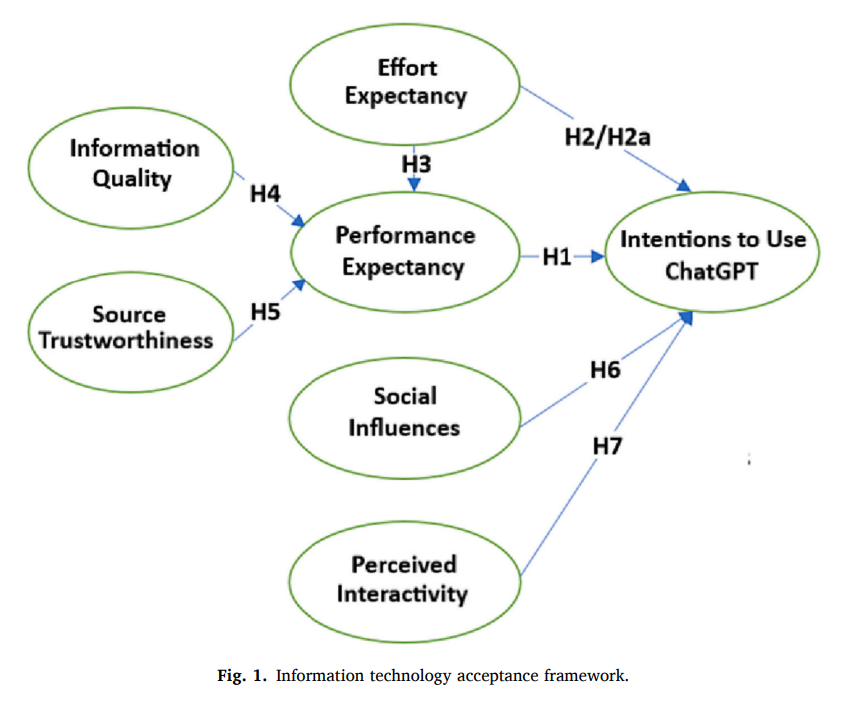
This study hypothesizes that information quality and source trustworthiness are significant antecedents of performance expectancy. It presumes that this latter construct, together with effort expectancy, social influences as well as perceived interactivity affect the online users’ acceptance and usage of generative pre-trained AI chatbots like GPT-3.5 or GPT-4.
Notwithstanding, for the time being, there is still scant research that is focused on AI-powered LLM, like ChatGPT, that are capable of generating human-like text that is based on previous contexts and drawn from past conversations. This timely study raises awareness on the individuals’ perceptions about the utilitarian value of such interactive technologies, in an academic (higher educational) context. It clearly identifies the factors that are influencing the individuals’ intentions to continue using them, in the future.
From the literature review
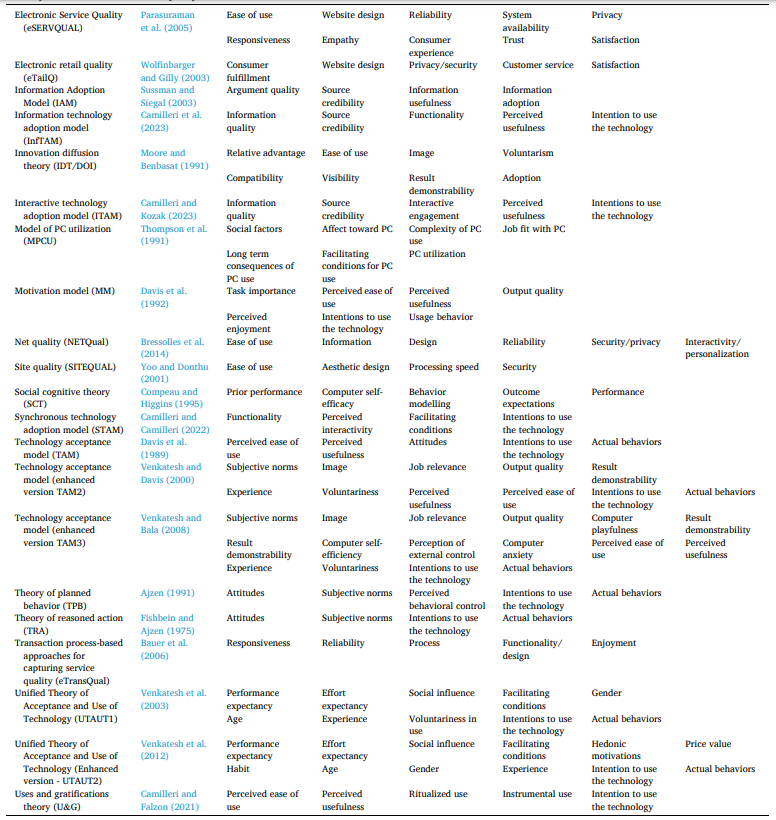
Table 1 features a summary of the most popular theoretical frameworks that sought to identify the antecedents and the extent to which they may affect the individuals’ intentions to use information technologies.
Table 1. A non-exhaustive list of theoretical frameworks focused on (information) technology adoption behaviors
Figure 1. features the conceptual framework that investigates information technology adoption factors. It represents a visual illustration of the hypotheses of this study. In sum, this empirical research presumes that information quality and source trustworthiness (from Information Adoption Model) precede performance expectancy. The latter construct together with effort expectancy, social influences (from Unified Theory of Acceptance and Use of Technology) as well as the perceived interactivity construct, are significant antecedents of the individuals’ intentions to use ChatGPT.
The survey instrument
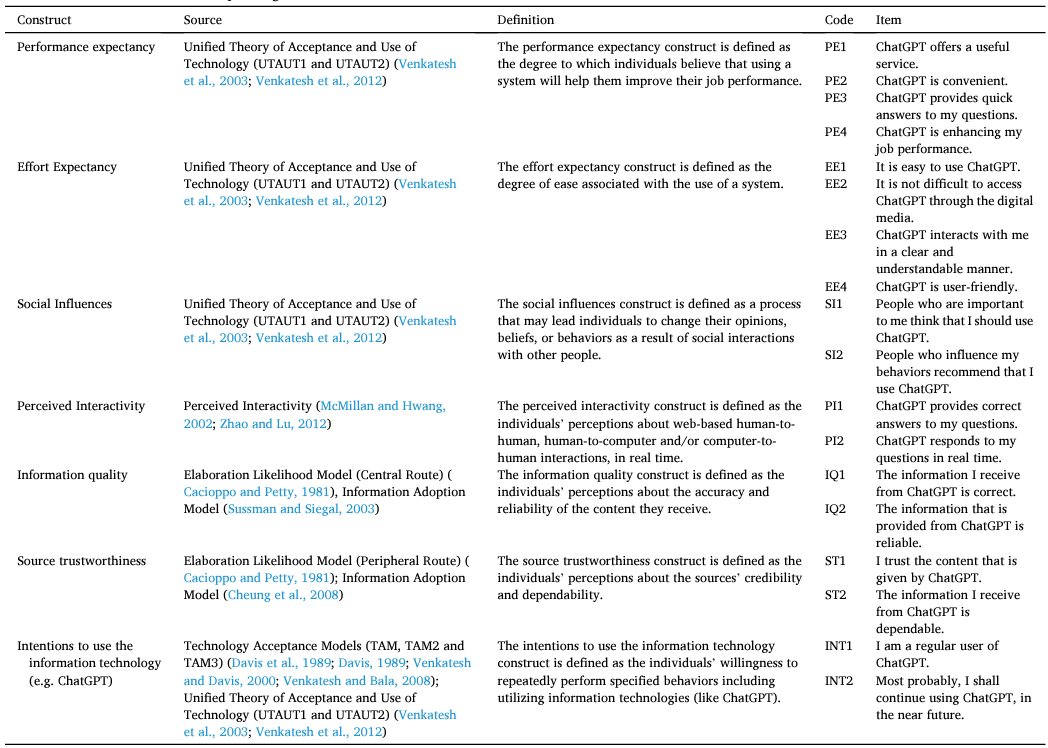
The respondents were instructed to answer all survey questions that were presented to them about information quality, source trustworthiness, performance expectancy, effort expectancy, social influences, perceived interactivity and on their behavioral intentions to continue using this technology (otherwise, they could not submit the questionnaire). Table 2 features the list of measures as well as their corresponding items that were utilized in this study. It also provides a definition of the constructs used in the proposed information technology acceptance framework.
Table 2. The list of measures and the corresponding items used in this research.
Theoretical implications
This research sought to explore the factors that are affecting the individuals’ intentions to use ChatGPT. It examined the online users’ effort and performance expectancy, social influences as well as their perceptions about the information quality, source trustworthiness and interactivity of generative text AI chatbots. The empirical investigation hypothesized that performance expectancy, effort expectancy and social influences from Venkatesh et al.’s (2003) UTAUT together with a perceived interactivity construct (McMillan and Hwang, 2002) were significant antecedents of their intentions to revisit ChatGPT’s website and/or to use its app. Moreover, it presumed that information quality and source trustworthiness measures from Sussman and Siegal’s (2003) IAM were found to be the precursors of performance expectancy.
The results from this study report that source trustworthiness-performance expectancy is the most significant path in this research model. They confirm that online users indicated that they believed that there is a connection between the source’s trustworthiness in terms of its dependability, and the degree to which they believe that using such an AI generative system will help them improve their job performance. Similar effects were also evidenced in previous IAM theoretical frameworks (Kang and Namkung, 2019; Onofrei et al., 2022), as well as in a number of studies related to TAM (Assaker, 2020; Chen and Aklikokou, 2020; Shahzad et al., 2018) and/or to UTAUT/UTAUT2 (Lallmahomed et al., 2017).
In addition, this research also reports that the users’ peceptions about information quality significantly affects their performance expectancy/expectancies from ChatGPT. Yet, in this case, this link was weaker than the former, thus implying that the respondents’ perceptions about the usefulness of this text generative technology were clearly influenced by the peripheral cues of communication (Cacioppo and Petty, 1981; Shi et al., 2018; Sussman and Siegal, 2003; Tien et al., 2019).
Very often, academic colleagues noted that individuals would probably rely on the information that is presented to them, if they perceive that the sources and/or their content are trustworthy (Bingham et al., 2019; John and De’Villiers, 2020; Winter, 2020). Frequently, they indicated that source trustworthiness would likely affect their beliefs about the usefulness of information technologies, as they enable them to enhance their performance. Conversely, some commentators argued that there may be users that could be skeptical and wary about using new technologies, especially if they are unfamiliar with them (Shankar et al., 2021). They noted that such individuals may be concerned about the reliability and trustworthiness of the latest technologies.
The findings suggest that the individuals’ perceptions about the interactivity of ChatGPT are a precursor of their intentions to use it. This link is also highly significant. Therefore, the online users were somehow appreciating this information technology’s responsiveness to their prompts (in terms of its computer-human communications). Evidently, ChatGPT’s interactivity attributes are having an impact on the individuals’ readiness to engage with it, and to seek answers to their questions. Similar results were reported in other studies that analyzed how the interactivity and anthropomorphic features of dialogue systems like live support chatbots, or virtual assistants can influence the online users’ willingness to continue utilizing them in the future (Baabdullah et al., 2022; Balakrishnan et al., 2022; Brachten et al., 2021; Liew et al., 2017).
There are a number of academic contributions that sought to explore how, why, where and when individuals are lured by interactive communication technologies (e.g. Hari et al., 2022; Li et al., 2021; Lou et al., 2022). Generally, these researchers posited that users are habituated with information systems that are programed to engage with them in a dynamic and responsive manner. Very often they indicated that many individuals are favorably disposed to use dialogue systems that are capable of providing them with instant feedback and personalized content. Several colleagues suggest that positive user experiences as well as high satisfaction levels and enjoyment, could enhance their connection with information technologies, and will probably motivate them to continue using them in the future (Ashfaq et al., 2020; Camilleri and Falzon, 2021; Huang and Chueh, 2021; Wolfinbarger and Gilly, 2003).
Another important finding from this research is that the individuals’ social influences (from family, friends or colleagues) are affecting their interactions with ChatGPT. Again, this causal path is also very significant. Similar results were also reported in UTAUT/UTAUT2 studies that are focused on the link between social influences and its link with intentional behaviors to use technologies (Gursoy et al., 2019; Patil et al., 2020). In addition, TPB/TRA researchers found that subjective norms also predict behavioral intentions (Driediger and Bhatiasevi, 2019; Sohn and Kwon, 2020). This is in stark contract with other studies that reported that there was no significant relationship between social influences/subjective norms and behavioral intentions (Ho et al., 2020; Kamble et al., 2019).
Interestingly, the results report that there are highly significant effects between effort expectancy (i.e. ease of use of the generative AI technology) and performance expectancy (i.e. its perceived usefulness). Many scholars posit that perceived ease of use is a significant driver of perceived usefulness of technology (Bressolles et al., 2014; Davis, 1989; Davis et al., 1989; Kamble et al., 2019; Yoo and Donthu, 2001). Furthermore, there are significant causal paths between performance expectancy-intentions to use ChatGPT and even between effort expectancy-intentions to use ChatGPT, albeit to a lesser extent. Yet, this research indicates that performance expectancy partially mediates effort expectancy-intentions to use ChatGPT. In this case, this link is highly significant.
In sum, this contribution validates key information technology measures, specifically, performance expectancy, effort expectancy, social influences and behavioral intentions from UTAUT/UTAUT2, as well as information quality and source trustworthiness from ELM/IAM and integrates them with a perceived interactivity factor. It builds on previous theoretical underpinnings. Yet, it differentiates itself from previous studies. To date, there are no other empirical investigations that have combined the same constructs that are presented in this article. Notwithstanding, this research puts forward a robust Information Technology Acceptance Framework. The results confirm the reliability and validity of the measures. They clearly outline the relative strength and significance of the causal paths that are predicting the individuals’ intentions to use ChatGPT.
Managerial implications
This empirical study provides a snapshot on the online users’ perceptions about ChatGPT’s responses to verbal queries, and sheds light on their dispositions to avail themselves from its natural language processing. It explores their performance expectations about their usefulness and their effort expectations related to the ease of use of these information technologies and investigates whether they are affected by colleagues or by other social influences to use such dialogue systems. Moreover, it examines their insights about the content quality, source trustworthiness as well as on the interactivity features of these text- generative AI models.
Generally, the results suggest that the research participants felt thatthese algorithms are easy to use. The findings indicate that they consider them to be useful too, specifically when the information they generate is trustworthy and dependable. The respondents suggest that they are concerned about the quality and accuracy of the content that is featured in the AI chatbots’ answers. This contingent issue can have a negative effect on the use of the information that is created by online dialogue systems.
OpenAI’s ChatGPT is a case in point. Its app is freely available in many countries, via desktop and mobile technologies including iOS and Android. The company admits that its GPT-3.5 outputs may be inaccurate, untruthful, and misleading at times. It clarifies that its algorithm is not connected to the internet, and that it can occasionally produce incorrect answers (OpenAI, 2023a). It posits that GPT-3.5 has limited knowledge of the world and events after 2021 and may also occasionally produce harmful instructions or biased content. OpenAI recommends checking whether its chatbot’s responses are accurate or not, and to let them know when and if it answers in an incorrect manner, by using their “Thumbs Down” button. They even declare that their ChatGPT’s Help Center can occasionally make up facts or “hallucinate” outputs (OpenAI, 2023a,b).
OpenAI reports that its top notch ChatGPT Plus subscribers can access safer and more useful responses. In this case, users can avail themselves from a number of beta plugins and resources that can offer a wide range of capabilities including text-to-speech applications as well as web browsing features through Bing. Yet again, OpenAI (2023b) indicates that its GPT-4 still has many known limitations that the company is working to address, such as “social biases and adversarial prompts” (at the time of writing this article). Evidently, works are still in progress at OpenAI. The company needs to resolve these serious issues, considering that its Content Policy and Terms clearly stipulate that OpenAI’s consumers are the owners of the output that is created by ChatGPT. Hence, ChatGPT’s users have the right to reprint, sell, and merchandise the content that is generated for them through OpenAI’s platforms, regardless of whether the output (its response) was provided via a free or a paid plan.
Various commentators are increasingly raising awareness about the corporate digital responsibilities of those involved in the research, development and maintenance of such dialogue systems. A number of stakeholders, particularly the regulatory ones, are concerned on possible risks and perils arising from AI algorithms including interactive chatbots. In many cases, they are warning that disruptive chatbots could disseminate misinformation,foster prejudice, bias and discrimination, raise privacy concerns, and could lead to the loss of jobs. Arguably, one has to bear in mind that, in many cases, many governments are outpaced by the proliferation of technological innovations (as their development happens before the enactment of legislation). As a result, they tend to be reactive in the implementation of substantive regulatory interventions. This research reported that the development of ChatGPT has resulted in mixed reactions among different stakeholders in society, especially during the first months after its official launch. At the moment, there are just a few jurisdictions that have formalized policies and governance frameworks that are meant to protect and safeguard individuals and entities from possible risks and dangers of AI technologies (Camilleri, 2023). Of course, voluntary principles and guidelines are a step in the right direction. However, policy makers are expected by various stakeholders to step-up their commitment by introducing quasi-regulations and legislation.
Currently, a number of technology conglomerates including Microsoft-backed OpenAI, Apple and IBM, among others, anticipated the governments’ regulations by joining forces in a non-profit organization entitled, “Partnership for AI” that aims to advance safe, responsible AI, that is rooted in open innovation. In addition, IBM has also teamed up with Meta and other companies, startups, universities, research and government organizations, as well as non-profit foundations to form an “AI Alliance”, that is intended to foster innovations across all aspects of AI technology, applications and governance.


 V
V I would like to thank my colleagues (and co-authors), namely, Hari Babu Singu, Debarun Chakraborty, Ciro Troise and Stefano Bresciani, for involving me in this meaningful research collaboration. It’s been a real pleasure working with you on this topic!



You must be logged in to post a comment.