
Tag Archives: Education

Re-conceiving Corporate Sustainability and Responsibility for Education

employees

(This contribution also appeared on CSRwire)

During their learning journey, individuals acquire knowledge and skills that ought to be relevant for their prospective employment. The provision of their education is the responsibility of national governments. Yet, business and industry seldom offer continuous professional development and training to their human resources that supplement formal education (although they are rarely involved in setting outcomes of curriculum programmes). Very often, companies have to respond to challenging issues such as skill mismatches where candidates lack certain competencies that may be too deep to bridge through corporate training courses. Perhaps, global businesses may compensate to a certain extent as they can shift their operations elsewhere to tap more qualified employees. However, the constraints on their growth can be halted by the broad impact of inadequate education and training in some industries or regions. Therefore, corporations may possibly become a key player in addressing unmet needs in education. Several companies have the resources and the political influence to help improve educational outcomes which will in turn help them to nurture local talent. Leading businesses are already devising Corporate Sustainability and Responsibility (CSR) programmes that are actively supporting education across many contexts:

For instance; Cisco (a provider of networking equipment), has created more than 10,000 networking academies in 165 countries. 4.75 million individuals have improved their employment prospects as they attended training to become network administrators. At the same time, these individuals have increased the demand for Cisco’s equipment. Similarly, SAP and Verizon have often partnered with local universities and education institutions in order to deliver courses, career coaching and customised degrees on site for employees. The companies have discovered that employees that pursue such programmes are more likely to remain loyal to their company. Naturally, it is in the interest of employees to attend educational programmes that may ultimately lead to their career progression and better prospects. Moreover, continuous professional development and training may considerably reduce high employee turnover. Interestingly, SAP employs people with autism in technology-focused roles. In doing so, SAP concentrates on these individuals’ unique strengths. This way, the company can gain access to a wider pool of untapped talent that will help to foster a climate of creativity and innovation. In a similar vein, Intel has also invested in training programmes and partnerships that strengthen education. The company has recognised that its business growth is constrained by a chronic shortage of talent in science, technology, engineering, and maths (STEM) disciplines. Through programmes like Intel Math and Intel Teach, the global multinational has delivered instructional materials, online resources, and professional development tools for hundreds of thousands of educators across the United States. The students’ have acquired STEM and other 21st century skills, including critical thinking with data as well as scientific inquiry. This is a relevant example of a corporate business that has successfully addressed its workforce needs. Intel has recognised specific skill gaps in its central areas like technology and engineering. Accordingly, the company has committed itself for further investment in education. The company has created higher education curricula in demand areas like microelectronics, nanotechnology, security systems and entrepreneurship. Undoubtedly, Intel’s efforts affected millions of US students. At the same time, the company has increased its productivity and competitiveness. In addition, there are many big businesses that contribute in stewardship, charitable and philanthropic causes. In the past, the GE Foundation has supported systemic improvements in urban school districts that were close to GE’s business. These investments have surely helped to close the interplay between corporate sustainability and responsibility (CSR) and corporate philanthropy, while strengthening GE’s long-term talent pipeline.

In a nutshell, this contribution redefines the private sector’s role in the realms of education. It posits that there are win-win opportunities for companies and national governments as they cultivate human capital. Indeed, companies can create synergistic value for both business and society. In the main, such a strategic approach can result in new business models and cross-sector collaborations that will inevitably lead to operational efficiencies, cost savings and significant improvements to the firms’ bottom lines. Notwithstanding, the businesses’ involvement in setting curricula may also help to improve the effectiveness of education systems in many contexts. Businesses can become key stakeholders in this regard. Their CSR programmes can reconnect their economic success with societal progress.
Leave a comment

Filed under Corporate Sustainability and Responsibility, Education, Marketing

How Education brings Social Cohesion and Economic Growth?

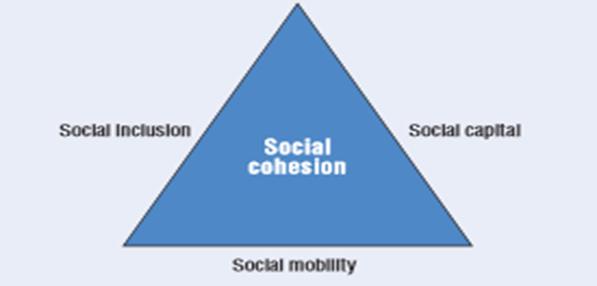
Who would argue against lifting people out of poverty? Today, education transcends curriculum programmes. It provides opportunities for social mobility as individuals are rewarded according to their merit.Interventions in the realms of education may play a significant role in shaping key performance indicators for social outcomes. This short contribution suggests that education may create a fair, just and equitable society for all. Thus, the notion of social cohesion and its constituent elements; social inclusion, social capital and social mobility are some of the concepts which are increasingly being addressed by stakeholders in education.

With better education there may be implications for economic growth, job creation and competitiveness (OECD, 2009). The Ministry of Education and Employment together with the University of Malta and other vocational institutions have always strived in their endeavours to address skill gaps (and mismatches) in the labour market. A lot of discourse has been made about how Malta’s productivity and competitiveness may be improved through active labour market policies and initiatives. For instance, more participation of women in the job market, flexible working arrangements, the provision and affordability of child-care facilities as well as out-of-school centres may possibly help to bring more social cohesion and a better living for all members of society. In addition, lifelong learning and employment opportunities are also vital elements of any social cohesion agenda. Through education and training, individuals will acquire knowledge and cultivate skills and competences which are relevant to their employers. Consequently, educational outcomes will influence social inclusion, social mobility and social capital as illustrated hereunder in Figure 1.

sc

Figure 1: The Components of Social Cohesion (OECD, 2011)

The schooling experience itself impacts social cohesion as it shapes and transmits common values that underpin social capital and inclusion. Education has the potential to bring social cohesion through civic and societal engagement. To my mind, how children are schooled may impact on their sense of belonging to a society. It is important to realise that certain instruments that reduce opportunity costs of continued education can possibly improve student attainment levels. Young adolescents who leave education and training prematurely will lack the necessary skills and qualifications which are essential for their employment prospects. It may appear that, Malta is responding to the contentious issue of early school leaving (ESL) through the provision of ongoing training schemes as well as employer incentives. The Employment and Training Corporation is also using the European Union’s Training Aid Framework (TAF) which is co-funded through the European Social Fund to strengthen the employability prospects of the Maltese work force. In a nutshell, this programme sponsors students, employees and unemployed individuals to train themselves in areas which are required by the labour market. The Ministry of Education and Employment has always been committed to increase the number of students in higher education. Interestingly, Malta’s National Reform Programme under the Europe 2020 Strategy has yielded some preventative measures against ESL, including; the implementation of the “National Curriculum Framework”; the provision of more opportunities for vocational education and training (VET) in compulsory education; the strengthening of the existent “Validation of Informal” and “Non-formal Learning” as well as the development of new forms of teaching and learning, such as “e-Learning”. This programme posits that intervention measures include; a review of extant measures with a focus on school, parent, teacher collaboration, the development of a multi-stakeholder approach to address the needs of particular groups of students at risk of ESL and the further strengthening of guidance throughout compulsory education. As a result, this reform programme has set clear and measurable targets in this regard, as it emphasised the importance of effective delivery and visible results. Apparently, stakeholders in education are committed to taking steps to improve the provision of training, skills and qualifications. Year after year, the smallest EU state is raising the quality of its education and training systems to encourage a greater participation of its workforce in the labour market.

Malta has recognised the importance of reducing its number of unqualified school leavers. Lifelong learning, ongoing training opportunities and continuous professional development can offer valuable support to more vulnerable people. Measures including; better access to childcare, more flexible working schemes and employer incentives are surely helping individuals, particularly women to return to work. This short contribution suggests that the pursuit towards continuous improvement in educational scale and social progress can create a virtuous cycle of productivity outcomes and economic growth.

Leave a comment

Filed under Education, Social Cohesion

Embedding Formative Assessments in Curriculum Frameworks

assessment

Educators who regularly engage in student-oriented approaches will inevitably need to adapt to different pupils’ needs, abilities, interests and learning styles. Nowadays there is adequate and sufficient evidence which suggests that educators who supplement or replace lectures with active learning strategies are improving their students’ learning and knowledge retention. At the same time, the students will become motivated as they participate in the discovery and scientific processes. Recent, academic studies have shown that educators are increasingly resorting to student-centred assessment approaches, including: Active Learning, Collaborative Learning, Inquiry-based Learning, Cooperative Learning, Problem-based Learning, Peer Led Team Learning, Team-based Learning and Peer Instruction among other methodologies. Therefore, educators are expected to identify their students’ learning needs and respond to them. Yet, they should also measure the progress of their pupils in their learning journey. This article maintains that (summative) assessments are a classic way of measuring student progress. Assessments are integral to the schools’ quality assurance, syllabi and curriculum programmes. In a similar way, such forms of tracking individuals’ performance and their progress are also applied in workplace environments by many employers. However this is only part of the story. To be truly meaningful and effective, assessments should also be “formative”. Educators may use tools and activities which are embedded in the on-going curriculum to garner students’ feedback at key points in the learning process.

Interestingly, educators are moving away from the conventional teacher-centred methodologies as they are enhancing their interaction with students. Formative assessments respond to the pupils’ individual learning needs as the educators are making frequent, appraisals of their students’ understanding. This enables them to adapt their teaching to meet the students’ requirements, and to better help everyone reach high standards of excellence. Educators ought to involve their students in their learning journey. This helps them to develop key knowledge, skills and competences that enable their intellectual growth. Nevertheless, although the educators seem to be incorporating various aspects of formative assessment into their teaching, it is less common to find it practiced in a systematic manner. Formative assessments are often present within individual teachers’ frameworks. It may appear that some of the emerging educational approaches are setting up learning situations as students’ are guided toward their learning goals. These approaches seem to be re-defining student success. To my mind, formative assessments are highly effective in raising the level of student attainment, as they are likely to increase the equity of student outcomes.  Formative assessments entice the students’ curiosity in the subject, as well as improving the students’ ability and aptitude to learn. Such student-centred methodologies emphasise the process of teaching and learning, as they involve students in their own educational process. It also builds students’ skills during peer and self-assessments, and help them develop a range of effective learning strategies. Students who are actively involved in building their understanding of new concepts (rather than merely absorbing information) and who are learning to judge their own quality and of their peers – are developing invaluable skills for lifelong learning. As a proponent of active learning my formative assessment strategies often feature role-playing, debating, student engagement in case studies, active participation in cooperative learning and the like. Such teaching approaches can be utilised to create a context of material, where learners work collaboratively. Needless to say, the degree of my involvement while students are being “active” may vary according to the specific task and its context in a teaching unit. Of course, there are different approaches to gauge students’ comprehension of what has been taught. A non-exhaustive list of formative assessment strategies can include:

  • Questioning strategies: During classroom interactions, students may be asked challenging questions. Questions often reveal student misconceptions. Questions can be embedded in lesson plans. Asking questions often gives me an opportunity for deeper thinking and provides me with significant insights into the degree and depth of student understanding. Questions will inevitably engage students in classroom dialogue that both uncovers and expands learning.
  • Criteria and goal setting: Students need to understand and know the learning targets / goals and the criteria for reaching them. Establishing and defining quality work together, asking students to participate in establishing norms and behaviours for classroom culture, and determining what should be included in criteria for success are all examples of such a strategy. Using student work, classroom tests, or exemplars of what is expected will help students understand where they are, where they need to be, and an effective process for getting there.
  • Observations assist teachers in gathering evidence of student learning to inform instructional planning. This evidence can be recorded and used as constructive feedback for students about their learning curve.
  • Self and peer assessments help to create a learning community within a classroom. Students will learn as they are engaged in metacognitive thinking. When students are involved in criteria and goal setting, self-evaluation is a logical step forward in the learning process. With peer evaluation, students see each other as valuable resources for checking each other’s quality work against previously established criteria.
  • Student record keeping helps students better understand their own learning as evidenced by their classroom work. This process of students keeping on-going records of their work will help reflect on their learning journey, as they examine the progress they are making toward their learning goals.
  • Portfolios, logbooks and rubrics: These instruments are widely used to provide an opportunity for written dialogues with students. Such tools help educators to evaluate the quality of their students’ work. On the other hand, students will use rubrics to judge their own work, and improve upon it.

Without doubt, there may be still some perceived tensions among stakeholders about formative assessments and summative tests. Education institutions have to be accountable for student achievement. They guide students to satisfy the requirements of their curriculum programmes. There may be a lack of consistency and coherence in policies between assessments and evaluations at both the institutional and classroom levels.  And there are different attitudes among educators about formative assessments. Perhaps, on-going assessments may be considered too resource-intensive and time-consuming to be practical. Educators are often faced with extensive curriculum and reporting requirements as they are often teaching to larger classes.

The right assessment systems foster constructive cultures of evaluation. Formative assessments are likely to help in promoting reforms for student-centred education. Ideally, information gathered through assessments and evaluation processes can be used to shape strategies for continuous improvement at each level of our education system. In classrooms, educators can possibly gather information on student understanding. Consequentially, this enables them to adjust their instruction to meet students’ identified learning needs. In conclusion, this contribution suggests that the locus of emerging educational strategies is pushing toward a proactive engagement in student-centred learning theories, where the student is placed at the very centre of the educator’s realms.

Also featured on the Times of Malta on the 27th October 2013.

Dr Mark Anthony Camilleri lectures at the University of Malta.

Leave a comment

Filed under Uncategorized

Economic Growth Correlates with Investment in Education

index

TimesofMalta.com

Now more than ever, today’s employees need to possess adequate skills and knowledge to enable them to perform a wider range of tasks and functions within their organisational contexts. The labour market has to become flexible and adaptable to the continuously changing market environment. Moreover, the educational institutions’ investments in curriculum development will help to provide incentives for individuals to commit resources to their careers. Many academic studies have shown that economic growth is increasingly correlated to the effectiveness of the countries’ educational policies and their related curriculum development programmes (OECD, 2012). Educators should ensure that their policies, systems and reforms contribute to the supply of well-skilled people for the labour market. Prospective students of continuous professional development programmes and of higher education courses may be new entrants (school leavers), people continuing to expand their existing knowledge and skills in their workplace or job seekers registering for employment. On the other hand, lower social capital investments can impact on a country’s economic growth prospects as well as on its productivity levels and competitiveness. This may translate in serious negative effects for the individual’s well-being as well as for the cohesiveness of society.

For instance, entrepreneurship programmes in post-secondary or tertiary institutions are usually based on multiple-skills approaches. Students who follow such courses acquire key competences in creativity, innovation as they enhance their business acumen. In addition, they usually develop their social skills, particularly if they work in groups. Students can learn how to work collaboratively in a team environment. Educators should try to adopt student-centred approaches, including case studies, active participation in cooperative learning, exercises such as role-playing, debating, and the like. In fact, assessments of entrepreneurship studies may also involve the delivery of a sales pitch and the drawing-up of a business plan. Both of these tasks can be carried out in groups of three or four students. Ideally, students should also demonstrate their written communications skills. They may be required to produce media releases which feature their unique selling proposition(s) to their chosen markets. Such methodologies may possibly entice students’ curiosity and motivation in the subject. In the process, the students will also learn how to work in tandem as they develop their interpersonal skills.

0511-0902-1815-5717_Group_of_Business_People_at_a_Think_Tank_Meeting_clipart_image.jpg 

In a similar vein, successful entrepreneurs also have to work closely with people. Perhaps, it is critical for business owners (including micro-enterprises) to foster great relationships with employees, customers, suppliers, shareholders, investors and more. It goes without saying that some individuals may exhibit higher interpersonal traits than others, but others can learn and improve upon their existing skills. As prospective entrepreneurs, the students are expected to come up with fresh, innovative ideas, and make good decisions in their projects. Arguably, creativity, problem solving and recognising opportunities in the marketplace are some of the specific skills that may be acquired. However, it is important that the students’ decisions are based on relevant market research. The entrepreneurship programme will have to provide practical skills and knowledge to enable the student to produce effective goods or services in a profitable manner. One of the learning outcomes of this subject is to help students to set their goals and to create good plans to achieve them. Afterwards, the students can proceed with the organisation, leadership and implementation of their project. The students’ multi-skills will help them leverage themselves and to achieve a competitive advantage over others.


The theoretical aspect of the entrepreneurship studies teaches students how to develop coherent, well thought-through business plans. The students acquire sufficient knowledge of the main functional areas of business (sales, marketing, finance, and operations). In addition, the students are taught how entrepreneurs raise their capital. They will also learn about financial projections and how to determine the break-even point of their projects.


Indeed, the entrepreneurship studies focus on developing the students’ potential skills. Throughout such pragmatic educational programmes, the students will have to use their abilities and talents to operate resources or to manage others with a reasonable degree of confidence and motivation.  The students who are successful in their entrepreneurship studies nurture their skills, knowledge and competences. This contribution suggests that multi-skilling approaches in education can bring increased competitiveness and productivity in the labour market.

Leave a comment

Filed under Uncategorized