Tag Archives: artificial intelligence

An artificial intelligence governance framework

This is an excerpt from my latest contribution on responsible artificial intelligence (AI).

Suggested citation: Camilleri, M. A. (2023). Artificial intelligence governance: Ethical considerations and implications for socialresponsibility. Expert Systems, e13406. https://doi.org/10.1111/exsy.13406

The term “artificial intelligence governance” or “AI governance” integrates the notions of “AI” and “corporate governance”. AI governance is based on formal rules (including legislative acts and binding regulations) as well as on voluntary principles that are intended to guide practitioners in their research, development and maintenance of AI systems (Butcher & Beridze, 2019; Gonzalez et al., 2020). Essentially, it represents a regulatory framework that can support AI practitioners in their strategy formulation and in day-to-day operations (Erdélyi & Goldsmith, 2022; Mullins et al., 2021; Schneider et al., 2022). The rationale behind responsible AI governance is to ensure that automated systems including ML/DL technologies, are supporting individuals and organizations in achieving their long terms objectives, whist safeguarding the interests of all stakeholders (Corea et al., 2023; Hickok et al., 2022).

AI governance requires that the organizational leaders comply with relevant legislation, hard laws and regulations (Mäntymäki et al., 2022). Moreover, they are expected to follow ethical norms, values and standards (Koniakou, 2023). Practitioners ought to be trustworthy, diligent and accountable in how they handle their intellectual capital and other resources including their information technologies, finances as well as members of staff, in order to overcome challenges, minimize uncertainties, risks and any negative repercussions (E.g. decreased human oversight in decision making, among others) (Agbese et al., 2023; Smuha, 2019).

Procedural governance mechanisms ought to be in place to ensure that AI technologies and ML/DL models are operating in a responsible manner. Figure 1 features some of the key elements that are required for the responsible governance of artificial intelligence. The following principles are aimed to provide guidelines for the modus operandi of AI practitioners (including ML/DL developers).

Figure 1. A Responsible Artificial Intelligence Governance Framework

Accountability and transparency

“Accountability” refers to the stakeholders’ expectations about the proper functioning of AI systems, in all stages, including in the design, creation, testing or deployment, in accordance with relevant regulatory frameworks. It is imperative that AI developers are held accountable for the smooth operation of AI systems throughout their lifecycle (Raji et al., 2020). Stakeholders expect them to be accountable by keeping a track record of their AI development processes (Mäntymäki et al., 2022).

The transparency notion refers to the extent to which end-users could be in a position to understand how AI systems work (Andrada et al., 2020; Hollanek, 2020). AI transparency is associated with the degree of comprehension about algorithmic models in terms of “simulatability” (an understanding of AI functioning), “decomposability” (related to how individual components work), and algorithmic transparency (this is associated to the algorithms’ visibility).

 In reality, it is difficult to understand how AI systems, including deep learning models and their neural networks are learning (as they acquire, process and store data) during training phases. They are often considered as black box models. It may prove hard to algorithmically translate derived concepts into human-understandable terms, even though developers may use certain jargon to explain their models’ attributes and features. Many legislators are striving in their endeavors to pressurize AI actors to describe the algorithms they use in automated decision-making, yet the publication of algorithms is useless if outsiders cannot access the data of the AI model.

Explainability and interpretability

Explainability is the concept that sheds light on how AI models work, in a way that is comprehensible to a human being. Arguably, the explainabilty of AI systems could improve their transparency, trustworthiness and accountability. At the same time, it can reduce bias and unfairness. The explainability of artificial intelligence systems could clarify how they reached their decisions (Arya et al., 2019; Keller & Drake, 2021). For instance, AI could explain how and why autonomous cars decide to stop or to slow down when there are pedestrians or other vehicles in front of them.

Explainable AI systems might improve consumer trust and may enable engineers to develop other AI models, as they are in a position to track provenance of every process, to ensure reproducibility, and to enable checks and balances (Schneider et al., 2022). Similarly, interpretability refers to the level of accuracy of machine learning programs in terms of linking the causes to the effects (John-Mathews, 2022).

Fairness and inclusiveness

The responsible AI’s fairness dimension refers to the practitioners’ attempts to correct algorithmic biases that may possibly (voluntarily or involuntarily) be included in their automation processes (Bellamy et al., 2019; Mäntymäki, et al., 2022). AI systems can be affected by their developers’ biases that could include preferences or antipathies toward specific demographic variables like genders, age groups and ethnicities, among others (Madaio et al., 2020). Currently, there is no universal definition on AI fairness.

However, recently many multinational corporations have developed instruments that are intended to detect bias and to reduce it as much as possible (John-Mathews et al., 2022). In many cases, AI systems are learning from the data that is fed to them. If the data are skewed and/or if they comprise implicit bias into them, they may result in inappropriate outputs.

Fair AI systems rely on unbiased data (Wu et al., 2020). For this reason, many companies including Facebook, Google, IBM and Microsoft, among others are striving in their endeavors to involve members of staff hailing from diverse backgrounds. These technology conglomerates are trying to become as inclusive and as culturally aware as possible in order to minimize bias from affecting their AI processes. Previous research reported that AI’s bias may result in inequality, discrimination and in the loss of jobs (Butcher & Beridze, 2019).

Privacy and safety for consumers

Consumers are increasingly concerned about the privacy of their data. They have a right to control who has access to their personal information. The data that is collected or used by third parties, without the authorization or voluntary consent of individuals, would result in the violations of their privacy (Zhu et al., 2020; Wu et al., 2022).

AI-enabled products, including dialogue systems like chatbots and virtual assistants, as well as digital assistants (e.g. like Siri, Alexa or Cortana), and/or wearable technologies such as smart watches and sensorial smart socks, among others, are increasingly capturing and storing large quantities of consumer information. The benefits that are delivering these interactive technologies may be offset by a number of challenges. The technology businesses who developed these products are responsible to protect their consumers’ personal data (Rodríguez-Barroso et al., 2020). Their devices are capable of holding a wide variety of information on their users. They are continuously gathering textual, visual, audio, verbal, and other sensory data from consumers. In many cases, the customers are not aware that they are sharing personal information to them.

For example, facial recognition technologies are increasingly being used in different contexts. They may be used by individuals to access websites and social media, in a secure manner and to even authorize their payments through banking and financial services applications. Employers may rely on such systems to track and monitor their employees’ attendance. Marketers can utilize such technologies to target digital advertisements to specific customers. Police and security departments may use them for their surveillance systems and to investigate criminal cases. The adoption of these technologies has often raised concerns about privacy and security issues. According to several data privacy laws that have been enacted in different jurisdictions, organizations are bound to inform users that they are gathering and storing their biometric data. The businesses that employ such technologies are not authorized to use their consumers’ data without their consent.

Companies are expected to communicate about their data privacy policies with their target audiences (Wong, 2020). They have to reassure consumers that the consented data they collect from them is protected and are bound to inform them that they may use their information to improve their customized services to them. The technology giants can reward their consumers to share sensitive information. They could offer them improved personalized services among other incentives, in return for their data. In addition, consumers may be allowed to access their own information and could be provided with more control (or other reasonable options) on how to manage their personal details.

The security and robustness of AI systems

AI algorithms are vulnerable to cyberattacks by malicious actors. Therefore, it is in the interest of AI developers to secure their automated systems and to ensure that they are robust enough against any risks and attempts to hack them (Gehr et al., 2018; Li et al., 2020).

The accessibility to AI models ought to be continuously monitored at all times during their development and deployment (Bertino et al., 2021). There may be instances when AI models could encounter incidental adversities, leading to the corruption of data. Alternatively, they might encounter intentional adversities when they experience sabotage from hackers. In both cases, the AI model will be compromised and can result in system malfunctions (Papagiannidis et al., 2023).

AI models have to prevent such contingent issues from happening. Their developers’ responsibilities are to improve the robustness of their automated systems, and to make them as secure of possible, to reduce the chances of threats, including by inadvertent irregularities, information leakages, as well as by privacy violations like data breaches, contamination and poisoning by malicious actors (Agbese et al., 2023; Hamon et al., 2020).

AI developers should have preventive policies and measures related to the monitoring and control of their data. They ought to invest in security technologies including authentication and/or access systems with encryption software as well as firewalls for their protection against cyberattacks. Routine testing can increase data protection, improve security levels and minimize the risks of incidents.

Conclusions

This review indicates that more academics as well as practitioners, are increasingly devoting their attention to AI as they elaborate about its potential uses, as well as on its opportunities and threats. It reported that its proponents are raising awareness on the benefits of AI systems for individuals as well as for organizations. At the same time, it suggests that a number of scholars and other stakeholders including policy makers, are raising their concerns about its possible perils (e.g. Berente et al., 2021; Gonzalez et al., 2020; Zhang & Lu, 2021).

Many researchers identified some of the risks of AI (Li et al., 2021; Magas & Kiritsis, 2022). In many cases, they warned that AI could disseminate misinformation, foster prejudice, bias and discrimination, raise privacy concerns, and could lead to the loss of jobs (Butcher & Beridze, 2019). A few commentators argue about the “singularity” or the moment where machine learning technologies could even surpass human intelligence (Huang & Rust, 2022). They predict that a critical shift could occur if humans are no longer in a position to control AI anymore.

In this light, this article sought to explore the governance of AI. It sheds light on substantive regulations, as well as on reflexive principles and guidelines, that are intended at practitioners who are researching, testing, developing and implementing AI models. It clearly explains how institutions, non-governmental organizations and technology conglomerates are introducing protocols (including self-regulations) to prevent contingencies from even happening due to inappropriate AI governance.

Debatably, the voluntary or involuntary mishandling of automated systems can expose practitioners to operational disruptions and to significant risks including to their corporate image and reputation (Watts & Adriano, 2021). The nature of AI requires practitioners to develop guardrails to ensure that their algorithms work as they should (Bauer, 2022). It is imperative that businesses comply with relevant legislations and to follow ethical practices (Buhmann & Fieseler, 2023). Ultimately, it is in their interest to operate their company in a responsible manner, and to implement AI governance procedures. This way they can minimize unnecessary risks and safeguard the well-being of all stakeholders.

This contribution has addressed its underlying research objectives. Firstly, it raised awareness on AI governance frameworks that were developed by policy makers and other organizations, including by the businesses themselves. Secondly, it scrutinized the extant academic literature focused on AI governance and on the intersection of AI and CSR. Thirdly, it discussed about essential elements for the promotion of socially responsible behaviors and ethical dispositions of AI developers. In conclusion it put forward an AI governance conceptual model for practitioners.

This research made reference to regulatory instruments that are intended to govern AI expert systems. It reported that, at the moment there are a few jurisdictions that have formalized their AI policies and governance frameworks. Hence, this article urges laggard governments to plan, organize, design and implement regulatory instruments that ensure that individuals and entities are safe when they utilize AI systems for personal benefit, educational and/or for commercial purposes.

Arguably, one has to bear in mind that, in many cases, policy makers have to face a “pacing problem” as the proliferation of innovation is much quicker than legislation. As a result, governments tend to be reactive in the implementation of regulatory interventions relating to innovations. They may be unwilling to hold back the development of disruptive technologies from their societies. Notwithstanding, they may face criticism by a wide array of stakeholders in this regard, as they may have conflicting objectives and expectations.

The governments’ policy is to regulate business and industry to establish technical, safety and quality standards as well as to monitor their compliance. Yet, they may consider introducing different forms of regulation other than the traditional “command and control” mechanisms. They may opt for performance-based and/or market-based incentive approaches, co-regulation and self-regulation schemes, among others (Hepburn, 2009), in order to foster technological innovations.

This research has shown that a number of technology giants, including IBM and Microsoft, among others, are anticipating the regulatory interventions of different governments where they operate their businesses. It reported that they are communicating about their responsible AI governance initiatives as they share information on their policies and practices that are meant to certify, explain and audit their AI developments. Evidently, these companies, among others, are voluntarily self-regulating themselves as they promote accountability, fairness, privacy and robust AI systems. These two organizations, in particular, are raising awareness about their AI governance frameworks to increase their CSR credentials with stakeholders.

Likewise, AI developers who work for other businesses, are expected to forge relationships with external stakeholders including with policy makers as well as with actors including individuals and organizations who share similar interests in AI. Innovative clusters and network developments may result in better AI systems and can also decrease the chances of possible risks.  Indeed, practitioners can be in better position if they cooperate with stakeholders for the development of trustworthy AI and if they increase their human capacity to improve the quality of their intellectual properties (Camilleri et al., 2023). This way, they can enhance their competitiveness and growth prospects (Troise & Camilleri, 2021). Arguably, it is in their interest to continuously engage with internal stakeholders (and employees), and to educate them about AI governance dimensions, that are intended to promote accountable, transparent, explainable interpretable reproducible, fair, inclusive and secure AI solutions. Hence, they could maximize AI benefits, minimize their risks as well as associated costs.

Future research directions

Academic colleagues are invited to raise more awareness on AI governance mechanisms as well as on verification and monitoring instruments. They can investigate what, how, when and where protocols could be used to protect and safeguard individuals and entities from possible risks and dangers of AI.

The “what” question involves the identification of AI research and development processes that require regulatory or quasi regulatory instruments (in the absence of relevant legislation) and/or necessitate revisions in existing statutory frameworks.

The “how” question is related to the substance and form of AI regulations, in terms of their completeness, relevance, and accuracy. This argumentation is synonymous with the true and fair view concept applied in the accounting standards of financial statements.

The “when” question is concerned with the timeliness of the regulatory intervention. Policy makers ought to ensure that stringent rules do not hinder or delay the advancement of technological innovations.

The “where” question is meant to identify the context where mandatory regulations or the introduction of soft laws, including non-legally binding principles and guidelines are/are not required.

Future researchers are expected to investigate further these four questions in more depth and breadth. This research indicated that most contributions on AI governance were discursive in nature and/or involved literature reviews. Hence, there is scope for academic colleagues to conduct primary research activities and to utilize different research designs, methodologies and sampling frames to better understand the implications of planning, organizing, implementing and monitoring AI governance frameworks, in diverse contexts.

The full article is also available here: https://www.researchgate.net/publication/372412209_Artificial_intelligence_governance_Ethical_considerations_and_implications_for_social_responsibility

Leave a comment

Filed under artificial intelligence, chatbots, Corporate Social Responsibility, internet technologies, internet technologies and society

Live support by chatbots with artificial intelligence: A future research agenda

This is an excerpt from one of my latest contributions on the use of responsive chatbots by service businesses. The content was adapted for this blogpost.

Suggested citation: Camilleri, M.A. & Troise, C. (2022). Live support by chatbots with artificial intelligence: A future research agenda. Service Business, https://doi.org/10.1007/s11628-022-00513-9

(Credit: Chatbots Magazine)

The benefits of using chatbots for online customer services

Frequently, consumers are engaging with chatbot systems without even knowing, as machines (rather than human agents) are responding to online queries (Li et al. 2021; Pantano and Pizzi 2020; Seering et al. 2018; Stoeckli et al. 2020). Whilst 13% of online consumer queries require human intervention (as they may involve complex queries and complaints), more than 87 % of online consumer queries are handled by chatbots (Ngai et al., 2021).

Several studies reported that there are many advantages of using conversational chatbots for customer services. Their functional benefits include increased convenience to customers, enhanced operational efficiencies, reduced labor costs, and time-saving opportunities.

Consumers are increasingly availing themselves of these interactive technologies to retrieve detailed information from their product recommendation systems and/or to request their assistance to help them resolve technical issues. Alternatively, they use them to scrutinize their personal data. Hence, in many cases, customers are willing to share their sensitive information in exchange for a better service.

Although, these interactive technologies are less engaging than human agents, they can possibly elicit more disclosures from consumers. They are in a position to process the consumers’ personal data and to compare it with prior knowledge, without any human instruction. Chatbots can learn in a proactive manner from new sources of information to enrich their database.

Whilst human customer service agents may usually handle complex queries including complaints, service chatbots can improve the handling of routine consumer queries. They are capable of interacting with online users in two-way communications (to a certain extent). Their interactions may result in significant effects on consumer trust, satisfaction, and repurchase intentions, as well as on positive word-of-mouth publicity.

Many researchers reported that consumers are intrigued to communicate with anthropomorphized technologies as they invoke social responses and norms of reciprocity. Such conversational agents are programed with certain cues, features and attributes that are normally associated with humans.

The findings from this review clearly indicate that individuals feel comfortable using chatbots that simulate human interactions, particularly with those that have enhanced anthropomorphic designs. Many authors noted that the more chatbots respond to users in a natural, humanlike way, the easier it is for the business to convert visitors into customers, particularly if they improve their online experiences. This research indicates that there is scope for businesses to use conversational technologies to personalize interactions with online users, to build better relationships with them, to enhance consumer satisfaction levels, to generate leads as well as sales conversions.

The costs of using chatbots for online customer services

Despite the latest advances in the delivery of electronic services, there are still individuals who hold negative perceptions and attitudes towards the use of interactive technologies. Although AI technologies have been specifically created to foster co-creation between the service provider and the customer,

There are a number of challenges (like authenticity issues, cognition challenges, affective issues, functionality issues and integration conflicts) that may result in a failed service interaction and in dissatisfied customers. There are consumers, particularly the older ones, who do not feel comfortable interacting with artificially intelligent technologies like chatbots, or who may not want to comply with their requests, for different reasons. For example, they could be wary about cyber-security issues and/or may simply refuse to engage in conversations with a robot.

A few commentators contended that consumers should be informed when they are interacting with a machine. In many cases, online users may not be aware that they are engaging with elaborate AI systems that use cues such as names, avatars, and typing indicators that are intended to mimic human traits. Many researchers pointed out that consumers may or may not want to be serviced by chatbots.

A number of researchers argued that some chatbots are still not capable of communicative behaviors that are intended to enhance relational outcomes. For the time being, there are chatbot technologies that are not programed to answer to all of their customers’ queries (if they do not recognize the keywords that are used by the customers), or may not be quick enough to deal with multiple questions at the same time. Therefore, the quality of their conversations may be limited. Such automated technologies may not always be in a position to engage in non-linear conversations, especially when they have to go back and forth on a topic with online users.

Theoretical and practical implications

This contribution confirms that recently there is a growing interest among academia as well as by practitioners on research that is focused on the use of chatbots that can improve the businesses’ customer-centric services. It clarifies that various academic researchers have often relied on different theories including on the expectancy theory, or on the expectancy violation theory, the human computer interaction theory/human machine communication theory, the social presence theory, and/or on the social response theory, among others.

Currently, there are limited publications that integrated well-established conceptual bases (like those featured in the literature review), or that presented discursive contributions on this topic. Moreover, there are just a few review articles that capture, scrutinize and interpret the findings from previous theoretical underpinnings, about the use of responsive chatbots in service business settings. Therefore, this systematic review paper addresses this knowledge gap in the academic literature.

It clearly differentiates itself from mainstream research as it scrutinizes and synthesizes the findings from recent, high impact articles on this topic. It clearly identifies the most popular articles from Scopus and Web of Science, and advances a definition about anthropomorphic chatbots, artificial intelligence chatbots (or AI chatbots), conversational chatbot agents (or conversational entities, conversational interfaces, conversational recommender systems or dialogue systems), customer experience with chatbots, chatbot customer service, customer satisfaction with chatbots, customer value (or the customers’ perceived value) of chatbots, and on service robots (robot advisors). It discusses about the different attributes of conversational chatbots and sheds light on the benefits and costs of using interactive technologies to respond to online users’ queries.

In sum, the findings from this research reveal that there is a business case for online service providers to utilize AI chatbots. These conversational technologies could offer technical support to consumers and prospects, on various aspects, in real time, round the clock. Hence, service businesses could be in a position to reduce their labor costs as they would require fewer human agents to respond to their customers. Moreover, the use of interactive chatbot technologies could improve the efficiency and responsiveness of service delivery. Businesses could utilize AI dialogue systems to enhance their customer-centric services and to improve online experiences.  These service technologies can reduce the workload of human agents. The latter ones can dedicate their energies to resolve serious matters, including the handling of complaints and time-consuming cases.

On the other hand, this paper also discusses potential pitfalls. Currently, there are consumers who for some reason or another, are not comfortable interacting with automated chatbots. They may be reluctant to engage with advanced anthropomorphic systems that use avatars, even though, at times, they can mimic human communications relatively well.  Such individuals may still appreciate a human presence to resolve their service issues. They may perceive that interactive service technologies are emotionless and lack a sense of empathy.

Presently, chatbots can only respond to questions, keywords and phrases that they were programed to answer. Although they are useful in solving basic queries, their interactions with consumers are still limited. Their dialogue systems require periodic maintenance. Unlike human agents they cannot engage in in-depth conversations or deal with multiple queries, particularly if they are expected to go back and forth on a topic.

Most probably, these technical issues will be dealt with over time, as more advanced chatbots will be entering the market in the foreseeable future. It is likely that these AI technologies would possess improved capabilities and will be programmed with up-to-date information, to better serve future customers, to exceed their expectations.

Limitations and future research avenues

This research suggests that this area of study is gaining traction in academic circles, particularly in the last few years. In fact, it clarifies that there were four hundred twenty-one 421 publications on chatbots in business-related journals, up to December 2021. Four hundred fifteen (415) of them were published in the last 5 years. 

The systematic analysis that was presented in this research was focused on “chatbot(s)” or “chatterbot(s)”. Other academics may refer to them by using different synonyms like “artificial conversational entity (entities)”, “bot(s)”, “conversational avatar(s)”, “conversational interface agent”, “interactive agent(s)”, “talkbot(s)”, “virtual agent(s)”, and/or “virtual assistant(s)”, among others. Therefore, future researchers may also consider using these keywords when they are other exploring the academic and nonacademic literature on conversational chatbots that are being used for customer-centric services.

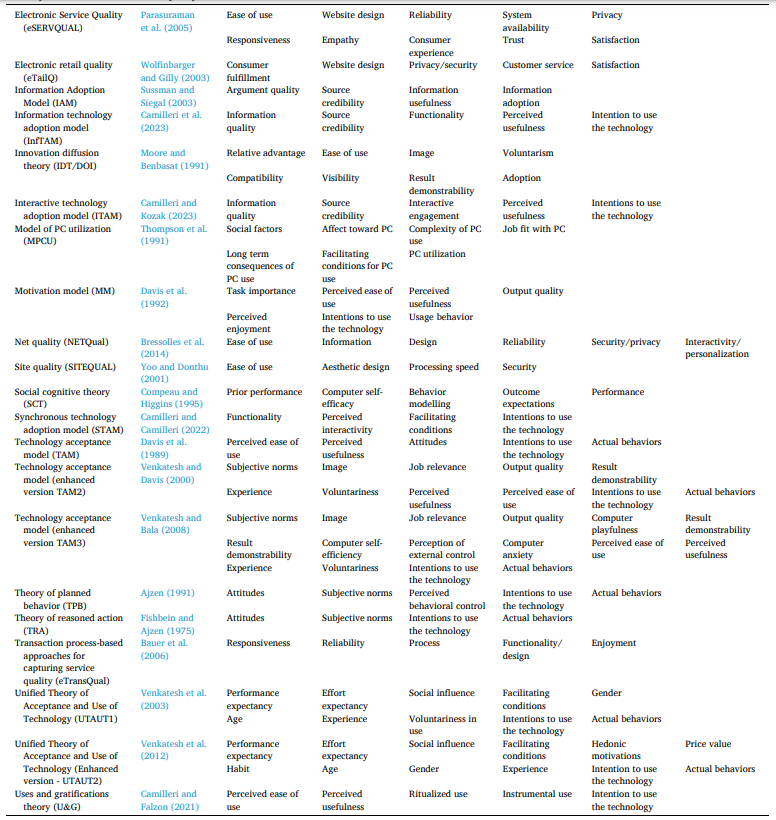
Nevertheless, this bibliographic study has identified some of the most popular research areas relating to the use of responsive chatbots in online customer service settings. The findings confirmed that many authors are focusing on the chatbots’ anthropomorphic designs, AI capabilities and on their dialogue systems. This research suggests that there are still knowledge gaps in the academic literature. The following table clearly specifies that there are untapped opportunities for further empirical research in this promising field of study.

The full article is forthcoming. A prepublication version will be available through Researchgate.

Leave a comment

Filed under artificial intelligence, Business, chatbots, customer service, Marketing

Announcing a Call for Chapters (for Springer)

Call for Chapters

Strategic Corporate Communication and Stakeholder Engagement in the Digital Age


Abstract submission deadline: 30th June 2019 (EXTENDED to the 30th September 2019)
Full chapters due: 31st December 2019


Background

The latest advances in technologies and networks have been central to the expansion of electronic content across different contexts. Contemporary communication approaches are crossing boundaries as new media are offering both challenges and opportunities. The democratisation of the production and dissemination of information via the online technologies has inevitably led individuals and organisations to share content (including images, photos, news items, videos and podcasts) via the digital and social media. Interactive technologies are allowing individuals and organisations to co-create and manipulate electronic content. At the same time, they enable them to engage in free-flowing conversations with other online users, groups or virtual communities (Camilleri, 2017). Innovative technologies have empowered the organisations’ stakeholders, including; employees, investors, customers, local communities, government agencies, non-governmental organisations (NGOs), as well as the news media, among others. Both internal and external stakeholders are in a better position to scrutinise the organisations’ decisions and actions. For this reason, there is scope for the practitioners to align their corporate communication goals and activities with the societal expectations (Camilleri, 2015; Gardberg & Fombrun, 2006). Therefore, organisations are encouraged to listen to their stakeholders. Several public interest organisations, including listed businesses, banks and insurance companies are already sharing information about their financial and non-financial performance in an accountable and transparent manner. The rationale behind their corporate disclosures is to develop and maintain strong and favourable reputations among stakeholders (Camilleri, 2018; Cornelissen, 2008). The corporate reputation is “a perceptual representation of a company’s past actions and future prospects that describe the firm’s overall appeal to all of its key constituents when compared to other leading rivals” (Fombrun, 1996).

Business and media practitioners ought to be cognisant about the strategic role of corporate communication in leveraging the organisations’ image and reputation among stakeholders (Van Riel & Fombrun, 2007). They are expected to possess corporation communication skills as they need to forge relationships with different stakeholder groups (including employees, customers, suppliers, investors, media, regulatory authorities and the community at large). They have to be proficient in specialist areas, including; issues management, crises communication as well as in corporate social responsibility reporting, among other topics. At the same time, they should be aware about the possible uses of different technologies, including; artificial intelligence, augmented and virtual reality, big data analytics, blockchain and internet of things, among others; as these innovative tools are disrupting today’s corporate communication processes.


Objective

This title shall explain how strategic communication and media management can affect various political, economic, societal and technological realities. Theoretical and empirical contributions can shed more light on the existing structures, institutions and cultures that are firmly founded on the communication technologies, infrastructures and practices. The rapid proliferation of the digital media has led both academics and practitioners to increase their interactive engagement with a multitude of stakeholders. Very often, they are influencing regulators, industries, civil society organisations and activist groups, among other interested parties. Therefore, this book’s valued contributions may include, but are not restricted to, the following topics:


Artificial Intelligence and Corporate Communication

Augmented and Virtual Reality in Corporate Communication

Blockchain and Corporate Communication

Big Data and Analytics in Corporate Communication

Branding and Corporate Reputation

Corporate Communication via Social Media

Corporate Communication Policy

Corporate Culture

Corporate Identity

Corporate Social Responsibility Communications

Crisis, Risk and Change Management

Digital Media and Corporate Communication

Employee Communications

Fake News and Corporate Communication

Government Relationships

Integrated Communication

Integrated Reporting of Financial and Non-Financial Performance

Internet Technologies and Corporate Communication

Internet of Things and Corporate Communication

Investor Relationships

Issues Management and Public Relations

Leadership and Change Communication

Marketing Communications

Measuring the Effectiveness of Corporate Communications

Metrics for Corporate Communication Practice

Press and Media Relationships

Stakeholder Management and Communication

Strategic Planning and Communication Management


This publication shall present the academics’ conceptual discussions that cover the contemporary topic of corporate communication in a concise yet accessible way. Covering both theory and practice, this publication shall introduce its readers to the key issues of strategic corporate communication as well as stakeholder management in the digital age. This will allow prospective practitioners to critically analyse future, real-life situations. All chapters will provide a background to specific topics as the academic contributors should feature their critical perspectives on issues, controversies and problems relating to corporate communication.

This authoritative book will provide relevant knowledge and skills in corporate communication that is unsurpassed in readability, depth and breadth. At the start of each chapter, the authors will prepare a short abstract that summarises the content of their contribution. They are encouraged to include descriptive case studies to illustrate real situations, conceptual, theoretical or empirical contributions that are meant to help aspiring managers and executives in their future employment. In conclusion, each chapter shall also contain a succinct summary that should outline key implications (of the findings) to academia and / or practitioners, in a condensed form. This will enable the readers to retain key information.


Target Audience

This textbook introduces aspiring practitioners as well as under-graduate and post-graduate students to the subject of corporate communication – in a structured manner. More importantly, it will also be relevant to those course instructors who are teaching media, marketing communications and business-related subjects in higher education institutions, including; universities and colleges. It is hoped that course conveners will use this edited textbook as a basis for class discussions.


Submission Procedure

Senior and junior academic researchers are invited to submit a 300-word abstract on or before the 30th June 2019. Submissions should be sent to Mark.A.Camilleri@um.edu.mt. Authors will be notified about the editorial decision during July 2019. The length of the chapters should be between 6,000- 8,000 words (including references, figures and tables). These contributions will be accepted on or before the 31st December 2019. The references should be presented in APA style (Version 6). All submitted chapters will be critically reviewed on a double-blind review basis. The authors’ and the reviewers’ identities will remain anonymous. All authors will be requested to serve as reviewers for this book. They will receive a notification of acceptance, rejection or suggested modifications – on or before the 15th February 2020.

Note: There are no submission or acceptance fees for the publication of this book. All abstracts / proposals should be submitted via the editor’s email.


Editor

Mark Anthony Camilleri (Ph.D. Edinburgh)
Department of Corporate Communication,
Faculty of Media and Knowledge Sciences,
University of Malta, MALTA.
Email: mark.a.camilleri@um.edu.mt


Publisher

Following the double-blind peer review process, the full chapters will be submitted to Springer Nature for final review. For additional information regarding the publisher, please visit https://www.springer.com/gp. This prospective publication will be released in 2020.


Important Dates

Abstract Submission Deadline:          30th June 2019 30th September 2019
Notification of Acceptance:               31st July 2019 31st October 2019

Full Chapters Due:                             31st December 2019

Notification of Review Results:         15th February 2020
Final Chapter Submission:                 31st March 2020

Final Acceptance Notification:          30th April, 2020

References

Camilleri, M.A. (2015). Valuing Stakeholder Engagement and Sustainability Reporting. Corporate Reputation Review18(3), 210-222. https://link-springer-com.ejournals.um.edu.mt/article/10.1057/crr.2015.9

Camilleri, M.A. (2017). Corporate Sustainability, Social Responsibility and Environmental Management, Cham, Switzerland: Springer Nature. https://www.springer.com/gp/book/9783319468488

Camilleri, M.A. (2018). Theoretical Insights on Integrated Reporting: The Inclusion of Non-Financial Capitals in Corporate Disclosures. Corporate Communications: An International Journal23(4), 567-581. https://www.emeraldinsight.com/doi/full/10.1108/CCIJ-01-2018-0016

Cornelissen, J.P. (2008). Corporate Communication. The International Encyclopedia of Communication. https://onlinelibrary.wiley.com/doi/abs/10.1002/9781405186407.wbiecc143.pub2

Fombrun, C.J. (1995). Reputation: Realizing Value from the Corporate Image. Cambridge, MA, USA: Harvard Business School Press.

Gardberg, N.A., & Fombrun, C. J. (2006). Corporate Citizenship: Creating Intangible Assets across Institutional Environments. Academy of Management Review31(2), 329-346. https://journals.aom.org/doi/abs/10.5465/AMR.2006.20208684

Van Riel, C.B., & Fombrun, C.J. (2007). Essentials of Corporate Communication: Implementing Practices for Effective Reputation Management. Oxford, UK: Routledge. http://repository.umpwr.ac.id:8080/bitstream/handle/123456789/511/Essentials%20of%20Corporate%20Communication.pdf?sequence=1

Leave a comment

Filed under Analytics, Big Data, blockchain, branding, Business, Corporate Governance, Corporate Social Responsibility, Corporate Sustainability and Responsibility, CSR, digital media, ESG Reporting, Higher Education, Human Resources, Impact Investing, Integrated Reporting, internet technologies, internet technologies and society, Marketing, online, Shared Value, Stakeholder Engagement, Sustainability, Web