Suggested citation: Camilleri, M.A. (2025). Cocreating Value Through Open Circular Innovation Strategies: A Results-Driven Work Plan and Future Research Avenues, Business Strategy and the Environment, https://doi.org/10.1002/bse.4216
This research raises awareness of practitioners’ crowdsourcing initiatives and collaborative approaches, such as sharing ideas and resources with external partners, expert consultants, marketplace stakeholders (like suppliers and customers), university institutions, research centers, and even competitors, as the latter can help them develop innovation labs and to foster industrial symbiosis (Calabrese et al. 2024; Sundar et al. 2023; Triguero et al. 2022). It reported that open innovation networks would enable them to work in tandem with other entities to extend the life of products and their components. It also indicated how and where circular open innovations would facilitate the sharing of unwanted materials and resources that can be reused, repaired, restored, refurbished, or recycled through resource recovery systems and reverse logistics approaches. In addition, it postulates that circular economy practitioners could differentiate their business models by offering product-service systems, sharing economies, and/or leasing models to increase resource efficiencies and to minimize waste.
Arguably, the cocreation of open innovations can contribute to improve the financial performance of practitioners as well as of their partners who are supporting them in fostering closed-loop systems and sharing economy practices. They enable businesses and their stakeholders to minimize externalities like waste and pollution that can ultimately impact the long-term viability of our planet. Figure 1 presents a conceptual framework that clarifies how open innovation cocreation approaches can be utilized to advance circular, closed-loop models while adding value to the businesses’ financial performance.
The collaborative efforts between organizations, individuals, and various stakeholders can lead to sustainable innovations, including to the advancement of circular economy models (Jesus and Jugend 2023; Tumuyu et al. 2024). Such practices are not without their own inherent challenges and pitfalls. For example, resource sharing, the recovery of waste and by-products from other organizations, and industrial symbiosis involve close partnership agreements among firms and their collaborators, as they strive in their endeavors to optimize resource use and to minimize waste (Battistella and Pessot 2024; Eisenreich et al. 2021). While the open innovation strategies that are mentioned in this article can lead to significant efficiency gains and to waste reductions, practitioners may encounter several difficulties and hurdles, to implement the required changes (Phonthanukitithaworn et al. 2024). Different entities will have their own organizational culture, strategic goals, and modus operandi that may result in coordination challenges among stakeholders.
Organizations may become overly reliant on sharing resources or on their symbiotic relationships, leading to vulnerabilities related to stakeholder dependencies (Battistella and Pessot 2024). For instance, if one partner experiences disruptions, such as operational issues or financial difficulties, it can adversely affect the feasibility of the entire network. Notwithstanding, organizations are usually expected to share information and resources when they are involved in corporate innovation hubs and clusters. Their openness can lead to concerns about knowledge leakages and intellectual property theft, which may deter companies from fully engaging in resource-sharing initiatives, as they pursue outbound innovation approaches.
Other challenges may arise from resource recovery, reverse logistics, and product-life extension strategies (Johnstone 2024). The implementation of reverse logistics systems can be costly, especially for small and micro enterprises. The costs associated with the collection, sorting, and processing of returned products and components may outweigh the benefits, particularly if the market for recovered materials is not well established (Panza et al. 2022; Sgambaro et al. 2024). Moreover, the effectiveness of resource recovery methodologies and of product-life extension strategies would be highly dependent on the stakeholders’ willingness to return products or to participate in recycling programs. Circular economy practitioners may have to invest in promotional campaigns to educate their stakeholders about sustainable behaviors. There may be instances where existing recovery and recycling technologies are not sufficiently advanced or widely available, in certain contexts, thereby posing significant barriers to the effective implementation of open circular innovations. Notwithstanding, there may be responsible practitioners and sustainability champions that may struggle to find reliable partners with appropriate technological solutions that could help them close the loop of their circular economy.
In some scenarios, emerging circular economy enthusiasts may be eager to shift from traditional product sales models to innovative product-service systems. Yet, such budding practitioners can face operational challenges in their transitions to such circular business models. They may have to change certain business processes, reformulate supply chains, and also redefine their customer relationships, to foster compliance with their modus operandi. These dynamic aspects can be time-consuming, costly, and resource intensive (Eisenreich et al. 2021). For instance, the customers who are accustomed to owning tangible assets may resist shifting to a product-service system model. Their reluctance to accept the service providers’ revised terms and conditions can hinder the adoption of circular economy practices. The former may struggle to convince their consumers to change their status quo, by accessing products as a service, rather than owning them (Sgambaro et al. 2024). In addition, the practitioners adopting products-as-a-service systems may find it difficult to quantify their performance outcomes related to resource savings and customer satisfaction levels and to evaluate the success of their product-service models, accurately, due to a lack of established metrics.
In a similar vein, the customers of sharing economies and leasing systems ought to trust the quality standards and safety features of the products and services they use (Sergianni et al. 2024). Any negative incidents reported through previous consumers’ testimonials and reviews can undermine the prospective customers’ confidence in the service provider or in the manufacturer who produced the product in the first place. Notwithstanding, several sharing economy models rely on community participation and localized networks, which can pose possible challenges for scalability. As businesses seek to expand their operations, it may prove hard for them to consistently maintain the same level of trust and quality in their service delivery. Moreover, many commentators argue that the rapid growth of sharing economies often outpaces existing regulatory frameworks. The lack of regulations, in certain jurisdictions, in this regard, can create uncertainties and gray areas for businesses as well as for their consumers.
Featuring a few snippets from one of my latest co-authored papers on the use of digital technologies for lean and sustainable value chains. A few sections have been adapted to be presented as a blog post.
Suggested citation: Strazzullo, S., Cricelli, L., Troise, C. & Camilleri, M.A. (2024). Leveraging Industry 4.0 technologies for sustainable value chains: Raising awareness on digital transformation and responsible operations management, Sustainable Development, https://doi.org/10.1002/sd.3211
Abstract
Practitioners, policy makers as well as scholars are increasingly focusing their attention on the promotion of sustainable practices that reduce the businesses’ impacts on the environment. In many cases, they are well aware that manufacturers and their suppliers are resorting to lean management processes and Industry 4.0 (I4.0) technologies such as big data, internet of things (IoT), and artificial intelligence (AI), among others, to implement sustainable production models in their operational processes. This research utilizes an inductive approach to better understand how I4.0 technologies could result in increased organizational performance in terms of resource efficiencies, quality assurance as well as in environmentally sustainable outcomes, in the context of the automotive industry. The findings shed light on the relationship between I4.0 technologies, sustainable and lean practices of automakers of combustion engines, hybrid models and/or electric vehicles (EVs). In conclusion, this contribution puts forward an original conceptual framework that clearly explains how practitioners can avail themselves of disruptive technologies to foster continuous improvements in their value chain.
Keywords: Industry 4.0, digital transformation, lean management, sustainable supply chain, responsible operations management, resource efficiencies.
Introduction
The manufacturing industries are characterized by their increased emphasis on the development of sustainable practices that are facilitated by digital technologies. Companies are under pressure from a wide range of stakeholders, including by regulatory institutions and by individual customers, among others (Wellbrock et al., 2020). In parallel, in recent years, most businesses have gradually introduced Industry 4.0 (I4.0) technologies in their manufacturing processes, as they shifted to smart factory models (Atif, 2023; Choi et al., 2022; Varriale et al., 2024). However, they cannot disregard their corporate responsibilities on economic, environmental and social aspects (Sunar & Swaminathan, 2022). Many researchers contend that sustainability behaviors ought to be integrated with I4.0 processes (Ghobakhloo, 2020), in order to enhance the effectiveness, efficiencies and economies of their Supply Chains (SC) (Núñez-Merino et al., 2020). To be competitive in this context, SCs are implementing lean management models to improve their operations.
The sustainability of SC is related to the notion of Lean Supply Chain Management (LSCM) that refers to the elimination of non-value-added activities in order to enhance the manufacturing firms’ performance (Centobelli et al., 2022; Núñez-Merino et al., 2020). The proponents of LSCM suggest that the generation of waste can be reduced through responsible management strategies (Deshpande & Swaminathan, 2020). Arguably, the minimization of externalities can ultimately affect all stakeholders of SCs, ranging from the business itself, its suppliers as well as its consumers (Khorasani et al., 2020). Notwithstanding, the stakeholders’ pressures on organizations has led them to change their operational approaches to comply with new environmental regulations and to respond to the growing demands of customers for sustainable products and services (Adomako et al., 2022; Camilleri et al., 2023).
As a result, many commentators are also raising awareness on the Sustainable Supply Chain Management (SSCM) concept (Sonar et al., 2022; Yadav et al., 2020). Very often, they claim that SSCM is an important organizational model that can increase corporate profits and boost market shares. The SSCM proposition is based on the reduction of risks from unwanted environmental impacts, thereby improving the overall efficiency of SCs (Negri et al., 2021). Previous contributions have clearly demonstrated how LSCM and SSCM are closely related to one another (Azevedo et al., 2017). More recent studies have deepened the link between the lean management paradigm and I4.0 (Oliveira-Dias et al., 2022; Tissir et al., 2022). The integration of these two concepts has led to the formulation of new definitions such as “Lean 4.0” and “Digital Lean Manufacturing”, among others.
Given the increased complexity of operations, many researchers debate that the introduction of lean practices may not be enough to address extant competitive pressures. Although lean management can improve the operational efficiencies of SCs and may add value to their organization, there is still scope for practitioners to continue ameliorating their extant processes. Lean initiatives are reaching a point where they are becoming common practice in different contexts. Many manufacturers are adopting them to reduce their costs. However, the success of lean production practices relies on the management’s strategic decisions and on operational changes they are willing to undertake. Arguably, both SSCM and LSCM are aimed at fostering more flexible, fast, customized, and transparent operations management in manufacturing and distribution systems. Some studies have already clarified how digital technologies can help practitioners to improve achieve these objectives (Ghobakhloo, 2020; Varriale et al., 2024).
Several academic studies have not considered the fact that SCs are becoming more technologically savvy. As technologies continue to evolve, they are transforming the modus operandi of many businesses. Today’s organizational processes are increasingly utilizing different types of innovative solutions. Undoubtedly, manufacturers ought to keep up with the latest advances in technology and with the changing market conditions. Besides, a number of firms are opting to outsource their manufacturing processes to low-cost developing countries. In this light, this research builds on theoretical underpinnings focused on the link between SSCM and LSCM. However, it differentiates itself from previous contributions, as it clarifies how these two paradigms can be connected to I4.0.
Notwithstanding, for the time being, there is still a lack of agreement among academia, policy makers and expert practitioners about what constitutes lean, sustainable systems in today’s manufacturing landscape. Although there a number of stakeholders who are already engaging in LSCM and SSCM practices to meet the new challenges and opportunities presented by I4.0 and the digital age, others are still lagging behind, or are considering SSCM and LSCM and digital technologies as silos, as they see no link between these approaches (Narkhede et al., 2024).
For example, at the time of writing, several automotive manufacturers claim that they are integrating lean and sustainable practices. Very often, they indicate that they utilize I4.0’s disruptive technologies. Yet, a number of academic commentators argue that some of these practitioners unsustainable manufacturing processes and waste management behaviors are contributing to the negative impacts to the degradation of the natural environment, thereby accelerating climate change (Liu & Kong, 2021; Sonar et al., 2022).
Lately, academic colleagues have sought to highlight the synergies between I4.0 technologies, lean management principles and sustainable practices (Centobelli et al., 2022; Cerchione, 2024). The majority of contributions provide a conceptual study of the potential relationship between I4.0, sustainable and lean SCs. However, to date, limited research have integrated lean SC, SSC and I4.0 technologies. This paper represents one of the first attempts to investigate the connection between SSCM, LSCM and I4.0 paradigms, in depth and breadth, in the context of the automotive industry. For the time being, there is still limited research that raises awareness on sustainable and lean supply chain systems that are benefiting from disruptive technologies (Cerchione, 2024; Guo et al., 2022). Hence, this contribution addresses this knowledge gap. Specifically, it seeks to explore these research questions (RQs):
RQ1: Which I4.0 technologies and to what extent are they supporting the manufacturing businesses in their adoption of sustainable and lean management practices?
RQ2: How is the automotive industry’s SC benefiting from the utilization of disruptive technologies, as well as from sustainable and lean management practices?
The underlying goal of this contribution is to raise awareness on how manufacturing businesses including automotive corporations utilize I4.0 technologies, implement lean management as well as sustainable practices to improve their SCs performance. An inductive approach is utilized to address the above RQs. Rich qualitative data were captured through semi-structured interviews with expert practitioners who hold relevant experience in planning, organizing, leading and controlling responsible operations management initiatives in the automotive industry, and who are already deploying a wide array of I4.0 technologies in their manufacturing processes.
The researchers adopt a hermeneutic approach to outline the thematic analysis (TA) of their interpretative findings. They identify the main intersections between SSCM, LSCM and I4.0 paradigms. Moreover, they provide a conceptual framework that clearly explicates how practitioners can avail themselves of I4.0 technologies to advance sustainable and lean management practices in different phases of the supply chain, including in the sourcing of materials, inventory control, manufacturing processes, logistics/distribution of products, as well as in their after sales services.
Literature review
Companies can create value when they have the competences, capabilities and resources to create products. (Khan et al., 2016). They ought to be flexible and responsive to their customers’ needs, particularly in a competitive environment, like the automotive industry. Indeed, customers tend to evaluate the companies based on the products they sell and on their unique selling propositions (Kumar Singh & Modgil, 2020). The lean management principles can therefore help manufacturers to implement the philosophy of continuous improvements in their operational performance (Marodin et al. 2016), in order to add value to their customers, and to increase the likelihood of repeat business (Liker, 2004; Papadopoulou & Özbayrak, 2005).
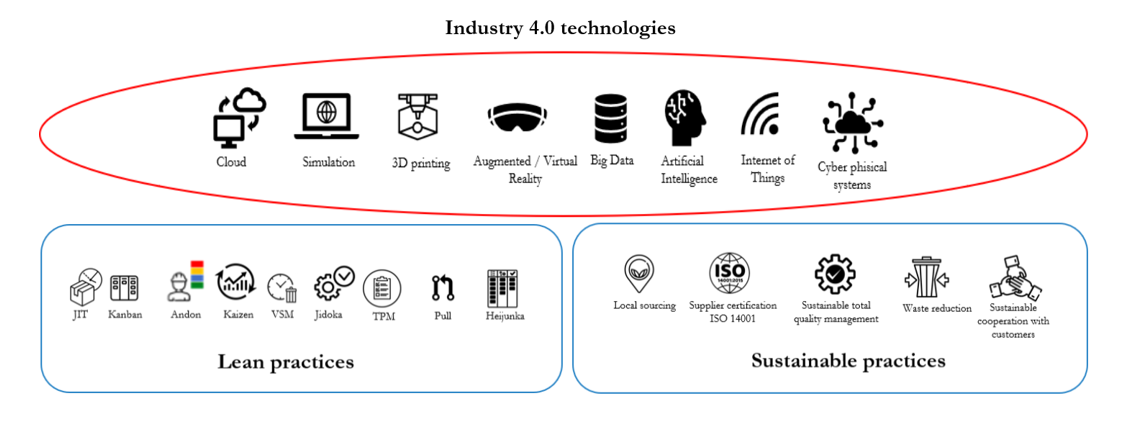
Such ongoing improvements are not only relevant during production (e.g. within the automotive workshops) but may also be implemented throughout the entire SC, including in customer-facing environments (Cagliano et al., 2006). There are a number of lean management approaches that can be taken on board by different manufacturers including by automakers. Table 1 provides a list of lean practices (that could also be adopted within the automotive industry):
Table 1. A non-exhaustive list of lean management terms
Lean Practices
Definitions
References
Andon
Andon is a quality control signaling system that provides notifications on issues relating to the maintenance of certain operational processes. An alert can be activated automatically through automated systems or manually by employees. As a result, Andon systems can pause production so that operational issues can be rectified.
(Saurin et al., 2011)
Heijunka
Heijunka is intended to improve operational flows by reducing the unevenness in production processes and by minimizing the chance of overburden. It can used to process orders according to fluctuations in demand, and to respond to changes by levelling production by volume or by type, thereby utilizing existing capacity in the best possible way.
(Nordin et al., 2010)
Jidoka
Jidoke refers to automated systems that are monitored and supervised by humans. It is used to improve the product quality and to prevent any malfunctions during manufacturing processes.
(Liker & Morgan, 2006)
Just in time (JIT)
A JIT system is an inventory management strategy that is based on forecasted demand. It aligns purchasing and procurement tasks with production schedules. Companies employ this lean strategy to increase their efficiency by reducing overproduction, unnecessary waiting times, excessive inventory, product defects and unwanted waste. JIT is evidenced when materials and goods are ordered, only when they are required.
(Mayr et al., 2018; Sanders et al., 2016)
Kaizen
Kaizen is a lean production management approach that promotes continuous improvements in manufacturing processes on a day-by-day basis. This notion is based on the idea that ongoing positive changes will gradually result in significant improvements in the long run. Organizations adopting Kaizen will motivate their employees to consistently boost their productivity, reduce waste, lower defects and to be accountable in their jobs.
(Valamede & Akkari, 2020)
Kanban
Kanban involves a scheduling system that can improve operational efficiencies in lean manufacturing environments. One of its main advantages is to limit the buildup of excess materials and resources at any point in time during operational processes. Practitioners ought to ensure that they are maintaining a predefined inventory level for production purposes.
(Valamede & Akkari, 2020)
Pull Production (PP)
PP is a lean management methodology that is intended to control production processes in order to limit overproduction, reduce surpluses and to minimize warehouse costs. PP can be used to determine the optimal quantity that should be produced. Production occurs when and where it is needed, according to demand.
(Sanders et al., 2017b)
Total Productive Maintenance (TPM)
TPM is a holistic maintenance approach that is used to improve operational efficiency and product quality, by eliminating failures and defects. Moreover, it promotes a safe working environment to prevent accidents from happening. It also aims to motivate employees to improve their job satisfaction, productivity and organizational performance
(Mayr et al., 2018; Valamede & Akkari 2020)
Value Stream Mapping (VSM)
VSM (is also known as material- and information-flow mapping) is a lean management method that involves the analysis of extant operations to better plan operational procedures, for the future. It is a visual tool that describes (in detail) all critical steps in specific manufacturing processes.
(De Raedemaecker et al., 2017; Wagner et al., 2017)
Table 2 describes some of the most prevalent sustainability practices that are being employed in the automotive industry, as well as in other manufacturing contexts.
Table 2 Sustainable practices adopted by manufacturing businesses
Sustainable Practices
Definitions
References
Sustainable Total Quality Management (STQM)
STQM is a management approach that relies on the participation of all members of staff to create long-term value to their organization and to society at large, by considering the triple bottom line objectives in terms of profit, people and planet.
(Yadav et al., 2020)
Local sourcing
Local sourcing is related to the procurement of products, resources or materials from producers and suppliers located in close proximity to the manufacturing facility, rather than acquiring them from international sources. This approach encourages companies to purchase their requirements from local suppliers to reduce costs and to minimize their impact on the environment.
(Zailani et al., 2015)
Sustainable cooperation with customers
“Sustainable cooperation with customers” involves the businesses’ engagement activities with customers. Organizations can increase their customers’ awareness about social responsible issues and environmentally sustainable initiatives.
(Eltayeb et al., 2011; Purba Rao, 2018)
Sustainable employee engagement
“Sustainable employee engagement” is associated with the organizations’ relationship with its employees. Employers are expected to treat their employees well with dignity and respect. It is in their interest to foster an organizational climate that rewards their hard in a commensurate manner.
(Robinson et al., 2003)
Supplier certification International Standards Organization’s (ISO’s) Environmental Management Standard (ISO14001)
ISO14001 is one of the most widely used environmental management standard. It encourages manufacturing practitioners to continuously improve their operations to minimize their impact on the environment. It clearly recommends that environmental management issues ought to be embedded within the organizations’ strategic planning processes and that business leaders should pledge their commitment to implement sustainable initiatives that are aimed to protect the environment and to mitigate climate change.
(Camilleri, 2022; Potoski & Prakash 2005)
Waste and emissions reductions
The “waste and emissions reductions” constitute one of the most important aspects of sustainable production. Manufacturing businesses ought to reduce the generation of externalities including the accumulation of waste and emissions resulting from their operations. They are expected to strictly comply with the relevant legislation to protect the environment and to prevent any detrimental effects from waste and emissions on eco systems.
(Vijayvargy & Agarwal, 2014)
Table 3 sheds light on some of I4.0 technologies that are being employed within the automotive industry.
Table 3. I4.0 technologies that are utilized in the automotive industry
I4.0 Technologies
Definitions
References
Three-Dimensional (3D) printing
3D printing is based on additive technology that can create solid objects from computer-aided design (CAD) software, or via 3D models.
(Kamble et al. 2018)
Artificial Intelligence (AI)
AI is concerned with computers and machines that are capable of mimicking human reasoning, human learning and even human behaviors. Basically, it involves a set of machine learning and deep learning technologies that can be used to analyze, predict and forecast data, to categorize objects, to process natural language, to make recommendations, and to retrieve intelligent data retrieval.
(Chae and Goh 2020; Ghobakhloo 2020)
Augmented Reality (AR)
AR enables its users to view virtual content that comprises multiple sensory modalities that may include visual, vocal, haptic, olfactory, and other somatosensory stimuli in a real-world environment.
(Mayr et al., 2018; Rüßmann et al., 2015)
Big Data (BIG DATA)
BIG DATA refers to data sets that are too large or complex to be dealt with via conventional data processing software. Supposedly, big data software can rapidly handle large volumes as well as a variety of information.
(Swaminathan, 2018; Vaidya et al., 2018)
Blockchain
A blockchain is a distributed ledger technology that allows its users to track and store records (blocks). The blocks hold transactional data that are securely linked together via cryptographic hashes that are timestamped. Each block is linked to the other.
(Pun et al., 2021)
Cloud computing
Cloud computing refers to on-demand computer resources that can be utilized to share and store data in an agile and flexible manner, beyond company boundaries, through multiple locations.
(Tao & Qi 2019; Vaidya et al. 2018)
Cyber Physical Systems (CPSs)
CPSs are related to physical and software systems that are deeply intertwined to operate spatial and temporal scales. They are controlled and/or monitored by algorithms to interact with each other in ways that change with context. They exhibit multiple and distinct behavioral modalities.
(Adamides & Karacapilidis, 2020; Kamble et al., 2018; Wang et al., 2016)
Internet of Things (IoT)
IoT are physical objects (or groups of objects) with sensors that can enable them to process and exchange data with other devices and systems via the Internet or other communications networks.
(He & Xu, 2014)
Virtual simulation (VS)
VS refers to computational system-based modeling that relies on real-time data to mirror the physical world. Virtual models can include machines, products, and humans. A simulation provides a preliminary analysis of different processes (and phases) that make up the operational processes, thereby presenting performance estimates for production management.
(Li et al., 2018)
Discussion
This research sought to examine the role of I4.0 technologies in supporting sustainable and lean initiatives in SCs. To this end, an inductive study involving a thematic analysis was conducted to answer the underlying RQs. Interestingly, the findings clearly indicate that utilization of I4.0 technologies are opening up new opportunities in the automotive industry. They confirm that carmakers are changing their modus operandi in terms of their procurement of resources, production practices, and of how they are servicing their customers. It shows that a myriad of digital technologies (including big data, simulation and IoT, among others) are facilitating the implementation of lean programs, thereby improving productivity outcomes, whilst decreasing operational costs.
Moreover, it reported that certain disruptive technologies can be utilized to create value to environmental sustainability in terms of waste minimization practices through recycling procedures, reductions in CO2 emissions, lower energy consumption levels, et cetera, thereby diminishing the businesses’ impact on the natural environments. This research noted that the automakers’ implementation of sustainable practices is not as conspicuous as that of their lean management practices, in the academic literature, even though most of them are increasingly producing sustainable vehicles including hybrids and EVs.
In addition, the findings indicate that there is still scope for manufacturing firms to avail themselves of I4.0 systems to consistently improve their operations in SCs. The results reported that big data can be used to pursue continuous improvements and Kaizen approaches to improve efficiencies, lower costs and reduce waste. They revealed that practitioners are collaborating with marketplace stakeholders and utilizing JIT systems to responsibly source materials and resources when they are required. Moreover, they found that organizations are availing themselves of Andon and Jidoka automated systems to monitor and control different manufacturing processes in the supply chain, to ensure the smooth running of operations.
Theoretical implications
This contribution convergences Industry 4.0 and responsible supply chain practices with lean management approaches. It raises awareness on how manufacturers including those operating in the automotive industry, can improve their quality standards through specific tools (e.g. Andon and Jidoka) and techniques (like Kaizen and Kanban, among others), to enhance their efficiencies, reduce costs and eliminate non-value-added activities. It explains that there is scope for sustainable businesses to invest in disruptive technologies and long-term cultural change to achieve continuous improvements in their supply chains. It clarifies that the intersection of LSCM, SSCM and I4.0 can potentially revolutionize operations management, as practitioners can benefit from digital technologies like real-time data, cloud, AI, CPS, blockchain technologies to consistently ameliorate their production systems in a sustainable manner.
Arguably, businesses can avail themselves of big data analytics, simulations and digital twins, to anticipate demand fluctuations, optimize inventory levels, reduce lead times. These data-driven innovations enable them to proactively respond to changing market conditions and disruptions, identify potential disruptions early, and to mitigate risks. In addition, they could invest in Blockchain digital ledger technologies to trace materials, components and products to ensure responsible sourcing of goods, increase the sustainability of their operations and reduce the businesses’ environmental impact.
Alternatively, they can utilize CPS systems to automate tasks, improve quality control and to reduce errors from their production processes. These approaches would probably lead to better resource utilization, waste management and circular economy approaches like recyclability, reusability and repairability of assets to extend their lifecycles. Hence, practitioners can align I4.0 paradigm with the lean principles of pull production and just-in-time systems as well as with sustainable supply chain management. For the time being, few researchers have delved into these promising areas of study. Even fewer contributions have investigated these issues in the automotive industry context. This contribution addresses these knowledge gaps in academia. It advances a comprehensive theoretical framework that clearly sheds light on the link between I4.0, strategic lean management approaches and sustainability outcomes including improved resource efficiencies and reduced externalities, among others.
Managerial implications
Regarding the implications for practitioners, this contribution raises awareness on the importance of using technologies to improve the efficiency, economy and effectiveness of SCs, in a sustainable manner. The interpretative findings of this research identified a set of I4.0 technologies and practices that can improve the performance of SCs in the automotive industry. Among the various I4.0 technologies, the informants identified: IoT, simulation, cloud, and big data as some of the most effective tools to enhance the organizational performance of manufacturing businesses. Generally, they indicated that their companies were relying on insights from big data to continuously improve their operations. Evidently, they captured data as they tracked different processes of their operations, in real time. Subsequently, the gathered data is analyzed to discover any areas for improvement. For example, big data could reveal that modifications may be required if certain processes and procedures are not adding value to the company, or if they are translating to operational inefficiencies and/or to unwanted waste.
Most interviewees showed that they utilized simulations, cloud systems and IoT to adopt JIT, Kaizen, Jidoka, local sourcing, and waste reduction initiatives. They explained how they benefitted from these technologies to optimize their operations, in terms their procurement of materials, as well as in other areas including in distribution and marketing activities. For instance, the findings clearly reported that IoT can support the implementation of local sourcing of resources, by minimizing the vulnerabilities and logistical costs associated with long SCs and could improve efficiency by providing valuable information about machine health, including predictive maintenance requirements, at logistics centers or warehouses.
This research reported that these tools enabled practitioners to monitor the operational performance in all phases of their SC, including from the selection of suppliers until the delivery of after-sales services to their valued customers. As mentioned above, the utilization of systems such as big data, analytics and the use of cloud technologies for data storage are adding value to the companies’ SC. Data-driven technologies facilitate the exchange of information between marketplace stakeholders (e.g. with intermediaries). They can foster lean management approaches by increasing throughput, addressing bottlenecks, streamlining processes and by reducing delays, resulting in improved productivity, operational efficiencies, better time management and in lower risks for SCs.
Macroenvironmental factors, including political, economic, social, and technological issues could also impact on the businesses’ I4.0 digital transformation and implementation of sustainable operations management. The transition towards a zero-waste model could prove to be a costly, long-term investment for businesses including those operating in the automotive industry. Although financial investments in new technologies could possibly improve operational efficiencies (Camilleri, 2019), there could still be a low demand for them, particularly if I4.0 systems require behavioural changes by their users.
Featuring snippets from one of my coauthored articles on the intersection of technology adoption and sustainable development.
Suggested citation: Cricelli, L., Mauriello, R., Strazzullo, S. & Camilleri, M.A. (2024). Assessing the impact of Industry 4.0 technologies on the social sustainability of agrifood companies, Business Strategy and the Environment, https://doi.org/10.1002/bse.3874
Abstract: Industry 4.0 technologies present new opportunities for the sustainable development of companies in the agrifood industry. The extant literature on this topic suggests that innovative technologies can support agrifood companies in addressing environmental, economic, and social sustainability issues. While the environmental and economic benefits of technological innovations in the agrifood industry have been widely investigated, few studies sought to explore the impact of the adoption of Industry 4.0 technologies on long-standing social issues. This research addresses this knowledge gap, The data were gathered from 116 Italian agrifood companies that utilized Industry 4.0 technologies. The findings from structural equations modelling partial least squares (SEM-PLS) show that adopting Industry 4.0 technologies helps agrifood companies to improve human resources management, supply chain management, and stakeholder relationships. Finally, this contribution puts forward implications for practitioners, as it raises awareness on the benefits of using technological innovations to promote social sustainability outcomes.
This figure illustrates the model underlying the research hypotheses of this contribution.
An excerpt from the conclusion: recent studies suggest that the adoption of I.40 technologies may have significant social implications for agrifood companies, affecting labour management, supply chain accountability, and relationships with key stakeholders, including governments and consumers (Chandan et al., 2023; Prause, 2021; Rijswijk et al., 2021). Despite this, available literature focuses on the relationship between environmental and economic benefits, while social sustainability implications are currently underinvestigated, especially from an empirical perspective.
This study aimed to help bridge this gap by providing evidence of the impact of I4.0 technologies on the social sustainability of companies in the agrifood industry. To this end, we use data from 116 Italian agrifood companies to validate a theoretical model explaining how the adoption of I4.0 technologies influences the social sustainability of agrifood companies. Specifically, this study focuses on agrifood companies performing cultivation activities, which face unique and relevant social sustainability challenges related to labour, supply chain, and stakeholders’ management. Also, by including companies cultivating a variety of product categories, this study provides some valuable theoretical and practical contributions.
From a theoretical perspective, this study offers two main contributions. First, it validates a conceptual model assessing the impact of I4.0 technologies on the social sustainability of agrifood companies. This advances the literature by providing a framework that can guide future studies on the social implications of technological innovation in the agrifood industry. Second, this study is one of the few to provide empirical evidence of the impact of I4.0 technologies on different aspects of the social sustainability of agrifood companies. This helps explain how technological innovation may influence social sustainability in the agrifood industry and identify further research opportunities. Results show that the development of I4.0 technological skills has a positive impact on all three dimensions of social sustainability. This is consistent with recent literature suggesting that the adoption of I4.0 technologies promotes the development of managerial skills, shifting the role of agricultural workers from executors to decision-makers. Furthermore, the development of I4.0 technological skills enables the use of advanced solutions, which can support operators in the execution of physically demanding tasks (Alves et al., 2023; Lioutas et al., 2021). I4.0 technological skills also positively affect the sustainable management of the supply chain and stakeholder relations, although the reasons are currently under-investigated.
Finally, the results highlight the complexity of the relationship between I4.0 technological strategy and social sustainability. The results reveal a negative relationship between I4.0 technological strategy and sustainable stakeholders’ management, somewhat contradicting recent studies suggesting that an adequate technological innovation strategy is a crucial stepping stone in assisting agrifood companies regain the trust of consumers and society. Advancing an explanation, we hypothesize that the adoption of I4.0 absorbs resources and attention that could have been otherwise directed to address stakeholders’ demands. Finally, a positive relationship was found between I4.0 technological maturity and human resources management, confirming that I4.0 technologies may help companies create healthier work environments, in combination with the development of I4.0 technological skills.
As for practical implications, this study can help managers of these companies analyse and reap the social benefits of adopting I4.0 technologies. Findings show that the introduction of innovative technologies represents a significant opportunity to develop employees’ skills and improve the quality of working conditions, balancing the workloads of field operators. Automation could effectively support cultivation activities, while the use of predictive models could reduce the impact of unpredictable natural factors. Moreover, acquiring advanced and transversal technological skills could provide benefits that go beyond the management of cultivation activities. The use of data provided by modern information systems could simplify communication and coordination with partners and enhance supply chain security, with positive effects on the relationships with stakeholders, including governments and consumers.
Finally, the results suggest managers carefully assess how the company’s I4.0 technological strategy and maturity affect the various dimensions of social sustainability. The findings warn about the risk of focusing exclusively on the company’s needs and losing sight of the interests of supply chain partners and external stakeholders. Despite its contributions, this work is not exempt from limitations. Concerning the sample, this study is based on data obtained from companies operating in specific stages of the Italian agrifood industry. In particular, the study focuses on companies performing cultivation activities in a highly industrialized context. Thus, while adequate to the scope of the study, the sample has limitations. First, it does not include companies that perform product processing and distribution activities. Companies in the meat industry are also excluded. This affects the generalizability of the results, as the study does not provide information on the advantages that I4.0 technologies can offer to such companies.
Furthermore, by focusing on a single country, the study does not account for socioeconomic factors that might affect the results. Future studies can extend the analysis by carrying out crosscountry investigations or by focusing on different geographic areas. Another limitation of the study concerns the use of sociodemographic variables. While providing useful information to outline the profile of the respondents and validate the information sources, the available observations prevented us from capturing any differences in the perceptions of respondents based on variables such as gender or age. Future contributions could focus on assessing how sociodemographic variables mediate individuals’ perception of the impact of I4.0 technologies on the social sustainability of agrifood companies.
In conclusion, we reflect on possible limitations in the theoretical model. Specifically, the absence of previous studies investigating the impact of I4.0 technologies on the social sustainability of agrifood leads to a lack of established metrics and indicators. In this study, we address this shortcoming by referencing established theories such as the RBV to model the technological capability of the company, and the literature on CSR to investigate the multiple facets of social sustainability in the agrifood industry. Despite our efforts to identify all relevant variables, this may have caused us to overlook some important factors. Thus, we elicit future research to extend the analysis and provide additional elements to our framework. Lastly, we point out that this study investigates the impact of I4.0 technologies on the social sustainability of agrifood companies holistically. Therefore, future contributions could obtain different results by focusing on individual technologies or specific applications.
Abstract submission deadline: 30th June 2020
Full chapters due: 31st December 2020
The Brundtland Report (WCED, 1987) defined sustainable development as; “development that meet the needs of the present without compromising the ability of future generations to meet their own needs” (p. 43). Its underlying assumption is that the world’s physical resources are not finite; therefore, they have to be managed responsibly to sustain future generations (Camilleri, 2018a; Camilleri, 2014). Subsequently, the United Nations (UN) Conference on Environment and Development has put forward Agenda 21 that dedicated a chapter that was focused on unsustainable patterns of production and consumption. This document recommended that the UN’s member states ought to intensify their efforts to reduce the use of scarce resources during production processes, whilst minimising the environmental impacts from the generation of waste and pollution (Camilleri, 2018a; Camilleri, 2014; Agenda 21, 1992).
In 2002, the UN Report of the World Summit on Sustainable Development also made reference to unsustainable patterns of production and consumption. The UN’s member states were urged to manage their natural resources in a sustainable manner and with lower negative environmental impacts; by promoting the conservation and sustainable use of biodiversity and ecosystems, whilst reducing waste (WSSD, 2002, p. 13). Moreover, in another resolution, entitled; “The future we want,” the General Assembly at the UN Conference on Sustainable Development has reaffirmed its commitment to implementing green economy policies in the context of sustainable development. The heads of state and government or their representatives have agreed to continue promoting the integrated and sustainable management of ecosystems, whilst facilitating their conservation, regeneration, and restoration of resources (UNCSD, 2012). Furthermore, during the UN’s General Assembly Resolution of September 25 2015 entitled “Transforming our world: the 2030 Agenda for Sustainable Development,” the world leaders have agreed to adopt the Sustainable Development Goals that replaced the previous millennium development goals that were established in the year 2000. Specifically, the Sustainable Development Goal 12 of the 2030 agenda, namely, “Sustainable Consumption and Production” explained that there is an opportunity for business and industry to reap economic gains through resource and energy efficiencies. It also raised awareness on the use of sustainable infrastructures and urged the UN member states to address air, water, and soil pollution to minimise their environmental impact (UNDP, 2015). Moreover, the Paris Climate Agreement (COP 21) and Resolutions 1/5 and 2/7 on chemicals and waste, and 2/8 on sustainable production and consumption, as adopted by the first and second sessions of the United Nations Environment Assembly (that was held in Nairobi, Kenya, on the June 27, 2014 and the May 27, 2016), are also considered as important policy instruments for many stakeholders, as they have paved the way for the transition towards the CE strategy.
These intergovernmental policy recommendations on sustainable consumption and production have led to increased regulatory pressures on business and industry towards controlled operations management and environmentally responsible practices.
Relevant theoretical underpinnings reported that the circular economy reduces the reliance on resource extraction and raw materials (Camilleri, 2018b; Camilleri, 2017; Cooper, 1999). Therefore, it restores any damage in resource acquisition by ensuring that little waste is generated throughout the production process and during the products’ life. Liu, Li, Zuo, Zhang, and Wang (2009) explained that the circular economy aims at minimising the generation of waste, as it involves environmental conservation. Similarly, Su, Heshmati, Geng, and Yu (2013) contended that the circular economy strategy involves efficiency‐oriented control systems at all stages of production, distribution, and consumption of materials. They made reference to energy efficiency and water conservation, land management, and soil protection, among other issues. Hence, the circular economy model can lead to resource and energy efficiencies as well as economic development.
In this light, the publisher is calling for theoretical and empirical contributions that are focused on the sustainable production and consumption of resources, materials and products. Therefore, the readers of this publication will be in a better position to understand the operations and strategies in manufacturing industries as well as in closed loop and product-service systems (Camilleri, 2018a). This special issue will include but is not limited to the following topics:
Alternative consumption patterns;
Assessment and Reporting;
Biomass;
Clean production;
Circular economy;
Circular economy business models;
Circular economy product designs;
Climate change;
Climate change policy and adaptation;
Closed loop systems;
Corporate social responsibility;
Corporate sustainability,
Eco-efficiency;
Eco-industrial parks;
Ecological management and natural capital;
Education for sustainability;
Emissions reduction;
Energy efficiency;
Energy policy;
Energy use and consumption;
Environmental assessment;
Environmental behavior;
Environmental economics;
Environmental management;
Environmental policy;
Environmental protection;
Environmental sustainability;
Extended producer responsibility;
Footprints and other assessment types;
Green/sustainable engineering;
Green/sustainable supply chains;
Industrial, agricultural and supply chains;
Industrial ecology;
Life cycle assessment;
Pollution reduction;
Product-service systems;
Recycling Resources;
Regional sustainability;
Renewable energy;
Renewable resource;
Resource and energy use;
Resource Efficiency;
Sustainable consumption;
Sustainable production;
Sustainable tourism;
Urban and regional sustainability;
Water conservation;
Waste management;
Waste minimization;
Submission Procedure
Academics and researchers are invited to submit a 300-word abstract before the 30th June 2020. Submissions should be sent to Mark.A.Camilleri@um.edu.mt. Authors will be notified about the editorial decision during July 2020. The accepted chapters should be submitted before the 31st December 2020. The length of the chapters should be around 7,000 words (including references, figures and tables). The references should be presented in APA style (Version 6). All submitted chapters will be critically reviewed on a double-blind review basis. All authors will be requested to serve as reviewers for this book. They will receive a notification of acceptance, rejection or suggested modifications –before the 25th February 2021.
Note: There are no submission or acceptance fees for the publication of the book chapters. All abstracts / proposals should be submitted via the editor’s email.
Editor
Prof. Dr. Mark Anthony Camilleri (Ph.D. Edinburgh)
Following the double-blind peer review process, the full chapters will be submitted to Emerald for final review. For additional information regarding the publisher, please visit https://www.emerald.com/insight/. This prospective publication will be released in 2021.
Camilleri, M. (2014). Advancing the sustainable tourism agenda through strategic CSR perspectives. Tourism Planning & Development, 11(1), 42-56.
Camilleri, M. A. (2017). Closing the Loop of the Circular Economy for Corporate Sustainability and Responsibility. In Corporate Sustainability, Social Responsibility and Environmental Management (pp. 175-190). Springer, Cham.
Camilleri, M. A. (2018a). The circular economy’s closed loop and product service systems for sustainable development: A review and appraisal. Sustainable Development, 27(3), 530-536.
Camilleri, M. A. (2018b). Closing the loop for resource efficiency, sustainable consumption and production: A critical review of the circular economy. International Journal of Sustainable Development.21(1-4), 1-17.
Cooper, T. (1999). Creating an economic infrastructure for sustainable product design. Journal of Sustainable Product Design, 8, 7– 17.
Liu, Q., Li, H. M., Zuo, X. L., Zhang, F. F., & Wang, L. (2009). A survey and analysis on public awareness and performance for promoting circular economy in China: A case study from Tianjin. Journal of Cleaner Production, 17, 265– 270. https://doi.org/10.1016/j.jclepro.2008.06.003
Su, B., Heshmati, A., Geng, Y., & Yu, X. (2013). A review of the circular economy in China: Moving from rhetoric to implementation. Journal of Cleaner Production, 42, 215– 227. https://doi.org/10.1016/j.jclepro.2012.11.020
WCED (1987). Our common future. In World commission on environment and development. Oxford, U.K: Oxford University press.
WSSD (2002). United Nations report of the world summit on sustainable development. Johannesburg, South Africa, 26 August‐ 4 September 2002. http://www.un‐documents.net/aconf199‐20.pdf.
This is an excerpt from my latest paper: Camilleri, M. A. (2018). The circular economy’s closed loop and product service systems for sustainable development: A review and appraisal. Sustainable Development. https://onlinelibrary.wiley.com/doi/pdf/10.1002/sd.1909
(c) The Sustainable Business Edit
Many academic commentators claim that product-service systems (PSS) are moving society towards a resource‐efficient, circular economy (CE) (Tukker, 2015; Piscicelli et al., 2015; Yuan et al., 2006). PSSs shift the businesses’ focus from designing and selling only physical products, to selling a marketable set of products, services, supporting networks, and infrastructures, by including repair and maintenance, updates/upgrades, help desk, training and consultancy, and disposal‐services such as recycling and take‐back (Gaiardelli et al., 2014). Therefore, PSS consists of tangible products as well as intangible services that are combined so that they are jointly capable of satisfying the consumers’ demands (Hockerts & Weaver, 2002).
PSS providers are in a position to design need‐fulfilment systems with lower impacts to the environment, by either replacing an alternative product‐service mix or by influencing the customers’ activities to become more eco‐efficient. Tukker (2015) suggested that firms have an incentive to prolong the service life of their products and to make them as cost‐ and material‐efficient as possible. Moreover, PSSs would typically extend beyond purchase, affecting the use and disposal of resources. Hence, these systems could lead to the minimisation of material flows in the economy whilst maximising the businesses’ service output and their users’ satisfaction (Tukker & Tischner, 2006). There are three types of PSSs that prescribe different product service components and ownership packages:
(a) a product‐PSS that adds extra services but the ownership of the product(s) is transferred to the consumer(s);
(b) the results‐PSSs that would involve both parties agreeing to achieve target results, as they recast product(s) as utilised materials;
(c) in use‐PSSs, the provider(s) lease, share or pool their product(s); however, they retain the ownership of the product(s).
For instance, Koninklijke Philips N.V. (Royal Philips, commonly known as Philips), a diversified technology company utilises the use‐PSS approach, as it provides a lighting service to customers and is responsible for its technology risk. The Dutch company installs its lighting equipment (including street lighting), maintains it, and ensures that it runs for a very long time. Eventually, it reclaims back its equipment when it is the right time to recycle materials. This property rights are distributed amongst Philips and its clients, over the life time of the products. Philips has recognised an untapped opportunity to retain ownership of its products, as it has committed itself to dispose of the infrastructure and its constituent parts at their end of life. At the same time, customers (including the government) do not have to pay high upfront costs for their lighting equipment. Interestingly, Philips is also adopting a similar PSS within health care environments where it has established leasing relationships with clients for its medical infrastructure. Again, the company will eventually reclaim back its equipment and upgrades it when necessary. When the medical equipment is refurbished with the state‐of‐the art technology, the multinational firm will reuse it for another customer; it provides a warrantee cover and guarantees its products as new.
The idea of shared ownership is conspicuous with the results‐ and use‐PSSs. These systems have led to upstream effects (through sustainable designs) and increased throughput. As a result, they are sustainable in the long run, as there are less externalities, in terms of waste and emissions.
References
Camilleri, M. A.(2017). Corporate sustainability, social responsibility and environmental management: An introduction to theory and practice with case studies. Cham: Springer Nature.
Gaiardelli, P.,Resta, B., Martinez, V., Pinto, R., & Albores, P. (2014). A classification model for product‐service offerings. Journal of cleaner production, 66,507–519.
Hockerts, K.,& Weaver, N. (2002). Are service systems worth our interest. Assessing the eco‐efficiency of sustainable service systems. Working document, INSEADFontainebleau, France.
Piscicelli, L.,Cooper, T., & Fisher, T. (2015). The role of values in collaborative consumption:Insights from a product service system for lending and borrowing in the UK. Journal of Cleaner Production, 97, 21–29. https://doi.org/10.1016/j.jclepro.2014.07.032
Tukker, A., &Tischner, U. (2006). Product‐services as a research field: Past, present and future. Reflections from a decade of research. Journal of Cleaner Production, 14(17),1552–1556. https://doi.org/10.1016/j.jclepro.2006.01.02
Yuan, Z., Bi, J.,& Moriguichi, Y. (2006). The circular economy: A new development strategy in China.Journal of Industrial Ecology, 10(1), 4–8.
This is excerpt from my latest paper that was accepted by ‘Sustainable Development’ (Wiley).
How to Cite: Camilleri, M.A. (2018). The Circular Economy’s Closed Loop and Product Service Systems for Sustainable Development: A Review and Appraisal. Sustainable Development. Forthcoming.
The Brundtland Report (WCED, 1987) defined sustainable development as; “development that meets the needs of the present without compromising the ability of future generations to meet their own needs” (p. 43). Its underlying assumption is that the world’s physical resources are not finite, therefore, they have to be managed responsibly to sustain future generations. Subsequently, the United Nations (UN) Conference on Environment and Development has put forward Agenda 21 that dedicated a chapter that was focused on unsustainable patterns of production and consumption. This document recommended that the UN’s member states ought to intensify their efforts to reduce the use of scarce resources during production processes, whilst minimising the environmental impacts from generation of waste and pollution (Agenda 21, 1992).
These intergovernmental policy recommendations on sustainable consumption and production have led to increased regulatory pressures on business and industry toward controlled operations management and environmentally-responsible practices. In 2014, the European Union (EU) Commission anticipated that, “new business models, eco-designs and industrial symbiosis can move the community toward zero-waste; reduce greenhouse emissions and environmental impacts” (EU, 2018). Eventually, in March 2017, the EU Commission and the European Economic and Social Committee organised a Circular Economy Stakeholder Conference, where it reported on the delivery and progress of some of its Action Plan. It also established a Finance Support Platform with the European Investment Bank (EIB) and issued important guidance documents to Member States on the conversion of waste to energy.
WSSD 2002. United Nations Report of the World Summit on Sustainable Development. Johannesburg, South Africa, 26 August- 4 September 2002. http://www.un-documents.net/aconf199-20.pdf [29 June 2018].
How to Cite: Camilleri, M.A. (2018). Closing the Loop for Resource Efficiency, Sustainable Consumption and Production: A Critical Review of the Circular Economy. International Journal of Sustainable Development (forthcoming). DOI: 10.1504/IJSD.2018.10012310
The promotion of quality education has re-emerged as an important policy objective across many countries during the past decade. For instance, the aims of Europe 2020 strategy (that was launched in 2010) were to improve the EU’s competitiveness and productivity that underpin a sustainable social market economy (EU, 2010 a,b). The strategy identified three priorities as the main pillars of this strategy:
Smart growth—developing an economy based on knowledge and innovation;
Sustainable growth—promoting a more resource efficient, greener and more competitive economy; and
Inclusive growth—fostering a high-employment economy delivering economic, social and territorial cohesion (Pasimeni & Pasimeni, 2015).
Significant investments have already been made across the globe to raise relevant competencies that help to improve social outcomes (e.g. social inclusion, social equity and social capital) since these are known to affect educational and labour market success.
In a similar vein, the fourth United Nations’ Sustainable Development Goal (SDG4) and its 10 targets represent an ambitious and universal agenda to develop better skills for better lives. Five of its 10 targets are concerned with improving the quality of education for individual children, young people and adults, and to give them better and more relevant knowledge and skills. During the last few decades; major progress has been made towards increasing access to education at all levels; from school readiness among young children through achieving literacy and numeracy at primary school, increasing enrolment rates in schools particularly for women and girls to equipping young adults with knowledge and skills for decent work and global citizenship (UNSDG4, 2015). In this light, the SDG4’s targets are the following (UNSDG4, 2015):
By 2030, ensure that all girls and boys complete free, equitable and quality primary and secondary education leading to relevant and Goal-4 effective learning outcomes;
By 2030, ensure that all girls and boys have access to quality early childhood development, care and pre-primary education so that they are ready for primary education;
By 2030, ensure equal access for all women and men to affordable and quality technical, vocational and tertiary education, including university;
By 2030, substantially increase the number of youth and adults who have relevant skills, including technical and vocational skills, for employment, decent jobs and entrepreneurship;
By 2030, eliminate gender disparities in education and ensure equal access to all levels of education and vocational training for the vulnerable, including persons with disabilities, indigenous peoples and children in vulnerable situations;
By 2030, ensure that all youth and a substantial proportion of adults, both men and women, achieve literacy and numeracy;
By 2030, ensure that all learners acquire the knowledge and skills needed to promote sustainable development, including, among others, through education for sustainable development and sustainable lifestyles, human rights, gender equality, promotion of a culture of peace and non-violence, global citizenship and appreciation of cultural diversity and of culture’s contribution to sustainable development;
Build and upgrade education facilities that are child, disability and gender sensitive and provide safe, nonviolent, inclusive and effective learning environments for all;
By 2020, substantially expand globally the number of scholarships available to developing countries, in particular least developed countries, small island developing States and African countries, for enrolment in higher education, including vocational training and information and communications technology, technical, engineering and scientific programmes, in developed countries and other developing countries. By 2030, substantially increase the supply of qualified teachers, including through international cooperation for teacher training in developing countries, especially least developed countries and small island developing states (UNSDG4, 2015).
However, The Programme for International Student Assessment (PISA) the world’s most widely used global metric to measure the quality of learning outcomes, as well as its adult version, the Programme for the International Assessment of Adult Competencies (PIAAC), underlined that although many countries may have their children in school; only a proportion of them achieve adequate levels of proficiency by the end of lower secondary education (PISA, 2012). This finding does not augur well for economic, social and sustainable development.
Bolder efforts are required to make even greater strides to achieve the sustainable development goal of quality education for all. A centralised educational policy may help to achieve the desired outcomes. Well-laid out curricula are capable of successfully developing the full potential of lifelong learners. In addition, the government’s policies of taxation and redistribution of income may also help to counteract inequalities in some segments of society.
The provision of quality education introduces certain mechanisms that equip people with relevant knowledge and skills that they need for today’s labour market. Active employment policies are required to help unemployed people find work. The overall objective of the employability programmes is the reintegration of jobseekers and the inactive individuals into the labour market as well as the provision of assistance to employed persons to secure and advance in their job prospects.





 Substantia Mea
You must be logged in to post a comment.