Category Archives: Corporate Sustainability and Responsibility

Cocreating Value Through Open Circular Innovation Strategies

This blog post is an excerpt from my latest open-access article on the intersection of open innovation and the circular economy.

Suggested citation: Camilleri, M.A. (2025). Cocreating Value Through Open Circular Innovation Strategies: A Results-Driven Work Plan and Future Research Avenues, Business Strategy and the Environmenthttps://doi.org/10.1002/bse.4216

The stakeholders’ open innovation approaches are evidenced through collaborative practices across value chains, as practitioners are willing to share ideas and technologies with “new” partners to advance disruptive sustainable innovations (Battistella and Pessot 2024; Bocken and Ritala 2022; Brown et al. 2020). Inbound innovation practitioners can benefit from external stakeholders’ knowledge and expertise to implement product-life extension strategies and resource recovery methods and to cocreate circular economy ecosystems including industrial symbiosis, reverse logistics, product-service systems/product-as-a-service, sharing economy, and leasing models (Köhler et al. 2022; Lisi et al. 2024).

Resource Recovery and Industrial Symbiosis

Open innovation practitioners would benefit from external competences, capabilities, and technologies from stakeholders who are not in the company’s books. Their ongoing engagement and collaboration with them may help them improve their operations as they acquire resources such as human capital, materials, energy, water, and by-products, among others. Resource sharing can help the businesses to optimize manufacturing processes, to minimize waste, and to create a more sustainable and efficient industrial ecosystem (Johnstone 2024).

Practitioners may even benefit from other businesses’ externalities including by-products or unwanted waste materials and could utilize them as resources. They can leverage open innovation approaches to address resource scarcity (and resource depletion) by finding new ways to repurpose waste. They may do so by reducing material inputs and by recycling valuable resources (Berkemeier et al. 2024). For example, the heat generated from a power plant could be used to heat buildings or greenhouses located in nearby communities. Industries situated close to each other may share utilities including energy and water supply infrastructure or services, such as transportation, water treatment facilities, or waste management services. Their resource recovery can result in cost saving and operational efficiencies (Johnstone 2024).

Cross-industry collaboration and industrial symbiosis can help companies to discover new uses of waste streams to develop circular supply chains. There is scope for business leaders to engage with external stakeholders, to exchange or sell discarded resources, and by-products that would otherwise end up as waste. Arguably, one company’s waste, materials and by-products can serve as resources for others. The sharing of resources among organizations can significantly enhance the practitioners’ capabilities, as partners can work in tandem on sustainability initiatives and innovation projects to achieve circular economy outcomes. The stakeholders’ pooling of surplus resources can lower the manufacturing costs for collaborating partners, as they allow them to access tools and materials at lower market prices.

The case of Kalundborg, Denmark, typifies such open innovation approaches (CEStakeholderEU n.d.; Valenzuela-Venegas et al. 2016). A power plant (located at Asnæs), a Novo Nordisk (a pharmaceutical company), and an oil refinery (belonging to Equinor, formerly known as Statoil), among other organizations, are working together in industrial symbiosis. In sum, these entities have created a network that optimizes materials from waste or by-products and are turning them into valuable resources. Their aim is to lower their costs while minimizing their environmental impact.

Kalundborg started as an informal exchange of waste materials between industries that are situated in close proximity to one another. For example, the excess heat from the power plant is used by Novo Nordisk for production processes, and to heat local homes. In addition, surplus water from the oil refinery is used by a local fish farm. Over the years, this collaboration has grown into a large-scale, highly efficient system, where waste from one process becomes a resource for another. Such symbiosis has significantly reduced waste, emissions, and water consumption, thereby contributing to environmental and economic sustainability.

Similarly, the municipality of Amsterdam is collaborating with a nonprofit organization, entitled, “Circle Economy.” Together, they have developed a strategic plan whose objectives are to turn Amsterdam into a fully circular city by 2050 (Calisto Friant et al. 2021; CEStakeholderEU 2016; Government.nl 2016). This initiative involves the transformation of various sectors, such as construction, energy, and waste management, among others, to adapt the city to operate closed-loop systems. Collaborative projects comprise the reutilization of materials from demolished buildings to reduce waste generated from the construction industry, the promotion of business models like “product as a service” that encourage the leasing of assets rather than owning them, the development of shared mobility solutions, and the reduction of food waste, among others (Camilleri 2021; Camilleri 2025). These circular economy practices can contribute to reducing resource utilization, consumption, and depletion of materials.

Resource Recovery, Reverse Logistics, and Product-Life Extension Strategies

Practitioners can collaborate with external partners to extend the life of certain products and/or of their components. They can help each other to recover materials from used and unwanted items, including from waste, in order to reuse, refurbish, recycle, and remanufacture resources to promote sustainable supply chains (Hadi 2024). The resource recovery procedures focus on reclaiming discarded products and their component materials to reuse them as inputs for new production processes (Brown et al. 2020). Similarly, reverse logistics approaches are intended to support the collection and transportation of waste items, like plastics, metal, and electronics, among others (Pichlak and Szromek 2022). For example, returned electronics can be refurbished, remanufactured for further use, and resold. Such operational processes facilitate the flow of products in the opposite direction of traditional supply chains, as they involve returning, repairing, restoring, and recycling materials for a specific manufacturer, or for designated facilities.

The utilized materials that could have finished in a landfill can be repurposed as plausible resources in industrial production (Lisi et al. 2024). Likewise, the products collected through reverse logistics can also be refurbished or remanufactured. This form of resource recovery extends the life of products and reduces the need for new raw materials (Phonthanukitithaworn et al. 2024). There are instances where materials like organic waste, used oils, or even heat could be captured and utilized in waste-to-energy processes, and for resource extraction purposes, instead of being disposed of, in the natural environment (Ahmad et al. 2024; Liu et al. 2023). Therefore, external stakeholders could help sustainability champions in the recovery of resources, or to increase product longevity, and the lifecycles of extant products and/or of their component materials, while reducing material consumption (Panza et al. 2022; Sgambaro et al. 2024). As a result, the responsible manufacturers would be in a position to develop sustainable products that are durable, repairable, recyclable, and/or biodegradable.

For example, retail brands, including H&M, among others have teamed up with Ellen MacArthur Foundation as well as with philanthropists, nongovernmental organizations (NGOs), and disruptive innovators, to design a “new textiles economy” known as Circular Fibres Initiative (Ellen MacArthur Foundation 2021a; UNEP 2023). One of its objectives is to develop materials including sustainable fibers in order to improve their end-of-life processing. As a result, clothing and apparel materials could last longer, be worn multiple times, and may be easily rented, resold, or recycled. This collaboration set the foundation for H&M’s efforts to collect and recycle used clothing through their in-store garment collection programs. Similarly, Nike has launched a Circular Innovation Challenge (Di Summa 2023). Like H&M, it invited innovators from around the world to propose ideas for new sustainability materials, design processes, and end-of-life solutions for shoes, to transform the future of footwear. Evidently, Nike’s goal was to reduce waste by creating closed-loop products that are recycled or reused at the end of their lifecycle. One of the major outcomes of their challenge was the development of shoes made from recycled materials, including from factory waste and recycled plastics.

Like Nike, Adidas partnered with Parley for the Oceans, an environmental organization, as well as with material innovators and recycling experts, to address a growing consumer demand for eco-friendly and sustainable footwear, without compromising on performance or quality (Murfree and Police 2022). This collaboration is aimed at developing shoes made from recycled ocean plastics, thereby contributing to a circular product lifecycle. As a result, the company’s Parley line of shoes, which was/is made from ocean plastics, has quickly become a global success, with millions of pairs sold since its launch. Other apparel brands, including Patagonia, REI, and Eileen Fisher, have joined forces with Yerdle, a technology company that provides logistics capabilities to buy back and resell their used items (Agrawal et al. 2019; Forbes 2019). By taking advantage of resale, brands take control of the growing secondary retail market. Such sustainable recovery practices provide them with an opportunity to extend the life of their existing products. Hence, they are in a position to reduce the generation of unwanted materials that end up in landfills. At the same time, they promote responsible consumption behaviors among consumers, and increase their profits, by selling refurbished items.

Alternatively, for-profit businesses may collaborate with other organizations, including with competitors, to reduce waste related to single-use packaging, that could inevitably end up in landfills, and/or in our oceans. TerraCycle, a United States–based company specializing in recycling hard-to-recycle materials, is a case in point, of such organizations, as its “Loop” platform aims to reduce single-use packaging, by offering consumers reusable, refillable containers for everyday products (Conick 2019; WEF 2023). Launched in 2019, Loop represents a major step toward implementing circular economy principles. It is intended to eliminate waste from disposable packaging through a “return and reuse” system. For the record, Terracycle entered into a partnership with multinational brands like Nestlé, Unilever, and Procter & Gamble, among other retailers Consumers can purchase these brands’ products through Loop’s platform, and when finished, they can return their empty packages for cleaning and reuse. The partnerships among these big brands has dramatically reduced the need for single-use plastic packaging. As a result, a number of companies have been able to extend the lifecycle of their packaging materials, while offering consumers a more sustainable alternative to traditional packaging. The Loop model has expanded to major retailers like Carrefour in Europe and Walgreens in the United States, among others, demonstrating that open innovation efforts across different sectors can scale circular practices globally (WEF 2025).

For instance, there is scope for businesses to collaborate with research institutions as well as with NGOs, to develop open innovation solutions that are intended to reduce waste and pollution that are damaging the natural environment and the biosphere (Pichlak and Szromek 2022). For instance, Interface (a flooring company) and the Zoological Society of London have launched the Net-Works Program (Luqmani et al. 2017; ZSL 2025). Essentially, this program involves the utilization of discarded fishing nets and their recycling into nylon yarn, to develop sustainable carpets. Net-Works is designed to tackle the growing environmental problem of discarded fishing nets in some of the globe’s poorest coastal communities, including those in the Philippines and Cameroon, among others. This program is aimed at reducing pollution in the oceans, as plastic materials can be ingested by marine animals and/or destroy their habitat. It raises awareness on the use of dangerous resources that are polluting the world’s natural environment. Moreover, it offers economic opportunities for the governments of developing countries, as they enable them to provide new sources of income for local communities. Through such sustainable initiatives, Interface has integrated a circular economy approach into its supply chain. It created a model that combines environmental conservation with social impact.

In a similar vein, Unilever, one of the world’s largest consumer goods companies, is collaborating with external innovators, research institutions and startups to address the challenge of plastic waste. In short, this multinational business indicated that it is seeking external ideas to reduce plastic waste, to use better plastic that is designed to be recycled, and/or to avoid using plastic by switching to alternative materials (Arijeniwa et al. 2024; Phelan et al. 2022). Unilever’s engagement with external partners has helped the organization to utilize responsible material designs, sustainable packaging, and recycling technologies that align with circular economy principles. For example, one of the key success factors of Unilever’s open innovation initiative was the development of a fully recyclable plastic detergent bottle that is made from 100% recycled materials. Additionally, this multinational organization continuously raises awareness about its reuse and refill stations for personal care products, in various supermarkets, in different contexts around the globe, thereby reducing the need for single-use packaging. The diverse ideas sourced through external partners are significantly contributing to minimizing the use of virgin plastics by its distributors in the value chains, as well as by their consumers.

Likewise, Proctor & Gamble (P&G) collaborates with external scientists, startups, research institutions, and industry partners in its Connect + Develop program that is intended to develop sustainable products and solutions (Huston and Sakkab 2006). This laudable program seeks external ideas related to sustainable packaging and product designs that are congruent with the company’s circular economy goals. Since its inception, P&G has developed new packaging materials that are easier to recycle, such as its clear, recyclable plastic for shampoo bottles. The company has also introduced concentrated product formulations that reduce packaging waste and shipping emissions. P&G’s open innovation model allowed the company to access diverse ideas and to rapidly implement responsible and sustainable solutions that align with its circular economy vision.

Another good example of circular economy practices is clearly illustrated when organizations leverage open innovation approaches to adopt waste-to-resource technologies to accelerate their transition to a zero-waste economy. A number of manufacturing firms including automotive businesses are already recovering materials and reutilizing resources from used vehicles at their end-of-life. Renault, one of Europe’s largest car makers, has teamed up with Veolia, a global environmental services company and Solvay, a global chemical and advanced materials company, to develop closed-loop recycled resources for automotive parts (Ellen MacArthur Foundation 2021b; Muller et al. 2021). These companies collaborate to utilize end-of-life vehicles to recover metals, plastics and other materials from them, as they are no longer in use. This allows Renault to operate its business sustainably, as the French car maker incorporates recycled materials in its new automobiles. The automotive company’s manufacturing plant in Flins, France, became a leading facility in Europe for vehicle disassembly and material recovery, thereby contributing to the circular economy agenda.

Product-Service Systems/Product-as-a-Service

Other manufacturing practitioners operating in different industries are adopting product-service systems that are also known as product-as-a-service business models. Such circular economy approaches involve companies offering products in combination with services (Sgambaro et al. 2024). The businesses offering product-service systems emphasize about the value derived from accessing and utilizing their maintained products rather than owning them. This economic model clearly specifies that customers do not have to purchase the products they use. Hence, consumers would benefit from utilizing the products and from its performance. Frequently, the practitioners operating business models that are very similar to leasing systems would provide additional services including maintenance, upgrades, and training, among others, along with their products, to add value to customers. As the service providers would usually retain the ownership of their products, it is in their interest to design them as efficient as possible, as they are meant to serve their purpose for a long time, without the need for regular maintenance (Chen 2018). Preferably, they should be designed in a very sustainable manner. Their components ought to be easily recyclable, and preferably modular and lightweight, to increase their likelihood of offering extended product lifespans.

A case in point is Signify (that was formerly known as Philips Lighting). Currently, the Dutch multinational conglomerate is collaborating with various municipalities and businesses (Bocken 2021; Camilleri 2019). The company is adopting a product-service system strategy, as it provides lighting systems as a service to its clients including to municipalities and to businesses, rather than merely selling light bulbs. This enables Signify to retain ownership of its equipment, to maintain its infrastructure as well as to upgrade and recycle its products at their end-of-life. In plain words, its customers will be only expected to pay for the light they use.

Arguably, this business model is clearly promoting the circular economy. It encourages the manufacturers and/or service providers to use efficient materials, as well as to increase the recycling of resources and materials. Hence, they will be in a better position to reduce their waste.

Sharing Economies and Leasing Systems

There are other sustainable business models that are related to product-service systems (Sergianni et al. 2024). In this case, their payment structure is typically based on subscription models, leases, and/or may involve pay-per-use arrangements. Customers including individuals and organizations, such as institutions, businesses, and NGOs, will be expected to pay for the duration of the service(s) they receive, or to pay the amount of the products they consume. Like the product-service systems (that were mentioned in the previous section), such circular economy models are shifting the focus from ownership to access (Eisenreich et al. 2021).

Such sustainable propositions can extend product lifecycles, reduce the generation of waste, and encourage resource-efficient practices. The proprietors who lease their assets are responsible for their ongoing maintenance and repairs. Hence, it is in their interest to design and develop high-quality, durable items and components that are easy to replace, refurbish, recycle, and repair. If they do so, they would require fewer raw materials, minimize their reliance on new resources, and also decrease their waste output.

The partnership between FROG Bikes (a manufacturer of children’s bikes) and Bike Club (a subscription service for bikes) represents a good example of open innovation practices, as the two businesses joined forces to lease bikes for families, and to exchange bikes as children outgrow them (Eurofound 2018). Essentially, Frog Bikes maintains, refurbishes, and reuses its bikes with new customers, once existing consumers need to upgrade to bigger ones. They strive in their endeavors to maximize the use of their resources. In reality, such a sharing economy initiative has extended the life of the bikes and has significantly reduced the likelihood that they end up in landfills when kids outgrow them. Indeed, the Bike Club’s leasing model is promoting a circular approach by prioritizing maintenance, reuse, and resource efficiency, over ownership and disposal.

Similarly, Floow2, a Dutch business-to-business sharing platform, collaborates with hospitals, construction companies, and other firms to share underutilized equipment, vehicles, and office spaces (Ellen MacArthur Foundation 2021c). This sharing economy company invites businesses from various industry sectors, including healthcare and construction, among others, to list their idle assets (that can be rented). Floow2 facilitates the sharing economy of high-cost resources such as medical equipment and/or construction tools. Its platform enables its customers (including hospitality, clinics, healthcare centers, and construction companies, among others) to optimize their operations, by utilizing leased technologies and systems, without the need to purchase them. This sharing economy approach reduces unnecessary investments in new equipment, minimizes waste, and improves resource efficiencies across multiple sectors.

Discussion

This research raises awareness of practitioners’ crowdsourcing initiatives and collaborative approaches, such as sharing ideas and resources with external partners, expert consultants, marketplace stakeholders (like suppliers and customers), university institutions, research centers, and even competitors, as the latter can help them develop innovation labs and to foster industrial symbiosis (Calabrese et al. 2024; Sundar et al. 2023; Triguero et al. 2022). It reported that open innovation networks would enable them to work in tandem with other entities to extend the life of products and their components. It also indicated how and where circular open innovations would facilitate the sharing of unwanted materials and resources that can be reused, repaired, restored, refurbished, or recycled through resource recovery systems and reverse logistics approaches. In addition, it postulates that circular economy practitioners could differentiate their business models by offering product-service systems, sharing economies, and/or leasing models to increase resource efficiencies and to minimize waste.

Arguably, the cocreation of open innovations can contribute to improve the financial performance of practitioners as well as of their partners who are supporting them in fostering closed-loop systems and sharing economy practices. They enable businesses and their stakeholders to minimize externalities like waste and pollution that can ultimately impact the long-term viability of our planet. Figure 1 presents a conceptual framework that clarifies how open innovation cocreation approaches can be utilized to advance circular, closed-loop models while adding value to the businesses’ financial performance.
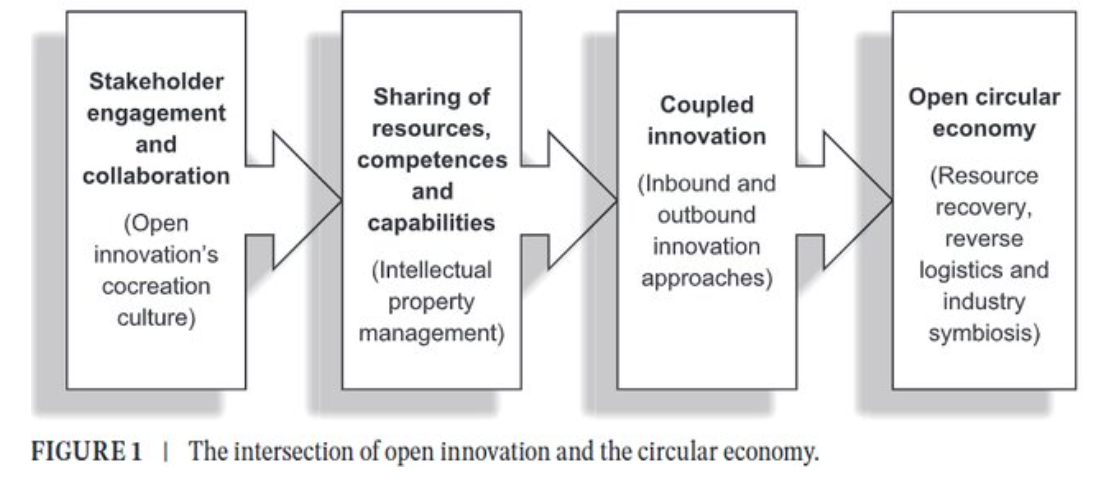
The collaborative efforts between organizations, individuals, and various stakeholders can lead to sustainable innovations, including to the advancement of circular economy models (Jesus and Jugend 2023; Tumuyu et al. 2024). Such practices are not without their own inherent challenges and pitfalls. For example, resource sharing, the recovery of waste and by-products from other organizations, and industrial symbiosis involve close partnership agreements among firms and their collaborators, as they strive in their endeavors to optimize resource use and to minimize waste (Battistella and Pessot 2024; Eisenreich et al. 2021). While the open innovation strategies that are mentioned in this article can lead to significant efficiency gains and to waste reductions, practitioners may encounter several difficulties and hurdles, to implement the required changes (Phonthanukitithaworn et al. 2024). Different entities will have their own organizational culture, strategic goals, and modus operandi that may result in coordination challenges among stakeholders.

Organizations may become overly reliant on sharing resources or on their symbiotic relationships, leading to vulnerabilities related to stakeholder dependencies (Battistella and Pessot 2024). For instance, if one partner experiences disruptions, such as operational issues or financial difficulties, it can adversely affect the feasibility of the entire network. Notwithstanding, organizations are usually expected to share information and resources when they are involved in corporate innovation hubs and clusters. Their openness can lead to concerns about knowledge leakages and intellectual property theft, which may deter companies from fully engaging in resource-sharing initiatives, as they pursue outbound innovation approaches.

Other challenges may arise from resource recovery, reverse logistics, and product-life extension strategies (Johnstone 2024). The implementation of reverse logistics systems can be costly, especially for small and micro enterprises. The costs associated with the collection, sorting, and processing of returned products and components may outweigh the benefits, particularly if the market for recovered materials is not well established (Panza et al. 2022; Sgambaro et al. 2024). Moreover, the effectiveness of resource recovery methodologies and of product-life extension strategies would be highly dependent on the stakeholders’ willingness to return products or to participate in recycling programs. Circular economy practitioners may have to invest in promotional campaigns to educate their stakeholders about sustainable behaviors. There may be instances where existing recovery and recycling technologies are not sufficiently advanced or widely available, in certain contexts, thereby posing significant barriers to the effective implementation of open circular innovations. Notwithstanding, there may be responsible practitioners and sustainability champions that may struggle to find reliable partners with appropriate technological solutions that could help them close the loop of their circular economy.

In some scenarios, emerging circular economy enthusiasts may be eager to shift from traditional product sales models to innovative product-service systems. Yet, such budding practitioners can face operational challenges in their transitions to such circular business models. They may have to change certain business processes, reformulate supply chains, and also redefine their customer relationships, to foster compliance with their modus operandi. These dynamic aspects can be time-consuming, costly, and resource intensive (Eisenreich et al. 2021). For instance, the customers who are accustomed to owning tangible assets may resist shifting to a product-service system model. Their reluctance to accept the service providers’ revised terms and conditions can hinder the adoption of circular economy practices. The former may struggle to convince their consumers to change their status quo, by accessing products as a service, rather than owning them (Sgambaro et al. 2024). In addition, the practitioners adopting products-as-a-service systems may find it difficult to quantify their performance outcomes related to resource savings and customer satisfaction levels and to evaluate the success of their product-service models, accurately, due to a lack of established metrics.

In a similar vein, the customers of sharing economies and leasing systems ought to trust the quality standards and safety features of the products and services they use (Sergianni et al. 2024). Any negative incidents reported through previous consumers’ testimonials and reviews can undermine the prospective customers’ confidence in the service provider or in the manufacturer who produced the product in the first place. Notwithstanding, several sharing economy models rely on community participation and localized networks, which can pose possible challenges for scalability. As businesses seek to expand their operations, it may prove hard for them to consistently maintain the same level of trust and quality in their service delivery. Moreover, many commentators argue that the rapid growth of sharing economies often outpaces existing regulatory frameworks. The lack of regulations, in certain jurisdictions, in this regard, can create uncertainties and gray areas for businesses as well as for their consumers.

Read further: https://onlinelibrary.wiley.com/doi/10.1002/bse.4216 (the full references are available here).

This research is also available via ResearchGate, Academia.edu, Social Science Research Network and through University of Malta’s Open Access Repository.

Leave a comment

Filed under Circular Economy, circular economy, Corporate Sustainability and Responsibility, Open Innovation

Stakeholder engagement disclosures in sustainability reports

This is an excerpt from one of my latest articles, published through Business Ethics, the Environment and Responsbility.

Suggested citation: Galeotti, R. M., Camilleri, M. A., Roberto, F., & Sepe, F. (2023). Stakeholder engagement disclosures in sustainability reports: Evidence from Italian food companies. Business Ethics, the Environment & Responsibility, Ahead-of-print, 1–20, https://doi.org/10.1111/beer.12642 

Abstract

More businesses are embedding stakeholder engagement (SE) practices in their corporate disclosures. This article explores the extent to which SE practices are featured in the sustainability reports (SRs) of 48 Italian food and beverage businesses, following the latest Global Reporting Initiative (GRI) standards. The researchers analyze the content of their SRs dated 2020 and 2021. They utilize a panel regression technique to examine the relationship between stakeholder engagement disclosures (SED) and corporate financial performance (CFP), and to investigate the mediating role of SR assurance. The results show a positive and significant relationship between SED and CFP. They also confirm that there is a moderating effect from SR assurance on this causal path. However, the findings reveal that SED in SRs of Italian food companies is still moderate. This contribution builds on the logic behind the stakeholder theory. It implies that there is scope for food companies to forge relationships with stakeholders. It indicates that it is in their interest to disclose material information about their SE practices in their SR and to organize third party assurance assessments in order to improve their legitimacy with stakeholders.

1 INTRODUCTION

The sustainability agenda has gained significant attention within the global food sector (Rueda et al., 2017), and it is becoming a growing concern among stakeholders (Al Hawaj & Buallay, 2022). The food industry is heavily reliant on natural and technological resources such as water, energy, chemicals, and fossil fuels, and therefore, has a substantial impact on the environment and the society (Buallay, 2020; Camilleri, 2021; Ramos et al., 2020). The actions of food manufacturers and retailers can significantly affect the health of individuals. Their ability to choose, process, package, transport, and promote sustainable food could have an impact on what people consume and on their overall well-being. As they interact directly with consumers, they are subject to intense scrutiny and requests for transparency. Stakeholders, including governmental institutions, consumers, and the global community, have called upon food companies to adopt more sustainable practices and to pay more attention to food sustainability (Friedrich et al., 2012; Troise et al., 2021). Very often, they are raising awareness about value creation opportunities to persuade them to engage in responsible production and consumption behaviors (Attanasio et al., 2021), and to forge relationships with marketplace stakeholders (Camilleri, 2020).

The interactions between firms and their external environment constitute a vital characteristic of a sustainable business model, owing to the unique value stream that stakeholder engagement (SE) can offer. In this context, sustainability disclosures can act as a catalyst to foster trust, enhance procedures and systems, promote the firm’s vision and strategy, decrease compliance expenses, and generate competitive advantages (Cardoni et al., 2022). Companies operating in the food sector are principally challenged in their efforts to deliver Sustainability Reports (SRs) that provide useful information to both internal and external stakeholders (D’Adamo, 2022). Research examining the role of sustainability reporting in enhancing firm performance in this sector is limited. Some studies suggest a positive relationship between strong sustainability reporting and return on assets (ROA) (Al Hawaj & Buallay, 2022), increased sales (Sen & Bhattacharya, 2001) or reduced cost of capital (Garzón-Jiménez & Zorio-Grima, 2022).

Given the complexity of the food sector, which is a typical multistakeholder context (Al Hawaj & Buallay, 2022), it is particularly relevant for food companies to ensure that their SRs provide accurate and thorough disclosures of their SE practices. SE is a complex and distinct activity that has emerged in the preparation of SRs (Greenwood, 2007) and it is crucial to reflect on the way it is conducted (Petruzzelli & Badia, 2023). The reporting entities cannot ignore their stakeholders’ relationships from their corporate disclosures. If they conceal any material information on this matter from their SR, they risk damaging their reputation and image (Ardiana, 2019; De Micco et al., 2021; Manetti, 2011; Miles & Ringham, 2020).

Academic research on SE is an evolving area of investigation due to the increasing scientific and professional interest in sustainability reporting issues (Camilleri, 2015; Stocker et al., 2020). Prior studies have indicated that many companies fail to provide complete disclosures of SE processes (Moratis & Brandt, 2017), and show an inadequate level of SE procedures (Petruzzelli & Badia, 2023; Venturelli et al., 2018). However, despite the significance of this subject, the number of empirical academic contributions on SE remains limited, making it important to further explore this topic. In such a context, several scholars are calling for further studies that seek to investigate how, why, where, and when firms are engaging with stakeholders. In addition, they are encouraging them to explore whether they are disclosing the details about their stakeholder relationships in their SRs (Gagné et al., 2022; Gao & Zhang, 2006; Hörisch et al., 2015).

The purpose of this article is twofold. The first one is to investigate the extent to which SE is featured in the SRs of 48 Italian unlisted food companies (that were relying on GRI’s new standards in the period 2020–2021), with the objective to verify their focus on SE disclosures (SED) process. The authors examine their SR’s content, in terms of the report preparers’ motivations and methods. They also verify whether they indicated specific stakeholders in their disclosures. This paper raises awareness on the role of SE in the sustainability reporting of food companies. It clarifies how and to what extent food companies are communicating directly with stakeholders, gathering feedback from them, and how explicitly they are involving them in the SR process. To this aim, the researchers developed an SE index composed of 7 categories and 21 items derived from prior literature on the topic and adapted from the latest Global Reporting Initiative (GRI) standards. The proposed index provides a systematic approach to examining the SE practices and activities disclosed by sample firms. Content analysis (a binary coding system) of GRI SRs was carried out to calculate the overall SED score. The second goal of this contribution is to investigate the relationship between SED and corporate financial performance (CFP). In addition, this research analyzes the moderating effects of SR assurance on SED-CFP causal link. Hence, this contribution addresses the following research questions:

  • RQ1: What is the state and extent of SED in the SRs of food companies?
  • RQ2: Is there a relationship between SED in SRs and CFP in the food industry? If there is, how and to what extent, is this relationship mediated by SR assurance?

This research explores the above-mentioned questions and provides insights on the SE processes of Italian Food companies. It builds on the Stakeholder Theory (ST; Freeman, 1984), as it seeks to explain whether SE processes are integrated in their SRs. The authors anticipate that the exploratory content analysis on the sample firms’ SRs indicate that the average level of SE is not significantly high in food companies in Italy, however, there is an increasing pattern of SED during the study period. While SE seems common practice, many firms are failing to provide the details on their stakeholder relationships in their SRs. The findings suggest that most of the engagement modes disclosed are unidirectional (level 1—Inform) with minimal emphasis on deep involvement strategies (level 3—Involve). Furthermore, only 32% of the sample seek assurance on the information disclosed.

Results from the panel data analysis provide evidence that there is a significant positive association between SED and CFP. Findings also show that SR assurance by accounting firms accentuates this effect. An extensive literature review suggests that this study, to the best of the authors’ knowledge, is the first to use food companies’ SRs to investigate the impact of SED on CFP introducing the interactive variable of SR third-party assurance, which adds new knowledge to SE and sustainability reporting literature from a specific industry in an advanced economy. Considering the maturity of Italian sustainability reporting and assurance practices (KPMG, 2022; Larrinaga et al., 2020) the Italian context is particularly relevant in explaining the interest of food companies into properly communicating SE activities in SRs. In these terms, this study contributes to a deeper understanding of the underexplored area of SE in a specific industry, highlighting the strategies used by Italian food companies to manage the SE communication process. Specifically, it provides insights to improve the framing of SED and gives evidence of the value relevance of SED and SR assurance for companies operating in the food sector. Therefore, this research sheds light on the advancement and enhancement of food company–stakeholder relations, particularly from the perspective of value co-creation. The findings will help managers identify key focus areas where they can improve the SED process aiming at creating shared value and foster mutually beneficial relationships with stakeholders.

The remainder of this study is structured as follows. The next section deals with the paper’s conceptual framework and hypotheses development. This is followed by the research design and methodology. Finally, the results, discussion, including recommendations, limitations, and hints for future research are presented.

Read further (this publication is available in its entirety, as it is an open-access article).

Leave a comment

Filed under Corporate Social Responsibility, Corporate Sustainability and Responsibility, CSR, ESG Reporting, Stakeholder Engagement, Sustainability

CALL FOR PAPERS: The circular economy of surplus food (in the hospitality industry)

A SPECIAL ISSUE entitled,’Responsible consumption and production of food: Opportunities and challenges for hospitality practitioners‘ will be published through the Journal of Sustainable Tourism.

Special Issue Editor(s)

Mark Anthony Camilleri, University of Malta, Malta, and Northwestern University, United States of America.

mark.a.camilleri@um.edu.mt

Antonino Galati, Universita’ degli studi di Palermo, Italy.

antonino.galati@unipa.it

Demetris Vrontis, University of Nicosia, Cyprus.

vrontis.d@unic.ac.cy

Previous research explored the circular economy practices of different businesses in various contexts; however, limited contributions have focused on the responsible production and consumption of food (Huang et al., 2022; Van Riel et al., 2021). Even fewer articles sought to explore environmental, social and governance (ESG) dimensions relating to the sustainable supply chain management of food and beverages in the tourism context.

This special issue will shed light on the responsible practices in all stages of food preparation and consumption in the tourism and hospitality industry. It raises awareness on sustainable behaviors that are aimed to reduce the businesses’ externalities including the generation of food waste on the natural environment. It shall put forward relevant knowledge and understanding on good industry practices that curb food loss. It will identify the strengths and weaknesses of extant food supply chains as well as of waste management systems adopted in the sector. It is hoped that prospective contributors identify laudable and strategic initiatives in terms of preventative and mitigating measures in terms of procurement and inventory practices, recycling procedures and waste reduction systems involving circular economy approaches.

Academic researchers are invited to track the progress of the tourism businesses on the United Nations’ Sustainable Development Goal SDG12 – Responsible Consumption and Production. They are expected to investigate in depth and breadth, how tourism businesses are planning, organizing, implementing and measuring the effectiveness of their responsible value chain activities. They may utilize different methodologies to do so. They can feature theoretical and empirical contributions as well as case studies of organizations that are: (i) reusing and recycling of surplus food, (ii) utilizing sharing economy platforms and mobile apps (that are intended to support business practitioners and prospective consumers to reduce the food loss and waste), (iii) contributing to charitable institutions and food banks, through donations of surplus food, and/or (iv) recycling inedible foods to compost, among other options.

The contributing authors could clarify how, where, when and why tourism businesses are measuring their ESG performance on issues relating to the supply chain of food and beverage. They may refer to international regulatory instruments and guidelines (Camilleri, 2022),  including the International Standards Organization (ISO) and Global Reporting Initiative (GRI) standards, among others, to evaluate the practitioners’ ESG performance through: a) Environmental Metrics: The businesses’ circularity; Recycling and waste management; and/or Water security; b) Social Metrics: Corporate social responsibility; Product safety; Responsible sourcing; and/or Sustainable supply chain, and; c) Governance: Accounting transparency; Environmental sustainability reporting and disclosures.

They could rely on GRI’s Standards 2020, as well as on GRI 204: Procurement Practices 2016; GRI 303: Water and Effluents 201; GRI 306: Effluents and Waste 2016; GRI 306: Waste 2020; GRI 308: Supplier Environmental Assessment 2016 and GRI 403: and to Occupational Health and Safety 2018, to assess the businesses’ ESG credentials.

Prospective submissions ought to clearly communicate about the positive multiplier effects of their research (Ahn, 2019). They can identify responsible production and consumption behaviors that may result in operational efficiencies and cost savings in their operations (Camilleri, 2019). At the same time, they enable them to improve their corporate image among stakeholders (hence they can increase their financial performance). They can examine specific supply chain management initiatives involving open innovation, stakeholder engagement and circular economy approaches that may ultimately enhance the businesses’ legitimacy in society. More importantly, they are urged to elaborate on the potential pitfalls and to discuss about possible challenges for an effective implementation of a sustainable value chain of food-related products and their packaging, in the tourism and hospitality industry (Galati et al., 2022).

It is anticipated that the published articles shall put forward practical implications for a wide array of tourism stakeholders, including for food manufacturers and distributors, airlines, cruise companies, international hotel chains, hospitality enterprises, and for consumers themselves. At the same time, they will draw their attention to the business case for responsible consumption and production of food through strategic behaviors.

Potential topics may include but are not limited to:

 –          Responsible food production for tourism businesses

–           Responsible food consumption practices in the hospitality industry

–           Circular economy and closed loop systems adopted in restaurants, pubs and cafes

–           Open innovation and circular economy approaches for a sustainable tourism industry

–           Recycling of inedible food waste to compost

–           Measuring performance of responsible food production/sustainable consumption

–           Digitalisation and the use of sharing economy platforms to reduce food waste

–           Artificial intelligence for sustainable food systems

–           Sustainable food supply chain management

–           Food waste and social acceptance of circular approaches

–           Stakeholders’ roles to minimize food waste in the hospitality industry

–           Food donation initiatives to decrease food loss and waste

References

Ahn, J. (2019). Corporate social responsibility signaling, evaluation, identification, and revisit intention among cruise customers. Journal of Sustainable Tourism, 27(11), 1634-1647.

Camilleri, M. A. (2019). The circular economy’s closed loop and product service systems for sustainable development: A review and appraisal. Sustainable Development, 27(3), 530-536.

Camilleri, M. A. (2022). The rationale for ISO 14001 certification: A systematic review and a cost–benefit analysis. Corporate Social Responsibility and Environmental Management, 29(4), 1067-1083.

Galati, A., Alaimo, L. S., Ciaccio, T., Vrontis, D., & Fiore, M. (2022). Plastic or not plastic? That’s the problem: Analysing the Italian students purchasing behavior of mineral water bottles made with eco-friendly packaging. Resources, Conservation and Recycling, 179, https://doi.org/10.1016/j.resconrec.2021.106060

Huang, Y., Ma, E., & Yen, T. H. (2022). Generation Z diners’ moral judgements of restaurant food waste in the United States: a qualitative inquiry. Journal of Sustainable Tourism, https://doi.org/10.1080/09669582.2022.2150861

Van Riel, A. C., Andreassen, T. W., Lervik-Olsen, L., Zhang, L., Mithas, S., & Heinonen, K. (2021). A customer-centric five actor model for sustainability and service innovation. Journal of Business Research, 136, 389-401.

Leave a comment

Filed under academia, Call for papers, Circular Economy, environment, food loss, food waste, Hospitality, hotels, responsible consumption, responsible production, responsible tourism, restaurants, Shared Value, sharing economy, Stakeholder Engagement, Strategy, Sustainability, Sustainable Consumption, sustainable development, sustainable production, sustainable tourism, tourism

Creating shared value through open innovation approaches

This is an excerpt from one of my latest articles that was published through Business Strategy and the Environment.

Big businesses are breaking down traditional silos among their internal departments to improve knowledge flows within their organizations and/or when they welcome external ideas and competences from external organizations (Aakhus & Bzdak, 2015; Chesbrough, 2003; Chesbrough & Bogers, 2014). Open innovation is related to the degree of trust and openness with a variety of stakeholders (Chesbrough, 2020; Leonidou et al., 2020; Zhu et al., 2019). Debately, this concept clearly differentiates itself from closed innovation approaches that are associated with traditional, secretive business models that would primarily rely on the firms’ internal competences and resources. In the latter case, the companies would withhold knowledge about their generation of novel ideas, including incremental and radical innovations within their research and development (R&D) department. They would be wary of leaking information to external parties. This is in stark contract with open innovation.

Open innovation is rooted in the belief that the dissemination of knowledge and collaboration with stakeholders would lead to win-win outcomes for all parties. Chesbrough (2003) argued that companies can maximize the potential of their disruptive innovations if they work in tandem with internal as well as with external stakeholders (rather than on their own) in order to improve products and service delivery. His open innovation model suggests that corporations ought to benefit from diverse pools of knowledge that are distributed among companies, customers, suppliers, universities, research center industry consortia, and startup firms.

Chesbrough (2020) distinguished between different types of insider information that could or could not be leaked to interested parties. He cautioned that sensitive information (he referred to as the “Crown Jewels”) ought to be protected and can never be revealed to external stakeholders. Nevertheless, he argued that an organization can selectively share specific communications with a “Middle Group” comprising key customers, suppliers, and/or partners in order to forge closer relationships with them. The companies’ internal R&D departments can avail themselves from their consumers’ insights as well as from external competences, capabilities, and resources, to cocreate value to their business and to society at large.

Chesbrough (2020) went on to suggest that a company should open-up their “long tail of intellectual property to everyone.” He contended that organizations may do so to save on their patent renewal fees. During the coronavirus (COVID-19) pandemic, many businesses joined forces and adopted such an intercompany open innovation approach to mass produce medical equipment. For instance, Ford Motor Co. sent its teams of engineers to consult with counterparts at 3M and General Electric to produce respirators, ventilators, and new 3-D-printed face shields, for the benefit of healthcare employees and COVID-19 patients (Washington Post, 2020).

Corporations are increasingly collaborating with experts hailing from diverse industry sectors to innovate themselves and to search for new sources of competitive advantage (Porter & Kramer, 2011; Roszkowska-Menkes, 2018). They may usually resort to open innovation approaches when they engage with talented individuals who work on a freelance basis or for other organizations, to benefit from their support. There is scope for companies to forge fruitful relationships with external stakeholders, who may be specialized in specific fields, to help them identify trends, penetrate into new markets, to develop new products, or to diversify their business model, to establish new revenue streams for their firm (Camilleri & Bresciani, 2022; Centobelli, Cerchione, Chiaroni, et al., 2020; Su et al., 2022). These stakeholders can add value to host organizations in their planning, organization, and implementation of social and environmentally sustainable innovations (Camilleri, 2019a; Sajjad et al., 2020).

Open innovation holds great potential to create shared value opportunities for business and society (Aakhus & Bzdak, 2015; Alberti & Varon Garrido, 2017; Roszkowska-Menkes, 2018). This argumentation is closely related to the strategic approach to corporate social responsibility (CSR) and to the discourse about corporate sustainability (Camilleri, 2022a; Eweje, 2020). Previous literature confirmed that open innovation processes can have a significant effect on the companies’ triple bottom line in terms of their economic performance as well as on their social and environmental credentials (Gong et al., 2020; Grunwald et al., 2021; Mendes et al., 2021; Testa et al., 2018).

The businesses’ ongoing engagement with their valued employees may result in a boost in their intrinsic motivations, morale, job satisfaction, and low turnover levels and could increase their productivity levels (Camilleri, 2021; Chang, 2020; Kumar & Srivastava, 2020; Schmidt-Keilich & Schrader, 2019). Their collaboration with external (expert) stakeholders may lead to positive outcomes including to knowledge acquisition, operational efficiencies, cost savings, and to creating new revenue streams from the development of innovative projects, among others (Ghodbane, 2019; Huizingh, 2011). Open innovation agreements are clearly evidenced when businesses forge strong relationships with internal and external stakeholders to help them plan, develop, promote, and distribute products (Bresciani, 2017; Camilleri, 2019b; Chesbrough & Bogers, 2014; Greco et al., 2022; Loučanová et al., 2022; Troise et al., 2021). They may do so to be in a better position to align corporate objectives (including to increase their bottom lines) with their social and environmental performance (Alberti & Varon Garrido, 2017; Herrera & de las Heras-Rosas, 2020; Mendes et al., 2021).

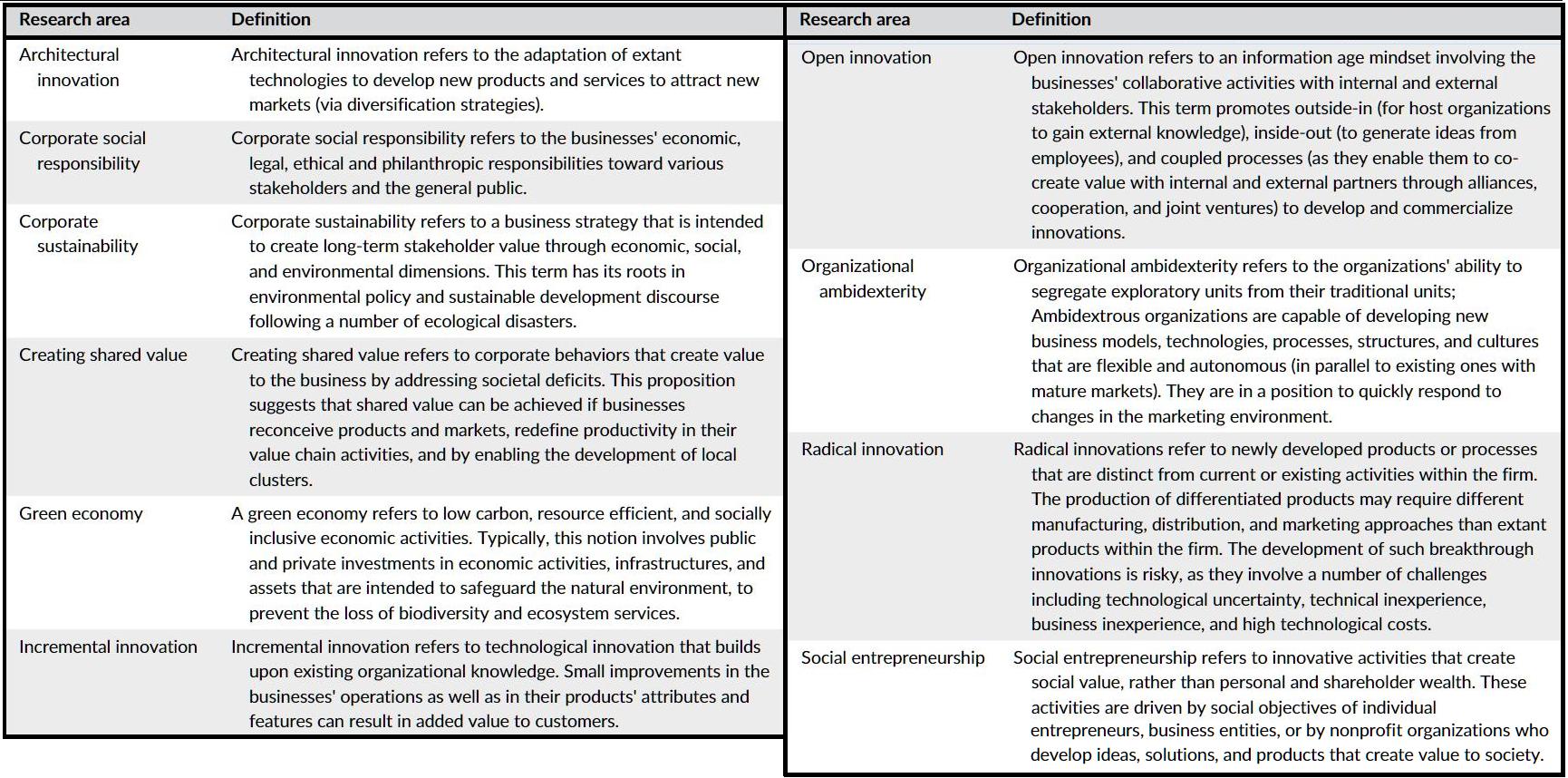
This paper provides a clear definition of the most popular paradigms relating to the intersection of open innovation approaches and corporate sustainability, as reported in Table 1.

Table 1. A list of the most popular paradigms relating to the intersection of open innovation approaches and corporate sustainability

“The following section synthesizes the content that was reported in past contributions. The researchers deliberate about open innovation opportunities and challenges for host organizations as well as for their collaborators”.

Open innovation opportunities

In the main, many commentators noted that open innovation approaches have brought positive outcomes for host organizations and their collaborators. The research questions of the extracted contributions (that are reported in Table 2) indicated that in many cases, companies are striving in their endeavors to build productive relationships with different stakeholders (Mtapuri et al., 2022; Peña-Miranda et al., 2022; Shaikh & Randhawa, 2022), to create value to their businesses as well as to society (Döll et al., 2022; Ghodbane, 2019; Roszkowska-Menkes, 2018). Very often, they confirmed that open innovation practitioners are promoting organizational governance (Aakhus & Bzdak, 2015; Sánchez-Teba et al., 2021), fair labor practices (Chang, 2020; Herrera & de las Heras-Rosas, 2020; Kumar & Srivastava, 2020; Schmidt-Keilich & Schrader, 2019), environmentally responsible investments (Aakhus & Bzdak, 2015; Cigir, 2018; Mendes et al., 2021; van Lieshout et al., 2021; Yang & Roh, 2019), and consumer-related issues (Greco et al., 2022; Loučanová et al., 2022; Wu & Zhu, 2021; Yang & Roh, 2019), among other laudable behaviors.

Many researchers raised awareness on the corporate sustainability paradigm (van Marrewijk, 2003) as they reported about the businesses’ value creating activities that are synonymous with the triple bottom line discourse, in terms of their organizations’ social, environment, and economic performance (Chang, 2020; Döll et al., 2022; Su et al., 2022; van Lieshout et al., 2021; Yang & Roh, 2019).

Other authors identified strategic CSR (Fontana, 2017; Porter & Kramer, 2006) practices and discussed about shared value perspectives (Abdulkader et al., 2020; Porter & Kramer, 2011) that are intended to improve corporate financial performance while enhancing their social and environmental responsibility credentials among stakeholders (Ghodbane, 2019; Roszkowska-Menkes, 2018; Sánchez-Teba et al., 2021).

Mendes et al. (2021) argued that strategic CSR was evidenced through collaborative approaches involving employees and external stakeholders. They maintained that there is scope for businesses to reconceive their communication designs with a wide array of stakeholders. Similarly, Aakhus and Bzdak (2015) contended that stakeholder engagement and open innovation processes led to improved decision making, particularly when host organizations consider investing in resources and infrastructures to be in a better position to address the social, cultural, and environmental concerns.

Firms could implement open innovation approaches to benefit from outsiders’ capabilities and competences (of other organizations, including funders, partners, and beneficiaries, among others) (Alberti & Varon Garrido, 2017). They may benefit from the external stakeholders’ support to diversify their business and/or to develop innovative products and services. Their involvement could help them augment their financial performance in terms of their margins and return on assets (Ben Hassen & Talbi, 2022).

Ongoing investments in open and technological innovations in terms of process and product development can result in virtuous circles and positive multiplier effects for the businesses as well as to society. Practitioners can forge cooperative agreements with social entrepreneurs, for-profit organizations, or with non-profit entities. Many companies are increasingly recruiting consultants who are specialized in sustainable innovations. Alternatively, they engage corporate reporting experts to help them improve their ESG credentials with stakeholders (Holmes & Smart, 2009).

Such open innovation approaches are intrinsically related to key theoretical underpinnings related to CSR including the stakeholder theory, institutional theory, signaling theory, and to the legitimacy theory, among others (Authors; Freudenreich et al., 2020). Firms have a responsibility to bear toward societies where they operate their business (in addition to their economic responsibility to increase profits). Their collaborative stance with knowledgeable professionals may provide an essential impetus for them to improve their corporate reputation and image with customers and prospects.

The open innovation paradigm suggests that it is in the businesses’ interest to engage with stakeholders through outside-in (to benefit from external knowledge and expertise), inside-out (to avail themselves of their extant competences and capabilities), and coupled (cocreation) processes with internal and external stakeholders (Enkel et al., 2009; Roszkowska-Menkes, 2018). Its theorists claim that outside-in processes are intended to enhance the company’s knowledge as they source external information from marketplace stakeholders including suppliers, intermediaries, customers, and even competitors, among others.

Many researchers emphasize that there are a number of benefits resulting from coopetition among cooperative competitors. Their inside-out collaborative processes stimulate innovations, lead to improvements in extant technologies, and provide complementary resources, resulting in new markets and products. Competing businesses can exchange their ideas and innovations with trustworthy stakeholders, outside of their organizations’ boundaries in order to improve their socio-emotional wealth (Herrera & de las Heras-Rosas, 2020). The proponents of open innovation advocate that businesses ought to foster an organizational culture that promotes knowledge transfer, ongoing innovations, and internationalization strategies.

Michelino et al. (2019) held that organizations ought to engage in ambidextrous approaches. These authors commended that practitioners should distinguish between exploratory and traditional units of their business model. They posited that it would be better for them if they segregated the former from the latter ones, especially if they want to develop new processes, products, and technologies in mature markets. The organizations’ exploratory units could be in a better position to flexibly respond to ongoing changes in their marketing environment.

Other researchers noted that it would be better if the businesses’ R&D activities are attuned with the practitioners’ expertise and/or with their stakeholders who are involved in their open innovation knowledge sharing strategies (Talab et al., 2018). Companies can generate new sources of revenue streams, even in areas that are associated with social issues and/or with green economies, if they reach new customers in different markets (Centobelli, Cerchione, & Esposito, 2020; Chang, 2020; Su et al., 2022; Yang & Roh, 2019). They may partner with other organizations to commercialize their (incremental or radical) innovations through licensing fees, franchises, joint ventures, mergers and acquisitions, spinoffs, and so forth.

Many commentators made reference to coupled processes involving a combination of outside-in and inside-out open innovation processes (Roszkowska-Menkes, 2018). The businesses’ transversal alliances involving horizontal and vertical collaborative approaches with external stakeholders can help them co-create ideas to foster innovations (Greco et al., 2022; Rupo et al., 2018). Several open innovation theorists are increasingly raising awareness on how collaborative relationships with stakeholders including consumers, lead users, organizations who may or may not be related to the company per se, universities as well as research institutions, among others, are supporting various businesses in their R&D stages and/or in the design of products (Khan et al., 2022; Naruetharadhol et al., 2022). Very often, their research confirmed that such cocreation processes are utilized in different contexts, for the manufacturing of a wide range of technologies.

The findings from this review reported that, for the time being, just a few researchers are integrating open innovation’s cocreation approaches with corporate sustainability outcomes. A number of contributing authors insisted that there are many advantages for socially and environmentally responsible companies to embrace open innovation approaches (Carayannis et al., 2021; Cigir, 2018; Mendes et al., 2021; Yang & Roh, 2019). In many cases, they argued that the practitioners’ intentions are to broaden their search activities and to avail themselves from talented employees and external experts in exchange for enhanced social legitimacy, thereby availing themselves of innovation capital for future enterprising activities (Greco et al., 2022; Holmes & Smart, 2009).

Hence, businesses may benefit from the competences and capabilities of individual consultants and organizations (from outside their company) to tap into the power of co-creation, to source ideas for social and green innovations (van Lieshout et al., 2021). These alliances are meant to support laudable causes, address the deficits in society, and/or to minimize the businesses’ impact on the natural environment (Altuna et al., 2015; Khan et al., 2022). For-profit organizations can resort to open innovation approaches to avail themselves of resources and infrastructures that are not currently available within their firm. This way they can reduce their costs, risks, and timescales when diversifying into sustainable business ventures, including those related to social entrepreneurship projects (Peredo & McLean, 2006; Shapovalov et al., 2019). They may do so to leverage their business, to gain a competitive advantage over their rivals.

Open innovation challenges

Open innovations could expose the businesses to significant risks and uncertainties associated with enmeshed, permeable relationships with potential collaborators (Gomes et al., 2021; Madanaguli et al., 2023). Various authors contended that practitioners should create an organizational culture that is conducive to open innovation (Herrera & de las Heras-Rosas, 2020; Mohelska & Sokolova, 2017). Generally, they argued that host organizations should communicate and liaise with employees as well as with external partners, during the generation of ideas and in different stages of their R&D projects. Some researchers noted that open innovation practitioners tend to rely on their external stakeholders’ valuable support to diversify their business models, products, or services (Chalvatzis et al., 2019; Park & Tangpong, 2021; Su et al., 2022).

A number of academic commentators argued that practitioners have to set clear, specific, measurable, attainable, relevant, and timely goals to them before they even start working on a project together (Alberti & Varon Garrido, 2017). In many cases, they maintained that host organizations are expected to foster a strong relationship with collaborators. At the same time, they should ensure that the latter ones comply with their modus operandi (Dahlander & Wallin, 2020). In reality, it may prove difficult for the business leaders to trust the new partners. Unlike their employees, the external parties are not subject to the companies’ codes of conduct, rules, and regulations (Chesbrough, 2020; Shamah & Elssawabi, 2015). A few authors indicated that senior management may utilize extrinsic and intrinsic incentives to empower and motivate internal as well as external stakeholders to pursue their organization’s open innovation objectives (Chang, 2020; Greco et al., 2022; Holmes & Smart, 2009; Roszkowska-Menkes, 2018; Schmidt-Keilich & Schrader, 2019).

Some researchers identified possible threats during and after the implementation of joint projects. Very often, they contended that host organizations risk losing their locus of control to external stakeholders who are experts in their respective fields (Madanaguli et al., 2023). The latter ones may possess unique skills and competences that are not readily available within the organization. A few authors cautioned that the practitioners as well as their collaborators are entrusted to safeguard each other’s intangible assets. A number of researchers warned and cautioned that they may risk revealing insider information about sensitive commercial details relating to their intellectual capital (Gomes et al., 2021). As a result, companies may decide to collaborate on a few peripheral tasks as they may be wary of losing their return on investments if they share trade secrets with their new partners, who could easily become their competitors. Their proprietary knowledge concerns are of course real and vital for their future prospects. Therefore, their relationships with internal and external stakeholders should be based on mutual trust and understanding in order to increase the confidence in the projects’ outcomes (Ferraris et al., 2020; Sánchez-Teba et al., 2021).

CONCLUSIONS

The companies’ ongoing engagement with internal and external stakeholders as well as their strategic CSR initiatives and environmentally sustainable innovations can generate economic value, in the long run. This review confirms that for-profit organizations are increasingly using open innovation approaches. At the same time, they are following ethical practices, adopting responsible human resources management policies, and investing in green technologies to gain institutional legitimacy and to create competitive advantages for their business. Many authors reported that their corporate sustainability behaviors can enhance their organizations’ reputation and image among customers as well as with marketplace stakeholders. At the same time, their laudable practices may even improve their corporate financial performance.

During COVID-19, many businesses turned to open innovation’s collaborative approaches. Various stakeholders joined forces and worked with other organizations, including with competitors, on social projects that benefit the communities where they operate their companies. In many cases, practitioners have realized that such partnerships with certain stakeholders (like researchers, knowledgeable experts, creative businesses, and non-governmental institutions, among others) enable their organizations to find new ways to solve pressing problems and at the same time helped them build a positive reputation. Indeed, open innovation approaches can serve as a foundation for future win-win alliances, in line with sociological research demonstrating that trust develops when partners voluntarily go the extra mile, to create value to their business and to society at large.

Yet, this research revealed that there is still a gap in the academic literature that links CSR/corporate sustainability with open collaborative approaches. At the time of writing, this paper, there were only 45 contributions on the intersection of these notions.

A full version of this open-access paper can be accessed through publisher: https://onlinelibrary.wiley.com/doi/full/10.1002/bse.3377

Leave a comment

Filed under academia, Business, Corporate Social Responsibility, Corporate Sustainability and Responsibility, environment, Open Innovation, Shared Value

Walking the talk about Corporate Social Responsibility Communications

This is an excerpt from one of my latest articles that was accepted for publication by Wiley’s Business Ethics, the Environment and Responsibility (formerly known as Business Ethics: A European Review).

Suggested citation: Camilleri, M.A. (2022). Walking the talk about corporate social responsibility communication: An Elaboration Likelihood Model perspective, Business Ethics, the Environment & Responsibility, https://onlinelibrary.wiley.com/doi/full/10.1111/beer.12427

(Source: Camilleri, 2022)

Theoretical implications

This contribution validated the Elaboration Likelihood Model’s (ELM’s) measures and key constructs relating to the Information Adoption Model (IAM). Specifically, this research identified the effects of information relevance, information accuracy, information accuracy, source trustworthiness and source expertise on the individual’ attitudes toward online CSR communications.

The results confirmed that both central as well as peripheral factors (to a lower extent) were having a significant effect on the targeted audiences’ changing attitudes toward corporate communications. In sum, this study indicated that online users appreciated relevant and timely CSR content from trusted sources – that were curated by experts. This finding is conspicuous with relevant theoretical underpinnings on ELM. For instance, Chen and Chang (2018) and even Rawlins (2008) contended that individuals are usually captivated by current, relevant, complete, accurate, reliable, comparable and clear communications.

Relevant academic literature reported that individuals may choose to pursue ELM’s central route, whenever they evaluate the quality of the arguments/information that is communicated to them (Petty & Cacioppo, 1986). Alternatively, if they are not interested or motivated on the content, they may usually rely on the sources’ credibility to form their attitudes and opinions on their messages. Previous research often utilized ‘source expertise’ and ‘source trustworthiness’ constructs to measure the respondents’ perceptions about the credibility of sources of information.

In this case, this study found that the research participants were more influenced by ELM’s central route processing as information timeliness and information relevance were having nuanced effect on attitudes when compared to the peripheral factors including source expertise. Evidently, the respondents reflected and thought on CSR communications they accessed through the Internet and via social media. This finding implies that the businesses’ elaborated, high-quality content was changing their stakeholders’ attitudes toward CSR information.

Nevertheless, the research model indicated that the participants were somehow affected by peripheral issues, particularly by the source expertise of content curators. Previous literature reported that the recipients of information can still be influenced by the peripheral route’s subjective cues and/or by heuristic inferences (i.e. low elaboration issues). For instance, many individuals are continuously exposed to corporate communications from businesses who have excellent credentials among their followers (Camilleri, 2021a).

The findings from this study revealed that source trustworthiness was the weakest antecedent of the individuals’ attitudes toward CSR communications. This result is similar to previous findings from other studies, where the researchers reported that there were lower effects from peripheral factors like source credibility/source trustworthiness (than from central factors) on information usefulness/attitudes toward information.

This research demonstrated that external stakeholders were mainly processing information relating to the businesses’ CSR activities through the central route, as they considered their communications as elaborate, timely and relevant. However, it also showed that they held positive perceptions about the expertise of content curators who were disseminating information on their CSR credentials via digital media

Managerial implications

This contribution has investigated the online users’ attitudes about CSR communications and revealed their perceptions about the sources’ credibility. It implies that businesses can improve their credentials if they publish quality CSR content that is appreciated by their stakeholders. This research suggests that external stakeholders expected businesses to publish relevant information that is accurate and timely. This finding suggests that there is scope for the businesses to regularly update their CSR webpages with the latest developments. For instance, they can publish certain information and newsfeeds about non-financial matters including on their immediate responses to COVID-19 like sanitization and hygienic measures in their workplace environments. They may disseminate health and safety information through social media sites or via online video sharing platforms. They can use different digital media to promote their businesses’ responsible behaviors toward their employees and the community at large, during different waves of the pandemic.

Ultimately, it is in the companies’ interest to communicate about appropriate ESG matters with different stakeholders (Camilleri, 2021b). Businesses ought to use corporate websites to disseminate information on commercial aspects, corporate governance policies, CSR and/or environmental sustainability initiatives as well as on COVID-19. In this day and age, they should also utilize social media networks (SNSs) on a regular basis, to raise awareness about their website, and to interact on different issues with their followers, in real time. They can publish appealing content including images and videos about their CSR activities to entice the curiosity of stakeholders. They may also share excerpts from their CSR disclosures and could feature forward-looking statements that shed light on their trajectories for a post COVID-19 era.

Limitations and directions for future research

This study is not without limitations. The measures that were used to capture the data were drawn from ELM and from its related IAM. These theoretical models were mostly referenced in previous studies that were mostly focused on the co-creation of content, including online reviews and electronic word of mouth publicity. Therefore, the survey items were adapted for a study that sought to explore the online users’ attitudes toward CSR communications. In this case, the results confirmed the reliability and validity of the constructs. Hence, prospective researchers are encouraged to replicate this study in other contexts.

Future studies may consider different constructs that may be drawn from other theoretical frameworks, to shed more light on the individuals’ attitudes toward online communications, information adoption and/or intentional behaviors. Researchers may adopt other constructs to evaluate different aspects of online content. They may investigate perceptions about information access, information understandability, data richness, interactivity and customization capabilities or information completeness, among others. Alternatively, they could determine whether the information is rhetoric, difficult to understand, confusing, ineffective or even useless for online users. Furthermore, alternative research methods and sampling frames can be used to capture and analyze the data. Interpretative studies can explore other stakeholders’ in-depth opinions and beliefs on CSR communications and delve deeper into their content.  Inductive studies may reveal other important issues on how to improve the quality and credibility of CSR disclosures in the digital age.

References

Camilleri, M. A. (2021a). Strategic dialogic communication through digital media during COVID-19. In M. A. Camilleri (Ed.), Strategic Corporate Communication in the Digital Age. Bingley: Emerald, pp. 1-18. https://www.researchgate.net/publication/343294285_Strategic_Dialogic_Communication_Through_Digital_Media_During_COVID-19_Crisis

Camilleri, M.A. (2021b). Strategic attributions of corporate social responsibility and environmental management: The business case for doing well by doing good! Sustainable Development, https://onlinelibrary.wiley.com/doi/full/10.1002/sd.2256

Chen, C. C., & Chang, Y. C. (2018). What drives purchase intention on Airbnb? Perspectives of consumer reviews, information quality, and media richness. Telematics and Informatics35(5), 1512-1523.

Petty, R. E., & Cacioppo, J. T. (1986). The elaboration likelihood model of persuasion. In Communication and persuasion (pp. 1-24). Springer, New York, NY.

Rawlins, B. (2008). Give the emperor a mirror: Toward developing a stakeholder measurement of organizational transparency. Journal of Public Relations Research, 21(1), 71-99.

This excerpt was adapted for a blog. The full paper can be downloaded through: https://www.researchgate.net/publication/359186812_Walking_the_talk_about_corporate_social_responsibility_communication_An_Elaboration_Likelihood_Model_perspective

Leave a comment

Filed under corporate communication, Corporate Social Responsibility, Corporate Sustainability and Responsibility, CSR, digital media, ESG Reporting

How can we combat climate change?

This is an excerpt from one of my latest contributions.

Suggested citation: Camilleri, M.A. (2022). The rationale for ISO 14001 certification: A systematic review and a cost-benefit analysis, Corporate Social Responsibility and Environmental Management, https://doi.org/10.1002/csr.2254

Source: UNFCCC.int

During the Paris Climate Conference (COP 21), one hundred ninety-six (196) countries pledged their commitment to implement environmental performance measures to reduce the effects of climate change. This conference has led to the development of the ‘Paris Agreement’ where signatories became legally bound to limit global warming to below 2°C, and possibly 1.5°C (Palea & Drogo, 2020; Secinaro, Brescia, Calandra & Saiti, 2020). They recognized the importance of averting and minimizing the environmental impact that is caused by climate change, by scaling up their efforts and support initiatives to reduce emissions, by building resilience among parties, and by promoting cooperation (Birindelli & Chiappini, 2021; Gatto, 2020).

In the aftermath of COP 21, many countries submitted their plans for climate action (these plans are also known as nationally determined contributions – NDCs), where they communicated about their tangible actions that were aimed to reduce their greenhouse gas emissions and the impacts of rising temperatures (Fatica & Panzica, 2021; Gerged, Matthews & Elheddad, 2021).  Consequentially, intergovernmental organizations including the European Union (EU), among others, are increasingly establishing ambitious carbon neutrality goals and zero-carbon solutions to tackle climate change issues (Benz, Paulus, Scherer, Syryca & Trück, 2021).

Many countries are incentivizing businesses across different economic sectors, to reduce their emissions. For example, the EU member states are expected to reduce their greenhouse gas emissions by 40% before 2030, and by 60% prior to 2050 (EU, 2019). These targets would require the commitment of stakeholders from various sectors including those operating within the energy and transportation industries, among others.

The latest climate change conference (COP26) suggested that progress has been made on the signatories’ mitigation measures that were aimed to reduce emissions, on their adaptation efforts to deal with climate change impacts, on the mobilization of finance, and on the increased collaboration among countries to reach 2030 emissions targets. However, more concerted efforts are required to deliver on these four pledges (UNFCC, 2021).

This contribution raises awareness on the use of environmental management standards that are intended to support organizations of different types and sizes, including private entities, not-for-profits as well as governmental agencies, to improve their environmental performance credentials. A thorough review of the relevant literature suggests that, over the years many practitioners have utilized the International Standards Organization’s ISO 14001 environment management systems standard to assist them in their environmental management issues (Baek, 2018; Delmas & Toffel, 2008; Erauskin‐Tolosa, Zubeltzu‐Jaka, Heras‐Saizarbitoria & Boiral, 2020; Melnyk, Sroufe & Calantone, 2003).

Many academic commentators noted that several practitioners operating in different industry sectors, in various contexts, are implementing ISO 14001 requirements to obtain this standard’s certification (Boiral, Guillaumie, Heras‐Saizarbitoria & Tayo Tene, 2018; Para‐González & Mascaraque‐Ramírez, 2019; Riaz, & Saeed, 2020). Whilst several researchers contended about the benefits of abiding by voluntary principles and guidelines (Camilleri, 2018), others discussed about the main obstacles to obtaining impartial audits, assurances and certifications from independent standard setters (Hillary, 2004; Ma, Liu, Appolloni & Liu, 2021; Robèrt, Schmidt-Bleek, Aloisi De Larderel … & Wackernagel, 2002; Teng & Wu, 2018).

Hence, this research examines identifies the rationale for ISO 14001 certification (Carvalho, Santos & Gonçalves, 2020; Eltayeb, Zailani & Ramayah, 2011; Lee, Noh, Choi & Rha, 2017; Potoski & Prakash, 2005) that is supposedly intended to improve the organizations’ environmental performance and to enhance their credentials. Specifically, this contribution’s objectives are threefold. Firstly, it provides a generic background on voluntary instruments, policies and guidelines that are intended to promote corporate environmentally responsible behaviors. Secondly, it presents the results from a systematic review of academic articles that were focused on ISO 14001 – environment management systems. Thirdly, it synthesizes the findings from high impact papers and discusses about the benefits and costs of using this standard. In conclusion, it elaborates on the implications of this research, it identifies its limitations and points out future research avenues.

In sum, this contribution differentiates itself from previous articles, particularly those that sought to investigate the introduction and implementation of environment management systems in specific entities. This research involves a two-stage systematic analysis. It appraises a number of empirical investigations, theoretical articles, reviews, case studies, discursive/opinion papers, from 1995-2021. Afterwards, it scrutinizes their content to shed more light on the pros and cons of using ISO 14001 as a vehicle to improve corporate environmental performance.

This paper can be downloaded, in its entirety, through ResearchGate: https://www.researchgate.net/publication/358557458_The_rationale_for_ISO_14001_certification_A_systematic_review_and_a_cost-benefit_analysis

Leave a comment

Filed under Business, Circular Economy, corporate citizenship, Corporate Social Responsibility, Corporate Sustainability and Responsibility, CSR, environment, Sustainability, sustainable development

The European Union’s corporate sustainability reporting directive (CSRD)

The European Union (EU)’s non-financial reporting directive (NFRD) law requires that large undertakings including corporations, listed businesses and government entities, among others, to disclose information on the way they operate and manage social and environmental challenges. This helps investors, civil society organisations, consumers, policy makers and other stakeholders to be in a better position to evaluate their non-financial performance (Camilleri, 2015; Camilleri, 2018; EU, 2014).

Recently, the EU (2021) put forward its proposal for a Corporate Sustainability Reporting Directive (CSRD), which would amend the existing reporting requirements of the NFRD. In sum, the proposal extends the audit requirement to large companies and listed businesses in regulated markets (except listed micro-enterprises). They will be expected to introduce more detailed reporting requirements, according to mandatory EU sustainability reporting standards. At the time of writing this contribution, it is envisaged that the first set of standards would be adopted by October 2022 (EU, 2021).

References:

Camilleri, M.A. (2015). Environmental, social and governance disclosures in Europe.  Sustainability Accounting, Management and Policy Journal, 6(2), 224-242. https://www.emerald.com/insight/content/doi/10.1108/SAMPJ-10-2014-0065/full/html

Camilleri, M.A. (2018). Theoretical insights on integrated reporting: The inclusion of non-financial capitals in corporate disclosures, Corporate Communications: An International Journal, 23(4), 567-581. https://www.emerald.com/insight/content/doi/10.1108/CCIJ-01-2018-0016/full/html

EU (2014). Directive 2014/95/EU of the European Parliament and of the Council of 22 October 2014 amending Directive 2013/34/EU as regards disclosure of non-financial and diversity information by certain large undertakings and groups. European Commission, Brussels, Belgium. https://eur-lex.europa.eu/legal-content/EN/TXT/?uri=CELEX%3A32014L0095

EU (2021). EU Taxonomy, Corporate Sustainability Reporting, Sustainability Preferences and Fiduciary Duties: Directing finance towards the European Green Deal COM/2021/188 final https://eur-lex.europa.eu/legal-content/EN/TXT/?uri=CELEX:52021DC0188

Leave a comment

Filed under Corporate Social Responsibility, Corporate Sustainability and Responsibility, CSR, ESG Reporting, Integrated Reporting

Why should hospitality businesses care about their stakeholders?

Image by Rob Monkman (React Mobile)

The following text was adapted from one of my latest articles that was published in Wiley’s Sustainable Development (Journal).

Suggested Citation: Camilleri, M.A. (2021). Strategic attributions of corporate social responsibility and environmental management: The business case for doing well by doing.  good! Sustainable Development. https://onlinelibrary.wiley.com/doi/full/10.1002/sd.2256

Introduction

The corporate social responsibility (CSR) notion became popularized during the latter part of 20th the century (Carroll, 2021; 1999; Moon, 2007). At the time, businesses were becoming more concerned on how their activities affected legitimate stakeholders and the development of society at large (Phillips, 2003; Freeman & Reed, 1983). Hence, various authors posited that CSR is a fertile ground for theory development and empirical analysis (McWilliams, Siegel & Wright, 2006).

Without doubt, the clarification of the meaning of CSR is a significant strand in the research agenda (Owen, 2005). CSR has developed as a rather vague concept of moral good or normative behaviors (Frederick, 1986). This construct was described as a relativistic measure of ‘the economic, legal, ethical and discretionary expectations that society had of organizations at a given point of time’ (Carroll, 1979). CSR tackled ‘social problem(s)’ to engender positive ‘economic benefit(s)’ to ensure ‘well paid jobs, and … wealth’ (Drucker, 1984).

CSR has continuously been challenged by those who expected businesses to engage in socially responsible behaviors with stakeholders, to adhere to ethical norms in society, and to protect the natural environment (Camilleri, 2015; Lindgreen & Swaen, 2010; Burke & Logsdon, 1996). Previous research reported that CSR practices can result in improved relationships with different stakeholders (Camilleri, 2017a; Moon, 2007; Sen, Bhattacharya & Korschun, 2006).

Various commentators contended that it is in the businesses’ interest to engage in responsible behaviors to forge closer ties with internal and external stakeholders (Ewan & Freeman, 1993; Freeman, 1984). In addition, many researchers reported that there is a causal relationship between the firms’ stakeholder engagement and their financial performance (Henisz, Dorobantu & Nartey, 2014 Pava & Krausz, 1996). This relationship also holds in the tourism and hospitality industry context (Rhou, Singal & Koh, 2016; Camilleri, 2012; Inoue, & Lee, 2011).

Various hotels and restaurants are increasingly communicating about their responsible activities that are having an effect on their stakeholders, including their employees, patrons, guests, suppliers, local communities, the environment, regulatory authorities and the community at large (Camilleri, 2020a). Like other businesses, tourism and hospitality enterprises are always expected to provide decent employment to locals and migrant workers, health and safety in their workplace environments, adequate compensation and recognition of all employees, ongoing training and development opportunities, work-life balance, and the like.

Various studies suggest that, in normal circumstances, when businesses engage in responsible human resources management (HRM), they will boost their employees’ morale, enhance their job satisfaction and reduce the staff turnover (Asimah, 2018). However, an unprecedented COVID-19 and its preventative measures have surely led to a significant reduction in their business activities.

The pandemic has had a devastating effect on the companies’ social metrics, including on their employees’ conditions of employment, financial remuneration and job security, among other issues (Kramer & Kramer, 2020). It has inevitably led to mass redundancies or resulted in the workers’ reduced wages and salaries. On the other hand, this situation has led to a decrease in the companies’ environmental impacts, such as their greenhouse gas emissions and other unwanted externalities.

Several businesses, including hospitality enterprises are becoming more concerned about their impact on the environment (Kim, Lee & Fairhurst, 2017; Elkington, 1998). In many cases, hotels and restaurants strive to reduce their environmental footprint by offering local, fresh, and sustainable food to their patrons. Very often, they are implementing sustainable models including circular economy systems to use and reuse resources, and to minimize their waste, where possible (Camilleri, 2020b). Alternatively, they are decreasing their electricity and water consumption in their properties, by investing in green technologies and renewable energy sources.

These sustainability initiatives could result in operational efficiencies and cost savings, higher quality, innovation and competitiveness, in the long term. As a matter of fact, many studies confirmed that there is a business case for CSR, as corporations engage in socially responsible and environmentally sound behaviors, to pursue profit-making activities (Porter & Kramer, 2011; 2019; Camilleri, 2012; Carroll & Shabana, 2010; Weber, 2008). Notwithstanding, CSR and sustainable practices can help businesses to improve their reputation, to enhance their image among external stakeholders and could lead to a favorable climate of trust and cooperation with internal stakeholders (Camilleri, 2019a).

In this light, this research builds on previous theoretical underpinnings that are focused on the CSR agenda and on its related stakeholder theory. However, it differentiates itself from other contributions as it clarifies that stakeholder attributions, as well as the corporations’ ethical responsibility, responsible human resources management and environmental responsibility will add value to society and to the businesses themselves.

This contribution addresses a knowledge gap in academia. For the time being, there is no other study that effects of stakeholders’ attributions on the companies’ strategic attributions, as depicted in Figure 1. In sum, this study clarifies that there is scope for businesses to forge strong relationships with different stakeholders. It clearly indicated that their engagement with stakeholders and their responsible behaviors were leading to strategic outcomes for their business and to society at large.

Figure 1. A research model that sheds light on the factors leading to strategic outcomes of corporate responsible behaviors

(Source: Camilleri, 2021)

Implications to academia

This research model suggests that the businesses’ socially and environmentally responsible behaviors are triggered by different stakeholders. The findings evidenced that stakeholder-driven attributions were encouraging tourism and hospitality companies to engage in responsible behaviors, particularly toward their employees. The results confirmed that stakeholders were expecting these businesses to implement environmentally friendly initiatives, like recycling practices, water and energy conservation, et cetera. The findings revealed that there was a significant relationship between stakeholder attributions and the businesses’ strategic attributions to undertake responsible and sustainable initiatives.

This contribution proves that there is scope for tourism and hospitality firms to forge relationships with various stakeholders. By doing so, they will add value to their businesses, to society and the environment. The respondents clearly indicated that CSR initiatives were having an effect on marketplace stakeholders, by retaining customers and attracting new ones, thereby increasing their companies’ bottom lines.

Previous research has yielded mixed findings on the relationships between corporate social performance and their financial performance (Inoue & Lee, 2011; Kang et al., 2010; Orlitzky, Schmidt, & Rynes, 2003; McWilliams and Siegel 2001). Many contributions reported that companies did well by doing good (Camilleri, 2020a; Falck & Heblich, 2007; Porter & Kramer, 2011). The businesses’ laudable activities can help them build a positive brand image and reputation (Rhou et al., 2016). Hence, there is scope for the businesses to communicate about their CSR behaviors to their stakeholders. Their financial performance relies on the stakeholders’ awareness of their social and environmental responsibility (Camilleri, 2019a).

Arguably, the traditional schools of thought relating to CSR, including the stakeholder theory or even the legitimacy theory had primarily focused on the businesses’ stewardship principles and on their ethical or social responsibilities toward stakeholders in society (Carroll, 1999; Evan & Freeman, 1993; Freeman, 1986). In this case, this study is congruent with more recent contributions that are promoting the business case for CSR and environmentally-sound behaviors (e.g. Dmytriyev et al., 2021; Carroll, 2021; Camilleri, 2012; Carroll & Shabana 2010; Falck & Heblich, 2007).

This latter perspective is synonymous with value-based approaches, including ‘The Virtuous Circles’ (Pava & Krausz 1996), ‘The Triple Bottom Line Approach’ (Elkington 1998), ‘The Supply and Demand Theory of the Firm’ (McWilliams & Siegel 2001), ‘the Win-Win Perspective for CSR practices’ (Falck & Heblich, 2007), ‘Creating Shared Value’ (Porter & Kramer 2011), ‘Value in Business’ (Lindgreen et al., 2012), ‘The Stakeholder Approach to Maximizing Business and Social Value’ (Bhattacharya et al., 2012), ‘Value Creation through Social Strategy’ (Husted  et al., 2015) and ‘Corporate Responsibility and Sustainability’ (Camilleri, 2018), among others.

In sum, the proponents of these value-based theories sustain that there is a connection between the businesses’ laudable behaviors and their growth prospects. Currently, there are still a few contributions, albeit a few exceptions, that have focused their attention on the effects of stakeholder attributions on CSR and responsible environmental practices in the tourism and hospitality context.

This research confirmed that the CSR initiatives that are directed at internal stakeholders, like human resources, and/or environmentally friendly behaviors that can affect external stakeholders, including local communities are ultimately creating new markets, improving the companies’ profitability and strengthening their competitive positioning. Therefore, today’s businesses are encouraged to engage with a wide array of stakeholders to identify their demands and expectations. This way, they will be in a position to add value to their business, to society and the environment.

Managerial Implications

The strategic attributions of responsible corporate behaviors focus on exploiting opportunities that reconcile differing stakeholder demands. This study demonstrated that tourism and hospitality employers were connecting with multiple stakeholders. The respondents confirmed that they felt that their employers’ CSR and environmentally responsible practices were resulting in shared value opportunities for society and for the businesses themselves, as they led to an increased financial performance, in the long run.

In the past, CSR was associated with corporate philanthropy, contributions-in-kind toward social and environmental causes, environmental protection, employees’ engagement in community works, volunteerism and pro-bono service among other responsible initiatives. However, in this day and age, many companies are increasingly recognizing that there is a business case for CSR. Although, discretionary spending in CSR is usually driven by different stakeholders, businesses are realizing that there are strategic attributions, in addition to stakeholder attributions, to invest in CSR and environmental management practices (Camilleri, 2017a).

This contribution confirmed that stakeholder pressures were having direct and indirect effects on the businesses’ strategic outcomes. This research clearly indicated that both internal and external stakeholders were encouraging the tourism business to invest in environmentally friendly initiatives. This finding is consistent with other theoretical underpinnings (He, He & Xu, 2018; Graci & Dodds, 2008).

Recently, more hotels and restaurants are stepping in with their commitment for sustainability issues as they comply with non-governmental organizations’ regulatory tools such as process and performance-oriented standards relating to environmental protection, corporate governance, and the like (Camilleri, 2015).

Many governments are reinforcing their rules of law and directing businesses to follow their regulations as well as ethical principles of intergovernmental institutions. Yet, certain hospitality enterprises are still not always offering appropriate conditions of employment to their workers (Camilleri, 2021; Asimah, 2018; Janta et al., 2011; Poultson, 2009). The tourism industry is characterized by its seasonality issues and its low entry, insecure jobs.

Several hotels and restaurants would usually offer short-term employment prospects to newcomers to the labor market, including school leavers, individuals with poor qualifications and immigrants, among others (Harkinson et al., 2011). Typically, they recruit employees on a part-time basis and in temporary positions to economize on their wages. Very often, their low-level workers are not affiliated with trade unions. Therefore, they are not covered by collective agreements. As a result, hotel employees may be vulnerable to modern slavery conditions, as they are expected to work for longer than usual, in unsocial hours, during late evenings, night shifts, and in the weekends.

In this case, this research proved that tourism and hospitality employees appreciated their employers’ responsible HRM initiatives including the provision of training and development opportunities, the promotion of equal opportunities when hiring and promoting employees and suitable arrangements for their health and safety. Their employers’ responsible behaviors was having a significant effect on the strategic attributions to their business.

Hence, there is more to CSR than ‘doing well by doing good’. The respondents believed that businesses could increase their profits by engaging in responsible HRM and in ethical behaviors. They indicated that their employer was successful in attracting and retaining customers. This finding suggests that the company they worked for, had high credentials among their employees. The firms’ engagement with different stakeholders can result in an improved reputation and image. They will be in a better position to create economic value for their business if they meet and exceed their stakeholders’ expectations.  

In sum, the objectives of this research were threefold. Firstly, the literature review has given an insight into mainstream responsible HRM initiatives, ethical principles and environmentally friendly investments. Secondly, its empirical research has contributed to knowledge by adding a tourism industry perspective in the existing theoretical underpinnings that are focused on strategic attributions and outcomes of corporate responsibility behaviors. Thirdly, it has outlined a model which clearly evidences how different stakeholder demands and expectations are having an effect on the businesses’ responsible activities.

On a lighter note, it suggests that Adam Smith’s ‘invisible hand’ is triggering businesses to create value to society whilst pursuing their own interest. Hence, corporate social and environmental practices can generate a virtuous circle of positive multiplier effects.

Therefore, there is scope for the businesses, including tourism and hospitality enterprises to communicate about their CSR and environmental initiatives through different marketing communications channels via traditional and interactive media. Ultimately, it is in their interest to promote their responsible behaviors through relevant messages that are clearly understood by different stakeholders.

Limitations and future research

This contribution raises awareness about the strategic attributions of CSR in the tourism and hospitality industry sectors. It clarified that CSR behaviors including ethical responsibility, responsible human resources management and environmental responsibility resulted in substantial benefits to a wide array of stakeholders and to the firm itself. Therefore, there is scope for other researchers to replicate this study in different contexts.

Future studies can incorporate other measures relating to the stakeholder theory. Alternatively, they can utilize other measures that may be drawn from the resource-based view theory, legitimacy theory or institutional theory, among others. Perhaps, further research may use qualitative research methods to delve into the individuals’ opinions and beliefs on strategic attributions of CSR and on environmentally-sound investments, including circular economy systems and renewable technologies.

A free-prepublication version of this paper is available (in its entirety) through ResearchGate.

Leave a comment

Filed under Business, Corporate Social Responsibility, Corporate Sustainability and Responsibility, COVID19, CSR, Hospitality, Human Resources, human resources management, Marketing, Strategic Management, Strategy, Sustainability, sustainable development, tourism

How to reduce food loss (and waste) from the hospitality industry?

This is an excerpt from one of my latest academic contributions.

(C) Travlinmad.com

Hospitality businesses can implement a number of responsible practices. The very first step for them is to develop ‘sustainable’ menus. The restaurants’ menus can offer a choice of different portion sizes to satisfy the requirements of different customers. They may feature fewer items in their menus to operate their business with a reduced inventory of food products to decrease storage costs, minimize waste and spoilage. It is in the interest of restaurant owner-managers to procure fresh ingredients from local businesses including farmers, bakers, butchers, et cetera, to ensure that they are preparing good food for their valued customers. Local products including organic items like fruit and vegetables, will have a longer shelf life than imported ones.

The hospitality businesses ought to forge close relationships with dependable, local suppliers to implement just-in-time purchasing systems (Camilleri, 2015a; Camilleri, 2017a). There is scope for them to purchase regularly and in smaller quantities to reduce the probabilities of food spoilage and dehydration. They are expected to continuously monitor the expiration dates of their food items and ingredients to minimize waste and to respect relevant hygienic standards. Owner-managers may apply the first expired first out (FEFO) principles in their kitchens, to avoid any stock-outs.  Moreover, they can use food tracking devices to identify the types of food waste they are generating.

Their monitoring and control of food waste should be carried out on a day-to-day basis, as it can lead to significant operational efficiencies and cost savings.  Practitioners may keep a track record of their waste in a spreadsheet. They can measure the quantity of organic waste that is generated from their premises. They may include details like the dates (and times of events), which ingredients or recipes were wasted, the name of the employee(s) who was (or were) responsible for the waste, et cetera. Furthermore, practitioners can estimate the composition of their organic waste and identify whether it is derived from vegetables, bread/pasta, specific meats, etc. This will allow them to make adjustments in their food menus (if possible).

Such food trackers may also help the hospitality business to detect irresponsible behaviors in their kitchens and to minimize food waste from their properties. It may indicate that certain employees are not engaging in responsible food preparation behaviors. There is scope for hospitality businesses to train their human resources, at all levels, particularly new employees, on circular economy approaches [Camilleri, 2014). This way, they will be in a better position to improve their efficiencies in terms of reducing, reusing and recycling resources, and responsible waste disposal practices (Camilleri, 2019a; Camilleri, 2020). They have to be supported and educated on the best practices to ensure that they are improving the (economic) sustainability of their businesses’ food and beverage operations whilst minimizing their impact on the natural environment (Camilleri, 2015b; Camilleri, 2016a; Camilleri, 2017). Table 1 illustrates the responsible behaviors that can be implemented by hospitality businesses to reduce food loss and the generation of waste from their premises:

This research shed light on a number of laudable circular economy initiatives that were drawn from the hospitality industry. It also made reference to a sustainable enterprise that utilizes a sharing economy platform that links consumers with hospitality service providers. Mobile users can purchase surplus food from hotels, restaurants and cafes at a discount. At the same time, the app enables the businesses to make revenue out of their perishable food and to minimize their environmental footprint by reducing their waste. Moreover, it reported that businesses can benefit from tax deductions and credit systems, in different contexts, if they donate surplus (edible) food to charities and food banks.  Alternatively, if the food is contaminated or decayed it may be accumulated and turned it into animal feed, compost or transformed into energy through methanation processes. The case studies indicated that the re-utilization of non-edible leftovers may be monetized if they are used for such secondary purposes.

Key Takeaways

The implementation and execution of the circular economy’s closed loop systems ought to be promoted through different marketing channels. Hotels and restaurants can use marketing communications through different media to raise awareness on how they are capable of generating less waste (Camilleri, 2016b). They should promote sustainable production and consumption behaviors through different media outlets, including traditional and digital channels (Camilleri & Costa, 2018; Camilleri, 2018a; 2018b; 2018c).

The hospitality businesses responsible initiatives can raise their profile among different stakeholders, including customers and suppliers, among others (Camilleri, 2015; 2018d). The customers will probably appreciate the hospitality businesses’ efforts to reduce their impact to the natural environment. Some of their sustainability measures are dependent on the active commitment of hotel clients and restaurant patrons. Therefore, it is very important for them to raise awareness about their waste prevention campaigns and on their environmental achievements so that they may feel part of the responsible initiatives. This way, they become key participants in the reduction of generated waste. Hence, businesses can educate customers about responsible consumption behaviors to help them in their endeavors to curb food loss and the generation of unnecessary waste [Camilleri & Ratten, 2020; Camilleri, 2019b). The food and beverage servers could engage in conversations with their clients to better understand their food requirements.

In a similar vein, this research suggests that the hospitality businesses ought to forge closer relationships with their suppliers including farmers and other retailers, to implement responsible inventory management systems and just-in-time purchasing. Suppliers must continuously be informed and updated on their procurement policies. Their ongoing communications may facilitate collaborative practices that may translate to positive outcomes, including the sourcing of better-quality products with extended lifecycles and longer expiry dates. 

This contribution reported various preventative measures and recycling practices that may be taken on board by hospitality practitioners and their stakeholders, to reduce food waste and its detrimental effect on our natural environment and biospheres. There is scope for trade unions and industry associations in tourism and hospitality, to promote the responsible behaviors, among their members.

Notwithstanding, regulatory authorities and their policy makers can encourage hospitality practitioners to invest in environmentally friendly systems to minimize their food loss and waste. They can offer them financial incentives like tax deductions or exemptions when they donate surplus food. Alternatively, governments can support them by providing adequate infrastructures and resources including on-site composting facilities and/or methanization processes that are aimed to minimize the accumulation of food waste that finishes in landfills. Such responsible investments will ultimately result in a sustainable value chain in tourism cities, as they add value to the hospitality businesses, to the environment and to society, at large (Salonen & Camilleri, 2020; Camilleri, 2017b).

Suggested citation: Camilleri, M.A. (2021). Sustainable Production and Consumption of Food. Mise-en-Place Circular Economy Policies and Waste Management Practices in Tourism Cities. Sustainability, 13, 9986. https://doi.org/10.3390/su13179986 (OPEN ACCESS)

References

Camilleri, M.A. (2014). The business case for corporate social responsibility. In Marketing & Public Policy as a Force for Social Change Conference. Proceedings pp. 8-14 (Washington D.C., 4th June), American Marketing Association (AMA), Available online: https://www.researchgate.net/publication/273131156_The_Business_Case_for_Corporate_Social_Responsibility.

Camilleri, M.A. (2015a). Re-conceiving CSR programmes for education. In Corporate Social Responsibility: Academic Insights and Impacts, Vertigans, S. & Idowu, S.O. (Eds), Springer: Cham, Swtizerland, http://www.springer.com/gb/book/9783319350820

Camilleri, M.A. (2015b). Environmental, social and governance disclosures in Europe. Sustainability Accounting, Management and Policy Journal, 6, 2, 224-242. http://www.emeraldinsight.com/doi/abs/10.1108/SAMPJ-10-2014-0065 

Camilleri M.A. (2016a). Corporate sustainability and responsibility toward education, Journal of Global Responsibility 7, 1, 56-71, http://www.emeraldinsight.com/doi/abs/10.1108/JGR-08-2015-0015

Camilleri M.A. (2016b). Reconceiving corporate social responsibility for business and educational outcomes. Cogent Business and Management, 3, 1 http://dx.doi.org/10.1080/23311975.2016.1142044

Camilleri, M.A. (2017a) Corporate citizenship and social responsibility policies in the United States of America. Sustainability Accounting, Management and Policy Journal, 8, 1, 77-93. http://www.emeraldinsight.com/doi/abs/10.1108/SAMPJ-05-2016-0023

Camilleri, M.A. (2017b). Corporate sustainability and responsibility: Creating value for business, society and the environment. Asian Journal of Sustainability and Social Responsibility, 2, 1, 59-74. https://ajssr.springeropen.com/articles/10.1186/s41180-017-0016-5

Camilleri, M.A. (2018a). The promotion of responsible tourism management through digital media. Tourism Planning & Development15, 6, 653-671. https://www.tandfonline.com/doi/full/10.1080/21568316.2017.1393772

Camilleri, M.A. (2018b). Unlocking corporate social responsibility through digital media. In Communicating Corporate Social Responsibility in the Digital Era.  Lindgreen, A., Vanhamme, J., Maon, F. and Watkins, R. (Eds), Routledge: Oxford, United Kingdom, https://www.routledge.com/Communicating-Corporate-Social-Responsibility-in-the-Digital-Era/Lindgreen-Vanhamme-Watkins/p/book/9781472484161

Camilleri, M.A. (2018c) Unleashing corporate social responsibility communication for small businesses in the digital era. In Academy of Management Annual Conference Proceedings: Improving Lives, Chicago, 11 August 2018, Academy of Management. Available online: https://journals.aom.org/doi/10.5465/AMBPP.2018.10467abstract

Camilleri, M.A. (2018d). Theoretical insights on integrated reporting: The inclusion of non-financial capitals in corporate disclosures. Corporate Communications: An International Journal, 23, 4,  567-581.  https://doi.org/10.1108/CCIJ-01-2018-0016:

Camilleri, M.A. & Costa, R. A. (2018). The small businesses’ responsible entrepreneurship and their stakeholder engagement through digital media. 13th European Conference on Innovation and Entrepreneurship (ECIE) (11 September). University of Aveiro, Aveiro, Portugal. Available online: https://papers.ssrn.com/sol3/papers.cfm?abstract_id=3233528 (accessed on 24 August 2021).

Camilleri, M. A. (2019a). The circular economy’s closed loop and product service systems for sustainable development: A review and appraisal. Sustainable Development27(3), 530-536. https://doi.org/10.1002/sd.1909

Camilleri, M.A. (2019b). Measuring the corporate managers’ attitudes towards ISO’s social responsibility standard. Total Quality Management & Business Excellence, 30, 13-14, 1549-1561. https://www.tandfonline.com/doi/full/10.1080/14783363.2017.1413344

Camilleri, M. A. (2020). European environment policy for the circular economy: Implications for business and industry stakeholders. Sustainable Development28(6), 1804-1812.https://doi.org/10.1002/SD.2113

Camilleri, M.A. & Ratten, V. (2020). The sustainable development of smart cities through digital innovation. Sustainability, Available online: https://www.mdpi.com/journal/sustainability/special_issues/Smart_Cities_Digital_Innovation (accessed on 24 August 2021).

Salonen A.O. & Camilleri M.A. (2020). Creating Shared Value. In Encyclopedia of Sustainable Management, Idowu S., Schmidpeter R., Capaldi N., Zu L., Del Baldo M. and Abreu R. (eds), Springer, Cham, Switzerland. https://papers.ssrn.com/sol3/papers.cfm?abstract_id=3683975

Leave a comment

Filed under Circular Economy, Corporate Social Responsibility, Hospitality, Marketing, tourism

The European Union’s circular economy plan for cleaner production and sustainable consumption of resources

This is an excerpt from my latest paper that was accepted for publication in Wiley’s Sustainable Development (impact factor: 4.082).

The circular economy strategy (EU, 2014)

This is an excerpt from my latest paper that was accepted for publication in Wiley’s Sustainable Development (impact factor: 4.082).

The EU’s (2020) plan is encouraging businesses as well as their consumers to engage in the circular economy’s sustainable production and consumption behaviors, and to use and reuse products, materials and resources. It is urging them to minimize their impact on the natural environment by reducing their waste and emissions.

The transition towards the circular economy can be facilitated if the EU national governments would create a favorable climate for stakeholder engagement. They can provide technical assistance, mobilize financial resources and facilitate positive impact investing in circular economy systems.

For instance, the European Green Deal Investment Plan (EIP) is currently supporting industry sectors relating to the provision of sustainable energy, energy efficiency, sustainable cities and sustainable agricultural practices, among other areas.

Various academic articles confirmed that practitioners will only be intrigued to engage in the circular economy if it adds value to them, in terms of the economic return on investment, process improvements and product benefits. The business case will motivate practitioners, creditors and investors to shift from unsustainable and irresponsible practices to the circular economy’s sustainable production and consumption behaviors.

Business and industry practitioners are perceiving that there are economic and environmental benefits if they adopt cleaner production systems and sustainable supply chains. Notwithstanding, there are various organizations, including non-profit organizations that are actively engaged in repairing, refurbishing, restoring and/or recycling materials.

On the other hand, this paper identified some of the possible challenges that could have an effect on the businesses’ engagement in the circular economy. The advancement toward the circular economic practices may still prove to be difficult and challenging for some industries.

For the time being, there are many practitioners that are opting to remain in their status quo as they still rely on linear economy models. In pragmatic terms, it may not be feasible for businesses in the mining and extraction industries and/or for those that manufacture products and components for textiles, plastics, electrical and electronic items, among others, to avoid using hazardous substances (as there are no sustainable options for them) or to reduce their externalities, including emissions and waste.

These industry sectors are still finding it hard to reuse and recycle materials or to dispose of their waste in a sustainable manner. For example, the construction and demolition industry will incur significant costs to sort, clean, repair and reutilize materials like scrapped steel, metals, tiles, cement, glass, et cetera.

The smaller business enterprises may not have access to adequate and sufficient financial resources to make green investments. They may not perceive the business case for the long term, sustainable investment, or they may not be interested in new technologies that will require them to implement certain behavioral changes.

There may be other challenges that could slow down or prevent the industry practitioners’ engagement in the circular economy strategies. The governments may not introduce hard legislation to trigger the corporations’ sustainable production and consumption behaviors as this could impact on the businesses’ prospects.

For these reasons, businesses may not mitigate their externalities, including their emissions or unwanted waste, as these responsible actions would require changing or upgrading the extant technologies or practices. Alternatively, they may face other contingent issues like weak economic incentives; access to finance; shortage of green technologies; and a lack of appropriate performance standards in their workplace environments, among other issues.

The EU needs to overcome these barriers. To do so, it requires the cooperation of all stakeholders including policy makers (of different member states), industry practitioners, consumers and non-government organizations, among others, to translate its policies into concrete action.

Conclusions and Recommendations

This review indicated that, in many cases, the European policies and strategies have led to a significant reduction in waste and externalities in different EU contexts. However, the Commission ought to accelerate the shift toward the circular economy ~ in the light of the significant changes in our natural environment and biospheres.

Relevant academic research reported that policy makers can possibly provide the right infrastructures, resources and capabilities in terms of logistics, supply, distribution, training, et cetera, to different businesses and industry practitioners. For instance, they can create clusters that would facilitate the circular economy’s closed loop systems. The development of clusters may result in less dispersed value chains, economies of scales and scope, as well as improved operational efficiencies in manufacturing and logistics.

How to Cite: Camilleri, M.A. (2021). European environment policy for the circular economy: Implications for business and industry stakeholders. Sustainable Development, https://doi.org/10.1002/SD.2113

Related papers:

Camilleri, M. A. (2019). The circular economy’s closed loop and product service systems for sustainable development: A review and appraisal. Sustainable Development27(3), 530-536. https://onlinelibrary.wiley.com/doi/abs/10.1002/sd.1909

Camilleri, M. A. (2018). Closing the loop for resource efficiency, sustainable consumption and production: a critical review of the circular economy. International Journal of Sustainable Development21(1-4), 1-17. https://www.inderscienceonline.com/doi/abs/10.1504/IJSD.2018.100802

Leave a comment

Filed under Circular Economy, Sustainability, sustainable development