Category Archives: Sustainability

Using Environmental, Social and Governance (ESG) Factors for the promotion of Sustainable Tourism Development

Featuring excerpts from one of my latest article focused on the intersection of ESG performance and the promotion of the sustainable tourism agenda – published through Business Strategy and the Environment:

Suggested citation: Camilleri, M.A. (2025). Environmental, social and governance (ESG) factors for sustainable tourism development: The way forward toward destination resilience and growth, Business Strategy and the Environmenthttps://onlinelibrary.wiley.com/journal/10.1002/bse.70366

1 Introduction

Sustainable tourism is based on the principles of sustainable development (Fauzi 2025). It covers the complete tourism experience, including concerns related to economic, social and environmental issues (Bang-Ning et al. 2025; Wang and Zhang 2025). Its long-term dual objectives are to improve the tourists’ experiences of destinations they visit and to address the needs of host communities (Kim et al. 2024). Arguably, all forms of tourism have the potential to become sustainable if they are appropriately planned, led, organised and managed (Camilleri 2018). Destination marketers and tourism practitioners who pursue responsible tourism approaches ought to devote their attention to enhancing environmental protection within their territories, to mitigating the negative externalities of the tourism industry on the environment and society, to promoting fair and inclusive societies to enhance the quality of life of local residents, to facilitating exposure to diverse cultures, while fostering a resilient and dynamic economy that generates jobs and equitable growth for all (Rasoolimanesh et al. 2023; Scheyvens and Cheer 2022).

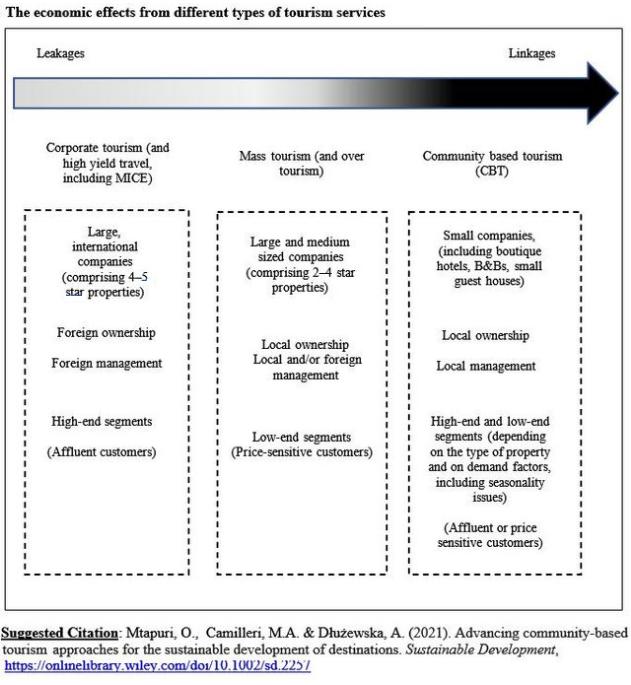
Conversely, irresponsible tourism practices can lead to the degradation of natural habitats, greenhouse gas emissions and the loss of biodiversity through air and water pollution from unsustainable transportation options, overconsumption of resources, waste generation and excessive construction (Banga et al. 2022; H. Wu et al. 2024). Indeed, any nation’s overdependence on tourism may give rise to economic difficulties during economic crises, such as increased cost of living for residents, seasonal income and precarious employment conditions, leakage of revenues when profits go to foreign-owned businesses and displacement of traditional industries like fishing and agriculture, among other contingent issues (Mtapuri et al. 2022; Mtapuri et al. 2024).

In addition, tourism may trigger social and cultural externalities like overcrowding and an increased strain on public services, occupational hazards for tourism employees and inequalities due to uneven distribution of benefits, displacement of local communities to give way to tourism infrastructures, the loss of authenticity in local traditions, an erosion of local identities and traditional lifestyles under external influence, as well as increased crime rates or illicit activities (Ramkissoon 2023).

In light of these challenges, this research seeks to provide a better understanding of how environmental, social and governance (ESG) dimensions can be embedded within sustainable tourism, to strengthen long-term destination resilience and economic growth. Debatably, although the use of the ESG dimensions is gaining traction in various corporate suites, their application in tourism and hospitality industry contexts is still limited. Notwithstanding, ESG research is still suffering from inconsistent conceptualisations, measurements and reporting systems (Legendre et al. 2024).

To address this gap, this contribution outlines five interrelated objectives: (1) It relies on a systematic review methodology to investigate the intersection of ESG principles and sustainable tourism; (2) It synthesises the findings and maps thematic connections related to environmental stewardship, social equity and governance structures in tourism destinations; (3) It evaluates ESG-based strategies that address carrying capacity limitations, overtourism, climate vulnerabilities, sociocultural tensions and institutional accountabilities; (4) It advances theoretical insights; and (5) It develops a comprehensive conceptual framework, to guide policymakers, practitioners and stakeholders in embedding ESG considerations into tourism planning and development, thereby promoting environmental sustainability, socioeconomic resilience and corporate governance.

Guided by these objectives, this timely research addresses four central research questions. Firstly, it asks: [RQ1] How have high-impact scholarly works conceptualised and operationalised ESG dimensions in order to promote sustainable travel destinations? Secondly, it seeks to answer this question: [RQ2] What empirical evidence exists on the effectiveness of ESG-aligned strategies in enhancing destination resilience and fostering long-term economic growth? The third question interrogates: [RQ3] What academic implications arise from this contribution, and how might its insights shape the future research agenda? Finally, the study seeks to address this question: [RQ4] How and in what ways are the ESG pillars interacting within sustainable tourism policy and practices? This research question recognises that the ESG dimensions may or may not always align harmoniously with the sustainable tourism agenda.

Although the sustainable tourism literature has often been linked to the United Nations Sustainable Development Goals (SDGs) and to broader corporate social responsibility (CSR) frameworks, the explicit integration of ESG principles into this field is still underdeveloped (Back 2024; Legendre et al. 2024; Lin et al. 2024; Shin et al. 2025). Much of the existing literature examines the environmental, social and governance (E, S and G) dimensions in isolation (Moss et al. 2024), with scholars often addressing, for example, environmental sustainability through climate adaptation strategies or governance via destination management systems, without adequately considering their interdependence or combined impact on tourism outcomes (Comite et al. 2025; Kim et al. 2024). This pattern was clearly evidenced in the findings of this research.

This article synthesises the findings of recent high-impact publications focused on sustainable tourism through the ESG performance lens, in order to advance a holistic conceptual model that bridges academic scholarship and policy application. In sum, this proposed theoretical framework clarifies how environmental stewardship, social inclusivity and governance accountability are shaping sustainable tourism trajectories. In conclusion, it puts forward original theoretical as well as the managerial implications. Theoretically, it enriches the sustainable tourism literature with an ESG-integrated analytical framework grounded in systematic evidence. Practically, it offers an actionable, governance-oriented blueprint that aligns environmental, social and economic objectives for responsible tourism planning and development. Hence, it provides a tangible roadmap that embeds ESG dimensions and their related criteria into sustainable tourism strategies for destination resilience and long-term competitiveness.

2 Background

The evolution of sustainable and responsible tourism paradigms can be traced back to the environmental consciousness that characterised the 1960s and 1970s. At the time, several governments were concerned over the ecological and cultural consequences of mass tourism. Early initiatives, such as the European Travel Commission’s 1973 campaign for environmentally sustainable tourism, sought to mitigate the negative externalities of rapid sector growth. Subsequently, South Africa’s 1996 national tourism policy introduced the concept of responsible tourism, that essentially emphasised community well-being as an integral component of destination management. The United Nations World Tourism Organization (UNWTO) has since positioned sustainable tourism as a catalyst for global development.

Eventually, the declaration of 2017 as the International Year of Sustainable Tourism for Development has underscored its potential to contribute directly to the United Nations SDGs. Specific targets like SDG 8 (decent work and economic growth), SDG 12 (responsible consumption and production), SDG 14 (life below water) and SDG 15 (life on land) highlight the sector’s capacity to create jobs, preserve ecosystems, safeguard cultural heritage and benefit vulnerable economies (Mahajan et al. 2024), particularly in small island states and least developed countries (Grilli et al. 2021). However, an ongoing achievement of these objectives necessitates balancing environmental, social and economic interests, a process that is often complicated by the diverse, and at times conflicting, priorities of a wide array of stakeholders (Civera et al. 2025).

Governments are important actors in this process. They can influence sustainable tourism outcomes through regulation, education, destination marketing and public–private partnerships (Dossou et al. 2023; Mdoda et al. 2024). Generally, their underlying policy rationale is to ensure that tourism development supports long-term economic growth while protecting cultural and natural assets, in order to improve community well-being (Andrade-Suárez and Caamaño-Franco 2020; Breiby et al. 2020). Yet this ambition is often undermined by market pressures, limited institutional capacities and the difficulty of translating high-level sustainability commitments into enforceable measures at the local levels.

In this light, the ESG framework a concept that was popularised by a United Nations Global Compact (2004) report, entitled, “Who Cares Wins”, offers a coherent approach for the integration of environmental stewardship, social equity and institutional accountability for the advancement of responsible tourism planning and development. Hence, in this context, practical tools are required in order to translate inconsistent guiding principles into actionable destination management strategies. For instance, the carrying capacity acts as a practical control mechanism within such a theoretical framework (Mtapuri et al. 2022; O’Reilly 1986). It ensures that tourism figures remain compatible with the preservation of natural, cultural and heritage assets. For the time being, there are challenges as well as opportunities for governments to translate the holistic vision of sustainable tourism policies into robust governance systems that maintain economic vitality and the integrity of their destinations.

4 Results

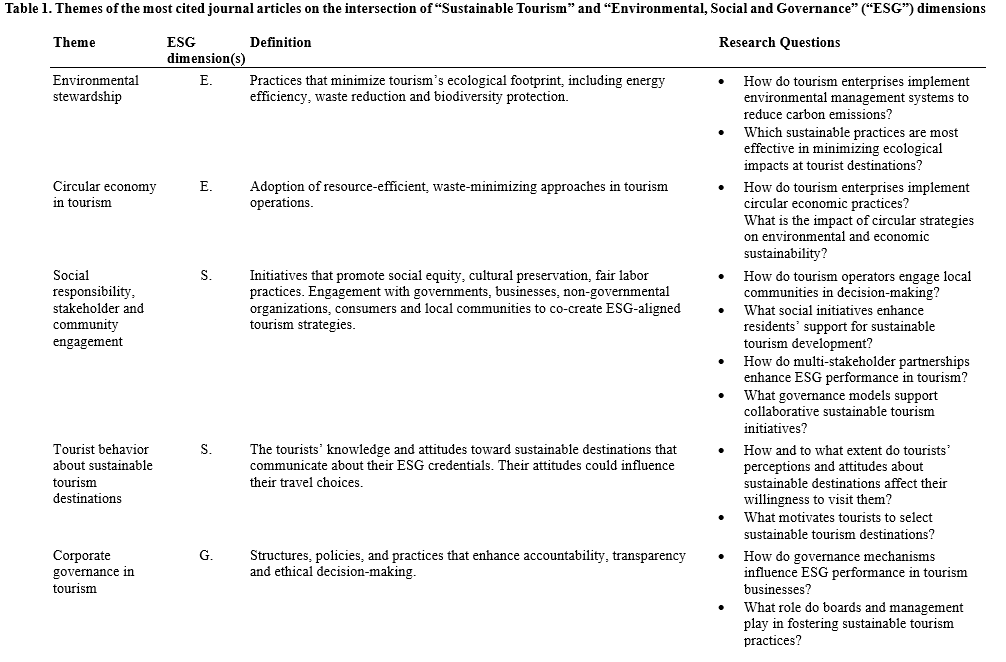
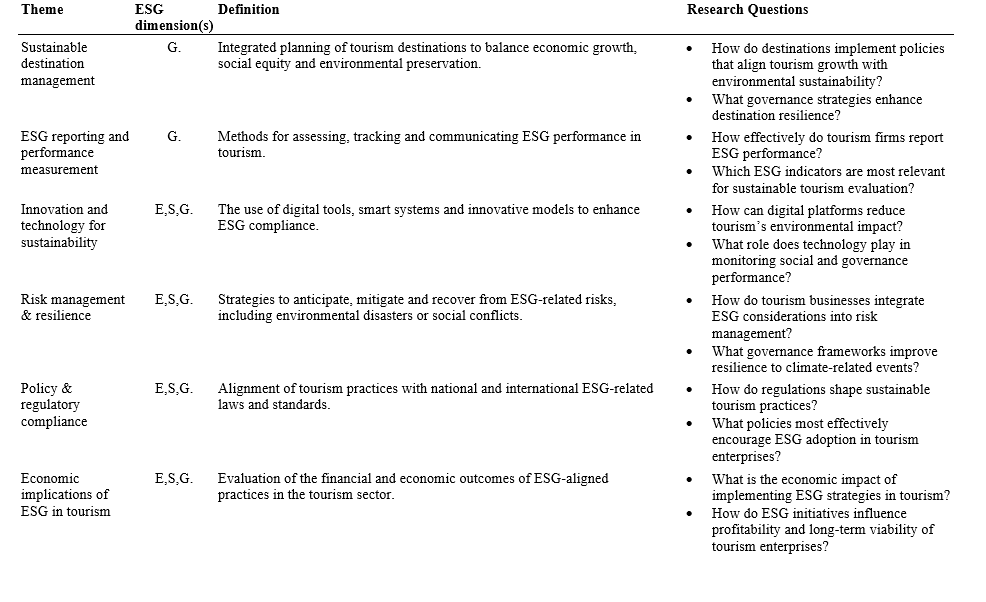
The thematic analysis indicates that the sustainable tourism concept is interconnected with each of the ESG’s dimensions. The findings suggest that sustainable tourism integrates environmental stewardship, social responsibility and sound governance to advance ecological preservation, community well-being and organisational accountability. Hence, it supports long-term destination resilience. The bibliographic results report that each of the ESG components is not only essential for sustainable tourism but also interdependent pillars that enable the sector to thrive in a responsible manner. Therefore, it is imperative for governments to safeguard natural and cultural heritage, empower local communities and foster transparent and effective governance, to ensure the sustainable development of destinations as well as their economic growth (Chong 2020; Grilli et al. 2021; Mamirkulova et al. 2020). The ESG framework, along with its criteria, serves as an important lens through which stakeholders can shape and evaluate sustainable tourism policies and practices (Işık, Islam, et al. 2025). Table 1 features the most conspicuous themes that emerged from this study. Additionally, it presents definitions for each theme along with illustrative research questions examined by the academic contributions identified in this systematic review.
4.1 The Environmental Dimension of Sustainable Tourism

The tourism industry is dependent on natural ecosystems. Therefore, it is in the tourism stakeholders’ interest to protect the environment and to minimise their externalities (J. S. Wu et al. 2021). There is scope for them to promote the conservation of land and water resources (Sørensen and Grindsted 2021). Water scarcity is a pressing global concern that is amplified in many tourist hotspots (WTTC 2023). However, tourism development and its related infrastructural expansion ought to respect ecological thresholds and preserve green spaces, particularly in urban areas. Hotels, resorts and attractions could implement water-saving technologies such as rainwater harvesting, low-flow fixtures and wastewater recycling (Foroughi et al. 2022). These sustainable measures reduce stress on local water supplies and help preserve aquatic ecosystems. In addition, tourism entities can avail themselves of renewable energy sources like solar panels, wind turbines, et cetera, and may adopt energy-efficient appliances and lighting solutions (Abdou et al. 2020; Zhan et al. 2021).

The rapid growth of tourism has historically been linked to environmental degradation through waste accumulation and pollution (Bekun et al. 2022). Circular economy strategies including improved waste management and pollution control through responsible waste disposal as well as reducing, reusing and recycling certain resources, can help decrease the industry’s externalities, but also create healthier spaces for tourists and staff (Camilleri 2025; Dey et al. 2025; Jain et al. 2024).

Tourism significantly contributes to the generation of greenhouse gas emissions through transportation and accommodation (Kim et al. 2024). Addressing climate change within sustainable tourism is critical to reducing the sector’s ecological footprint and enhancing destination resilience to climate impacts (Comite et al. 2025; Scott 2021). Many tourism businesses invest in carbon offset programs including reforestation, renewable energy projects and community-based conservation as mechanisms to offset their emissions (Banga et al. 2022). Eco-certifications such as Global Sustainable Tourism Council (GSTC), Green Globe, EarthCheck, GreenKey and LEED, among others, encourage the adoption of low-carbon practices. They enable practitioners and consumers to make environmentally conscious choices (Dube and Nhamo 2020; Gössling and Schweiggart 2022). Moreover, green transportation policies can encourage public transit, cycling, walking and the adoption of electric and hybrid vehicles for tourism-related travel, thereby reducing carbon footprints (Kim et al. 2024).

Ecologically sensitive zones such as national parks and marine reserves, which are home to wildlife, fragile species and habitats are some of the most visited places by tourists (Partelow and Nelson 2020; Tranter et al. 2022). Hence, they should be protected from overtourism by implementing visitor limits, buffer zones and conservation fees to reduce human impact (Leka et al. 2022). Restoration projects like reforestation, coral reef rehabilitation and wetland conservation are good examples of proactive environmental stewardship linked to tourism (Herrera-Franco et al. 2020; Muhammad et al. 2021). Environmental sustainability also depends on shaping tourist behaviours and fostering responsible activities like environmental awareness campaigns, community involvement in conservation efforts as well as engagement in low-impact alternatives like birdwatching, hiking and sustainable diving, among other stewardship practices (Khuadthong et al. 2025; J. S. Wu et al. 2021).

4.2 The Social Dimension of Sustainable Tourism

Sustainable tourism outcomes extend beyond environmental stewardship principles. Its social dimension encompasses criteria related to the preservation of cultural heritage; community engagement and empowerment; social equity, inclusion and cohesion; as well as responsible tourist behaviours, among other aspects (Bellato et al. 2023; Bianchi and de Man 2021; Joo et al. 2020a; Xu et al. 2020; Yang and Wong 2020; Rasoolimanesh et al. 2023). Sustainable tourism practices are clearly evidenced through improved relationships between tourists and local host communities, resulting in tangible benefits to both parties (Ramkissoon 2023).

The tourism industry can be considered a catalyst for cultural appreciation as well as a threat to cultural authenticity (Bai et al. 2024; H. Wu et al. 2024). Therefore, host destinations need to safeguard their cultural heritage, historical landmarks and monuments. Regulations and visitor management policies ought to be in place to limit wear and degradation of archaeological and religious sites, as well as historically important buildings and architectures (Mamirkulova et al. 2020). The social dimension of sustainable tourism entails that destination marketers preserve their cultural heritage and authenticity. They may do so by showcasing indigenous tastes and aromas of the region, including local foods and wines, and by promoting traditional music, dance, arts, crafts, et cetera, to appeal to international visitors (Andrade-Suárez and Caamaño-Franco 2020). This helps them keep their cultural legacy and maintain a competitive edge (Bellato et al. 2023). As a result, incoming tourists would be in a better position to appreciate local customs and folklore. Notwithstanding, their behaviours can play a crucial role in shaping social dynamics within destinations, as their activities might support community well-being and promote equitable access to tourism benefits (Mamirkulova et al. 2020).

However, policymakers are expected to manage visitor flows within a destination’s carrying capacity to prevent overcrowding, and to avoid social tensions, while fostering inclusivity, mutual respect and positive interactions between visitors and host communities (Back 2024; Koens et al. 2021). Perhaps, destination management organisations should educate visitors about cultural sensitivity issues to demonstrate their respect to host communities (Foroughi et al. 2022; Joo et al. 2020b; Mdoda et al. 2024). For example, they may raise awareness of appropriate behaviours in specific contexts, including dress codes and etiquette to mitigate cultural clashes, discourage exploitative tourism practices like invasive photography in certain settings and prevent unethical animal encounters, in order to foster mutual respect, enhance positive exchanges and safeguard community values (Ghaderi et al. 2024).

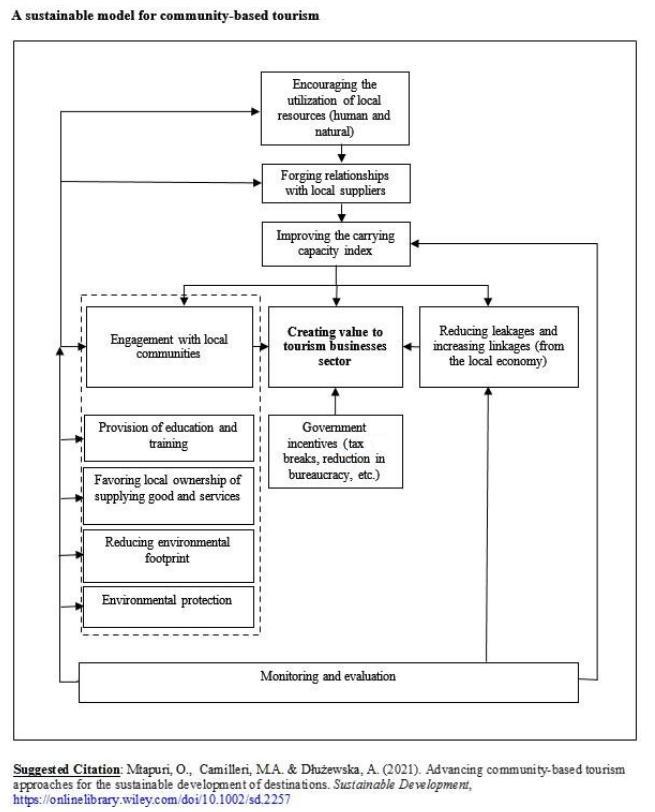
The sustainable tourism concept encourages participatory tourism planning. It prioritises the empowerment of indigenous communities in tourism decision-making and policy formulation (Ramkissoon 2023). The involvement of local residents may require capacity building to equip them with relevant skills to participate in the tourism sector, and to foster their economic advancement (Mamirkulova et al. 2020). The proponents of sustainable tourism frequently refer to the provision of fair employment opportunities, including for native populations, in terms of equitable wages and salaries, as well as decent working conditions, in order to enhance community livelihoods and social cohesion (Mtapuri, Camilleri, et al. 2022). Very often, they report that destinations would benefit from sustainable tourism practices that build social capital and reduce economic leakage, by incentivising local entrepreneurs and community-based tourism initiatives to ensure that financial returns remain within the community (Chong 2020; Partelow and Nelson 2020).

The systematic review postulates that the sustainable tourism concept is meant to promote social justice and reduce inequalities (Bianchi and de Man 2021). The extant research confirms that it fosters social inclusivity across various demographic groups in society by supporting gender equality, thereby enriching the sector’s diversity (Bellato et al. 2023; A. Khan et al. 2020). The industry’s labour market may include individuals hailing from different backgrounds in society, including young adults, women, senior citizens, immigrants and disabled people (Bianchi and de Man 2021; Camilleri et al. 2024). Tourism businesses are encouraged to develop infrastructures and services that accommodate people with accessibility requirements in order to broaden their destinations’ reach and social value (Sisto et al. 2022).

4.3 The Governance Dimension in Sustainable Tourism

The integration of environmental and social dimensions of sustainable tourism ultimately depends on transparent, accountable and participatory governance mechanisms (Joo et al. 2020b; Putzer and Posza 2024). Effective governance provides the institutional framework through which environmental stewardship and social responsibility are translated into actionable policies, coordinated initiatives and measurable outcomes (Back 2024; Ivars-Baidal et al. 2023).

Governments are entrusted to set the foundation for sustainable tourism through national and local tourism policies that clearly define sustainability goals, action plans and regulatory measures (Gössling and Schweiggart 2022). Such policies may be related to environmental and/or social regulations. They may enforce environmental impact assessments (EIAs), zoning laws and they could be meant to protect cultural heritage (Farsari 2023). Moreover, they may be intended to encourage or incentivise environmental sustainability practices (e.g., through eco-label or certification schemes) (Bekun et al. 2022). Alternatively, they may be focused on the destinations’ carrying capacity limits and/or on their overtourism aspects, if they specify visitor limits, and/or refer to taxes, levies or fees imposed on visitors or tourists (Leka et al. 2022).

Sustainable tourism governance depends on multisector cooperation (Farsari 2023) that may usually involve government departments and agencies, the private sector that may comprise accommodation service providers, airlines, tour operators, travel agencies as well as local communities, NGOs and international organisations, among others. Policymakers need to balance diverse stakeholders’ interests and to instil their shared responsibilities (Siakwah et al. 2020). Good governance can ultimately ensure that public–private partnerships would translate to long-term, sustainable tourism strategies related to responsible planning and development that consider specific socioenvironmental aspects of destinations: green building standards and the use of renewable energy, and/or emergency and crisis management issues (Scheyvens and Cheer 2022).

Policymakers are expected to conduct regular assessments and evaluations of tourism practitioners’ environmental, social and economic outcomes operating in their jurisdictions. They need to scrutinise corporate ESG disclosures, particularly in certain domains (e.g., in European contexts, where they ratified the corporate sustainability reporting directive) (Camilleri 2025). Governments should monitor business practices to safeguard their employees’ well-being, environmental sustainability and the communities’ interests (Putzer and Posza 2024). They may avail themselves of sustainability indicators and benchmarking tools such as GSTC’s criteria that are used to measure progress in sustainable tourism, in terms of sustainable management (planning, monitoring, governance); socioeconomic benefits to the local community, cultural heritage preservation and environmental protection (Wang and Zhang 2025). Such responsible and ethical practices increase trust and lead to continuous improvements in the tourism industry.

Discussion

The holistic integration of environmental, social and governance dimensions in sustainable tourism collectively contributes to enhance destination resilience and sustainable economic growth. The conservation of natural attractions such as beaches, forests and coral reefs will enable destinations to remain competitive. Therefore, there is scope in implementing climate-friendly measures, including reforestation and sustainable water management, among others, to reduce vulnerability to floods and storms. At the same time, they may curb ocean-level increases. Pollution prevention, waste minimization and circular economy strategies can help destinations maintain environmental quality, that is crucial for their ongoing tourism appeal. Notwithstanding, eco-certifications of responsible destinations can attract environmentally conscious travelers, who may be willing to pay more to visit sustainable tourism destinations.

The effectiveness of eco-certifications is amplified when combined with socially responsible practices. The integration of community empowerment, cultural heritage preservation, and social inclusiveness into tourism planning and development can contribute to increasing the sustainability of a destination. Hence, the tourism industry could add value to the environment as well as to local communities. By aligning sustainable development with local priorities and by promoting responsible tourism practices, destinations can provide authentic cultural and heritage experiences, thereby enhancing their visitor satisfaction and revisit intentions, in the future. In turn, this reinforces both market differentiation and long-term social resilience. Furthermore, as entrepreneurship flourishes, the local communities would benefit from circulating incomes and reduced economic leakages. Such outcomes are conducive to tourism growth.

However, policymakers must implement effective tourism governance to ensure that these economic gains are sustainable. Transparent governance fosters trust among stakeholders and facilitate sustainable growth and competitiveness. By implementing strategic planning and regulations, local authorities can ensure that tourism development| does not overwhelm infrastructure or degrade natural and cultural assets. This creates a balanced environment where entrepreneurship and community benefits coexist with long-term destination resilience. Therefore, sound governance prevents over-tourism and unmanaged expansion, whilst protecting the destinations’ assets. Robust tourism governance frameworks foster stable policy environments, attract further investments and enable long-term planning. Additionally, strong crisis management capabilities can equip destinations to handle unforeseen circumstances including pandemics, natural disasters and economic shocks.

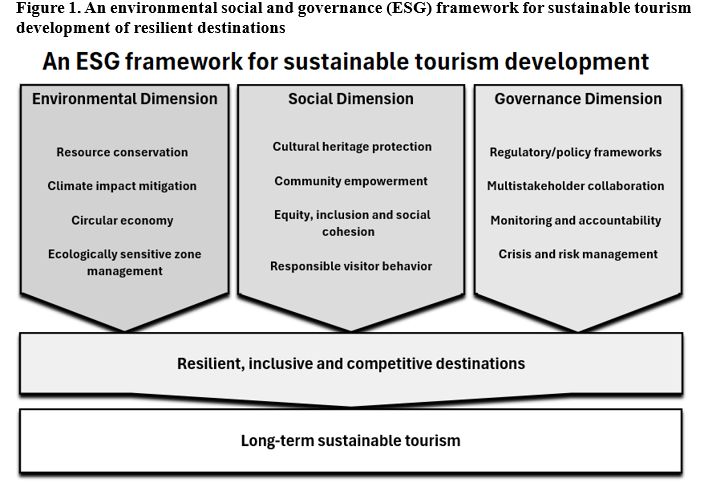
The above analysis underlines that environmental, social and governance dimensions are deeply interlinked to one another and mutually-reinforcing within sustainable tourism. An integrative ESG approach conceptualizes sustainable tourism as a synergistic framework that reconciles ecological integrity, social equity, and institutional effectiveness, as illustrated in Figure 1.
Theoretical implications

This study adds value to the growing body of literature focused on sustainable tourism governance (Gössling & Schweiggart, 2022; Işık et al., 2025; Rasoolimanesh et al., 2023). It clearly identifies key theoretical underpinnings of articles focused on the intersection of ESG dimensions and sustainable tourism practices. The bibliographic findings suggest that the stakeholder theory (Bellato et al., 2023; Ivars-Baidal et al., 2023; Matsali  et al., 2025; Mdoda  et al., 2024) and the institutional theory (Bekun et al., 2022; Dossou et al., 2023; Hall et al., 2020; Saarinen, 2021; Zhan et al., 2021) shed light on the role of government policies, corporate responsibility and community engagement in shaping the sustainable tourism agenda and different settings (Lin et al., 2024; Zhang et al., 2025). Interestingly, the Social Identity Theory clarifies how various stakeholder groups, including residents, tourists and industry practitioners, are aligning their behaviors with shared norms and identities that promote corporate ESG values (Yang & Wong, 2020). Drawing on Cognitive Appraisal Theory, it indicates that stakeholders’ evaluation of ESG-related risks and opportunities influences their emotional responses and subsequent engagement in sustainability initiatives (Foroughi et al., 2022). The Theory of Empowerment further explains how participatory governance and transparent decision-making can enhance community agency, fostering stronger local support for ESG-driven tourism strategies (Joo et al., 2020a).

In line with the Theory of Planned Behavior and the Attitude–Behavior–Context (ABC) Theory, the findings highlight that pro-sustainability intentions are by attitudes toward ESG as well as by perceived behavioral control and contextual enablers such as policy frameworks and market incentives (Joo et al., 2020b; Khuadthong et al., 2025; Wu et al., 2021). Moreover, the Value–Belief–Norm Theory demonstrates how environmental values and moral obligations underpin behavioral commitments to ESG-aligned tourism (Kim et al., 2024).

From a governance perspective, the Evolutionary Governance Theory clarifies how institutional arrangements, stakeholder relationships and regulatory norms adapt over time to embed ESG principles in tourism planning (Partelow & Nelson, 2020). The review suggests that tourism stakeholders’ decision-making including during uncertain situations, can be enriched through Decision Theory and by referring to the Interval-Valued Fermatean Fuzzy Set approach (Rani et al., 2022). These theories enable robust, data-informed prioritization of ESG objectives.

Furthermore, the findings underscore the recursive relationship between the human agency and the structural constraints. The results suggest that stakeholder actions can influence ESG governance systems. This argumentation is congruent with the Structuration Theory (Saarinen, 2021). Meanwhile, the Resource-Based View (Wang & Zhang, 2025; Zhu et al., 2021) and Dynamic Capabilities Theory (Wang & Zhang, 2025) frame ESG adoption as a strategic asset, where unique sustainability capabilities can enhance competitive advantage and long-term destination resilience.

Managerial implications

This research yields clear implications for policymakers, industry practitioners and local communities of tourist destinations. It postulates that the ESG dimensions can provide these stakeholders with a strategic framework to balance growth with long-term resilience. It confirms that ESG policies necessitate a comprehensive approach, that combines environmental conservation, social inclusion, and responsible governance considerations, rather than addressing them individually. Arguably, there may be variations in the importance, focus and implementation of ESG dimensions in tourism, in different contexts, due to the host countries’ economic capacities regulatory frameworks, social priorities and/or environmental challenges. As a result, the effects or outcomes of ESG initiatives are not uniform across destinations (Lin et al., 2024).

In addition, the size of the businesses can also influence their commitment to account and disclose ESG-related aspects of their performance. Large multinational travel and hospitality firms could benefit from economies of scale, in terms of greater financial, human, and technological resources, resulting in their ESG alignment and compliance with societal norms and regulatory frameworks. They can afford dedicated sustainability teams, advanced data management tools, and external consultants to ensure accurate measurement, benchmarking and disclosure of ESG performance. In stark contrast, the smaller firms may face resource constraints, limited expertise, and higher relative costs for data collection and reporting. Such non-commercial activities can hinder their ability to systematically track, measure and communicate ESG performance, placing them at a comparative disadvantage, relative to their larger counterparts.

From an environmental perspective, policy makers should operationalize carrying capacity thresholds and implement adaptive management systems to safeguard ecosystems, optimize resource utilization, and enhance climate resilience. Continuous monitoring and evaluation of environmental impacts are essential to ensure that tourism activities remain within sustainable limits. Proactive interventions including the promotion of low-carbon transportation, the adoption of renewable energy, efficient resource management, and waste reduction are critical for aligning tourism development with ESG objectives. Such strategies preserve biodiversity and can contribute to the long-term sustainability of destinations.

The social dimension emphasizes the equitable distribution of tourism benefits and the preservation of cultural integrity. Overtourism threatens community well-being through inflated living costs, cultural commodification and resident–visitor tensions. Hence, managers should foster participatory governance structures that empower local communities, entrepreneurs and cultural custodians in decision-making processes. Technological innovations including artificial intelligence (AI) solutions that monitor visitor flows can further support socially responsible destination management. At the same time, stakeholder engagement ensures that tourism operations retain their legitimacy in society.

Robust governance mechanisms underpin these strategies. Practitioners can align policies with international sustainability standards in order to facilitate transparent accountability. The implementation of ESG performance indicators, enforceable visitor limits and adaptive regulatory measures, such as dynamic pricing or quotas enable evidence-based decision-making and continuous improvements in responsible destinations. The strengthening of institutional capacities and local skills ensures that governance frameworks are effective and sustainable over time.

Financial innovation is essential for sustainable tourism development. Policy makers ought to invest in green technologies and infrastructures to protect the natural environment from externalities. They can provide incentives and funds to support practitioners in their transition to long-term sustainability. By embedding ESG principles, destinations are in a better position to enhance their resilience to environmental and social shocks, strengthen their reputation and image, whilst maintaining their competitiveness in the global tourism market.

Policymakers are encouraged to increase their enforcement of regulations to trigger responsible behaviors. At the same time, they need to nurture relationships with stakeholders. The hoteliers should embed social innovations and environmentally sustainable practices into core strategies and operations. As for local communities, it is in their interest to actively participate in tourism planning and development, to ensure they preserve their cultural heritage and share tourism benefits in a fair manner. Collectively, this contribution’s integrated ESG approach positions destinations for sustained economic growth while safeguarding environmental and social well-being.

Conclusion

This article reinforces the significance of integrating ESG principles into sustainable tourism strategies. By addressing environmental concerns, fostering social inclusivity, improving governance frameworks, and ensuring economic viability, stakeholders can contribute to a more resilient and responsible tourism sector. This research demonstrates that sustainable tourism is most effectively achieved through the integration of environmental, social, and governance (ESG) dimensions, which together foster long-term destination resilience and economic growth. Environmentally, sustainable tourism requires the preservation of natural ecosystems, efficient resource use, and proactive measures to reduce pollution and greenhouse gas emissions. Practices such as water-saving technologies, renewable energy adoption, waste reduction, and circular economy strategies not only mitigate ecological impacts but also enhance the attractiveness and competitiveness of destinations.

From a social perspective, sustainable tourism supports community empowerment, cultural preservation, inclusivity, and social equity. By engaging local residents in planning and decision-making, promoting equitable employment, and safeguarding cultural heritage, destinations can foster positive resident–visitor interactions and enhance the overall visitor experience. Responsible tourist behavior, participatory governance, and cultural sensitivity further reinforce social cohesion while ensuring that tourism benefits are broadly shared within host communities.

Effective governance underpins both environmental and social outcomes by providing transparent, accountable, and coordinated frameworks for sustainable tourism. Policymakers and destination managers play a critical role in enforcing regulations, monitoring ESG performance, and balancing stakeholder interests. Multi-sector collaboration, the application of sustainability indicators, and adaptive management strategies enable destinations to anticipate and respond to environmental, social, and economic shocks.

Collectively, the ESG approach positions sustainable tourism as a synergistic model that aligns ecological integrity, social responsibility, and institutional effectiveness. By embedding ESG principles into core strategies, destinations can deliver unique, high-quality experiences, strengthen community livelihoods, and maintain global competitiveness. This integrative framework demonstrates that environmental stewardship, social equity, and sound governance are mutually reinforcing, offering a pathway for destinations to achieve enduring sustainability, resilient growth, and enhanced market differentiation.

The full paper is available here:

Researchgate: https://www.researchgate.net/publication/397949208_Environmental_social_and_governance_ESG_factors_of_sustainable_tourism_development_The_way_forward_toward_destination_resilience_and_growth

Academia: https://www.academia.edu/145139975/Environmental_social_and_governance_ESG_factors_for_sustainable_tourism_development_The_way_forward_toward_destination_resilience_and_growth

Open Access Repository @University of Malta: https://www.um.edu.mt/library/oar/handle/123456789/141666

Leave a comment

Filed under carrying capacity, ESG, ESG Reporting, Marketing, Sustainability, sustainable tourism, tourism

Call for papers: Community-driven (Social) Innovation in Collaborative Ecosystems

I am delighted to share this call for papers for the European Academy of Management’s (EURAM2026’s) SIG01: Business for Society (B4S).

My colleagues, Mario Tani, University of Naples Federico II, Naples, Italy; Gianpaolo Basile, Università Telematica Universitas Mercatorum, Rome, Italy; Ciro Troise, University of Turin, Turin, Italy; Maria Palazzo, Università Telematica Universitas Mercatorum, Rome, Italy; Asha Thomas, Wrocław University of Science and Technology AND I, are guest editing a track entitled: “Relationships, Values, and Community-driven (Social) Innovation in Collaborative Ecosystems” (T01-14).

We are inviting conceptual, empirical and methodological papers on the interplay between open innovation, digital platforms and the power of the crowd in navigating today’s grand challenges.

“This track explores the strategic shift from firm-centric models to dynamic, collaborative ecosystems. We examine how deep stakeholder engagement, shared values, and community-driven innovation can generate sustainable economic, social, and environmental value”.

Further details about this conference track are available here: https://lnkd.in/djN8KpDw [T01-14].

Keywords: EURAM2026; Business For Society B4S; Collaborative Ecosystems; Open Innovation Community Driven Innovation; Stakeholder Engagement; Digital; Digital Platforms; Digital Transformation; Crowdsourcing; Sustainable Development Goals (SDGs); UNSDGs; SDG9 [Industry, Innovation And Infrastructure]; SDG11 [Sustainable Cities And Communities]; SDG12 [Responsible Consumption And Production]; SDG17 [Partnerships For The Goals].

Leave a comment

Filed under digital, digital media, digital transformation, innovation, internet technologies, internet technologies and society, Marketing, online, Open Innovation, Stakeholder Engagement, Sustainability, technology, Web

My contribution as foreign expert reviewer

I have just returned back to base after a productive two-day foreign expert meeting.

Once again, it was a positive experience to connect with European academic colleagues, to review and discuss research proposals worth thousands of Euros.

My big congratulations go to the successful scholars who passed the shortlisting phase, based on our evaluation scores.

The best proposals will eventually receive national government funds for transformative projects that will add value to society and the natural environment.

#Academia #AcademiaService #ForeignExpert #ForeignExpertReviewer #Review #AcademicReviewer #ResearchProposal #ResearchProjects

Leave a comment

Filed under academia, Business, education technology, Market Research, Marketing, performance appraisals, Stakeholder Engagement, Strategic Management, Strategy, Sustainability, technology, tourism

Leveraging Industry 4.0 technologies for sustainable value chains and responsible operations management

Featuring a few snippets from one of my latest co-authored papers on the use of digital technologies for lean and sustainable value chains. A few sections have been adapted to be presented as a blog post.

Suggested citation: Strazzullo, S., Cricelli, L., Troise, C. & Camilleri, M.A. (2024). Leveraging Industry 4.0 technologies for sustainable value chains: Raising awareness on digital transformation and responsible operations management, Sustainable Development, https://doi.org/10.1002/sd.3211

Abstract

Practitioners, policy makers as well as scholars are increasingly focusing their attention on the promotion of sustainable practices that reduce the businesses’ impacts on the environment. In many cases, they are well aware that manufacturers and their suppliers are resorting to lean management processes and Industry 4.0 (I4.0) technologies such as big data, internet of things (IoT), and artificial intelligence (AI), among others, to implement sustainable production models in their operational processes. This research utilizes an inductive approach to better understand how I4.0 technologies could result in increased organizational performance in terms of resource efficiencies, quality assurance as well as in environmentally sustainable outcomes, in the context of the automotive industry. The findings shed light on the relationship between I4.0 technologies, sustainable and lean practices of automakers of combustion engines, hybrid models and/or electric vehicles (EVs). In conclusion, this contribution puts forward an original conceptual framework that clearly explains how practitioners can avail themselves of disruptive technologies to foster continuous improvements in their value chain.

Keywords: Industry 4.0, digital transformation, lean management, sustainable supply chain, responsible operations management, resource efficiencies.

Introduction

The manufacturing industries are characterized by their increased emphasis on the development of sustainable practices that are facilitated by digital technologies. Companies are under pressure from a wide range of stakeholders, including by regulatory institutions and by individual customers, among others (Wellbrock et al., 2020). In parallel, in recent years, most businesses have gradually introduced Industry 4.0 (I4.0) technologies in their manufacturing processes, as they shifted to smart factory models (Atif, 2023; Choi et al., 2022; Varriale et al., 2024). However, they cannot disregard their corporate responsibilities on economic, environmental and social aspects (Sunar & Swaminathan, 2022). Many researchers contend that sustainability behaviors ought to be integrated with I4.0 processes (Ghobakhloo, 2020), in order to enhance the effectiveness, efficiencies and economies of their Supply Chains (SC) (Núñez-Merino et al., 2020). To be competitive in this context, SCs are implementing lean management models to improve their operations.

The sustainability of SC is related to the notion of Lean Supply Chain Management (LSCM) that refers to the elimination of non-value-added activities in order to enhance the manufacturing firms’ performance (Centobelli et al., 2022; Núñez-Merino et al., 2020). The proponents of LSCM suggest that the generation of waste can be reduced through responsible management strategies (Deshpande & Swaminathan, 2020). Arguably, the minimization of externalities can ultimately affect all stakeholders of SCs, ranging from the business itself, its suppliers as well as its consumers (Khorasani et al., 2020). Notwithstanding, the stakeholders’ pressures on organizations has led them to change their operational approaches to comply with new environmental regulations and to respond to the growing demands of customers for sustainable products and services (Adomako et al., 2022; Camilleri et al., 2023).

As a result, many commentators are also raising awareness on the Sustainable Supply Chain Management (SSCM) concept (Sonar et al., 2022; Yadav et al., 2020). Very often, they claim that SSCM is an important organizational model that can increase corporate profits and boost market shares. The SSCM proposition is based on the reduction of risks from unwanted environmental impacts, thereby improving the overall efficiency of SCs (Negri et al., 2021). Previous contributions have clearly demonstrated how LSCM and SSCM are closely related to one another (Azevedo et al., 2017). More recent studies have deepened the link between the lean management paradigm and I4.0 (Oliveira-Dias et al., 2022; Tissir et al., 2022). The  integration of these two concepts has led to the formulation of new definitions such as “Lean 4.0” and “Digital Lean Manufacturing”, among others.

Given the increased complexity of operations, many researchers debate that the introduction of lean practices may not be enough to address extant competitive pressures. Although lean management can improve the operational efficiencies of SCs and may add value to their organization, there is still scope for practitioners to continue ameliorating their extant processes. Lean initiatives are reaching a point where they are becoming common practice in different contexts. Many manufacturers are adopting them to reduce their costs. However, the success of lean production practices relies on the management’s strategic decisions and on operational changes they are willing to undertake. Arguably, both SSCM and LSCM are aimed at fostering more flexible, fast, customized, and transparent operations management in manufacturing and distribution systems. Some studies have already clarified how digital technologies can help practitioners to improve achieve these objectives (Ghobakhloo, 2020; Varriale et al., 2024).

Several academic studies have not considered the fact that SCs are becoming more technologically savvy. As technologies continue to evolve, they are transforming the modus operandi of many businesses. Today’s organizational processes are increasingly utilizing different types of innovative solutions. Undoubtedly, manufacturers ought to keep up with the latest advances in technology and with the changing market conditions. Besides, a number of firms are opting to outsource their manufacturing processes to low-cost developing countries. In this light, this research builds on theoretical underpinnings focused on the link between SSCM and LSCM. However, it differentiates itself from previous contributions, as it clarifies how these two paradigms can be connected to I4.0.

Notwithstanding, for the time being, there is still a lack of agreement among academia, policy makers and expert practitioners about what constitutes lean, sustainable systems in today’s manufacturing landscape. Although there a number of stakeholders who are already engaging in LSCM and SSCM practices to meet the new challenges and opportunities presented by I4.0 and the digital age, others are still lagging behind, or are considering SSCM and LSCM and digital technologies as silos, as they see no link between these approaches (Narkhede et al., 2024).

For example, at the time of writing, several automotive manufacturers claim that they are integrating lean and sustainable practices. Very often, they indicate that they utilize I4.0’s disruptive technologies. Yet, a number of academic commentators argue that some of these practitioners unsustainable manufacturing processes and waste management behaviors are contributing to the negative impacts to the degradation of the natural environment, thereby accelerating climate change (Liu & Kong, 2021; Sonar et al., 2022).

Lately, academic colleagues have sought to highlight the synergies between I4.0 technologies, lean management principles and sustainable practices (Centobelli et al., 2022; Cerchione, 2024). The majority of contributions provide a conceptual study of the potential relationship between I4.0, sustainable and lean SCs. However, to date, limited research have integrated lean SC, SSC and I4.0 technologies. This paper represents one of the first attempts to investigate the connection between SSCM, LSCM and I4.0 paradigms, in depth and breadth, in the context of the automotive industry. For the time being, there is still limited research that raises awareness on sustainable and lean supply chain systems that are benefiting from disruptive technologies (Cerchione, 2024; Guo et al., 2022). Hence, this contribution addresses this knowledge gap. Specifically, it seeks to explore these research questions (RQs):

RQ1: Which I4.0 technologies and to what extent are they supporting the manufacturing businesses in their adoption of sustainable and lean management practices?

RQ2: How is the automotive industry’s SC benefiting from the utilization of disruptive technologies, as well as from sustainable and lean management practices?

The underlying goal of this contribution is to raise awareness on how manufacturing businesses including automotive corporations utilize I4.0 technologies, implement lean management as well as sustainable practices to improve their SCs performance. An inductive approach is utilized to address the above RQs. Rich qualitative data were captured through semi-structured interviews with expert practitioners who hold relevant experience in planning, organizing, leading and controlling responsible operations management initiatives in the automotive industry, and who are already deploying a wide array of I4.0 technologies in their manufacturing processes.

The researchers adopt a hermeneutic approach to outline the thematic analysis (TA) of their interpretative findings. They identify the main intersections between SSCM, LSCM and I4.0 paradigms. Moreover, they provide a conceptual framework that clearly explicates how practitioners can avail themselves of I4.0 technologies to advance sustainable and lean management practices in different phases of the supply chain, including in the sourcing of materials, inventory control, manufacturing processes, logistics/distribution of products, as well as in their after sales services.

Literature review

Companies can create value when they have the competences, capabilities and resources to create products. (Khan et al., 2016). They ought to be flexible and responsive to their customers’ needs, particularly in a competitive environment, like the automotive industry. Indeed, customers tend to evaluate the companies based on the products they sell  and on their unique selling propositions  (Kumar Singh & Modgil, 2020). The lean management principles can therefore help manufacturers to implement the philosophy of continuous improvements in their operational performance (Marodin et al. 2016), in order to add value to their customers, and to increase the likelihood of repeat business (Liker, 2004; Papadopoulou & Özbayrak, 2005).

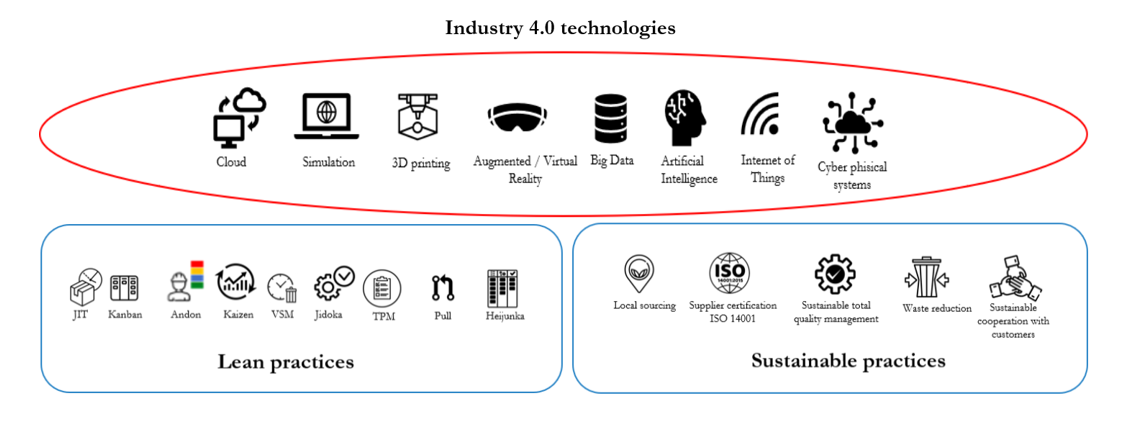
Such ongoing improvements are not only relevant during production (e.g. within the automotive workshops) but may also be implemented throughout the entire SC, including in customer-facing environments (Cagliano et al., 2006). There are a number of lean management approaches that can be taken on board by different manufacturers including by automakers. Table 1 provides a list of lean practices (that could also be adopted within the automotive industry):

Table 1. A non-exhaustive list of lean management terms

Lean PracticesDefinitionsReferences
AndonAndon is a quality control signaling system that provides notifications on issues relating to the maintenance of certain operational processes. An alert can be activated automatically through automated systems or manually by employees. As a result, Andon systems can pause production so that operational issues can be rectified.(Saurin et al., 2011)
HeijunkaHeijunka is intended to improve operational flows by reducing the unevenness in production processes and by minimizing the chance of overburden. It can used to process orders according to fluctuations in demand, and to respond to changes by levelling production by volume or by type, thereby utilizing existing capacity in the best possible way.(Nordin et al., 2010)
JidokaJidoke refers to automated systems that are monitored and supervised by humans. It is used to improve the product quality and to prevent any malfunctions during manufacturing processes.(Liker & Morgan, 2006)
Just in time (JIT)A JIT system is an inventory management strategy that is based on forecasted demand. It aligns purchasing and procurement tasks with production schedules. Companies employ this lean strategy to increase their efficiency by reducing overproduction, unnecessary waiting times, excessive inventory, product defects and unwanted waste. JIT is evidenced when materials and goods are ordered, only when they are required.(Mayr et al., 2018; Sanders et al., 2016)  
KaizenKaizen is a lean production management approach that promotes continuous improvements in manufacturing processes on a day-by-day basis. This notion is based on the idea that ongoing positive changes will gradually result in significant improvements in the long run. Organizations adopting Kaizen will motivate their employees to consistently boost their productivity, reduce waste, lower defects and to be accountable in their jobs.(Valamede & Akkari, 2020)
KanbanKanban involves a scheduling system that can improve operational efficiencies in lean manufacturing environments. One of its main advantages is to limit the buildup of excess materials and resources at any point in time during operational processes. Practitioners ought to ensure that they are maintaining a predefined inventory level for production purposes.(Valamede & Akkari, 2020)
Pull Production (PP)PP is a lean management methodology that is intended to control production processes in order to limit overproduction, reduce surpluses and to minimize warehouse costs. PP can be used to determine the optimal quantity that should be produced. Production occurs when and where it is needed, according to demand.(Sanders et al., 2017b)
Total Productive Maintenance (TPM)TPM is a holistic maintenance approach that is used to improve operational efficiency and product quality, by eliminating failures and defects. Moreover, it promotes a safe working environment to prevent accidents from happening. It also aims to motivate employees to improve their job satisfaction, productivity and organizational performance(Mayr et al., 2018; Valamede & Akkari 2020)
Value Stream Mapping (VSM)VSM (is also known as material- and information-flow mapping) is a lean management method that involves the analysis of extant operations to better plan operational procedures, for the future. It is a visual tool that describes (in detail) all critical steps in specific manufacturing processes.(De Raedemaecker et al., 2017; Wagner et al., 2017)

Table 2 describes some of the most prevalent sustainability practices that are being employed in the automotive industry, as well as in other manufacturing contexts.

Table 2 Sustainable practices adopted by manufacturing businesses

Sustainable PracticesDefinitionsReferences
Sustainable Total Quality Management (STQM)STQM is a management approach that relies on the participation of all members of staff to create long-term value to their organization and to society at large, by considering the triple bottom line objectives in terms of profit, people and planet.(Yadav et al., 2020)  
Local sourcingLocal sourcing is related to the procurement of products, resources or materials from producers and suppliers located in close proximity to the manufacturing facility, rather than acquiring them from international sources. This approach encourages companies to purchase their requirements from local suppliers to reduce costs and to minimize their impact on the environment.(Zailani et al., 2015)  
Sustainable cooperation with customers“Sustainable cooperation with customers” involves the businesses’ engagement activities with customers. Organizations can increase their customers’ awareness about social responsible issues and environmentally sustainable initiatives.(Eltayeb et al., 2011; Purba Rao, 2018)  
Sustainable employee engagement“Sustainable employee engagement” is associated with the organizations’ relationship with its employees. Employers are expected to treat their employees well with dignity and respect. It is in their interest to foster an organizational climate that rewards their hard in a commensurate manner.(Robinson et al., 2003)
Supplier certification International Standards Organization’s (ISO’s) Environmental Management Standard (ISO14001)ISO14001 is one of the most widely used environmental management standard. It encourages manufacturing practitioners to continuously improve their operations to minimize their impact on the environment. It clearly recommends that environmental management issues ought to be embedded within the organizations’ strategic planning processes and that business leaders should pledge their commitment to implement sustainable initiatives that are aimed to protect the environment and to mitigate climate change.  (Camilleri, 2022; Potoski & Prakash 2005)  
Waste and emissions reductionsThe “waste and emissions reductions” constitute one of the most important aspects of sustainable production. Manufacturing businesses ought to reduce the generation of externalities including the accumulation of waste and emissions resulting from their operations. They are expected to strictly comply with the relevant legislation to protect the environment and to prevent any detrimental effects from waste and emissions on eco systems.(Vijayvargy & Agarwal, 2014)

Table 3 sheds light on some of I4.0 technologies that are being employed within the automotive industry.

Table 3. I4.0 technologies that are utilized in the automotive industry

I4.0 TechnologiesDefinitionsReferences
Three-Dimensional (3D) printing3D printing is based on additive technology that can create solid objects from computer-aided design (CAD) software, or via 3D models.(Kamble et al. 2018)  
Artificial Intelligence (AI)AI is concerned with computers and machines that are capable of mimicking human reasoning, human learning and even human behaviors. Basically, it involves a set of machine learning and deep learning technologies that can be used to analyze, predict and forecast data, to categorize objects, to process natural language, to make recommendations, and to retrieve intelligent data retrieval.(Chae and Goh 2020; Ghobakhloo 2020)  
Augmented Reality (AR)AR enables its users to view virtual content that comprises multiple sensory modalities that may include visual, vocal, haptic, olfactory, and other somatosensory stimuli in a real-world environment.(Mayr et al., 2018; Rüßmann et al., 2015)
Big Data (BIG DATA)BIG DATA refers to data sets that are too large or complex to be dealt with via conventional data processing software. Supposedly, big data software can rapidly handle large volumes as well as a variety of information.(Swaminathan, 2018; Vaidya et al., 2018)
BlockchainA blockchain is a distributed ledger technology that allows its users to track and store records (blocks). The blocks hold transactional data that are securely linked together via cryptographic hashes that are timestamped. Each block is linked to the other.(Pun et al., 2021)
Cloud computingCloud computing refers to on-demand computer resources that can be utilized to share and store data in an agile and flexible manner, beyond company boundaries, through multiple locations.(Tao & Qi 2019; Vaidya et al. 2018)
Cyber Physical Systems (CPSs)  CPSs are related to physical and software systems that are deeply intertwined to operate spatial and temporal scales. They are controlled and/or monitored by algorithms to interact with each other in ways that change with context. They exhibit multiple and distinct behavioral modalities.(Adamides & Karacapilidis, 2020; Kamble et al., 2018; Wang et al., 2016)  
Internet of Things (IoT)IoT are physical objects (or groups of objects) with sensors that can enable them to process and exchange data with other devices and systems via the Internet or other communications networks.(He & Xu, 2014)  
Virtual simulation (VS)VS refers to computational system-based modeling that relies on real-time data to mirror the physical world. Virtual models can include machines, products, and humans. A simulation provides a preliminary analysis of different processes (and phases) that make up the operational processes, thereby presenting performance estimates for production management.(Li et al., 2018)

Discussion

This research sought to examine the role of I4.0 technologies in supporting sustainable and lean initiatives in SCs. To this end, an inductive study involving a thematic analysis was conducted to answer the underlying RQs. Interestingly, the findings clearly indicate that utilization of I4.0 technologies are opening up new opportunities in the automotive industry. They confirm that carmakers are changing their modus operandi in terms of their procurement of resources, production practices, and of how they are servicing their customers. It shows that a myriad of digital technologies (including big data, simulation and IoT, among others) are facilitating the implementation of lean programs, thereby improving productivity outcomes, whilst decreasing operational costs.

Moreover, it reported that certain disruptive technologies can be utilized to create value to environmental sustainability in terms of waste minimization practices through recycling procedures, reductions in CO2 emissions, lower energy consumption levels, et cetera, thereby diminishing the businesses’ impact on the natural environments. This research noted that the automakers’ implementation of sustainable practices is not as conspicuous as that of their lean management practices, in the academic literature, even though most of them are increasingly producing sustainable vehicles including hybrids and EVs.

In addition, the findings indicate that there is still scope for manufacturing firms to avail themselves of I4.0 systems to consistently improve their operations in SCs. The results reported that big data can be used to pursue continuous improvements and Kaizen approaches to improve efficiencies, lower costs and reduce waste. They revealed that practitioners are collaborating with marketplace stakeholders and utilizing JIT systems to responsibly source materials and resources when they are required. Moreover, they found that organizations are availing themselves of Andon and Jidoka automated systems to monitor and control different manufacturing processes in the supply chain, to ensure the smooth running of operations.

Theoretical implications

This contribution convergences Industry 4.0 and responsible supply chain practices with lean management approaches. It raises awareness on how manufacturers including those operating in the automotive industry, can improve their quality standards through specific tools (e.g. Andon and Jidoka) and techniques (like Kaizen and Kanban, among others), to enhance their efficiencies, reduce costs and eliminate non-value-added activities. It explains that there is scope for sustainable businesses to invest in disruptive technologies and long-term cultural change to achieve continuous improvements in their supply chains. It clarifies that the intersection of LSCM, SSCM and I4.0 can potentially revolutionize operations management, as practitioners can benefit from digital technologies like real-time data, cloud, AI, CPS, blockchain technologies to consistently ameliorate their production systems in a sustainable manner.

Arguably, businesses can avail themselves of big data analytics, simulations and digital twins, to anticipate demand fluctuations, optimize inventory levels, reduce lead times. These data-driven innovations enable them to proactively respond to changing market conditions and disruptions, identify potential disruptions early, and to mitigate risks. In addition, they could invest in Blockchain digital ledger technologies to trace materials, components and products to ensure responsible sourcing of goods, increase the sustainability of their operations and reduce the businesses’ environmental impact.  

Alternatively, they can utilize CPS systems to automate tasks, improve quality control and to reduce errors from their production processes. These approaches would probably lead to better resource utilization, waste management and circular economy approaches like recyclability, reusability and repairability of assets to extend their lifecycles. Hence, practitioners can align I4.0 paradigm with the lean principles of pull production and just-in-time systems as well as with sustainable supply chain management. For the time being, few researchers have delved into these promising areas of study. Even fewer contributions have investigated these issues in the automotive industry context. This contribution addresses these knowledge gaps in academia. It advances a comprehensive theoretical framework that clearly sheds light on the link between I4.0, strategic lean management approaches and sustainability outcomes including improved resource efficiencies and reduced externalities, among others.

Managerial implications

Regarding the implications for practitioners, this contribution raises awareness on the importance of using technologies to improve the efficiency, economy and effectiveness of SCs, in a sustainable manner. The interpretative findings of this research identified a set of I4.0 technologies and practices that can improve the performance of SCs in the automotive industry. Among the various I4.0 technologies, the informants identified: IoT, simulation, cloud, and big data as some of the most effective tools to enhance the organizational performance of manufacturing businesses. Generally, they indicated that their companies were relying on insights from big data to continuously improve their operations. Evidently, they captured data as they tracked different processes of their operations, in real time. Subsequently, the gathered data is analyzed to discover any areas for improvement. For example, big data could reveal that modifications may be required if certain processes and procedures are not adding value to the company, or if they are translating to operational inefficiencies and/or to unwanted waste.

Most interviewees showed that they utilized simulations, cloud systems and IoT to adopt JIT, Kaizen, Jidoka, local sourcing, and waste reduction initiatives. They explained how they benefitted from these technologies to optimize their operations, in terms their procurement of materials, as well as in other areas including in distribution and marketing activities. For instance, the findings clearly reported that IoT can support the implementation of local sourcing of resources, by minimizing the vulnerabilities and logistical costs associated with long SCs and could improve efficiency by providing valuable information about machine health, including predictive maintenance requirements, at logistics centers or warehouses.

This research reported that these tools enabled practitioners to monitor the operational performance in all phases of their SC, including from the selection of suppliers until the delivery of after-sales services to their valued customers. As mentioned above, the utilization of systems such as big data, analytics and the use of cloud technologies for data storage are adding value to the companies’ SC. Data-driven technologies facilitate the exchange of information between marketplace stakeholders (e.g. with intermediaries). They can foster lean management approaches by increasing throughput, addressing bottlenecks, streamlining processes and by reducing delays, resulting in improved productivity, operational efficiencies, better time management and in lower risks for SCs.

Macroenvironmental factors, including political, economic, social, and technological issues could also impact on the businesses’ I4.0 digital transformation and implementation of sustainable operations management. The transition towards a zero-waste model could prove to be a costly, long-term investment for businesses including those operating in the automotive industry. Although financial investments in new technologies could possibly improve operational efficiencies (Camilleri, 2019), there could still be a low demand for them, particularly if I4.0 systems require behavioural changes by their users.

The full list of references are included in the last part of this open-access article: https://doi.org/10.1002/sd.3211

This research is also available via Researchgate: https://www.researchgate.net/publication/384191949_Leveraging_Industry_40_technologies_for_sustainable_value_chains_Raising_awareness_on_digital_transformation_and_responsible_operations_management

Leave a comment

Filed under Business, digital transformation, Industry 4.0, lean management, Operations Management, Sustainability, sustainable supply chains

Unleashing digital transformation to achieve the sustainable development goals

Featuring a few snippets from one of my latest co-authored papers on the use of sustainable technologies in different industry sectors. A few sections have been adapted to be presented as a blog post.

Suggested citation: Varriale, V., Camilleri, M. A., Cammarano, A., Michelino, F., Müller, J., & Strazzullo, S.(2024). Unleashing digital transformation to achieve the sustainable development goals across multiple sectors. Sustainable Development, https://doi.org/10.1002/sd.3139

Abstract: Digital technologies have the potential to support the achievement of the Sustainable Development Goals (SDGs). Existing scientific literature lacks a comprehensive analysis of the triple link: “digital technologies – different industry sectors – SDGs”. By systematically analyzing extant literature, 1098 sustainable business practices are identified from 578 papers. The researchers noted that 11 digital technologies are employed across 17 industries to achieve the 17 SDGs. They report that artificial intelligence can be used to achieve affordable and clean energy (SDG 7), responsible consumption and production (SDG 12) as well as to address climate change (SDG 13). Further, geospatial technologies may be applied in the agricultural industry to reduce hunger in various domains (SDG 2), to foster good health and well‐being (SDG 3), to improve the availability of clean water and sanitation facilities (SDG 6), raise awareness on responsible consumption and production (SDG 12), and to safeguard life on land (SDG 15), among other insights.

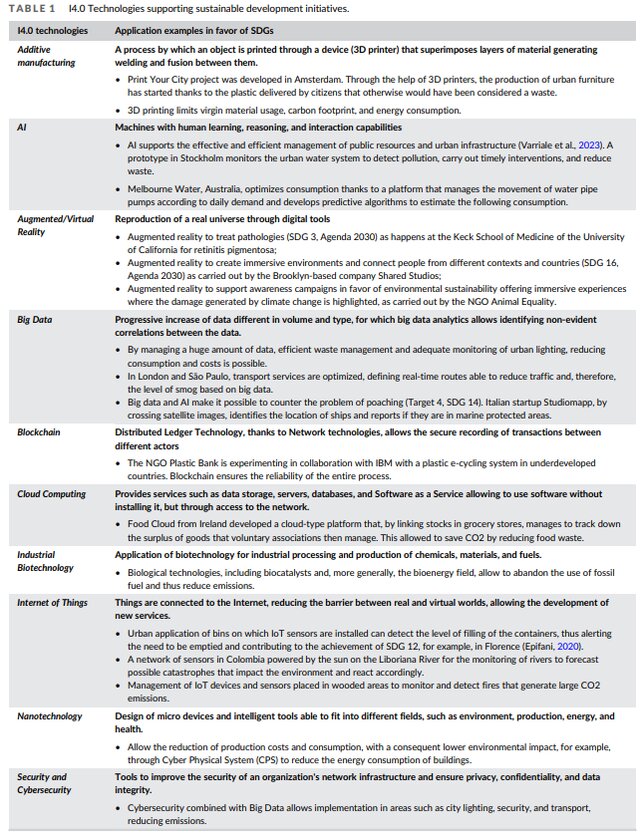
Literature review: The integration of digital technologies has emerged as a transforma-tive force in advancing sustainability objectives across diverse sectorsand industries. Digital technologies offer unprecedented opportunitiesto enhance resource efficiency, optimize processes, and foster innovation, thereby facilitating progress toward the attainment of the SDGs (Birkel & Müller, 2021; Camilleri et al., 2023; Cricelli et al., 2024). Table 1 sheds light on digital technologies that can be used to achieve the sustainable development goals.

Table 2 provides a list of digital technologies (Perano et al., 2023). These disruptive innovations were used as keywords in the search string through SCOPUS.

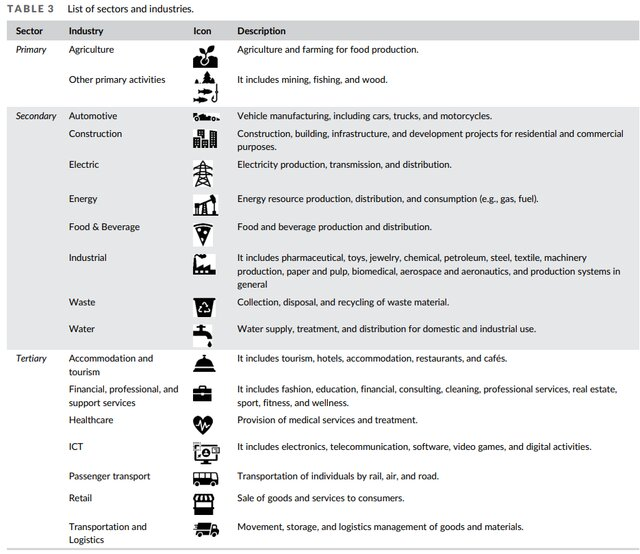
Table 3 identifies sectors and industries based on the SIC code classification (United Kingdom Government, 2024).

Theoretical implications: This article offers a comprehensive overview of the intersection between digitalization and sustainability across various industry sectors. It also considers their peculiar characteristics. The research analyzed 578 articles and identified 1098 sustainable business practices (SBPs), which were categorized into a three-dimensional framework connecting digital technologies, sectors & industries, as well as SDGs. This approach provides a new and innovative perspective on combining sustainability and digitalization by highlighting both promising and established areas of digital technology implementation. Theoretically, this study presents a clear and comprehensive picture of how digital technologies are adopted in different industries to achieve the SDGs. It classifies SBPs into three dimensions: (a) digital technology, (b) sectors & industries, and (c) SDGs. The goal is to present an up-to-date and thorough representation of digital technologies used to achieve the SDGs, based on information from scientific articles.

This contribution sheds light on key opportunities for the application of digital technologies. It identifies specific areas where they can be most effective. Unlike other research studies, this study uses a database of SBPs that can be applied across different industry sectors, to explain how practitioners can enhance their sustainability performance and achieve the SDGs. The three-dimensional framework illustrated in this article allows stakeholders to better understand how to adapt their business strategies and day-to-day operations to increase their sustainability credentials and to reduce their environmental impacts.

Managerial and policy implications: This research provides a comprehensive overview of the implementation of digital technologies across various industries and sectors. It raises awareness on how they can be utilized to achieve the SDGs. It highlights established applications of technologies and also identifies new ones. The proposed framework associates various digital technologies with specific industry sectors. It clearly explains who they can be employed to achieve the SDGs. Hence, this research and its findings would surely benefit practitioners, managers, and policy-makers.

The rationale behind this contribution is to build a robust knowledge base about the use of sustainable technologies among stakeholders. This way, they will be in a better position to improve their corporate responsibility credentials. Managers can use this study’s proposed framework to gain a deeper understanding of SBPs at three levels. In a nutshell, this research posits that SBPs can support practitioners in their strategic and operational decisions while minimizing the risks associated with adopting technologies that are less effective in addressing sustainability challenges. Additionally, this paper offers valuable insights for policymakers. It implies that research funds ought to be allocated toward specific sustainable technologies. This way, they can support various industry sectors in a targeted manner, and foster the development of digital transformation for the achievement of different SDGs.

The full paper (a prepublication version) is available from: https://www.researchgate.net/publication/382632705_Unleashing_digital_transformation_to_achieve_the_sustainable_development_goals_across_multiple_sectors

Leave a comment

Filed under artificial intelligence, Big Data, environment, Industry 4.0, Sustainability, sustainable development

The use of Industry 4.0 for social innovation

Featuring snippets from one of my coauthored articles on the intersection of technology adoption and sustainable development.

Suggested citation: Cricelli, L., Mauriello, R., Strazzullo, S. & Camilleri, M.A. (2024). Assessing the impact of Industry 4.0 technologies on the social sustainability of agrifood companies, Business Strategy and the Environmenthttps://doi.org/10.1002/bse.3874

Abstract: Industry 4.0 technologies present new opportunities for the sustainable development of companies in the agrifood industry. The extant literature on this topic suggests that innovative technologies can support agrifood companies in addressing environmental, economic, and social sustainability issues. While the environmental and economic benefits of technological innovations in the agrifood industry have been widely investigated, few studies sought to explore the impact of the adoption of Industry 4.0 technologies on long-standing social issues. This research addresses this knowledge gap, The data were gathered from 116 Italian agrifood companies that utilized Industry 4.0 technologies. The findings from structural equations modelling partial least squares (SEM-PLS) show that adopting Industry 4.0 technologies helps agrifood companies to improve human resources management, supply chain management, and stakeholder relationships. Finally, this contribution puts forward implications for practitioners, as it raises awareness on the benefits of using technological innovations to promote social sustainability outcomes.

Keywords: Industry 4.0, Technological skills, technological strategy, technological maturity, supply chain management, sustainable supply chain management.

This figure illustrates the model underlying the research hypotheses of this contribution.

An excerpt from the conclusion: recent studies suggest that the adoption of I.40 technologies may have significant social implications for agrifood companies, affecting labour management, supply chain accountability, and relationships with key stakeholders, including governments and consumers (Chandan et al., 2023; Prause, 2021; Rijswijk et al., 2021). Despite this, available literature focuses on the relationship between environmental and economic benefits, while social sustainability implications are currently underinvestigated, especially from an empirical perspective.

This study aimed to help bridge this gap by providing evidence of the impact of I4.0 technologies on the social sustainability of companies in the agrifood industry. To this end, we use data from 116 Italian agrifood companies to validate a theoretical model explaining how the adoption of I4.0 technologies influences the social sustainability of agrifood companies. Specifically, this study focuses on agrifood companies performing cultivation activities, which face unique and relevant social sustainability challenges related to labour, supply chain, and stakeholders’ management. Also, by including companies cultivating a variety of product categories, this study provides some valuable theoretical and practical contributions.

From a theoretical perspective, this study offers two main contributions. First, it validates a conceptual model assessing the impact of I4.0 technologies on the social sustainability of agrifood companies. This advances the literature by providing a framework that can guide future studies on the social implications of technological innovation in the agrifood industry. Second, this study is one of the few to provide empirical evidence of the impact of I4.0 technologies on different aspects of the social sustainability of agrifood companies. This helps explain how technological innovation may influence social sustainability in the agrifood industry and identify further research opportunities. Results show that the development of I4.0 technological skills has a positive impact on all three dimensions of social sustainability. This is consistent with recent literature suggesting that the adoption of I4.0 technologies promotes the development of managerial skills, shifting the role of agricultural workers from executors to decision-makers. Furthermore, the development of I4.0 technological skills enables the use of advanced solutions, which can support operators in the execution of physically demanding tasks (Alves et al., 2023; Lioutas et al., 2021). I4.0 technological skills also positively affect the sustainable management of the supply chain and stakeholder relations, although the reasons are currently under-investigated.

Finally, the results highlight the complexity of the relationship between I4.0 technological strategy and social sustainability. The results reveal a negative relationship between I4.0 technological strategy and sustainable stakeholders’ management, somewhat contradicting recent studies suggesting that an adequate technological innovation strategy is a crucial stepping stone in assisting agrifood companies regain the trust of consumers and society. Advancing an explanation, we hypothesize that the adoption of I4.0 absorbs resources and attention that could have been otherwise directed to address stakeholders’ demands. Finally, a positive relationship was found between I4.0 technological maturity and human resources management, confirming that I4.0 technologies may help companies create healthier work environments, in combination with the development of I4.0 technological skills.

As for practical implications, this study can help managers of these companies analyse and reap the social benefits of adopting I4.0 technologies. Findings show that the introduction of innovative technologies represents a significant opportunity to develop employees’ skills and improve the quality of working conditions, balancing the workloads of field operators. Automation could effectively support cultivation activities, while the use of predictive models could reduce the impact of unpredictable natural factors. Moreover, acquiring advanced and transversal technological skills could provide benefits that go beyond the management of cultivation activities. The use of data provided by modern information systems could simplify communication and coordination with partners and enhance supply chain security, with positive effects on the relationships with stakeholders, including governments and consumers.

Finally, the results suggest managers carefully assess how the company’s I4.0 technological strategy and maturity affect the various dimensions of social sustainability. The findings warn about the risk of focusing exclusively on the company’s needs and losing sight of the interests of supply chain partners and external stakeholders. Despite its contributions, this work is not exempt from limitations. Concerning the sample, this study is based on data obtained from companies operating in specific stages of the Italian agrifood industry. In particular, the study focuses on companies performing cultivation activities in a highly industrialized context. Thus, while adequate to the scope of the study, the sample has limitations. First, it does not include companies that perform product processing and distribution activities. Companies in the meat industry are also excluded. This affects the generalizability of the results, as the study does not provide information on the advantages that I4.0 technologies can offer to such companies.

Furthermore, by focusing on a single country, the study does not account for socioeconomic factors that might affect the results. Future studies can extend the analysis by carrying out crosscountry investigations or by focusing on different geographic areas. Another limitation of the study concerns the use of sociodemographic variables. While providing useful information to outline the profile of the respondents and validate the information sources, the available observations prevented us from capturing any differences in the perceptions of respondents based on variables such as gender or age. Future contributions could focus on assessing how sociodemographic variables mediate individuals’ perception of the impact of I4.0 technologies on the social sustainability of agrifood companies.

In conclusion, we reflect on possible limitations in the theoretical model. Specifically, the absence of previous studies investigating the impact of I4.0 technologies on the social sustainability of agrifood leads to a lack of established metrics and indicators. In this study, we address this shortcoming by referencing established theories such as the RBV to model the technological capability of the company, and the literature on CSR to investigate the multiple facets of social sustainability in the agrifood industry. Despite our efforts to identify all relevant variables, this may have caused us to overlook some important factors. Thus, we elicit future research to extend the analysis and provide additional elements to our framework. Lastly, we point out that this study investigates the impact of I4.0 technologies on the social sustainability of agrifood companies holistically. Therefore, future contributions could obtain different results by focusing on individual technologies or specific applications.

A pre-publication version of the article is available in its entirety through Researchgate. The full list of references can be accessed here: https://www.researchgate.net/publication/381655799_Assessing_the_impact_of_Industry_40_technologies_on_the_social_sustainability_of_agrifood_companies

Leave a comment

Filed under Industry 4.0, Stakeholder Engagement, Strategic Management, Strategy, Sustainability, technology

Stakeholder engagement disclosures in sustainability reports

This is an excerpt from one of my latest articles, published through Business Ethics, the Environment and Responsbility.

Suggested citation: Galeotti, R. M., Camilleri, M. A., Roberto, F., & Sepe, F. (2023). Stakeholder engagement disclosures in sustainability reports: Evidence from Italian food companies. Business Ethics, the Environment & Responsibility, Ahead-of-print, 1–20, https://doi.org/10.1111/beer.12642 

Abstract

More businesses are embedding stakeholder engagement (SE) practices in their corporate disclosures. This article explores the extent to which SE practices are featured in the sustainability reports (SRs) of 48 Italian food and beverage businesses, following the latest Global Reporting Initiative (GRI) standards. The researchers analyze the content of their SRs dated 2020 and 2021. They utilize a panel regression technique to examine the relationship between stakeholder engagement disclosures (SED) and corporate financial performance (CFP), and to investigate the mediating role of SR assurance. The results show a positive and significant relationship between SED and CFP. They also confirm that there is a moderating effect from SR assurance on this causal path. However, the findings reveal that SED in SRs of Italian food companies is still moderate. This contribution builds on the logic behind the stakeholder theory. It implies that there is scope for food companies to forge relationships with stakeholders. It indicates that it is in their interest to disclose material information about their SE practices in their SR and to organize third party assurance assessments in order to improve their legitimacy with stakeholders.

1 INTRODUCTION

The sustainability agenda has gained significant attention within the global food sector (Rueda et al., 2017), and it is becoming a growing concern among stakeholders (Al Hawaj & Buallay, 2022). The food industry is heavily reliant on natural and technological resources such as water, energy, chemicals, and fossil fuels, and therefore, has a substantial impact on the environment and the society (Buallay, 2020; Camilleri, 2021; Ramos et al., 2020). The actions of food manufacturers and retailers can significantly affect the health of individuals. Their ability to choose, process, package, transport, and promote sustainable food could have an impact on what people consume and on their overall well-being. As they interact directly with consumers, they are subject to intense scrutiny and requests for transparency. Stakeholders, including governmental institutions, consumers, and the global community, have called upon food companies to adopt more sustainable practices and to pay more attention to food sustainability (Friedrich et al., 2012; Troise et al., 2021). Very often, they are raising awareness about value creation opportunities to persuade them to engage in responsible production and consumption behaviors (Attanasio et al., 2021), and to forge relationships with marketplace stakeholders (Camilleri, 2020).

The interactions between firms and their external environment constitute a vital characteristic of a sustainable business model, owing to the unique value stream that stakeholder engagement (SE) can offer. In this context, sustainability disclosures can act as a catalyst to foster trust, enhance procedures and systems, promote the firm’s vision and strategy, decrease compliance expenses, and generate competitive advantages (Cardoni et al., 2022). Companies operating in the food sector are principally challenged in their efforts to deliver Sustainability Reports (SRs) that provide useful information to both internal and external stakeholders (D’Adamo, 2022). Research examining the role of sustainability reporting in enhancing firm performance in this sector is limited. Some studies suggest a positive relationship between strong sustainability reporting and return on assets (ROA) (Al Hawaj & Buallay, 2022), increased sales (Sen & Bhattacharya, 2001) or reduced cost of capital (Garzón-Jiménez & Zorio-Grima, 2022).

Given the complexity of the food sector, which is a typical multistakeholder context (Al Hawaj & Buallay, 2022), it is particularly relevant for food companies to ensure that their SRs provide accurate and thorough disclosures of their SE practices. SE is a complex and distinct activity that has emerged in the preparation of SRs (Greenwood, 2007) and it is crucial to reflect on the way it is conducted (Petruzzelli & Badia, 2023). The reporting entities cannot ignore their stakeholders’ relationships from their corporate disclosures. If they conceal any material information on this matter from their SR, they risk damaging their reputation and image (Ardiana, 2019; De Micco et al., 2021; Manetti, 2011; Miles & Ringham, 2020).

Academic research on SE is an evolving area of investigation due to the increasing scientific and professional interest in sustainability reporting issues (Camilleri, 2015; Stocker et al., 2020). Prior studies have indicated that many companies fail to provide complete disclosures of SE processes (Moratis & Brandt, 2017), and show an inadequate level of SE procedures (Petruzzelli & Badia, 2023; Venturelli et al., 2018). However, despite the significance of this subject, the number of empirical academic contributions on SE remains limited, making it important to further explore this topic. In such a context, several scholars are calling for further studies that seek to investigate how, why, where, and when firms are engaging with stakeholders. In addition, they are encouraging them to explore whether they are disclosing the details about their stakeholder relationships in their SRs (Gagné et al., 2022; Gao & Zhang, 2006; Hörisch et al., 2015).

The purpose of this article is twofold. The first one is to investigate the extent to which SE is featured in the SRs of 48 Italian unlisted food companies (that were relying on GRI’s new standards in the period 2020–2021), with the objective to verify their focus on SE disclosures (SED) process. The authors examine their SR’s content, in terms of the report preparers’ motivations and methods. They also verify whether they indicated specific stakeholders in their disclosures. This paper raises awareness on the role of SE in the sustainability reporting of food companies. It clarifies how and to what extent food companies are communicating directly with stakeholders, gathering feedback from them, and how explicitly they are involving them in the SR process. To this aim, the researchers developed an SE index composed of 7 categories and 21 items derived from prior literature on the topic and adapted from the latest Global Reporting Initiative (GRI) standards. The proposed index provides a systematic approach to examining the SE practices and activities disclosed by sample firms. Content analysis (a binary coding system) of GRI SRs was carried out to calculate the overall SED score. The second goal of this contribution is to investigate the relationship between SED and corporate financial performance (CFP). In addition, this research analyzes the moderating effects of SR assurance on SED-CFP causal link. Hence, this contribution addresses the following research questions:

  • RQ1: What is the state and extent of SED in the SRs of food companies?
  • RQ2: Is there a relationship between SED in SRs and CFP in the food industry? If there is, how and to what extent, is this relationship mediated by SR assurance?

This research explores the above-mentioned questions and provides insights on the SE processes of Italian Food companies. It builds on the Stakeholder Theory (ST; Freeman, 1984), as it seeks to explain whether SE processes are integrated in their SRs. The authors anticipate that the exploratory content analysis on the sample firms’ SRs indicate that the average level of SE is not significantly high in food companies in Italy, however, there is an increasing pattern of SED during the study period. While SE seems common practice, many firms are failing to provide the details on their stakeholder relationships in their SRs. The findings suggest that most of the engagement modes disclosed are unidirectional (level 1—Inform) with minimal emphasis on deep involvement strategies (level 3—Involve). Furthermore, only 32% of the sample seek assurance on the information disclosed.

Results from the panel data analysis provide evidence that there is a significant positive association between SED and CFP. Findings also show that SR assurance by accounting firms accentuates this effect. An extensive literature review suggests that this study, to the best of the authors’ knowledge, is the first to use food companies’ SRs to investigate the impact of SED on CFP introducing the interactive variable of SR third-party assurance, which adds new knowledge to SE and sustainability reporting literature from a specific industry in an advanced economy. Considering the maturity of Italian sustainability reporting and assurance practices (KPMG, 2022; Larrinaga et al., 2020) the Italian context is particularly relevant in explaining the interest of food companies into properly communicating SE activities in SRs. In these terms, this study contributes to a deeper understanding of the underexplored area of SE in a specific industry, highlighting the strategies used by Italian food companies to manage the SE communication process. Specifically, it provides insights to improve the framing of SED and gives evidence of the value relevance of SED and SR assurance for companies operating in the food sector. Therefore, this research sheds light on the advancement and enhancement of food company–stakeholder relations, particularly from the perspective of value co-creation. The findings will help managers identify key focus areas where they can improve the SED process aiming at creating shared value and foster mutually beneficial relationships with stakeholders.

The remainder of this study is structured as follows. The next section deals with the paper’s conceptual framework and hypotheses development. This is followed by the research design and methodology. Finally, the results, discussion, including recommendations, limitations, and hints for future research are presented.

Read further (this publication is available in its entirety, as it is an open-access article).

Leave a comment

Filed under Corporate Social Responsibility, Corporate Sustainability and Responsibility, CSR, ESG Reporting, Stakeholder Engagement, Sustainability

CALL FOR PAPERS: The circular economy of surplus food (in the hospitality industry)

A SPECIAL ISSUE entitled,’Responsible consumption and production of food: Opportunities and challenges for hospitality practitioners‘ will be published through the Journal of Sustainable Tourism.

Special Issue Editor(s)

Mark Anthony Camilleri, University of Malta, Malta, and Northwestern University, United States of America.

mark.a.camilleri@um.edu.mt

Antonino Galati, Universita’ degli studi di Palermo, Italy.

antonino.galati@unipa.it

Demetris Vrontis, University of Nicosia, Cyprus.

vrontis.d@unic.ac.cy

Previous research explored the circular economy practices of different businesses in various contexts; however, limited contributions have focused on the responsible production and consumption of food (Huang et al., 2022; Van Riel et al., 2021). Even fewer articles sought to explore environmental, social and governance (ESG) dimensions relating to the sustainable supply chain management of food and beverages in the tourism context.

This special issue will shed light on the responsible practices in all stages of food preparation and consumption in the tourism and hospitality industry. It raises awareness on sustainable behaviors that are aimed to reduce the businesses’ externalities including the generation of food waste on the natural environment. It shall put forward relevant knowledge and understanding on good industry practices that curb food loss. It will identify the strengths and weaknesses of extant food supply chains as well as of waste management systems adopted in the sector. It is hoped that prospective contributors identify laudable and strategic initiatives in terms of preventative and mitigating measures in terms of procurement and inventory practices, recycling procedures and waste reduction systems involving circular economy approaches.

Academic researchers are invited to track the progress of the tourism businesses on the United Nations’ Sustainable Development Goal SDG12 – Responsible Consumption and Production. They are expected to investigate in depth and breadth, how tourism businesses are planning, organizing, implementing and measuring the effectiveness of their responsible value chain activities. They may utilize different methodologies to do so. They can feature theoretical and empirical contributions as well as case studies of organizations that are: (i) reusing and recycling of surplus food, (ii) utilizing sharing economy platforms and mobile apps (that are intended to support business practitioners and prospective consumers to reduce the food loss and waste), (iii) contributing to charitable institutions and food banks, through donations of surplus food, and/or (iv) recycling inedible foods to compost, among other options.

The contributing authors could clarify how, where, when and why tourism businesses are measuring their ESG performance on issues relating to the supply chain of food and beverage. They may refer to international regulatory instruments and guidelines (Camilleri, 2022),  including the International Standards Organization (ISO) and Global Reporting Initiative (GRI) standards, among others, to evaluate the practitioners’ ESG performance through: a) Environmental Metrics: The businesses’ circularity; Recycling and waste management; and/or Water security; b) Social Metrics: Corporate social responsibility; Product safety; Responsible sourcing; and/or Sustainable supply chain, and; c) Governance: Accounting transparency; Environmental sustainability reporting and disclosures.

They could rely on GRI’s Standards 2020, as well as on GRI 204: Procurement Practices 2016; GRI 303: Water and Effluents 201; GRI 306: Effluents and Waste 2016; GRI 306: Waste 2020; GRI 308: Supplier Environmental Assessment 2016 and GRI 403: and to Occupational Health and Safety 2018, to assess the businesses’ ESG credentials.

Prospective submissions ought to clearly communicate about the positive multiplier effects of their research (Ahn, 2019). They can identify responsible production and consumption behaviors that may result in operational efficiencies and cost savings in their operations (Camilleri, 2019). At the same time, they enable them to improve their corporate image among stakeholders (hence they can increase their financial performance). They can examine specific supply chain management initiatives involving open innovation, stakeholder engagement and circular economy approaches that may ultimately enhance the businesses’ legitimacy in society. More importantly, they are urged to elaborate on the potential pitfalls and to discuss about possible challenges for an effective implementation of a sustainable value chain of food-related products and their packaging, in the tourism and hospitality industry (Galati et al., 2022).

It is anticipated that the published articles shall put forward practical implications for a wide array of tourism stakeholders, including for food manufacturers and distributors, airlines, cruise companies, international hotel chains, hospitality enterprises, and for consumers themselves. At the same time, they will draw their attention to the business case for responsible consumption and production of food through strategic behaviors.

Potential topics may include but are not limited to:

 –          Responsible food production for tourism businesses

–           Responsible food consumption practices in the hospitality industry

–           Circular economy and closed loop systems adopted in restaurants, pubs and cafes

–           Open innovation and circular economy approaches for a sustainable tourism industry

–           Recycling of inedible food waste to compost

–           Measuring performance of responsible food production/sustainable consumption

–           Digitalisation and the use of sharing economy platforms to reduce food waste

–           Artificial intelligence for sustainable food systems

–           Sustainable food supply chain management

–           Food waste and social acceptance of circular approaches

–           Stakeholders’ roles to minimize food waste in the hospitality industry

–           Food donation initiatives to decrease food loss and waste

References

Ahn, J. (2019). Corporate social responsibility signaling, evaluation, identification, and revisit intention among cruise customers. Journal of Sustainable Tourism, 27(11), 1634-1647.

Camilleri, M. A. (2019). The circular economy’s closed loop and product service systems for sustainable development: A review and appraisal. Sustainable Development, 27(3), 530-536.

Camilleri, M. A. (2022). The rationale for ISO 14001 certification: A systematic review and a cost–benefit analysis. Corporate Social Responsibility and Environmental Management, 29(4), 1067-1083.

Galati, A., Alaimo, L. S., Ciaccio, T., Vrontis, D., & Fiore, M. (2022). Plastic or not plastic? That’s the problem: Analysing the Italian students purchasing behavior of mineral water bottles made with eco-friendly packaging. Resources, Conservation and Recycling, 179, https://doi.org/10.1016/j.resconrec.2021.106060

Huang, Y., Ma, E., & Yen, T. H. (2022). Generation Z diners’ moral judgements of restaurant food waste in the United States: a qualitative inquiry. Journal of Sustainable Tourism, https://doi.org/10.1080/09669582.2022.2150861

Van Riel, A. C., Andreassen, T. W., Lervik-Olsen, L., Zhang, L., Mithas, S., & Heinonen, K. (2021). A customer-centric five actor model for sustainability and service innovation. Journal of Business Research, 136, 389-401.

Leave a comment

Filed under academia, Call for papers, Circular Economy, environment, food loss, food waste, Hospitality, hotels, responsible consumption, responsible production, responsible tourism, restaurants, Shared Value, sharing economy, Stakeholder Engagement, Strategy, Sustainability, Sustainable Consumption, sustainable development, sustainable production, sustainable tourism, tourism

How can we combat climate change?

This is an excerpt from one of my latest contributions.

Suggested citation: Camilleri, M.A. (2022). The rationale for ISO 14001 certification: A systematic review and a cost-benefit analysis, Corporate Social Responsibility and Environmental Management, https://doi.org/10.1002/csr.2254

Source: UNFCCC.int

During the Paris Climate Conference (COP 21), one hundred ninety-six (196) countries pledged their commitment to implement environmental performance measures to reduce the effects of climate change. This conference has led to the development of the ‘Paris Agreement’ where signatories became legally bound to limit global warming to below 2°C, and possibly 1.5°C (Palea & Drogo, 2020; Secinaro, Brescia, Calandra & Saiti, 2020). They recognized the importance of averting and minimizing the environmental impact that is caused by climate change, by scaling up their efforts and support initiatives to reduce emissions, by building resilience among parties, and by promoting cooperation (Birindelli & Chiappini, 2021; Gatto, 2020).

In the aftermath of COP 21, many countries submitted their plans for climate action (these plans are also known as nationally determined contributions – NDCs), where they communicated about their tangible actions that were aimed to reduce their greenhouse gas emissions and the impacts of rising temperatures (Fatica & Panzica, 2021; Gerged, Matthews & Elheddad, 2021).  Consequentially, intergovernmental organizations including the European Union (EU), among others, are increasingly establishing ambitious carbon neutrality goals and zero-carbon solutions to tackle climate change issues (Benz, Paulus, Scherer, Syryca & Trück, 2021).

Many countries are incentivizing businesses across different economic sectors, to reduce their emissions. For example, the EU member states are expected to reduce their greenhouse gas emissions by 40% before 2030, and by 60% prior to 2050 (EU, 2019). These targets would require the commitment of stakeholders from various sectors including those operating within the energy and transportation industries, among others.

The latest climate change conference (COP26) suggested that progress has been made on the signatories’ mitigation measures that were aimed to reduce emissions, on their adaptation efforts to deal with climate change impacts, on the mobilization of finance, and on the increased collaboration among countries to reach 2030 emissions targets. However, more concerted efforts are required to deliver on these four pledges (UNFCC, 2021).

This contribution raises awareness on the use of environmental management standards that are intended to support organizations of different types and sizes, including private entities, not-for-profits as well as governmental agencies, to improve their environmental performance credentials. A thorough review of the relevant literature suggests that, over the years many practitioners have utilized the International Standards Organization’s ISO 14001 environment management systems standard to assist them in their environmental management issues (Baek, 2018; Delmas & Toffel, 2008; Erauskin‐Tolosa, Zubeltzu‐Jaka, Heras‐Saizarbitoria & Boiral, 2020; Melnyk, Sroufe & Calantone, 2003).

Many academic commentators noted that several practitioners operating in different industry sectors, in various contexts, are implementing ISO 14001 requirements to obtain this standard’s certification (Boiral, Guillaumie, Heras‐Saizarbitoria & Tayo Tene, 2018; Para‐González & Mascaraque‐Ramírez, 2019; Riaz, & Saeed, 2020). Whilst several researchers contended about the benefits of abiding by voluntary principles and guidelines (Camilleri, 2018), others discussed about the main obstacles to obtaining impartial audits, assurances and certifications from independent standard setters (Hillary, 2004; Ma, Liu, Appolloni & Liu, 2021; Robèrt, Schmidt-Bleek, Aloisi De Larderel … & Wackernagel, 2002; Teng & Wu, 2018).

Hence, this research examines identifies the rationale for ISO 14001 certification (Carvalho, Santos & Gonçalves, 2020; Eltayeb, Zailani & Ramayah, 2011; Lee, Noh, Choi & Rha, 2017; Potoski & Prakash, 2005) that is supposedly intended to improve the organizations’ environmental performance and to enhance their credentials. Specifically, this contribution’s objectives are threefold. Firstly, it provides a generic background on voluntary instruments, policies and guidelines that are intended to promote corporate environmentally responsible behaviors. Secondly, it presents the results from a systematic review of academic articles that were focused on ISO 14001 – environment management systems. Thirdly, it synthesizes the findings from high impact papers and discusses about the benefits and costs of using this standard. In conclusion, it elaborates on the implications of this research, it identifies its limitations and points out future research avenues.

In sum, this contribution differentiates itself from previous articles, particularly those that sought to investigate the introduction and implementation of environment management systems in specific entities. This research involves a two-stage systematic analysis. It appraises a number of empirical investigations, theoretical articles, reviews, case studies, discursive/opinion papers, from 1995-2021. Afterwards, it scrutinizes their content to shed more light on the pros and cons of using ISO 14001 as a vehicle to improve corporate environmental performance.

This paper can be downloaded, in its entirety, through ResearchGate: https://www.researchgate.net/publication/358557458_The_rationale_for_ISO_14001_certification_A_systematic_review_and_a_cost-benefit_analysis

Leave a comment

Filed under Business, Circular Economy, corporate citizenship, Corporate Social Responsibility, Corporate Sustainability and Responsibility, CSR, environment, Sustainability, sustainable development

Advancing community-based tourism approaches for sustainable destinations

This is an excerpt from one of my latest papers on sustainable tourism.

Suggested citation: Mtapuri, O., Camilleri, M.A. & Dłużewska, A. (2021). Advancing community-based tourism approaches for the sustainable development of destinations. Sustainable Development, 

https://onlinelibrary.wiley.com/doi/10.1002/sd.2257

Image adapted from TravelDailyNews.

Whilst mass tourism service providers, such as foreign owned properties including international hotel chains are associated with economic leakages (Garrigós et al., 2015), locally-owned, smaller businesses, are usually aligned to economic linkages.

Destinations can use community-based tourism (CBT) approaches to increase linkages by attracting high yield, affluent tourists to locally-owned companies (Butler, 2020; Prasiasa, et al., 2020). From a community-based perspective, the limitation of tourism figures can improve the destinations’ sustainability, whilst limiting the impacts on the natural environment (Saarinen, 2006:1129). Tourism businesses can contribute to reduce their impact on the environment by limiting the number of tourists. They can improve the quality of their services to appeal to high-end segments.

To be successful, the proponents of CBT ought to ensure that they retain specific principles and characteristics. Thus, CBT practitioners could differentiate themselves from other business models by offering authentic, local experiences to their guests. CBT can establish itself as a niche tourism product that appeals to lucrative market segments. Therefore, service providers are expected to deliver on their promises. They have to meet and exceed their customers’ expectations without lowering their standards of service.

CBT operators rely on their community’s local resources including environment/natural resources, heritage, culture as well as on knowledgeable human resources. Their employees should possess customer service skills, and ought to be trained about their local tourism products. Local businesses may usually engage native employees to improve their consumers’ experiences with their CBT product.

However, there may be instances where CBT operators may not find local employees in the labor market. In this case, they have to train their imported employees about local cultures and traditions in order to continue delivering authentic CBT experiences. The following figure presents a model for sustainable CBT that relies on the destinations’ effective management of their carrying capacities.

An ongoing evaluation of the destinations’ infrastructures as well as on their human and natural resources, particularly during their high season, is required to ensure that they do not exceed their specific carrying capacities. While each specific context will have its own specific performance indicators, this contribution suggests that destination marketers ought to consider the following issues:

• The participation of local businesses and individual in CBT.
• Local procurement of products (for accommodation establishments, hotels, restaurants, and to other tourism businesses).


It is in the interest of CBT operators to think locally and act globally (Hofstede, 1998). They should consider sourcing their requirements from their local communities, where possible. Hence, tourism planners could utilize local resources to reduce leakages from their economy.

Governments can encourage tourism businesses to support local enterprises, for example, by purchasing local products, and by supporting the local communities. They may also incentivize businesses through financial instruments to pursue laudable activities. They can also provide support to tourism businesses, including small hotels and B&Bs to upgrade their services to attract lucrative tourists in their communities. At the same time, they have to maintain their destinations’ infrastructure and should offer suitable amenities to visitors.

These strategies are meant to foster an environment that promotes sustainable CBT approaches that are intended to increase economic linkages, whilst improving societal and the environmental outcomes in local communities. The following figure clarifies how tourism businesses can optimize the utilization of local resources through sustainable CBT strategies in order to improve their destination’s carrying capacity whilst reducing leakages from their economy.

The effectiveness of this proposed model for sustainable community-based tourism relies on a regular evaluation of the marketing environment. Tourism practitioners are expected to examine and re-examine their CBT strategies to ensure that they are still creating value to their business, to the local community and to the environment at large.

Sustainable CBT approaches can support the local economic development of destinations, however leakages can jeopardize the destinations’ competitiveness and growth prospects. While the degree and types of leakages may vary, according to specific characteristics of certain countries, it can be argued that the proper utilization of local resources can improve the national economies and the quality of life of different communities, including those from emerging economies.

The type of tourism planning and development that is adopted by certain destinations is another factor that can have an effect on their economic leakages or linkages. Based on the above, this contribution puts forward a theoretical model that is intended to address the limitations of the carrying capacities of various destinations. In sum, it suggests that sustainable CBT approaches that rely on the optimal utilization of local resources (including human and natural) may result in economic growth as well as in positive outcomes to local communities and their natural environments. This model is aimed at rebalancing leakages with linkages in the economy, whilst responding to challenges relating to the supply chains of different tourism businesses.

Indeed, there is scope for destinations to maximize the use of resources at their disposal (both human and natural). In a similar vein, companies should avail themselves of local resources, competences and capabilities. It is also in their interest to engage in strategic CSR and sustainable tourism practices to support local stakeholders and to safeguard their natural environment.

A sustainable CBT model would require tourism businesses to forge relationships with different stakeholders including with the government and its policymakers, suppliers, creditors, employees and customers, among others. The advancement of CBT would also necessitate that destination marketers and hospitality businesses work together, in tandem to improve their tourism product. Local stakeholders are expected to safeguard their natural environment, culture and traditions for the benefit of their communities, and for their valued tourists and visitors who would probably appreciate authentic destinations that offer unique experiences to them.

The full paper and the reference list is available here: https://www.researchgate.net/publication/355446004_Advancing_community-based_tourism_approaches_for_the_sustainable_development_of_destinations

Leave a comment

Filed under community-based tourism, Strategy, Sustainability, sustainable development, tourism