EU pledges financial support to SMEs

No longer are smaller businesses considered as reactive and peripheral forces in terms of innovation, employment and productivity.SMEs prevail in their contribution to the GDP of the world economies. The countries with a high percentage of SMEs tend to exhibit a relatively equal distribution of income. Therefore, SMEs may cause higher social stability in their local environmental setting. There are more than ninety-nine per cent of all businesses worldwide which are SMEs with less than 250 members of staff. Within the European Union there are more than 19 million SMEs, which provide employment for more than 74 million citizens. In aggregate, they are providing two out of three of the private sector jobs of the EU labour market. What might possibly be even more intriguing is that nine out of ten SMEs are actually micro-enterprises with less than 10 employees.

 access-to-finance_en

It may be argued that SMEs are the true back-bone of the European economy, as they are responsible for wealth and economic growth, along with their key role in innovation, research and development. The perceived importance of SMEs in Europe is reiterated at the political level as well. For instance, in a recent communication, the European Union’s Enterprise and Industry Division has reiterated the importance of improving access to finance for SMEs. It is hoped that the small and medium sized enterprises (SMEs) will drive the recovery in Europe. On the 2nd May the European Commission / European Investment Bank (EIB) joint report maintained that their support for SMEs has reached €13 billion in 2012. In addition, the Commission-funded guarantees have helped to mobilise loans worth more than €13 billion, boosting nearly 220,000 small businesses across Europe. This latest report covers the results of the current funding schemes as well as the new generation of financial instruments for SMEs. It transpired that the financial resources for SMEs were significantly enhanced through the €10 billion increase in the EIB’s capital.

During a meeting of the SME Finance Forum, on the eve of an Informal Competitiveness Council on the 2nd and 3rd of May in Dublin, the European Commission launched a new single online portal on all EU financial instruments (for SMEs) and an information guide to promote SMEs’ stock listings. The Commissioner for Industry and Entrepreneurship held that access to finance of SMEs remains difficult and it is still one of the main reasons for the current economic downturn. Therefore, EU authorities will boost loan guarantees to SMEs under the new COSME programme (as from 2014). Every euro dedicated to guarantees will possibly have the power to stimulate 30 euros in bank loans.  Almost 220,000 SMEs profited from the Commission’s Competitiveness and Innovation Framework Programme (CIP) programme. CIP was able to stimulate more than €15 billion of financing for SMEs, so far. With a budget of €1.1 billion (CIP) has helped to mobilise over €13 billion of loans and €2.3 billion of venture capital for SMEs across Europe. Under its SME guarantee facility, CIP has helped nearly 220,000 SMEs to access loans. These loan guarantees are used where the individual entrepreneur or the small enterprises do not have sufficient collateral. In many cases, banks will not provide them with a loan (debt financing).

More than 90% of the beneficiaries of loan guarantees are micro-enterprises, with less than 10 employees. Such enterprises struggle to raise their capital. They find themselves in an equity gap, where it is very difficult to acquire finance to operate efficiently. Although banks are key providers of finance for most small firms through the provision of loans, unsecured bank finance is very limited. Therefore, the SMEs’s growth into viable investment opportunities may be severely restricted. Cashflow-based lending is relatively rare and growing businesses rarely have unused security available. Despite the changing debt market, one of the main reasons why small businesses fail to get the debt finance they need; is their inability to provide adequate collateral. Even small businesses with high growth potential can experience difficulty in raising relatively modest amounts of risk capital, which is inevitably required to fund their ambitions for growth. Moreover, the external forces and potential threats in the business environment may impact harder on the small businesses than on the larger corporations. For instance, changes in government regulations, tax laws, labour legislation and interest rates may usually affect a greater percentage of expenses for the smaller businesses than they do for their larger counterparts.

Europe is responding to the contentious issues facing SMEs by providing a mix of flexible financial instruments under programmes such as the Competitiveness and Innovation Framework Programme (CIP), Progress Microfinance, the Risk Sharing Instrument (FP7), EIB loans and Structural Funds.

Leave a comment

Filed under SMEs

Leveraging Organisational Performance through ‘Shared Value’ Propositions

Many successful businesses are forging strategic alliances in their value chain in order to run their businesses profitably. They also promote the right conditions of employment, where they can. Arguably, several businesses are doing well by doing good as they create shared value opportunities in their supply chain. At the same time, they are instrumental in improving the lives of their suppliers. They do this as they want to enhance the quality and attributes of their products, which are ultimately delivered to customers and end consumers.

Nestlé, Google, IBM, Intel, Johnson & Johnson, Nestlé, Unilever, and Wal-Mart are some of the multinational organisations who have somewhat embraced the ‘shared value’ approach. These successful global businesses have shown that they are capable of creating value for shareholders as well as for society in general. In many cases they are building partnership and collaborative agreements with external stakeholders (including suppliers) hailing from different markets. Evidently, these businesses are reconceiving their products as they are taking a broad view of their purchasing and procurement and on production activities. Several multi-national organisations are looking beyond their short-term profits for shareholders. They are also looking after their other marketplace stakeholders. Many multinational organisations are redefining productivity in the value chain and enabling local cluster developments to mitigate risks, boost productivity and competitiveness.

 csv2

Two Case Studies:

#1 Nestlé

Nestlé’s business principles incorporate the 10 United Nations Global Compact Principles on human rights, labour, the environment and corruption. It transpires that Nestlé is an active member of the Compact’s Working Groups and Initiatives. ‘Creating shared value’ has become an integral strategy of how Nestlé does its business. In a nutshell, this approach is focusing on stakeholder engagement as well as environmental sustainability. Nestlé maintains that it complies with international regulatory laws and acceptable codes of conduct, as it improves its company’s operations. Yet, at the same time it is nurturing its suppliers’ (the farmers’ in the developing countries) talents. Nestlé has revisited its numerous processes and its value chain activities. Each stage of the production process, from the supply chain to transforming resources adds value to the overall end product, for the benefit of the company itself. Nestlé sources its materials from thousands of farms; many of them are situated in poorer rural regions of the world. Nestlé provide training to their supplies  in order to encourage sustainable production whilst protecting their procurement, standards and quality of their raw materials. This brings positive, long-term impacts on the local economy. At the same time, the suppliers are running profitable farms, as they are offering their children a better education. Moreover, both Nestlé and the suppliers are committed to protecting their natural environmental resources for their long term sustainability. In their corporate site, Nestlé indicate that their key performance indicators for responsible sourcing include;

  • 89.5% of Nestlé‘s suppliers comply with the brand’s Supplier Code.
  • Nestlé’s sources 11% of its cocoa through the Nestlé Cocoa Plan, where they have trained more than 27,000 farmers and distributed more than 1,000,000 high-yield, disease-resistant cocoa plantlets.
  • Nestlé helped 14 cocoa cooperatives achieve UTZ or Fair Trade certification.
  • Nestlé purchased 133,000 tonnes of green coffee through Farmer Connect, trained more than 48,000 farmers and distributed 12 million coffee plantlets in 2012.
  • 80% of the palm oil that Nestlé purchased this year was RSPO compliant, out of which about 13% was traceable RSPO certified oil and 67% had GreenPalm certificates.
  • More than 8,000 farmers joined the Nespresso AAA Sustainable Quality™ Program in 2012 and we’ve sourced 68% of Nespresso coffee through the AAA Sustainable Quality™ Program.

#2 The Intercontinental Hotel Group

The Intercontinental Hotel Group (IHG) reaffirm that they are successful in identifying innovative opportunities within the environment as they foster closer collaboration with the community. IHG have aligned their CSR report with the Global Reporting Initiative Scorecard. The hotel chain claims that it is envisaging reductions in energy consumption of up to 10% over the next three years. IHG plans to achieve this target by using an online sustainability tool named, ‘Green Engage. IHG suggests that this tool has helped them in measuring and monitoring energy, water and waste management. The international hospitality chain prides itself of a dedicated web page entitled Corporate Responsibility Report which outlines innovation, collaboration, environmental sustainability and sustainable communities. These laudable initiatives deliver education programs to employees, diversity initiatives, and environmental protection among others issues.  According to IHG, their key ‘Green Engage’ achievements in 2012 were the following;

  • Exceeded their three-year target (2010-2012) to reduce energy per available room by between 6 and 10% in our managed and owned estate with a reduction of 11.7%
  • 50% of IHGs’ hotels (2,250 based on January 2012 hotel figures) have used Green Engage as at 14 January 2013.
  • Reduced their carbon footprint in IHG owned and managed hotels by 19% per occupied room in a year
  • Achieved an absolute reduction in global carbon footprint in IHG hotels and corporate offices by 76,000 metric tonnes in a year
  • Launched a carbon calculator within IHG Green Engage using the industry approved carbon measurement methodology
  • Launched a Green Meeting checklist for IHG hotels
  • Developed further new features within IHG Green Engage such as multi-unit reporting and a water benchmark.

Evidently, many multinational organisations have taken on board Porter and Kramer’s latest notion, “creating shared value” as they work hard to ensure a sustainable and high quality supply of their raw materials. Some of these latest corporate responsibility developments are focusing on training of suppliers, improving social conditions, buying from cooperatives and paying premiums, and working with certification programmes (such as FairTradeEcolabels et cetera). Of course, all these initiatives create value through the supply chain, particularly for the smaller businesses and sole traders. Effective communication with stakeholders is a very important element of responsible business behaviour. This contribution suggests that through stakeholder engagement, businesses are identifying emerging issues, shape their responses and continue to drive improvements in their financial performance.

This contribution was published in the TimesofMalta.com:

http://www.timesofmalta.com/articles/view/20130523/business-comment/Leveraging-organisational-performance-through-shared-value-propositions.470940

Similar contributions:

http://www.timesofmalta.com/articles/view/20130124/business-comment/Creating-shared-value-for-long-term-sustainability.454548

Additional Links:

Blogs about ‘Shared Value’

Leave a comment

Filed under Uncategorized

CSR: new disclosure and reporting obligations for listed organisations | EurActiv

Commission accuses companies of ‘group think’, demands social responsibility | EurActiv.

Leave a comment

Filed under Uncategorized

Existing Policies on Tourism and Sustainable Development in the Maltese context

Tourism is an economic activity capable of generating growth and employment whilst contributing to economic development and social integration.  The EU tourism industry generates more than 4% of the EU’s GDP, varying from 2% (in some EU states) to 12% in Malta. When related sectors are taken into account, the estimated contribution of tourism to GDP creation is much higher. In recent years, employment growth within this sector has been significantly higher than others in the economy. The tourism and hospitality industries are particularly important when it comes to offering career opportunities to young people, who represent twice as much of the labour force than in other areas of the economy.


Malta drew up a strategy for sustainable development in the aftermath of the United Nations Conference on Environment and Development, which was held in 1992. The governments of almost all nations committed themselves to adopt a sustainable strategy so as to build upon and harmonise the various sectors’ economic, social and environmental policies. The basic goal of such a strategy was to ensure socially responsible economic development whilst protecting the resource base and the environment for the benefit of future generations. In September 2000, some 150 Heads of States, including the Maltese counterpart signed the Millennium Declaration. They reaffirmed their support to the principles of sustainable development and Agenda 21. They also agreed on the Millennium Development Goals, including the need to integrate the principles of sustainable development into country policies and programmes and reverse the loss of environmental resources.


The Tourism Policies (Malta Tourism Policies, 2008-2011; 2012-2016) and the National Environment Policy Draft (NEPD) for Consultation issued through the Office of the Prime Minister (2011) attempt to address the issues of sustainable development in the Maltese context. The NEPD covers potential areas of contention such as the construction of the buildings of tourism establishments, environmental protection, environmental stewardship and public participation in the environmental issues. This policy ensures that the construction of tourism development should be sustainable and should not harm sensitive ecological habitats. Similarly, it has been suggested that there should be no degradation of historical-cultural resources. NEPD sought to encourage the general public to actively participate in environmental management and to take action on environmental issues. There was a growing recognition that the concept of environmental stewardship had to be universal, and not just limited to the public sector or non-governmental organisations. The empowerment of citizens to take responsibility for the environment was the focus of the Aarhus Convention (1998), which Malta has also signed and ratified. Malta has also transposed the two EU directives related to the Aarhus Convention on access to information and public participation into its national legislation. Interestingly, Malta is fully compliant with the EU Directives relating to public participation, although there is the potential to refine its current practices. Malta’s environmental policy’s strategy rests on the following 5 pillars of sustainability:


· “Providing easily-accessible information about the state of the environment;

· Educating citizens, the private sector, local government and policy and decision-makers, about the environment;

· Providing information to consumers about the environmental impacts of products, services and activities through eco-labelling;

· Working with stakeholders, encouraging and supporting the role of the voluntary sector, particularly environmental non-governmental organisations, in environmental protection;

· Encouraging local government to take a stronger role in environmental protection” (Malta’s National Environment Policy Draft, 2011).


Moreover, the tourism policies (2008-2011; 2012-2016) encourage the provision of training which is highly required for young people and those who are willing to work in the tourism sectors. The tourism studies lead to the delivery of a quality service and hence to the industry’s competitiveness. The investment in human resources at all levels is deemed essential towards improving the tourism product. The ‘new’ tourism policy (covering the period 2012-2016) addresses the shortcomings of appropriate skills and  knowledge which are highly demanded and valued by the hospitality sector. The tourism stakeholders want to ensure that training is available for all those who want to work in the industry. The training structures must continuously improve the quality assurance and standards of training. They must ensure that such training is in line with the requirements of the industry; in terms of availability and accessibility of courses. Training the future’s human resources is the key to delivering a positive experience to Malta’s prospective visitors. The policy suggests that training is already being delivered by specialised personnel (at the Institute of Tourism Studies and through MTA’s Tourism Training and HR Development Department) capable of meeting the needs of the industry. In addition, the policy does not exclude the possibility of private training enterprises which may deliver recognised qualifications from accredited overseas institutions. Lifelong learning opportunities are being provided for those interested to start or to continue working in the tourism sector. Following Malta’s EU membership in 2004, the ministry for tourism has made good use of the European Social Funds (ESF), which together with national funds, has successfully co-funded such training initiatives.


The Maltese tourism policy (2012-2016) strives to address the contentious issues about middle-aged unemployment and female workforce participation in the labour market. According to this policy, it is crucial to minimise staff turnover. It encourages staff retention, particularly female employees. This can only be achieved if and when the necessary support structures and work patterns are available and accepted. The national action plan (Ministry for Tourism and Culture, 2012) presents the necessary guidelines to encourage such improved work practices, which are to be taken up by the private sector. The Maltese government’s objective in the tourism sector is to have the right environment which leads to the creation of more and better jobs, as specified in the National Action Plan for Employment (see Ministry for Tourism and Culture, 2012).

Tourism and Sustainable Development Policies in Malta

Malta Tourism Authority

Tourism and Sustainable Development Unit, Ministry for Tourism in Malta

Institution of Tourism Studies

Draft National Environment Policy, Malta

A look inside Malta’s new, national environment policy

Leave a comment

Filed under Uncategorized

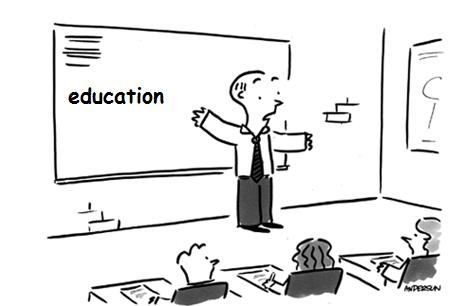
Student Centred Approaches in Higher Educational Settings

thinkers_cartoon

“One repays a teacher badly if one always remains nothing but a pupil.” Nietzsche (1891).

Traditionally, the teacher-centred learning involved the instructor’s active role, whereas the students exhibited a passive, receptive role. Of course, the student-centred learning has many implications for the design of the courses. In this perspective; within the student-oriented approach, the educator adapts to the pupils’ needs, abilities, interests, and learning styles. Handelsman et al. (2004) held that there is sufficient evidence that supplementing or replacing lectures with active learning strategies and engaging students in discovery and scientific process improves their learning and knowledge retention. Many educators are adopting a broad spectrum of the student-centred approaches, which include: Active Learning (Bonwell and Eison, 1991), Collaborative Learning (Bruffee, 1984), Inquiry-based Learning, Cooperative Learning (Johnson, Johnson and Smith, 1991), Problem-based Learning, Peer Led Team Learning (Tien, Roth, and Kampmeier, 2001), Team-based Learning (Michaelson, Knight and Fink, 2004), Peer Instruction (Mazur, 1997) among other methodologies.

As a proponent of active learning I suggest that exercises such as role-playing, debating, student engagement in case studies, active participation in cooperative learning and the like, may be used to create a context of material, where learners work collaboratively. Needless to say, the degree of the teacher’s involvement while the students are being “active” may vary according to the specific task and its context in a teaching unit (Bonwell and Eison, 1991). Examples of “active learning” activities include:

A collaborative learning group: Students are assigned in groups of 3-6 people and they are expected to work together, in tandem in a particular assignment. They are usually requested to answer a question to present to the class or to produce a project. A student debate: Students are urged to participate in activities by giving them the opportunity to express their views and opinions in verbal presentations. Debates will allow the students to take a position and collect information to substantiate their views and explain them to others. Class discussion are usually much more effective in smaller class settings. This educational setting allows the instructor to act as a moderator as s/he can guide the students’ learning experience, and foster the right environment. The students are requested  to critically reflect on the subject matter and use rationality to evaluate their peers’ positions. They are expected to discuss about any topic, in a constructive and objective manner. A discussion may be used as a follow-up activity when the lecture has already been delivered. Similarly, a think-pair-share activity is used when students are encouraged to reflect about the previous lesson. They are expected to discuss with one or more of their peers. Finally they are invited to share their concerns with the class as part of a formal discussion. The instructor is responsible to clarify any misunderstandings. In this case, the learners need a background of the subject to identify and relate what they know to others. Students need to prepared with sound instruction before expecting them to discuss any subject matter on their own.

A class game is a very innovative way to learn, as it provides an opportunity for students’ to review the course material. It also helps the them to enjoy the subject in creative ways. Different games may possibly include; jeopardy and crossword puzzles which keep the students’ minds going. Videos: It transpires that relevant video clips support students in their understanding. It is important that the video relates to the specific topic that students are covering at the particular point in time. The lecturer may possibly include a few questions before you start the video so to engage the students to pay attention to the video. After the video is complete, the students may be divided into groups in order to discuss what they learned. They may also be requested to write a review or points about the video clip or movie.

Evidently, it is up to the instructors to determine the educational goals and objectives. They have to analyse the environment in which they operate, identify the factors which may constrain their approaches, and choose any curricular model and methods that suit to their students. A diversity of approaches and varying methods are to be encouraged. This contribution suggests that a strategy that promotes a student-centred learning is likely to be very effective. Yet, I believe that there is a need for a fair evaluation of the students’ background before any approach can be considered to produce better results than others. The teacher’s duty and responsibility has inevitably changed to a  facilitator of learning. The learner-centred approach suggests that the students are the responsible participants in their own learning  journey.  Such a strategy puts the student at the very centre of the educator’s realms.

References:

Bonwell, C.C. and Eison, J.A. (1991) “Active Learning: Creating Excitement in the Classroom. ERIC Digest”, ASHE-ERIC Higher Education Reports, The George Washington University.

Bruffee, K.A. (1984) “Collaborative Learning and the” Conversation of Mankind”, College English 46.7: pp635-652.

Handelsman, J. et al. (2004) “Scientific teaching”, Science 304.5670: pp521-522.

Johnson, D.W., Johnson, R.T. and Smith, K.A. (1991) “Active learning”, Interaction Book Company.

Mazur, E. and Hilborn, R.C. (1997) “Peer instruction: A user’s manual”, Physics Today 50: 68.

Michaelson, L., Knight A., and Fink, L., (2004) “Team- based learning: A transformative use of small groups in  college teaching”, Sterling, VA: Stylus.

Nietzsche (1891) “Decadence, and Regeneration in France (1891-95)” In Forth, C.E. ( 1993) Journal of the History of Ideas, 54:1 pp97-117.

Tien, L.T., Roth, V. and Kampmeier, J.A (2002) “Implementation of a peer‐led team learning instructional approach in an undergraduate organic chemistry course”, Journal of research in science teaching 39.7: pp606-632.

1 Comment

Filed under Uncategorized

Valuing regulatory instruments for sustainability reporting

Laudable corporate responsibility practices often involve the development of network relations, as both private and government actors are increasingly investing their discretionary resources in social capital. Societal governance is intrinsically based on a set of increasingly complex and interdependent relationships. Several governments are stepping in with their commitment for corporate governance as they are setting their social and environmental responsibility agenda through different policies and frameworks.

Many countries are following the guidelines of the International Labour Organisation (ILO) and the Organisation for Economic Cooperation and Development (OECD) as these organisations have provided highly recognised international benchmarks for transparent and accountable practices. However, there are other pertinent actors within the local levels of society, which may include civil organisations and industry practitioners. There may be different expectations and perceptions within each stakeholder relationship, which have to be addressed successfully to develop appropriate CSR policies. Essentially, such relational approaches are based on the idea that recent changes and patterns affecting the economic and political structure may transform the roles and capacities of various social agents.

The corporations’ political role has inevitably raised the need for further transparency and accountability of practices. Apparently, the so called ‘standards’ represent voluntary predefined norms and procedures for organisational behaviour with regards to social and environmental issues and are often valid on a global level. There are several well-known examples of such standards, which may contain considerable differences. These standards help corporations to be accountable to the consequences of their actions. Organisations are encouraged to assess and communicate their responsible activities (and impacts) on sustainable issues to their stakeholders.

Yet, it may seem that to date there is still no formal model which can be used as a yardstick to evaluate the standards’ strengths and weaknesses. The accountability standards reflect a shift towards a ‘quasi-regulation’ which is based on a substantive (outcome-based) and reflexive (process-based) law approaches. A ‘substantive’ law approach is regulated by prescribing predefined outcomes, whereas a ‘reflexive’ law approach is regulated by prescribing procedures to determine outcomes in a discursive way. Since most accountability standards are addressing corporations all over the world, their macro-level norms may appear to be quite generic and broad in their content.

According to the EU Commission Expert Group (2012), non-financial reporting enables investors to contribute to a more efficient allocation of capital, and to better achieve longer-term investment goals. It can also help to make enterprises more accountable and contribute to higher levels of citizen trust in business. Several experts have supported the idea of a principles-based approach, rather than a detailed, rules-based one. The EU Commission Expert Group suggested that their framework on non-financial reporting has given flexibility to the companies to decide the topics to report on. The European Union’s experts (hailing from the Directorate General of the Internal Market and Services) came up with an innovative approach, which incentivised the companies to report their non-financial information. Of course, materiality is considered a key concern by audit experts. The experts stressed that improving materiality of reports is useful to address the comparability issues. They advocated that the companies’ boards should have ownership on reporting, in order to make it relevant and effective.

Clearly, the experts did recognise that there were significant differences in national cultural contexts as well as in their respective reporting mechanisms. Some experts have indicated their concern about the consequences of adopting more detailed reporting requirements (including specific key performance indicators) into EU legislation. On the other hand, they did not reject the idea of proposing a list of topics which could be covered by any company when reporting its responsible practices. The current EU framework still does not provide a specific reference framework as to the expected quality of the disclosure of the non-financial reports.

For the time being, the instruments for sustainable reporting are not compulsory, although a wide array of CSR tools and standards have already been developed. The voluntary nature of private non-financial reporting can be a valid reason why governments and businesses did not take a hands-on approach in the development of CSR policy. The governments could possibly play a more pro-active role by setting the regulatory social and environmental standards. The introduction of standards, phase-in periods and use of innovative technologies can possibly bring operational efficiencies and cost savings to the businesses themselves. Such measures may improve the environment, and increase the organisations’ competitiveness. Adequate regulation can possibly contribute to the wider societal and environmental objectives.

Mark Camilleri recently completed his PhD (Management) degree at the University of Edinburgh

Valuing non financial performance and CSR reporting

Leave a comment

Filed under Corporate Sustainability and Responsibility

Creazione di Valore Sinergetico per la Sostenibilita’ delle Aziende

La letteratura sulla responsabilità sociale ed ambientale suggerisce che ci sono benefici ottimali per l’ imprese che si comportano con integrita. Con questo in mente, la metodologia integra intuizioni della teoria degli stakeholder (stakeholder theory) e la teoria delle risorse (RBV theory) per affinare la base strategica per gli investimenti lodevoli. Image

Inoltre, la tesi fa riferimento alla nozione di Porter e Kramer (2011) e della UE (2011). Tecniche di ricerca di triangolazione sono state usate per scoprire come le imprese turistiche stanno sfruttando la creazione di valore condivisi per se stessi e per la società. L’analisi quantitativa ha testato la relazione tra i benefici che risultano dalle responsabilita sociali ed ambientali in confronto alle risorse che dedicano (risorse umane, finanziarie e investmenti sostenibili nel ambiente). In secondo luogo la fase qualitativa di questo studio e stata effettuata attraverso la realizzazione di interviste con proprietari / gestori nel settore turistico e con esperti governativi che sono responsabili per la regolamentazione politica e per formulare le linee guida per la sostenibilità. I risultati hanno indicato che un comportamento responsabile delle imprese ha portato a risultati ottimali (finanziari e strategici), gestione efficace delle risorse umane, efficienza operativa e risparmi sui costi. Finalmente, la tesi presenta un modello empirico che puo condurre a la ‘creazione di valore sinergetica’  per la società e per l’imprese stesse.  (Dottor Camilleri ha completato la sua tesi alla universita d’Edinburgo, in Scozia).

Leave a comment

Filed under Marketing

Creating Shared Value Leverages the Value Chain

csv

Socio-economic actions and environmental changes play a vital role in determining the prices of core commodities. Undoubtedly, the availability of commodities can change the dynamics in supply chain relationships. It is in the interest of suppliers to forge fruitful and collaborative working relationships with their customers. For instance, farm workers are demanding bigger shares from the profits of wine producers, coffee makers and the like. In this day and age, businesses will have to look at new ‘shared value’ models as customers are often expecting greater reliability, higher quality, reduced lead times and frequent deliveries from their suppliers.

‘Creating shared value’ needs to address not only value chain requirements but to ensure that programmes are built on joint principles. Of course, many businesses may be genuinely interested in investing in philanthropic initiatives. However, this particular proposition suggests that businesses can leverage themselves as they gain a competitive advantage.  Inevitably, this notion suggests  that there is a need for co-creative and innovative approaches rather than blueprints.

CASE STUDIES

“Take Novartis as an example. They saw a shared value opportunity in selling their pharmaceuticals in rural India, where 70% of the population lives. The obstacle was not the prices they charged but the social conditions in the region: a chronic lack of health-seeking behaviour in the community, healthcare providers with virtually no healthcare training, and tens of thousands of local clinics without a reliable supply chain. Looking through a shared value lens, Novartis saw these social problems as business opportunities: they hired hundreds of community health educators, held training camps for providers, and built up a distribution system to 50,000 rural clinics.

For Novartis, the result was an entirely new business model that is essential to their future. In the coming decade, emerging markets with similar challenges are predicted to account for 75% of the growth in global pharmaceutical sales. For 42 million people in India, the results are access to a vastly improved level of healthcare that neither government nor NGOs were providing.

Or consider Southwire, a US company that manufactures wire and cable in a small town in Georgia. Their machinists were retiring and the local high school, burdened by a 40% dropout rate, wasn’t producing the workforce they needed. So Southwire partnered with the school, opened a factory nearby to employ the most at-risk students, part-time, using attractive wages as an incentive, and mentored their academic performance. Nearly 100% of the students in the Southwire program completed high school, and 1/3 went on to become Southwire employees. And, by the way, that factory near the school generates a million dollar annual profit.

These examples are not examples of corporate social responsibility or sustainability. They are examples of businesses grabbing hold of a social issue that is at the core of their business, and figuring out how to wrap that into their strategy and operations. These companies are using the resources and capabilities of business to solve very specific social problems in ways that are aligned with the company’s strategy, that strengthen its competitive positioning, and that enable it to make more money” (More details are available in the Guardian – Better ways of doing business: Creating Shared Value).

More blogs about “Shared Value” approaches!

Leave a comment

February 5, 2013 · 4:36 pm

Britain is facing a ground hog year

As the Sterling is edging away from its 9 month low against the euro, it  is still very vulnerable to renewed selling on concerns about its fragile domestic economy.

Yesterday, financial experts warned that Britain is “likely” to lose its AAA credit rating as it seems that there’s another threat of a triple dip recession. The world’s three biggest rating agencies have all put the United Kingdom on a “negative outlook”. For instance, the chief economist at IHS Global Insight predicted that at least one of the three main rating agencies may downgrade Britain this year. Of course,  a lower ranking indicates that the country is a risky alternative for prospective investment. Arguably, such recent economic developments can even push up the borrowing costs for businesses.

Merely last week, the National Institute of Economic and Social Research (NIESR) calculated that the British economy shrank by 0.3% in the final quarter of 2012. The Centre of Economics and Business Research (CEBR) is forecasting that in 2017/18,  the net borrowing will be around £68billion. This amount is more than double the previous £31billion benchmark. CEBR is describing the UK’s deficit as a “three-parliament” problem, as they believe that austerity could possibly stretch beyond the year 2020.

In a similar vein, the annual CPI inflation stood at 2.7 percent in December. This means that it is currently somewhere well above the Bank of England’s 2.0 percent target. A high inflation could worsen an already weak economy by reducing British consumers’ spending power. CEBR is envisaging that the UK economy will grow by a mediocre 0.5% in 2013 and by 1.2% in 2014. Moreover, the unnerving sterling investors are wary of a probable referendum on Britain’s future membership prospects in the European Union.

Leave a comment

Filed under Uncategorized

Britain at a crossroads

Prime minister David Cameron is under pressure from his own party’s euro skeptics to hold a national referendum on the country’s membership of the European Union. Many believe that the U.K. economy is being hampered by unnecessary rules which are imposed by Brussels. Evidently, some conservative MPs are demanding to loosen the existing ties with the EU bloc to a relationship based on trade partnership. At the same time, Cameron is also resisting a push by many member states like France and Germany to grant central authorities in Brussels, in particular greater powers over financial and legal affairs.

Mr. Cameron seems to believe that the U.K.’s best interests are better served by staying in the EU, so that his country can have access to the European single market, and also have a say in how it is governed. For the record, the British prime minister is due to make a speech in mid-January to outline his position about this politically divisive matter. Last Wednesday, he pledged to his party that he will get the changes which suit Britain. Unfortunately, this issue may have also fueled talk that the U.K. could eventually withdraw from the EU.

In this light, ten high-profile business leaders warned their PM not to seek a wholesale renegotiation of the U.K.’s membership of the European Union. In a letter published last Wednesday in the Financial Times, they argued that Britain’s membership of the EU is being put at risk, and that such a move is creating damaging uncertainty for British business. In their letter, the outspoken executives admitted that Mr. Cameron was right to dismiss the idea of emulating Norway or Switzerland, which are enjoying a trading relationship with the EU. Alas, they have no say in the rules of the European single market. The businessmen maintained there was an urgent need for EU reform in areas such as employment legislation and EU budgets. They went on to suggest that that such a plan could fail, pushing the U.K. out of the EU and hurting business in the process.

Of course, membership in the EU has given the U.K. access to the massive European market and a say in how the region should govern itself and run its financial markets. Britain has also benefited from EU funds to build its infrastructure such as broadband networks to keep up with its neighbours.  Arguably, the recent turbulent economic times have inevitably forced the 17 Eurozone countries to move ever closer together, creating a more powerful union that could leave non-euro members like Britain with less negotiating power.

Leave a comment

Filed under Uncategorized