Tag Archives: sustainable tourism

Using Environmental, Social and Governance (ESG) Factors for the promotion of Sustainable Tourism Development

Featuring excerpts from one of my latest article focused on the intersection of ESG performance and the promotion of the sustainable tourism agenda – published through Business Strategy and the Environment:

Suggested citation: Camilleri, M.A. (2025). Environmental, social and governance (ESG) factors for sustainable tourism development: The way forward toward destination resilience and growth, Business Strategy and the Environmenthttps://onlinelibrary.wiley.com/journal/10.1002/bse.70366

1 Introduction

Sustainable tourism is based on the principles of sustainable development (Fauzi 2025). It covers the complete tourism experience, including concerns related to economic, social and environmental issues (Bang-Ning et al. 2025; Wang and Zhang 2025). Its long-term dual objectives are to improve the tourists’ experiences of destinations they visit and to address the needs of host communities (Kim et al. 2024). Arguably, all forms of tourism have the potential to become sustainable if they are appropriately planned, led, organised and managed (Camilleri 2018). Destination marketers and tourism practitioners who pursue responsible tourism approaches ought to devote their attention to enhancing environmental protection within their territories, to mitigating the negative externalities of the tourism industry on the environment and society, to promoting fair and inclusive societies to enhance the quality of life of local residents, to facilitating exposure to diverse cultures, while fostering a resilient and dynamic economy that generates jobs and equitable growth for all (Rasoolimanesh et al. 2023; Scheyvens and Cheer 2022).

Conversely, irresponsible tourism practices can lead to the degradation of natural habitats, greenhouse gas emissions and the loss of biodiversity through air and water pollution from unsustainable transportation options, overconsumption of resources, waste generation and excessive construction (Banga et al. 2022; H. Wu et al. 2024). Indeed, any nation’s overdependence on tourism may give rise to economic difficulties during economic crises, such as increased cost of living for residents, seasonal income and precarious employment conditions, leakage of revenues when profits go to foreign-owned businesses and displacement of traditional industries like fishing and agriculture, among other contingent issues (Mtapuri et al. 2022; Mtapuri et al. 2024).

In addition, tourism may trigger social and cultural externalities like overcrowding and an increased strain on public services, occupational hazards for tourism employees and inequalities due to uneven distribution of benefits, displacement of local communities to give way to tourism infrastructures, the loss of authenticity in local traditions, an erosion of local identities and traditional lifestyles under external influence, as well as increased crime rates or illicit activities (Ramkissoon 2023).

In light of these challenges, this research seeks to provide a better understanding of how environmental, social and governance (ESG) dimensions can be embedded within sustainable tourism, to strengthen long-term destination resilience and economic growth. Debatably, although the use of the ESG dimensions is gaining traction in various corporate suites, their application in tourism and hospitality industry contexts is still limited. Notwithstanding, ESG research is still suffering from inconsistent conceptualisations, measurements and reporting systems (Legendre et al. 2024).

To address this gap, this contribution outlines five interrelated objectives: (1) It relies on a systematic review methodology to investigate the intersection of ESG principles and sustainable tourism; (2) It synthesises the findings and maps thematic connections related to environmental stewardship, social equity and governance structures in tourism destinations; (3) It evaluates ESG-based strategies that address carrying capacity limitations, overtourism, climate vulnerabilities, sociocultural tensions and institutional accountabilities; (4) It advances theoretical insights; and (5) It develops a comprehensive conceptual framework, to guide policymakers, practitioners and stakeholders in embedding ESG considerations into tourism planning and development, thereby promoting environmental sustainability, socioeconomic resilience and corporate governance.

Guided by these objectives, this timely research addresses four central research questions. Firstly, it asks: [RQ1] How have high-impact scholarly works conceptualised and operationalised ESG dimensions in order to promote sustainable travel destinations? Secondly, it seeks to answer this question: [RQ2] What empirical evidence exists on the effectiveness of ESG-aligned strategies in enhancing destination resilience and fostering long-term economic growth? The third question interrogates: [RQ3] What academic implications arise from this contribution, and how might its insights shape the future research agenda? Finally, the study seeks to address this question: [RQ4] How and in what ways are the ESG pillars interacting within sustainable tourism policy and practices? This research question recognises that the ESG dimensions may or may not always align harmoniously with the sustainable tourism agenda.

Although the sustainable tourism literature has often been linked to the United Nations Sustainable Development Goals (SDGs) and to broader corporate social responsibility (CSR) frameworks, the explicit integration of ESG principles into this field is still underdeveloped (Back 2024; Legendre et al. 2024; Lin et al. 2024; Shin et al. 2025). Much of the existing literature examines the environmental, social and governance (E, S and G) dimensions in isolation (Moss et al. 2024), with scholars often addressing, for example, environmental sustainability through climate adaptation strategies or governance via destination management systems, without adequately considering their interdependence or combined impact on tourism outcomes (Comite et al. 2025; Kim et al. 2024). This pattern was clearly evidenced in the findings of this research.

This article synthesises the findings of recent high-impact publications focused on sustainable tourism through the ESG performance lens, in order to advance a holistic conceptual model that bridges academic scholarship and policy application. In sum, this proposed theoretical framework clarifies how environmental stewardship, social inclusivity and governance accountability are shaping sustainable tourism trajectories. In conclusion, it puts forward original theoretical as well as the managerial implications. Theoretically, it enriches the sustainable tourism literature with an ESG-integrated analytical framework grounded in systematic evidence. Practically, it offers an actionable, governance-oriented blueprint that aligns environmental, social and economic objectives for responsible tourism planning and development. Hence, it provides a tangible roadmap that embeds ESG dimensions and their related criteria into sustainable tourism strategies for destination resilience and long-term competitiveness.

2 Background

The evolution of sustainable and responsible tourism paradigms can be traced back to the environmental consciousness that characterised the 1960s and 1970s. At the time, several governments were concerned over the ecological and cultural consequences of mass tourism. Early initiatives, such as the European Travel Commission’s 1973 campaign for environmentally sustainable tourism, sought to mitigate the negative externalities of rapid sector growth. Subsequently, South Africa’s 1996 national tourism policy introduced the concept of responsible tourism, that essentially emphasised community well-being as an integral component of destination management. The United Nations World Tourism Organization (UNWTO) has since positioned sustainable tourism as a catalyst for global development.

Eventually, the declaration of 2017 as the International Year of Sustainable Tourism for Development has underscored its potential to contribute directly to the United Nations SDGs. Specific targets like SDG 8 (decent work and economic growth), SDG 12 (responsible consumption and production), SDG 14 (life below water) and SDG 15 (life on land) highlight the sector’s capacity to create jobs, preserve ecosystems, safeguard cultural heritage and benefit vulnerable economies (Mahajan et al. 2024), particularly in small island states and least developed countries (Grilli et al. 2021). However, an ongoing achievement of these objectives necessitates balancing environmental, social and economic interests, a process that is often complicated by the diverse, and at times conflicting, priorities of a wide array of stakeholders (Civera et al. 2025).

Governments are important actors in this process. They can influence sustainable tourism outcomes through regulation, education, destination marketing and public–private partnerships (Dossou et al. 2023; Mdoda et al. 2024). Generally, their underlying policy rationale is to ensure that tourism development supports long-term economic growth while protecting cultural and natural assets, in order to improve community well-being (Andrade-Suárez and Caamaño-Franco 2020; Breiby et al. 2020). Yet this ambition is often undermined by market pressures, limited institutional capacities and the difficulty of translating high-level sustainability commitments into enforceable measures at the local levels.

In this light, the ESG framework a concept that was popularised by a United Nations Global Compact (2004) report, entitled, “Who Cares Wins”, offers a coherent approach for the integration of environmental stewardship, social equity and institutional accountability for the advancement of responsible tourism planning and development. Hence, in this context, practical tools are required in order to translate inconsistent guiding principles into actionable destination management strategies. For instance, the carrying capacity acts as a practical control mechanism within such a theoretical framework (Mtapuri et al. 2022; O’Reilly 1986). It ensures that tourism figures remain compatible with the preservation of natural, cultural and heritage assets. For the time being, there are challenges as well as opportunities for governments to translate the holistic vision of sustainable tourism policies into robust governance systems that maintain economic vitality and the integrity of their destinations.

4 Results

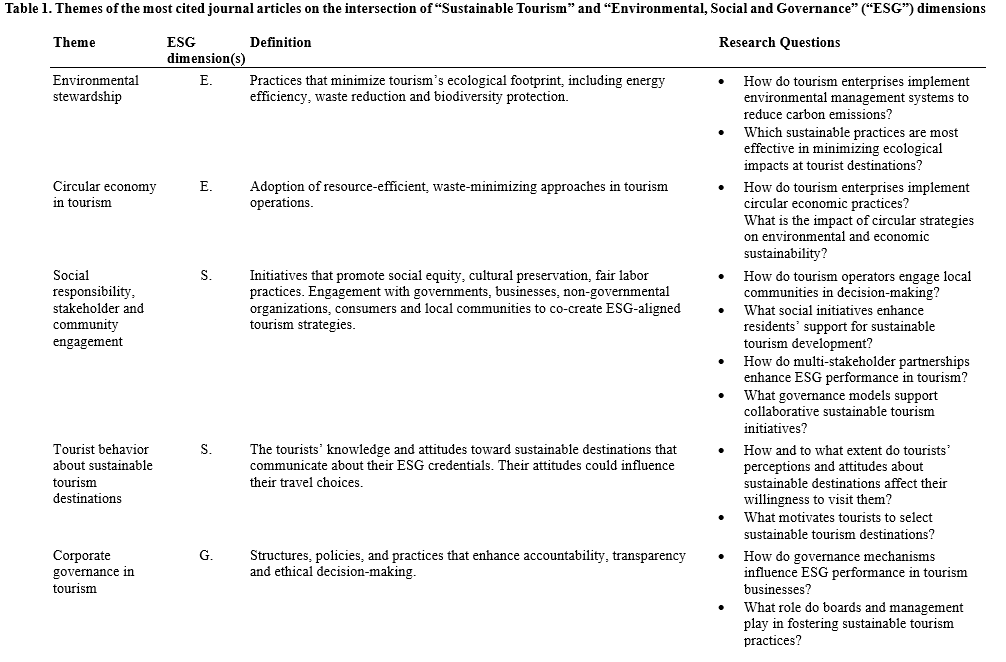
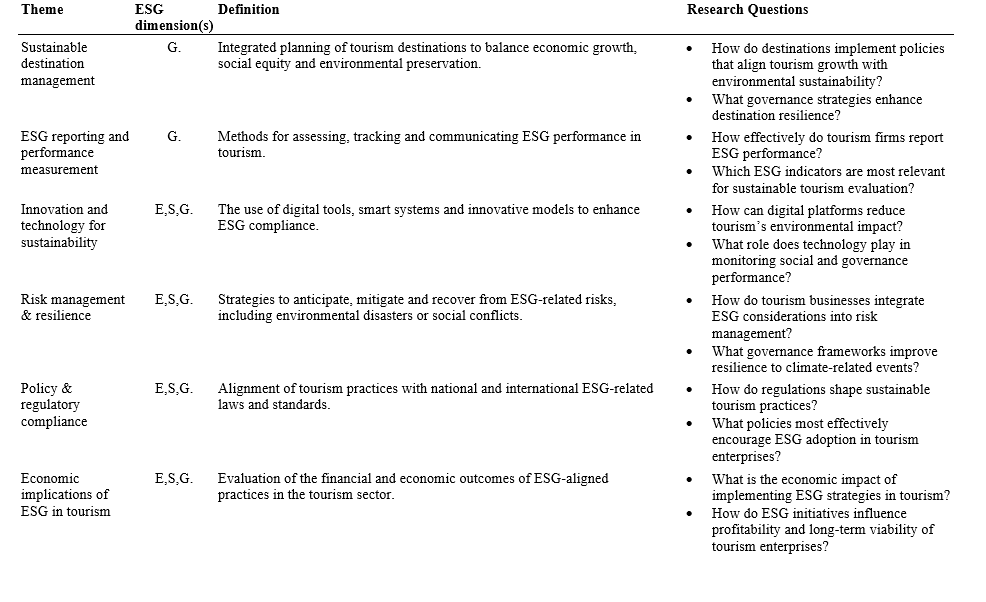
The thematic analysis indicates that the sustainable tourism concept is interconnected with each of the ESG’s dimensions. The findings suggest that sustainable tourism integrates environmental stewardship, social responsibility and sound governance to advance ecological preservation, community well-being and organisational accountability. Hence, it supports long-term destination resilience. The bibliographic results report that each of the ESG components is not only essential for sustainable tourism but also interdependent pillars that enable the sector to thrive in a responsible manner. Therefore, it is imperative for governments to safeguard natural and cultural heritage, empower local communities and foster transparent and effective governance, to ensure the sustainable development of destinations as well as their economic growth (Chong 2020; Grilli et al. 2021; Mamirkulova et al. 2020). The ESG framework, along with its criteria, serves as an important lens through which stakeholders can shape and evaluate sustainable tourism policies and practices (Işık, Islam, et al. 2025). Table 1 features the most conspicuous themes that emerged from this study. Additionally, it presents definitions for each theme along with illustrative research questions examined by the academic contributions identified in this systematic review.
4.1 The Environmental Dimension of Sustainable Tourism

The tourism industry is dependent on natural ecosystems. Therefore, it is in the tourism stakeholders’ interest to protect the environment and to minimise their externalities (J. S. Wu et al. 2021). There is scope for them to promote the conservation of land and water resources (Sørensen and Grindsted 2021). Water scarcity is a pressing global concern that is amplified in many tourist hotspots (WTTC 2023). However, tourism development and its related infrastructural expansion ought to respect ecological thresholds and preserve green spaces, particularly in urban areas. Hotels, resorts and attractions could implement water-saving technologies such as rainwater harvesting, low-flow fixtures and wastewater recycling (Foroughi et al. 2022). These sustainable measures reduce stress on local water supplies and help preserve aquatic ecosystems. In addition, tourism entities can avail themselves of renewable energy sources like solar panels, wind turbines, et cetera, and may adopt energy-efficient appliances and lighting solutions (Abdou et al. 2020; Zhan et al. 2021).

The rapid growth of tourism has historically been linked to environmental degradation through waste accumulation and pollution (Bekun et al. 2022). Circular economy strategies including improved waste management and pollution control through responsible waste disposal as well as reducing, reusing and recycling certain resources, can help decrease the industry’s externalities, but also create healthier spaces for tourists and staff (Camilleri 2025; Dey et al. 2025; Jain et al. 2024).

Tourism significantly contributes to the generation of greenhouse gas emissions through transportation and accommodation (Kim et al. 2024). Addressing climate change within sustainable tourism is critical to reducing the sector’s ecological footprint and enhancing destination resilience to climate impacts (Comite et al. 2025; Scott 2021). Many tourism businesses invest in carbon offset programs including reforestation, renewable energy projects and community-based conservation as mechanisms to offset their emissions (Banga et al. 2022). Eco-certifications such as Global Sustainable Tourism Council (GSTC), Green Globe, EarthCheck, GreenKey and LEED, among others, encourage the adoption of low-carbon practices. They enable practitioners and consumers to make environmentally conscious choices (Dube and Nhamo 2020; Gössling and Schweiggart 2022). Moreover, green transportation policies can encourage public transit, cycling, walking and the adoption of electric and hybrid vehicles for tourism-related travel, thereby reducing carbon footprints (Kim et al. 2024).

Ecologically sensitive zones such as national parks and marine reserves, which are home to wildlife, fragile species and habitats are some of the most visited places by tourists (Partelow and Nelson 2020; Tranter et al. 2022). Hence, they should be protected from overtourism by implementing visitor limits, buffer zones and conservation fees to reduce human impact (Leka et al. 2022). Restoration projects like reforestation, coral reef rehabilitation and wetland conservation are good examples of proactive environmental stewardship linked to tourism (Herrera-Franco et al. 2020; Muhammad et al. 2021). Environmental sustainability also depends on shaping tourist behaviours and fostering responsible activities like environmental awareness campaigns, community involvement in conservation efforts as well as engagement in low-impact alternatives like birdwatching, hiking and sustainable diving, among other stewardship practices (Khuadthong et al. 2025; J. S. Wu et al. 2021).

4.2 The Social Dimension of Sustainable Tourism

Sustainable tourism outcomes extend beyond environmental stewardship principles. Its social dimension encompasses criteria related to the preservation of cultural heritage; community engagement and empowerment; social equity, inclusion and cohesion; as well as responsible tourist behaviours, among other aspects (Bellato et al. 2023; Bianchi and de Man 2021; Joo et al. 2020a; Xu et al. 2020; Yang and Wong 2020; Rasoolimanesh et al. 2023). Sustainable tourism practices are clearly evidenced through improved relationships between tourists and local host communities, resulting in tangible benefits to both parties (Ramkissoon 2023).

The tourism industry can be considered a catalyst for cultural appreciation as well as a threat to cultural authenticity (Bai et al. 2024; H. Wu et al. 2024). Therefore, host destinations need to safeguard their cultural heritage, historical landmarks and monuments. Regulations and visitor management policies ought to be in place to limit wear and degradation of archaeological and religious sites, as well as historically important buildings and architectures (Mamirkulova et al. 2020). The social dimension of sustainable tourism entails that destination marketers preserve their cultural heritage and authenticity. They may do so by showcasing indigenous tastes and aromas of the region, including local foods and wines, and by promoting traditional music, dance, arts, crafts, et cetera, to appeal to international visitors (Andrade-Suárez and Caamaño-Franco 2020). This helps them keep their cultural legacy and maintain a competitive edge (Bellato et al. 2023). As a result, incoming tourists would be in a better position to appreciate local customs and folklore. Notwithstanding, their behaviours can play a crucial role in shaping social dynamics within destinations, as their activities might support community well-being and promote equitable access to tourism benefits (Mamirkulova et al. 2020).

However, policymakers are expected to manage visitor flows within a destination’s carrying capacity to prevent overcrowding, and to avoid social tensions, while fostering inclusivity, mutual respect and positive interactions between visitors and host communities (Back 2024; Koens et al. 2021). Perhaps, destination management organisations should educate visitors about cultural sensitivity issues to demonstrate their respect to host communities (Foroughi et al. 2022; Joo et al. 2020b; Mdoda et al. 2024). For example, they may raise awareness of appropriate behaviours in specific contexts, including dress codes and etiquette to mitigate cultural clashes, discourage exploitative tourism practices like invasive photography in certain settings and prevent unethical animal encounters, in order to foster mutual respect, enhance positive exchanges and safeguard community values (Ghaderi et al. 2024).

The sustainable tourism concept encourages participatory tourism planning. It prioritises the empowerment of indigenous communities in tourism decision-making and policy formulation (Ramkissoon 2023). The involvement of local residents may require capacity building to equip them with relevant skills to participate in the tourism sector, and to foster their economic advancement (Mamirkulova et al. 2020). The proponents of sustainable tourism frequently refer to the provision of fair employment opportunities, including for native populations, in terms of equitable wages and salaries, as well as decent working conditions, in order to enhance community livelihoods and social cohesion (Mtapuri, Camilleri, et al. 2022). Very often, they report that destinations would benefit from sustainable tourism practices that build social capital and reduce economic leakage, by incentivising local entrepreneurs and community-based tourism initiatives to ensure that financial returns remain within the community (Chong 2020; Partelow and Nelson 2020).

The systematic review postulates that the sustainable tourism concept is meant to promote social justice and reduce inequalities (Bianchi and de Man 2021). The extant research confirms that it fosters social inclusivity across various demographic groups in society by supporting gender equality, thereby enriching the sector’s diversity (Bellato et al. 2023; A. Khan et al. 2020). The industry’s labour market may include individuals hailing from different backgrounds in society, including young adults, women, senior citizens, immigrants and disabled people (Bianchi and de Man 2021; Camilleri et al. 2024). Tourism businesses are encouraged to develop infrastructures and services that accommodate people with accessibility requirements in order to broaden their destinations’ reach and social value (Sisto et al. 2022).

4.3 The Governance Dimension in Sustainable Tourism

The integration of environmental and social dimensions of sustainable tourism ultimately depends on transparent, accountable and participatory governance mechanisms (Joo et al. 2020b; Putzer and Posza 2024). Effective governance provides the institutional framework through which environmental stewardship and social responsibility are translated into actionable policies, coordinated initiatives and measurable outcomes (Back 2024; Ivars-Baidal et al. 2023).

Governments are entrusted to set the foundation for sustainable tourism through national and local tourism policies that clearly define sustainability goals, action plans and regulatory measures (Gössling and Schweiggart 2022). Such policies may be related to environmental and/or social regulations. They may enforce environmental impact assessments (EIAs), zoning laws and they could be meant to protect cultural heritage (Farsari 2023). Moreover, they may be intended to encourage or incentivise environmental sustainability practices (e.g., through eco-label or certification schemes) (Bekun et al. 2022). Alternatively, they may be focused on the destinations’ carrying capacity limits and/or on their overtourism aspects, if they specify visitor limits, and/or refer to taxes, levies or fees imposed on visitors or tourists (Leka et al. 2022).

Sustainable tourism governance depends on multisector cooperation (Farsari 2023) that may usually involve government departments and agencies, the private sector that may comprise accommodation service providers, airlines, tour operators, travel agencies as well as local communities, NGOs and international organisations, among others. Policymakers need to balance diverse stakeholders’ interests and to instil their shared responsibilities (Siakwah et al. 2020). Good governance can ultimately ensure that public–private partnerships would translate to long-term, sustainable tourism strategies related to responsible planning and development that consider specific socioenvironmental aspects of destinations: green building standards and the use of renewable energy, and/or emergency and crisis management issues (Scheyvens and Cheer 2022).

Policymakers are expected to conduct regular assessments and evaluations of tourism practitioners’ environmental, social and economic outcomes operating in their jurisdictions. They need to scrutinise corporate ESG disclosures, particularly in certain domains (e.g., in European contexts, where they ratified the corporate sustainability reporting directive) (Camilleri 2025). Governments should monitor business practices to safeguard their employees’ well-being, environmental sustainability and the communities’ interests (Putzer and Posza 2024). They may avail themselves of sustainability indicators and benchmarking tools such as GSTC’s criteria that are used to measure progress in sustainable tourism, in terms of sustainable management (planning, monitoring, governance); socioeconomic benefits to the local community, cultural heritage preservation and environmental protection (Wang and Zhang 2025). Such responsible and ethical practices increase trust and lead to continuous improvements in the tourism industry.

Discussion

The holistic integration of environmental, social and governance dimensions in sustainable tourism collectively contributes to enhance destination resilience and sustainable economic growth. The conservation of natural attractions such as beaches, forests and coral reefs will enable destinations to remain competitive. Therefore, there is scope in implementing climate-friendly measures, including reforestation and sustainable water management, among others, to reduce vulnerability to floods and storms. At the same time, they may curb ocean-level increases. Pollution prevention, waste minimization and circular economy strategies can help destinations maintain environmental quality, that is crucial for their ongoing tourism appeal. Notwithstanding, eco-certifications of responsible destinations can attract environmentally conscious travelers, who may be willing to pay more to visit sustainable tourism destinations.

The effectiveness of eco-certifications is amplified when combined with socially responsible practices. The integration of community empowerment, cultural heritage preservation, and social inclusiveness into tourism planning and development can contribute to increasing the sustainability of a destination. Hence, the tourism industry could add value to the environment as well as to local communities. By aligning sustainable development with local priorities and by promoting responsible tourism practices, destinations can provide authentic cultural and heritage experiences, thereby enhancing their visitor satisfaction and revisit intentions, in the future. In turn, this reinforces both market differentiation and long-term social resilience. Furthermore, as entrepreneurship flourishes, the local communities would benefit from circulating incomes and reduced economic leakages. Such outcomes are conducive to tourism growth.

However, policymakers must implement effective tourism governance to ensure that these economic gains are sustainable. Transparent governance fosters trust among stakeholders and facilitate sustainable growth and competitiveness. By implementing strategic planning and regulations, local authorities can ensure that tourism development| does not overwhelm infrastructure or degrade natural and cultural assets. This creates a balanced environment where entrepreneurship and community benefits coexist with long-term destination resilience. Therefore, sound governance prevents over-tourism and unmanaged expansion, whilst protecting the destinations’ assets. Robust tourism governance frameworks foster stable policy environments, attract further investments and enable long-term planning. Additionally, strong crisis management capabilities can equip destinations to handle unforeseen circumstances including pandemics, natural disasters and economic shocks.

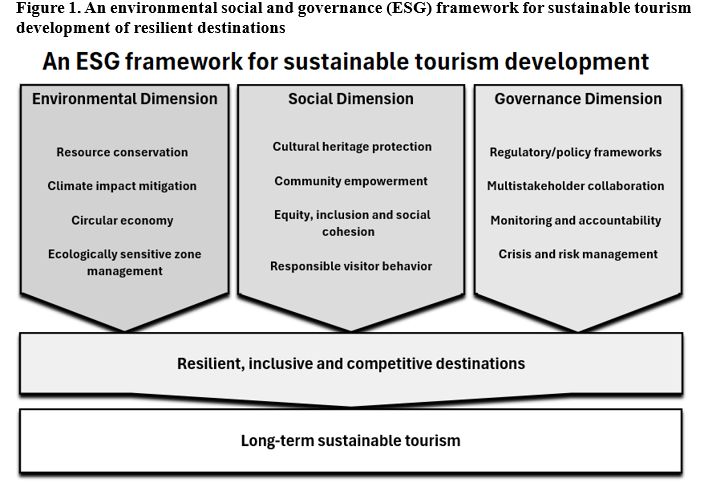
The above analysis underlines that environmental, social and governance dimensions are deeply interlinked to one another and mutually-reinforcing within sustainable tourism. An integrative ESG approach conceptualizes sustainable tourism as a synergistic framework that reconciles ecological integrity, social equity, and institutional effectiveness, as illustrated in Figure 1.
Theoretical implications

This study adds value to the growing body of literature focused on sustainable tourism governance (Gössling & Schweiggart, 2022; Işık et al., 2025; Rasoolimanesh et al., 2023). It clearly identifies key theoretical underpinnings of articles focused on the intersection of ESG dimensions and sustainable tourism practices. The bibliographic findings suggest that the stakeholder theory (Bellato et al., 2023; Ivars-Baidal et al., 2023; Matsali  et al., 2025; Mdoda  et al., 2024) and the institutional theory (Bekun et al., 2022; Dossou et al., 2023; Hall et al., 2020; Saarinen, 2021; Zhan et al., 2021) shed light on the role of government policies, corporate responsibility and community engagement in shaping the sustainable tourism agenda and different settings (Lin et al., 2024; Zhang et al., 2025). Interestingly, the Social Identity Theory clarifies how various stakeholder groups, including residents, tourists and industry practitioners, are aligning their behaviors with shared norms and identities that promote corporate ESG values (Yang & Wong, 2020). Drawing on Cognitive Appraisal Theory, it indicates that stakeholders’ evaluation of ESG-related risks and opportunities influences their emotional responses and subsequent engagement in sustainability initiatives (Foroughi et al., 2022). The Theory of Empowerment further explains how participatory governance and transparent decision-making can enhance community agency, fostering stronger local support for ESG-driven tourism strategies (Joo et al., 2020a).

In line with the Theory of Planned Behavior and the Attitude–Behavior–Context (ABC) Theory, the findings highlight that pro-sustainability intentions are by attitudes toward ESG as well as by perceived behavioral control and contextual enablers such as policy frameworks and market incentives (Joo et al., 2020b; Khuadthong et al., 2025; Wu et al., 2021). Moreover, the Value–Belief–Norm Theory demonstrates how environmental values and moral obligations underpin behavioral commitments to ESG-aligned tourism (Kim et al., 2024).

From a governance perspective, the Evolutionary Governance Theory clarifies how institutional arrangements, stakeholder relationships and regulatory norms adapt over time to embed ESG principles in tourism planning (Partelow & Nelson, 2020). The review suggests that tourism stakeholders’ decision-making including during uncertain situations, can be enriched through Decision Theory and by referring to the Interval-Valued Fermatean Fuzzy Set approach (Rani et al., 2022). These theories enable robust, data-informed prioritization of ESG objectives.

Furthermore, the findings underscore the recursive relationship between the human agency and the structural constraints. The results suggest that stakeholder actions can influence ESG governance systems. This argumentation is congruent with the Structuration Theory (Saarinen, 2021). Meanwhile, the Resource-Based View (Wang & Zhang, 2025; Zhu et al., 2021) and Dynamic Capabilities Theory (Wang & Zhang, 2025) frame ESG adoption as a strategic asset, where unique sustainability capabilities can enhance competitive advantage and long-term destination resilience.

Managerial implications

This research yields clear implications for policymakers, industry practitioners and local communities of tourist destinations. It postulates that the ESG dimensions can provide these stakeholders with a strategic framework to balance growth with long-term resilience. It confirms that ESG policies necessitate a comprehensive approach, that combines environmental conservation, social inclusion, and responsible governance considerations, rather than addressing them individually. Arguably, there may be variations in the importance, focus and implementation of ESG dimensions in tourism, in different contexts, due to the host countries’ economic capacities regulatory frameworks, social priorities and/or environmental challenges. As a result, the effects or outcomes of ESG initiatives are not uniform across destinations (Lin et al., 2024).

In addition, the size of the businesses can also influence their commitment to account and disclose ESG-related aspects of their performance. Large multinational travel and hospitality firms could benefit from economies of scale, in terms of greater financial, human, and technological resources, resulting in their ESG alignment and compliance with societal norms and regulatory frameworks. They can afford dedicated sustainability teams, advanced data management tools, and external consultants to ensure accurate measurement, benchmarking and disclosure of ESG performance. In stark contrast, the smaller firms may face resource constraints, limited expertise, and higher relative costs for data collection and reporting. Such non-commercial activities can hinder their ability to systematically track, measure and communicate ESG performance, placing them at a comparative disadvantage, relative to their larger counterparts.

From an environmental perspective, policy makers should operationalize carrying capacity thresholds and implement adaptive management systems to safeguard ecosystems, optimize resource utilization, and enhance climate resilience. Continuous monitoring and evaluation of environmental impacts are essential to ensure that tourism activities remain within sustainable limits. Proactive interventions including the promotion of low-carbon transportation, the adoption of renewable energy, efficient resource management, and waste reduction are critical for aligning tourism development with ESG objectives. Such strategies preserve biodiversity and can contribute to the long-term sustainability of destinations.

The social dimension emphasizes the equitable distribution of tourism benefits and the preservation of cultural integrity. Overtourism threatens community well-being through inflated living costs, cultural commodification and resident–visitor tensions. Hence, managers should foster participatory governance structures that empower local communities, entrepreneurs and cultural custodians in decision-making processes. Technological innovations including artificial intelligence (AI) solutions that monitor visitor flows can further support socially responsible destination management. At the same time, stakeholder engagement ensures that tourism operations retain their legitimacy in society.

Robust governance mechanisms underpin these strategies. Practitioners can align policies with international sustainability standards in order to facilitate transparent accountability. The implementation of ESG performance indicators, enforceable visitor limits and adaptive regulatory measures, such as dynamic pricing or quotas enable evidence-based decision-making and continuous improvements in responsible destinations. The strengthening of institutional capacities and local skills ensures that governance frameworks are effective and sustainable over time.

Financial innovation is essential for sustainable tourism development. Policy makers ought to invest in green technologies and infrastructures to protect the natural environment from externalities. They can provide incentives and funds to support practitioners in their transition to long-term sustainability. By embedding ESG principles, destinations are in a better position to enhance their resilience to environmental and social shocks, strengthen their reputation and image, whilst maintaining their competitiveness in the global tourism market.

Policymakers are encouraged to increase their enforcement of regulations to trigger responsible behaviors. At the same time, they need to nurture relationships with stakeholders. The hoteliers should embed social innovations and environmentally sustainable practices into core strategies and operations. As for local communities, it is in their interest to actively participate in tourism planning and development, to ensure they preserve their cultural heritage and share tourism benefits in a fair manner. Collectively, this contribution’s integrated ESG approach positions destinations for sustained economic growth while safeguarding environmental and social well-being.

Conclusion

This article reinforces the significance of integrating ESG principles into sustainable tourism strategies. By addressing environmental concerns, fostering social inclusivity, improving governance frameworks, and ensuring economic viability, stakeholders can contribute to a more resilient and responsible tourism sector. This research demonstrates that sustainable tourism is most effectively achieved through the integration of environmental, social, and governance (ESG) dimensions, which together foster long-term destination resilience and economic growth. Environmentally, sustainable tourism requires the preservation of natural ecosystems, efficient resource use, and proactive measures to reduce pollution and greenhouse gas emissions. Practices such as water-saving technologies, renewable energy adoption, waste reduction, and circular economy strategies not only mitigate ecological impacts but also enhance the attractiveness and competitiveness of destinations.

From a social perspective, sustainable tourism supports community empowerment, cultural preservation, inclusivity, and social equity. By engaging local residents in planning and decision-making, promoting equitable employment, and safeguarding cultural heritage, destinations can foster positive resident–visitor interactions and enhance the overall visitor experience. Responsible tourist behavior, participatory governance, and cultural sensitivity further reinforce social cohesion while ensuring that tourism benefits are broadly shared within host communities.

Effective governance underpins both environmental and social outcomes by providing transparent, accountable, and coordinated frameworks for sustainable tourism. Policymakers and destination managers play a critical role in enforcing regulations, monitoring ESG performance, and balancing stakeholder interests. Multi-sector collaboration, the application of sustainability indicators, and adaptive management strategies enable destinations to anticipate and respond to environmental, social, and economic shocks.

Collectively, the ESG approach positions sustainable tourism as a synergistic model that aligns ecological integrity, social responsibility, and institutional effectiveness. By embedding ESG principles into core strategies, destinations can deliver unique, high-quality experiences, strengthen community livelihoods, and maintain global competitiveness. This integrative framework demonstrates that environmental stewardship, social equity, and sound governance are mutually reinforcing, offering a pathway for destinations to achieve enduring sustainability, resilient growth, and enhanced market differentiation.

The full paper is available here:

Researchgate: https://www.researchgate.net/publication/397949208_Environmental_social_and_governance_ESG_factors_of_sustainable_tourism_development_The_way_forward_toward_destination_resilience_and_growth

Academia: https://www.academia.edu/145139975/Environmental_social_and_governance_ESG_factors_for_sustainable_tourism_development_The_way_forward_toward_destination_resilience_and_growth

Open Access Repository @University of Malta: https://www.um.edu.mt/library/oar/handle/123456789/141666
Leave a comment

Filed under carrying capacity, ESG, ESG Reporting, Marketing, Sustainability, sustainable tourism, tourism

CALL FOR PAPERS: The circular economy of surplus food (in the hospitality industry)

A SPECIAL ISSUE entitled,’Responsible consumption and production of food: Opportunities and challenges for hospitality practitioners‘ will be published through the Journal of Sustainable Tourism.

Special Issue Editor(s)

Mark Anthony Camilleri, University of Malta, Malta, and Northwestern University, United States of America.

mark.a.camilleri@um.edu.mt

Antonino Galati, Universita’ degli studi di Palermo, Italy.

antonino.galati@unipa.it

Demetris Vrontis, University of Nicosia, Cyprus.

vrontis.d@unic.ac.cy

Previous research explored the circular economy practices of different businesses in various contexts; however, limited contributions have focused on the responsible production and consumption of food (Huang et al., 2022; Van Riel et al., 2021). Even fewer articles sought to explore environmental, social and governance (ESG) dimensions relating to the sustainable supply chain management of food and beverages in the tourism context.

This special issue will shed light on the responsible practices in all stages of food preparation and consumption in the tourism and hospitality industry. It raises awareness on sustainable behaviors that are aimed to reduce the businesses’ externalities including the generation of food waste on the natural environment. It shall put forward relevant knowledge and understanding on good industry practices that curb food loss. It will identify the strengths and weaknesses of extant food supply chains as well as of waste management systems adopted in the sector. It is hoped that prospective contributors identify laudable and strategic initiatives in terms of preventative and mitigating measures in terms of procurement and inventory practices, recycling procedures and waste reduction systems involving circular economy approaches.

Academic researchers are invited to track the progress of the tourism businesses on the United Nations’ Sustainable Development Goal SDG12 – Responsible Consumption and Production. They are expected to investigate in depth and breadth, how tourism businesses are planning, organizing, implementing and measuring the effectiveness of their responsible value chain activities. They may utilize different methodologies to do so. They can feature theoretical and empirical contributions as well as case studies of organizations that are: (i) reusing and recycling of surplus food, (ii) utilizing sharing economy platforms and mobile apps (that are intended to support business practitioners and prospective consumers to reduce the food loss and waste), (iii) contributing to charitable institutions and food banks, through donations of surplus food, and/or (iv) recycling inedible foods to compost, among other options.

The contributing authors could clarify how, where, when and why tourism businesses are measuring their ESG performance on issues relating to the supply chain of food and beverage. They may refer to international regulatory instruments and guidelines (Camilleri, 2022),  including the International Standards Organization (ISO) and Global Reporting Initiative (GRI) standards, among others, to evaluate the practitioners’ ESG performance through: a) Environmental Metrics: The businesses’ circularity; Recycling and waste management; and/or Water security; b) Social Metrics: Corporate social responsibility; Product safety; Responsible sourcing; and/or Sustainable supply chain, and; c) Governance: Accounting transparency; Environmental sustainability reporting and disclosures.

They could rely on GRI’s Standards 2020, as well as on GRI 204: Procurement Practices 2016; GRI 303: Water and Effluents 201; GRI 306: Effluents and Waste 2016; GRI 306: Waste 2020; GRI 308: Supplier Environmental Assessment 2016 and GRI 403: and to Occupational Health and Safety 2018, to assess the businesses’ ESG credentials.

Prospective submissions ought to clearly communicate about the positive multiplier effects of their research (Ahn, 2019). They can identify responsible production and consumption behaviors that may result in operational efficiencies and cost savings in their operations (Camilleri, 2019). At the same time, they enable them to improve their corporate image among stakeholders (hence they can increase their financial performance). They can examine specific supply chain management initiatives involving open innovation, stakeholder engagement and circular economy approaches that may ultimately enhance the businesses’ legitimacy in society. More importantly, they are urged to elaborate on the potential pitfalls and to discuss about possible challenges for an effective implementation of a sustainable value chain of food-related products and their packaging, in the tourism and hospitality industry (Galati et al., 2022).

It is anticipated that the published articles shall put forward practical implications for a wide array of tourism stakeholders, including for food manufacturers and distributors, airlines, cruise companies, international hotel chains, hospitality enterprises, and for consumers themselves. At the same time, they will draw their attention to the business case for responsible consumption and production of food through strategic behaviors.

Potential topics may include but are not limited to:

 –          Responsible food production for tourism businesses

–           Responsible food consumption practices in the hospitality industry

–           Circular economy and closed loop systems adopted in restaurants, pubs and cafes

–           Open innovation and circular economy approaches for a sustainable tourism industry

–           Recycling of inedible food waste to compost

–           Measuring performance of responsible food production/sustainable consumption

–           Digitalisation and the use of sharing economy platforms to reduce food waste

–           Artificial intelligence for sustainable food systems

–           Sustainable food supply chain management

–           Food waste and social acceptance of circular approaches

–           Stakeholders’ roles to minimize food waste in the hospitality industry

–           Food donation initiatives to decrease food loss and waste

References

Ahn, J. (2019). Corporate social responsibility signaling, evaluation, identification, and revisit intention among cruise customers. Journal of Sustainable Tourism, 27(11), 1634-1647.

Camilleri, M. A. (2019). The circular economy’s closed loop and product service systems for sustainable development: A review and appraisal. Sustainable Development, 27(3), 530-536.

Camilleri, M. A. (2022). The rationale for ISO 14001 certification: A systematic review and a cost–benefit analysis. Corporate Social Responsibility and Environmental Management, 29(4), 1067-1083.

Galati, A., Alaimo, L. S., Ciaccio, T., Vrontis, D., & Fiore, M. (2022). Plastic or not plastic? That’s the problem: Analysing the Italian students purchasing behavior of mineral water bottles made with eco-friendly packaging. Resources, Conservation and Recycling, 179, https://doi.org/10.1016/j.resconrec.2021.106060

Huang, Y., Ma, E., & Yen, T. H. (2022). Generation Z diners’ moral judgements of restaurant food waste in the United States: a qualitative inquiry. Journal of Sustainable Tourism, https://doi.org/10.1080/09669582.2022.2150861

Van Riel, A. C., Andreassen, T. W., Lervik-Olsen, L., Zhang, L., Mithas, S., & Heinonen, K. (2021). A customer-centric five actor model for sustainability and service innovation. Journal of Business Research, 136, 389-401.

Leave a comment

Filed under academia, Call for papers, Circular Economy, environment, food loss, food waste, Hospitality, hotels, responsible consumption, responsible production, responsible tourism, restaurants, Shared Value, sharing economy, Stakeholder Engagement, Strategy, Sustainability, Sustainable Consumption, sustainable development, sustainable production, sustainable tourism, tourism

Advancing community-based tourism approaches for sustainable destinations

This is an excerpt from one of my latest papers on sustainable tourism.

Suggested citation: Mtapuri, O., Camilleri, M.A. & Dłużewska, A. (2021). Advancing community-based tourism approaches for the sustainable development of destinations. Sustainable Development, 

https://onlinelibrary.wiley.com/doi/10.1002/sd.2257

Image adapted from TravelDailyNews.

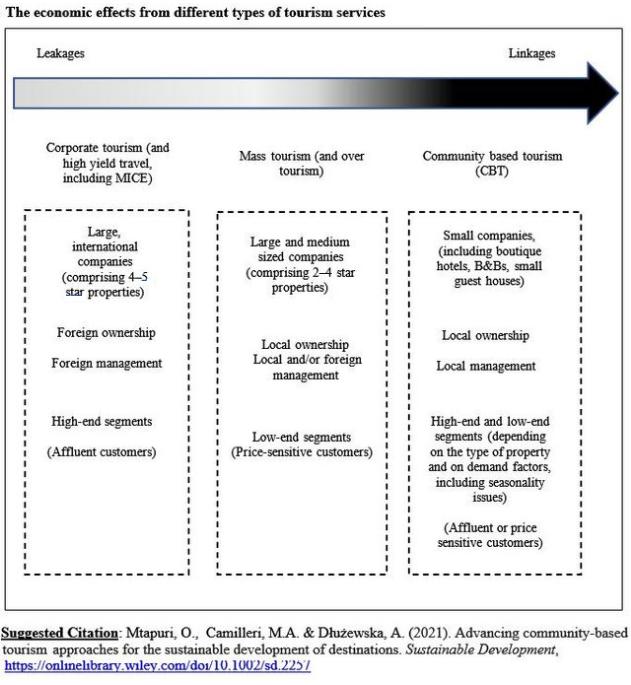
Whilst mass tourism service providers, such as foreign owned properties including international hotel chains are associated with economic leakages (Garrigós et al., 2015), locally-owned, smaller businesses, are usually aligned to economic linkages.

Destinations can use community-based tourism (CBT) approaches to increase linkages by attracting high yield, affluent tourists to locally-owned companies (Butler, 2020; Prasiasa, et al., 2020). From a community-based perspective, the limitation of tourism figures can improve the destinations’ sustainability, whilst limiting the impacts on the natural environment (Saarinen, 2006:1129). Tourism businesses can contribute to reduce their impact on the environment by limiting the number of tourists. They can improve the quality of their services to appeal to high-end segments.

To be successful, the proponents of CBT ought to ensure that they retain specific principles and characteristics. Thus, CBT practitioners could differentiate themselves from other business models by offering authentic, local experiences to their guests. CBT can establish itself as a niche tourism product that appeals to lucrative market segments. Therefore, service providers are expected to deliver on their promises. They have to meet and exceed their customers’ expectations without lowering their standards of service.

CBT operators rely on their community’s local resources including environment/natural resources, heritage, culture as well as on knowledgeable human resources. Their employees should possess customer service skills, and ought to be trained about their local tourism products. Local businesses may usually engage native employees to improve their consumers’ experiences with their CBT product.

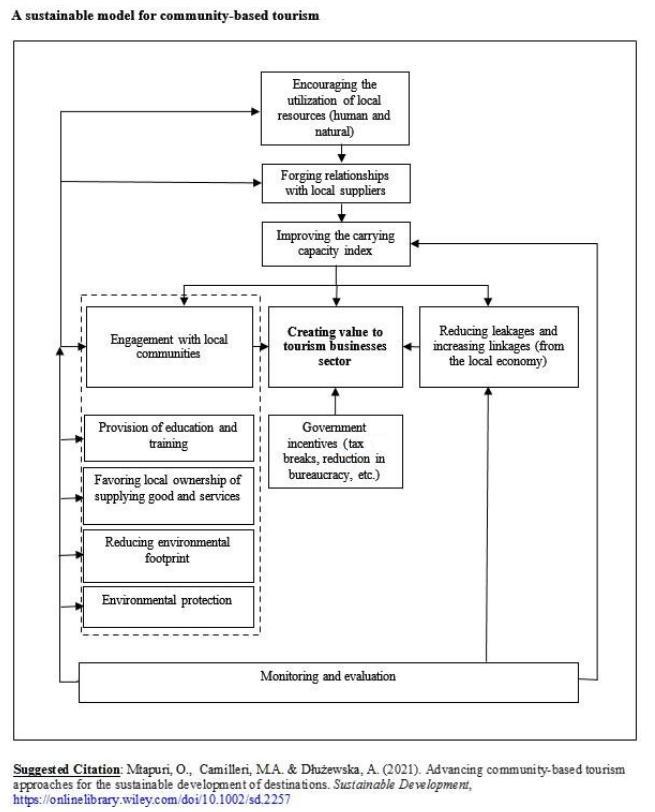
However, there may be instances where CBT operators may not find local employees in the labor market. In this case, they have to train their imported employees about local cultures and traditions in order to continue delivering authentic CBT experiences. The following figure presents a model for sustainable CBT that relies on the destinations’ effective management of their carrying capacities.

An ongoing evaluation of the destinations’ infrastructures as well as on their human and natural resources, particularly during their high season, is required to ensure that they do not exceed their specific carrying capacities. While each specific context will have its own specific performance indicators, this contribution suggests that destination marketers ought to consider the following issues:

• The participation of local businesses and individual in CBT.
• Local procurement of products (for accommodation establishments, hotels, restaurants, and to other tourism businesses).


It is in the interest of CBT operators to think locally and act globally (Hofstede, 1998). They should consider sourcing their requirements from their local communities, where possible. Hence, tourism planners could utilize local resources to reduce leakages from their economy.

Governments can encourage tourism businesses to support local enterprises, for example, by purchasing local products, and by supporting the local communities. They may also incentivize businesses through financial instruments to pursue laudable activities. They can also provide support to tourism businesses, including small hotels and B&Bs to upgrade their services to attract lucrative tourists in their communities. At the same time, they have to maintain their destinations’ infrastructure and should offer suitable amenities to visitors.

These strategies are meant to foster an environment that promotes sustainable CBT approaches that are intended to increase economic linkages, whilst improving societal and the environmental outcomes in local communities. The following figure clarifies how tourism businesses can optimize the utilization of local resources through sustainable CBT strategies in order to improve their destination’s carrying capacity whilst reducing leakages from their economy.

The effectiveness of this proposed model for sustainable community-based tourism relies on a regular evaluation of the marketing environment. Tourism practitioners are expected to examine and re-examine their CBT strategies to ensure that they are still creating value to their business, to the local community and to the environment at large.

Sustainable CBT approaches can support the local economic development of destinations, however leakages can jeopardize the destinations’ competitiveness and growth prospects. While the degree and types of leakages may vary, according to specific characteristics of certain countries, it can be argued that the proper utilization of local resources can improve the national economies and the quality of life of different communities, including those from emerging economies.

The type of tourism planning and development that is adopted by certain destinations is another factor that can have an effect on their economic leakages or linkages. Based on the above, this contribution puts forward a theoretical model that is intended to address the limitations of the carrying capacities of various destinations. In sum, it suggests that sustainable CBT approaches that rely on the optimal utilization of local resources (including human and natural) may result in economic growth as well as in positive outcomes to local communities and their natural environments. This model is aimed at rebalancing leakages with linkages in the economy, whilst responding to challenges relating to the supply chains of different tourism businesses.

Indeed, there is scope for destinations to maximize the use of resources at their disposal (both human and natural). In a similar vein, companies should avail themselves of local resources, competences and capabilities. It is also in their interest to engage in strategic CSR and sustainable tourism practices to support local stakeholders and to safeguard their natural environment.

A sustainable CBT model would require tourism businesses to forge relationships with different stakeholders including with the government and its policymakers, suppliers, creditors, employees and customers, among others. The advancement of CBT would also necessitate that destination marketers and hospitality businesses work together, in tandem to improve their tourism product. Local stakeholders are expected to safeguard their natural environment, culture and traditions for the benefit of their communities, and for their valued tourists and visitors who would probably appreciate authentic destinations that offer unique experiences to them.

The full paper and the reference list is available here: https://www.researchgate.net/publication/355446004_Advancing_community-based_tourism_approaches_for_the_sustainable_development_of_destinations

Leave a comment

Filed under community-based tourism, Strategy, Sustainability, sustainable development, tourism

My Latest Edited Book on Destination Marketing

An Excerpt from the Preface of “Strategic Perspectives in Destination Marketing” (forthcoming):

The marketing of a destination relies on planning, organization and the successful execution of strategies and tactics. Therefore, this authoritative book provides students and practitioners with relevant knowledge of tourism planning and destination marketing. The readers are equipped with a strong pedagogical base on the socio-economic, environmental and technological impacts on the attractiveness of tourist destinations. At the same time, this publication presents contemporary conceptual discussions as well as empirical studies on different aspects of the travel and tourism industries.

The readers of this book will acquire a good understanding of the tourism marketing environment, destination marketing and branding, pricing of tourism products, tourism distribution channels, etourism, as well as on sustainable and responsible tourism practices, and among other topics. They will appreciate that the tourism marketers, including destination management organizations (DMOs) are increasingly using innovative tools, including; digital media and ubiquitous technologies to engage with prospective visitors. Hence, this book also sheds light on the latest industry developments in travel, tourism, hospitality and events.

Chapter 1 introduces the readers to the tourism concept as it describes the travel facilitators and motivators. Afterwards, it explains several aspects of the tourism product, including; the visitors’ accessibility, accommodation, attractions, activities and amenities. It categorizes different travel markets; including; adventure tourism, business tourism (including meetings, incentives, conferences and events), culinary tourism, cultural (or heritage) tourism, eco-tourism (or sustainable tourism), educational tourism, health (or medical tourism), religious tourism, rural tourism, seaside tourism, sports tourism, urban (or city) tourism, wine tourism, among other niche areas.

Chapter 2 examines how foreign tourist intermediaries perceive Portugal as a tourist destination. It analyzes the promotional information that they use to attract visitors to this Southern European destination. This contribution recognizes that the tour operators have an important role in intermediating the relationship between the tourists and the tourism service providers. The authors suggest that tourism relies on the destination’s image that is often being portrayed by the foreign tourism intermediaries.

Chapter 3 explores the cruising consumers’ behaviors and their decision-making processes. The authors maintain that the destination, the social life on board as well as the cruise features are very important factors for consumer loyalty. In conclusion, they recommend that cruise lines should create synergies with local institutions in tourist destinations.

Chapter 4 investigates the Spanish inhabitants’ opinions on the tourism industry’s seasonality issues. The findings suggest that the local residents who live in the coastal destinations were in favor of having tourism activity throughout the year; as opposed to other host communities from urban and rural destinations (in Spain) who indicated that they would enjoy a break from tourist activity during the low / off peak seasons.

Chapter 5 provides a critical review about the pricing and revenue management strategies that are increasingly being adopted within the tourism and hospitality contexts. The authors introduce the readers to the concept of “rate fencing”. This proposition suggests that businesses ought to differentiate among various customer segments, as they should attract and develop relationships with the most profitable ones.

Chapter 6 appraises the use of qualitative reviews and quantitative ratings in interactive media. The authors also engage in a discussion on the content analysis of the online users’ generated content (UGC). They posit that it is in the interest of tourism and hospitality businesses to respond to positive and negative word of mouth publicity in reasonable time, as they may have to deal with fake and unverified reviews.

Chapter 7 clarifies how online travel businesses, including; AirTickets, AirBnB and TripAdvisor among others, are continuously investing in their communication technologies and infrastructures to improve their online users’ experience. The author contends that innovative technologies, such as recommender systems and control frameworks are supporting the travel businesses’ in their customer-centric approaches.

Chapter 8 discusses about the concept of the brand identity of destinations from the suppliers’ perspective. The author puts forward a case study on the city of Porto, in Portugal. She explicates how this tourist destination has used an authenticity-based approach to leverage itself as a distinct brand identity among other destinations.

Chapter 9 proposes an ambitious plan to attract visitors to Buxton, Derbyshire. Firstly, the authors focus on the marketing endeavors of a local renovated hotel. Secondly, they provide relevant examples of how other wellness and spa towns in Britain, including; Bath and Harrogate are organizing events and festivals to attract international tourists throughout the year.

Chapter 10 explains how a perceived (positive) image can provide a sustainable competitive advantage to tourism destinations. The authors argue that the historical events as well as other socio-political factors can possibly affect the visitors’ (pre-)conceptions of the Gallipoli peninsula in Turkey. However, they imply that the tourists’ positive experiences could translate to positive publicity for this destination.

Chapter 11 elucidates the notion of destination branding in the rural context. The author maintains that there are both opportunities and challenges for tourism policy makers to preserve the traditional farms and rural dwellings, in order to safeguard their distinct identity. He posits that the rural environment can add value to the tourist destinations and their branding.

Chapter 12 posits that today’s tour operators are highly driven by technology as prospective travelers are searching for online information about their destinations prior to their visits. The authors describe the digital marketing strategies and tactics that are used to promote Malawi, in Africa. They suggest that the inbound tour operators are increasingly using relevant content marketing through interactive technologies and social media to engage with prospective visitors.

Chapter 13 evaluates potential strategies that could be used to develop the tourism product in Adiyaman, Turkey. The authors identify the core responsibilities of the tourism stakeholders and put forward their key recommendations for the branding of this rural destination.

In sum, this authoritative publication is written in an engaging style that entices the curiosity of prospective readers. It explains all the theory in a simple and straightforward manner. This book reports on the global tourism marketing environments that comprise a wide array of economic, socio-cultural and environmental issues. It explains how technological advances have brought significant changes to the tourism industry and its marketing mix.

This book was written by academics for other scholars, researchers, advanced under-graduate and post-graduate students; as it provides a thorough literature review on different tourism topics, including; destination marketing and branding, sustainable and responsible tourism, tourism technologies, digital marketing, travel distribution and more. It is also relevant to the industry practitioners, including consultants, senior executives and managers who work for destination management organizations, tourism offices, hotels, inbound / outbound tour operators and travel agents, among others.

Leave a comment

Filed under destination marketing, digital media, Marketing, tourism, Travel

Call for Chapters: Strategic Perspectives in Destination Marketing

This edited book will be published by IGI Global (USA)
Proposals Submission Deadline: August 31, 2017
Full Chapters Due: November 30, 2017


Introduction

This book provides a broad knowledge and understanding of destination marketing and branding. It presents conceptual discussions that cover the operational and strategic perspectives of the travel, tourism and hospitality industry sectors. At the same time, the readers are equipped with a strong pedagogical application of the socio-economic, environmental and technological impacts of tourism and its related sectors. The course content of this publication prepares undergraduate students and aspiring managers with a thorough exposure of the latest industry and research developments. Covering both key theory and practice, it introduces its readers to tourism issues in a concise yet accessible way. This will allow prospective tourism practitioners to critically analyze future situations and make appropriate decisions in work place environments.

Objective

This book is a concise and authoritative guide on tourism and its related paradigms. It provides a thorough understanding on destination branding and marketing. Therefore, the readers of this publication will better comprehend the marketing processes, strategies and tactics within the travel, tourism and hospitality contexts. It also highlights the latest trends, including; etourism, destination marketing and tourism planning for the future. The style of this book and extensive use of case studies, illustrations and links maintain the reader’s interest through visual aids to learning.

This publication is written in an engaging style that entices the curiosity of prospective readers. It explains all the theory in a simple and straightforward manner. It often makes use of short case studies that are carefully drawn from selected tourism businesses. Descriptive cases set the theory in context as they have been chosen to represent the diversity of the industry – ranging from small travel agents to large legacy airlines or multi-national hotel chains. This book reports on the global tourism marketing environments that comprise economic, socio-cultural and environmental issues. It explains how technological advances have brought significant changes to the tourism industry and its marketing mix. Moreover, it features interesting illustrations, including diagrams and color images. Notwithstanding, this book will also provide direct links to further readings on the web to aid both teaching and learning.

Target Audience

This book introduces the students and aspiring practitioners to the subject of destination marketing in a structured manner. It is primarily intended to undergraduate and / or post-graduate students in tourism (including tourism management, hospitality management, airline management and travel agency operations). It is also relevant to destination management organisations, tourism offices, hoteliers, inbound / outbound tour operators, travel agents and all those individuals who are willing to work within the dynamic tourism industry.

Academics in higher education institutions including universities and vocational colleges, small tourism business owners, tourism and hospitality consultants, non-profit tourism organizations, policy makers and legislators.

Recommended Topics

  • An introduction to the tourism industry
  • The structure and organization of the tourism destinations
  • The tourism marketing environment
  • Political, legal and regulatory forces in destination management
  • Economic effects of tourism marketing
  • Socio-cultural issues and destination branding
  • Technological advancements and information systems for travel marketing
  • The environmental impact of tourism.
  • Branding the tourism product
  • The tourist destinations and visitor attractions
  • The hospitality sector, hotel and catering
  • Tourist transportation
  • Pricing Tourism Products And Revenue Management
  • Market and Demand
  • Pricing Approaches
  • Pricing Strategies
  • Tourism Intermediaries And Online Distribution Channels
  • Destination Management Organisations
  • Tour operators
  • Retailing tourism
  • Tourism amenities and ancillary services
  • Promoting the tourism product
  • Advertising tourism destinations
  • Public relations and publicity in destination marketing
  • Direct and online marketing
  • Building customer relationships for repeat tourism
  • Word of mouth, the importance of reviews and ratings in tourism marketing
  • Sustainable and responsible tourism in destination branding
  • Destination marketing: the way forward
  • Tourism planning and development
  • Tourism strategies for destinations
  • Measuring marketing effectiveness
  • What future for the tourism industry?

Submission Procedure

Researchers and practitioners are invited to submit on or before August 31, 2017, a chapter proposal of 1,000 to 2,000 words clearly explaining the mission and concerns of their proposed chapter. Authors will be notified by September 15, 2017 about the status of their proposals and sent chapter guidelines. Full chapters are expected to be submitted by November 30, 2017, and all interested authors must consult the guidelines for manuscript submissions at http://www.igi-global.com/publish/contributor-resources/before-you-write/ prior to submission. All submitted chapters will be reviewed on a double-blind review basis. Contributors may also be requested to serve as reviewers for this project.

Note: There are no submission or acceptance fees for manuscripts submitted to this book publication, Trust in Knowledge Management and Systems in Organizations. All manuscripts are accepted based on a double-blind peer review editorial process.

All proposals should be submitted through the eEditorial Discovery®TM online submission manager.

Publisher

This book is scheduled to be published by IGI Global (formerly Idea Group Inc.), publisher of the “Information Science Reference” (formerly Idea Group Reference), “Medical Information Science Reference,” “Business Science Reference,” and “Engineering Science Reference” imprints. For additional information regarding the publisher, please visit http://www.igi-global.com. This publication is anticipated to be released in 2018.

Important Dates

Proposal Submission Deadline: August 31, 2017
Notification of Acceptance: September 15, 2017
Full chapter Submission: November 30, 2017
Review Results to Chapter Authors: January 31, 2018
Revised Chapter Submission from Chapter Authors: February 28, 2018
Final Acceptance Notifications to Chapter Authors: March 15, 2018

Inquiries

Mark Anthony Camilleri, Ph.D.
Email: Mark.A.Camilleri@um.edu.mt

Leave a comment

Filed under digital media, Marketing, responsible tourism, Stakeholder Engagement, tourism, Travel

Creating Shared Value in Tourism and Hospitality

csv-tourism


Excerpt from: Camilleri M.A. (2015) Responsible tourism that creates shared value among stakeholders. Tourism Planning and Development. 13 (2) 219-235. Taylor and Francis. DOI: 10.1080/21568316.2015.1074100 http://dx.doi.org/10.1080/21568316.2015.1074100


The sustainable and responsible environmental practices leverage the tourism enterprises’ performance as innovations can help them improve their bottom-line. This research indicated that the investigated organisations were increasingly pledging their commitment for discretionary investments in environmental sustainability, including; energy and water
conservation, alternative energy generation, waste minimisation, reducing, reusing and recycling policies, pollution prevention, environmental protection, carbon offsetting programmes and the like.

Some of the interviewees have proved that they were truly capable of reducing their operational costs through better efficiencies. Nevertheless, there may be still room for improvement as tourism enterprises can increase their investments in the latest technological innovations. This study indicates that there are small tourism enterprises that still need to realise the business case for responsible tourism (Camilleri, 2015). Their organisational culture and business ethos will have to become attuned to embrace responsible behavioural practices.

The governments may also have an important role to play in this regard. The governments can take an active leading role in triggering responsible behaviours. Greater efforts are required by governments, the private sector and other stakeholders to translate responsible tourism principles into policies, strategies and regulations (Camilleri, 2014).

Governments may give incentives (through financial resources in the form of grants or tax relief) and enforce regulation in certain areas where responsible behaviour is required. The regulatory changes may possibly involve the use of eco-labels and certifications. Alternatively, the government may encourage efficient and timely reporting and audits of sustainability (and social) practices.

The governments may provide structured compliance procedures to tourism enterprises. Responsible tourism practices and their measurement, reporting and accreditation should be as clear and understandable as possible. The governments’ reporting standards and guidelines may possibly be drawn from the international reporting instruments (e.g. ISO, SA, AA and GRI).

Nevertheless, it must be recognised that the tourism industry is made up of various ownership structures, sizes and clienteles. In addition, there are many stakeholder influences, which affect the firms’ level of social and environmental responsibility. Perhaps, there is scope in sharing best practices, even with rival firms. It is necessary for responsible businesses to realise that they need to work in tandem with other organisations in order to create shared value and to move the responsible tourism agenda forward. Therefore, this study’s findings encourage inter-firm collaboration and networking across different sectors of the tourism industry.

There are competitive advantages that may arise from creating and measuring shared value. Evidently, there is more to responsible tourism than, “doing good by doing well”. As firms reap profits and grow, they can generate virtuous circles of positive multiplier effects. This paper has indicated that the tourism enterprises, who engage themselves in responsible and sustainable practices, are creating value for themselves and for society. In conclusion, this research puts forward the following key recommendations for the responsible tourism agenda:

  • Promotion of laudable business processes that bring economic, social and environmental
    value;
  • Encouragement of innovative and creative approaches, which foster the right environment
    for further development and application of sustainable and responsible practices;
  • Enhancement of collaborations and partnership agreements with governments, trade
    unions and society in general, including the marketplace stakeholders;
  • Ensuring that there are adequate levels of performance in areas such as health and
    safety, suitable working conditions and sustainable environmental practices;
  • Increased awareness, constructive communication, dialogue and trust;
  • National governments may create a regulatory framework which encourages and
    enables the implementation of sustainable and responsible behavioural practices by
    tourism enterprises.


References

Camilleri, M. (2014). Advancing the sustainable tourism agenda through strategic CSR perspectives. Tourism Planning & Development, 11(1), 42-56.
Camilleri, M.A. (2015) The Business Case for Corporate Social Responsibility. In Menzel Baker, S. & Mason, M.(Eds.) Marketing & Public Policy as a Force for Social Change Conference. (Washington D.C., 4th June). Proceedings, pp. 8-14, American Marketing Association. DOI: 10.13140/RG.2.1.2149.8328 https://www.ama.org/events-training/Conferences/Documents/2015-AMA-Marketing-Public-Policy-Proceedings.pdf

Leave a comment

Filed under Corporate Social Responsibility, Corporate Sustainability and Responsibility, Shared Value, Stakeholder Engagement, sustainable development, tourism

Responsible tourism that creates shared value among stakeholders

SV tourism

http://dx.doi.org/10.1080/21568316.2015.1074100

Abstract: This paper maintains that responsible tourism practices can be re-conceived strategically to confer competitive advantage. It looks at the extant literature surrounding the notions of “responsible tourism” and “shared value”. A qualitative research involved in-depth, semi-structured interview questions to discover the tourism and hospitality owner–managers’ ethos for responsible tourism. Secondly, telephone interviews were carried out with tourism regulatory officials. The findings have revealed that discretionary spending in socially and environmentally sound, responsible policies and initiatives can create shared value among tourism enterprises and their stakeholders. In a nutshell, this paper indicates that responsible tourism led to improved relationships with social and regulatory stakeholders, effective human resources management, better market standing, operational efficiencies and cost savings, along with other benefits.

To cite this article:

M. A. Camilleri (2015): Responsible tourism that creates shared value among stakeholders, Tourism Planning & Development, DOI: 10.1080/21568316.2015.1074100

Leave a comment

Filed under Corporate Sustainability and Responsibility, CSR, responsible tourism, tourism

Responsible Tourism that Creates Shared Value Among Stakeholders

Excerpt from the paper entitled; “Responsible Tourism that Creates Shared Value among Stakeholders” This contribution will shortly be published by  Tourism Planning and Development Journal.

This study revealed how different tourism organisations were engaging in responsible behaviours with varying degrees of intensity and success. It has identified cost effective and efficient operations. There was mention of some measures which enhance the human resources productivity. Other measures sought to reduce the negative environmental impacts. At the same time, it was recognised that it was in the businesses’ interest to maintain good relations with different stakeholders, including the regulatory ones.

rtThe researcher believes that responsible tourism can truly bring a competitive advantage when there are fruitful communications and continuous dialogue among all stakeholder groups (including the employees, customers, marketplace and societal groups). The tourism enterprises ought to engage themselves in societal relationships and sustainable environmental practices (Chiu, Lee and Chen, 2014). The tourism owner-managers admitted that responsible behaviours have brought reputational benefits, enhanced the firms’ image among external stakeholders and led to a favourable climate of trust and cooperation within the company. Similar findings were reported by Nunkoo and Smith (2013). This study reported that a participative leadership boosts employee morale and job satisfaction which may often lead to lower staff turnover and greater productivity in the workplace (Davidson et al., 2010). Evidently, stakeholder relationships are needed to bring external knowledge sources, which may in turn enhance organisational skills and performance (Frey and George, 2010).

The governments may also have an important role to play in this regard. The governments can take an active leading role in triggering responsible behaviours. Booyens (2010) also reiterated that greater efforts are required by governments, the private sector and other stakeholders to translate responsible tourism principles into policies, strategies and regulations. Governments may give incentives (through financial resources in the form of grants or tax relief) and enforce regulation in certain areas where responsible behaviour is required. The regulatory changes may possibly involve the use of eco-label and certifications. Alternatively, the government may encourage efficient and timely reporting and audits of sustainability (and social) practices. The governments may provide structured compliance procedures to tourism enterprises. Responsible tourism practices and their measurement, reporting and accreditation should be as clear and understandable as possible. The governments’ reporting standards and guidelines may possibly be drawn from the international reporting instruments (e.g. ISO, SA, AA, and GRI).

This research posits that sustainable and responsible environmental practices leverage the tourism enterprises performance as innovations can help to improve their bottom-line. This finding was also consonant with Bohdanowicz’s (2006) contribution. This research indicated that the investigated enterprises were increasingly pledging their commitment for discretionary investments in environmental sustainability, including; energy and water conservation, alternative energy generation, waste minimisation, reducing, reusing and recycling policies, pollution prevention, environmental protection, carbon offsetting programmes and the like. Indeed, some of the interviewees have proved that they were truly capable of reducing their operational costs through better efficiencies. Nevertheless, there may be still room for improvement as tourism enterprises can increase their investments in the latest technological innovations. This study indicates that there are small tourism enterprises that still need to realise the business case for responsible tourism. Their organisational culture and business ethos will have to become attuned to embrace responsible behavioural practices.

Nevertheless, it must be recognised that the tourism industry is made up of various ownership structures, sizes and clienteles. In addition, there are many stakeholder influences, which affect the firms’ level of social and environmental responsibility (Carroll and Shabana, 2010). Acquiring new knowledge must be accompanied by mechanisms for dissemination. Perhaps, there is scope in sharing best practices, even with rival firms. It is necessary for responsible businesses to realise that they need to work in tandem with other organisations in order to create shared value and to move the responsible tourism agenda forward. Therefore, this study’s findings encourage inter-firm collaboration and networking across different sectors of the tourism industry.

“…responsible behaviours have brought reputational benefits, enhanced the firms’ image among external stakeholders and led to a favourable climate of trust and cooperation within the company”.

This contribution contends that the notion of shared value is opening up new opportunities for responsible tourism and the sustainability agenda, particularly with its innovative approach to configure the value chain (Pfitzer, et al, 2013; Porter and Kramer 2011). There are competitive advantages that may arise from creating and measuring shared value. Evidently, there is more to responsible tourism than, ‘doing good by doing well’ (Garay and Font, 2012). As firms reap profits and grow, they can generate virtuous circles of positive multiplier effects. This paper has indicated that the tourism enterprises, who engage themselves in responsible and sustainable practices, are creating value for themselves and for society. In conclusion, this research puts forward the following key recommendations for the responsible tourism agenda:

• Promotion of laudable business processes that bring economic, social and environmental value;
• Encouragement of innovative and creative approaches, which foster the right environment for further development and application of sustainable and responsible practices;
• Enhancement of collaborations and partnership agreements with governments, trade unions and society in general, including the marketplace stakeholders;
• Ensuring that there are adequate levels of performance in areas such as health and safety, suitable working conditions and sustainable environmental practices;
• Increased awareness, constructive communication, dialogue and trust;
• National governments may create a regulatory framework which encourages and enables the implementation of sustainable and responsible behavioural practices by tourism enterprises.


References (a complete list of references that were cited in this paper)

Ayuso, S. (2007). Comparing voluntary policy instruments for sustainable tourism: The experience of the Spanish hotel sector. Journal of Sustainable Tourism, 15(2), 144-159.

Bohdanowicz, P. (2006). Environmental awareness and initiatives in the Swedish and Polish hotel industries—survey results. International Journal of Hospitality Management, 25(4), 662-682.

Booyens, I. (2010). Rethinking township tourism: towards responsible tourism development in South African townships. Development Southern Africa, 27(2), 273-287.

Bramwell, B., & Lane, B. (1993). Sustainable tourism: An evolving global approach. Journal of Sustainable Tourism, 1(1), 1-5.

Bramwell, B. & Rawding, L. (1996). Tourism marketing images of industrial cities. Annals of Tourism research, 23(1), 201-221.

Bramwell, B., & Sharman, A. (1999). Collaboration in local tourism policymaking. Annals of tourism research, 26(2), 392-415.

Bramwell, B., Lane, B., McCabe, S., Mosedale, J., & Scarles, C. (2008). Research perspectives on responsible tourism.

Buckley, R. (2012). Sustainable tourism: Research and reality. Annals of Tourism Research, 39(2), 528-546

Camilleri, M.A. (2014). Advancing the Sustainable Tourism Agenda Through Strategic CSR Perspectives, Tourism Planning & Development, 11:1, 42-56.

Camilleri, M.A. (2015) “Valuing Stakeholder Engagement and Sustainability Reporting”. Corporate Reputation Review, Vol. 18 (3).

Carroll, A.B., and Shabana, K.M (2010), The business case for corporate social responsibility: a review of concepts, research and practice. International Journal of Management Reviews 12 (1), 85-105.

Chiu, Y. T. H., Lee, W. I., & Chen, T. H. (2014). Environmentally responsible behavior in ecotourism: Antecedents and implications. Tourism Management, 40, 321-329.

Cooper, C. P. & Ozdil, I. (1992). From mass to ‘responsible’tourism: the Turkish experience. Tourism Management, 13(4), 377-386.

Crouch, G. I., & Ritchie, J. B. (1999). Tourism, competitiveness, and societal prosperity. Journal of business research, 44(3), 137-152.
Davidson, M. C., Timo, N. & Wang, Y. (2010). How much does labour turnover cost?: A case study of Australian four-and five-star hotels. International Journal of Contemporary Hospitality Management, 22(4), 451-466.

EU (2007). Agenda for a sustainable and competitive European tourism. http://ec.europa.eu/enterprise/sectors/tourism/documents/communications/commissioncommunication- accessed on the 12th December 2014.
EU (2012). European charter for a sustainable and responsible tourism http://ec.europa.eu/enterprise/sectors/tourism/sustainable-tourism/charter/index_en.htm accessed on the 12th December 2014.

Fleischer, A., & Felsenstein, D. (2000). Support for rural tourism: Does it make a difference?. Annals of tourism research, 27(4), 1007-1024.

Frey, N., & George, R. (2010). Responsible tourism management: The missing link between business owners’ attitudes and behaviour in the Cape Town tourism industry. Tourism Management, 31(5), 621-628.

Garay, L., & Font, X. (2012). Doing good to do well? Corporate social responsibility reasons, practices and impacts in small and medium accommodation enterprises. International Journal of Hospitality Management, 31(2), 329-337.

Getz, D., & Carlsen, J. (2000). Characteristics and goals of family and owner-operated businesses in the rural tourism and hospitality sectors. Tourism management, 21(6), 547-560.

Goodwin, H., & Francis, J. (2003). Ethical and responsible tourism: Consumer trends in the UK. Journal of Vacation Marketing, 9(3), 271-284.

Goodwin, H. (2007). Responsible tourism in destinations. http://haroldgoodwin.info/blog/?p=2745 accessed on the 11th December 2013.

Goodwin, H. (2011). Taking responsibility for tourism. Woodeaton, UK: Goodfellow Publishers Limited.

Goodwin (2013) What role does certification play in ensuring Responsible Tourism? – in WTM blog. http://www.wtmlondon.com/library/What-role-does-certification-play-in-ensuring-Responsible-Tourism#sthash.azaYgVZj.dpuf accessed on the 18th January 2014.

Goodwin (2015) Using Tourism to create shared value http://blog.wtmresponsibletourism.com/2015/02/16/using-tourism-to-create-shared-value-in-kerala/

Graci, S., & Dodds, R. (2008). Why go green? The business case for environmental commitment in the Canadian hotel industry. Anatolia, 19(2), 251-270.

Guardian (2014). http://www.theguardian.com/sustainable-business/2014/jan/23/davos-2014-climate-change-resource-security-sustainability-live accessed on the 18th January 2014.

Hall, C. M., & Lew, A. A. (1998). Sustainable tourism. A geographical perspective. Addison Wesley Longman Ltd.

Hall, C. M. (2010). Changing paradigms and global change: From sustainable to steady-state tourism. Tourism Recreation Research, 35(2), 131-143.

Hall, C. M. (2011). A typology of governance and its implications for tourism policy analysis. Journal of Sustainable Tourism, 19(4-5), 437-457.

Haywood, K. M. (1988). Responsible and responsive tourism planning in the community. Tourism management, 9(2), 105-118.

Iglesias, A., Garrote, L., Flores, F., & Moneo, M. (2007). Challenges to manage the risk of water scarcity and climate change in the Mediterranean. Water Resources Management, 21(5), 775-788.

IHG (2012a). Intercontintental Hotel Group: CSR Report 2012. http://www.ihgplc.com/files/pdf/2012_cr_report.pdf accessed on the 15th January 2014.

IHG (2012b). Intercontinental Hotel Group: CSR Report IHG Green Engage. http://www.ihgplc.com/index.asp?pageid=742 accessed on the 15th January 2014.
Jamal, T. B., & Getz, D. (1995). Collaboration theory and community tourism planning. Annals of tourism research, 22(1), 186-204.

Jones, A. (1987). Green tourism. Tourism management, 8(4), 354-356.

King, C. (2010). “One size doesn’t fit all” Tourism and hospitality employees’ response to internal brand management. International Journal of Contemporary Hospitality Management, 22(4), 517-534.

Kirk, D. (1998). Attitudes to environmental management held by a group of hotel managers in Edinburgh. International Journal of Hospitality Management, 17(1), 33-47.

Kramer, M. (2012). Shared Value: how corporations profit from solving social
problems. http://www.guardian.co.uk/sustainable-business/shared-value-how-corporationsprofit-
social-problems?intcmp=122 Accessed online on the 12th June 2012.

Krippendorf, J. (1982). Towards new tourism policies: The importance of environmental and sociocultural factors. Tourism management, 3(3), 135-148.

Krippendorf, J. (1987). Ecological approach to tourism marketing. Tourism Management, 8(2), 174-176.

Lee, T. H., Jan, F. H., & Yang, C. C. (2013). Conceptualizing and measuring environmentally responsible behaviors from the perspective of community-based tourists. Tourism Management, 36, 454-468.

Lloyd, B. (2015). Addressing Sustainable Development Goals: Shared value on the agenda at the 2015 World Economic Forum in Davos http://sharedvalue.org/groups/addressing-sustainable-development-goals-shared-value-agenda-2015-world-economic-forum-davos Accessed online on the 12th March 2015.

McIntyre, G. (1993). Sustainable tourism development: guide for local planners. World Tourism Organization (WTO).

Merwe, M. and Wöcke, A. (2007). An investigation into responsible tourism practices in the South African hotel industry. S. Afr. J. Bus. Manage, 38(2), 2

Miller, G. (2001). Corporate responsibility in the UK tourism industry. Tourism Management, 22(6), 589-598.
MTA (2015) Malta Tourism Authority: Why become ECO certified? http://www.mta.com.mt/why-become-eco-certified accessed on the 2nd February 2015.

Nunkoo, R., & Smith, S. L. (2013). Political economy of tourism: Trust in government actors, political support, and their determinants. Tourism management, 36, 120-132.

Pavesic, D. V., & Brymer, R. A. (1990). Job satisfaction: What’s happening to the young managers?. The Cornell Hotel and Restaurant Administration Quarterly, 30(4), 90-96.

Pfitzer, M., Bocksette, V., & Stamp, M. (2013). Innovating for Shared Value. Harvard Business Review.

Porter, M.E. & Kramer, M.R. (2011). Creating shared value: How to reinvent capitalism – and unleash a wave of innovation and growth. Harvard Business Review, (January/February), 62-77.

Poulston, J. M. (2009). Working conditions in hospitality: Employees’ views of the dissatisfactory hygiene factors. Journal of Quality Assurance in Hospitality & Tourism, 10(1), 23-43.

Sharpley, R. (2000). Tourism and sustainable development: Exploring the theoretical divide. Journal of Sustainable tourism, 8(1), 1-19.

Sharpley, R. (2014). Teaching responsible tourism. The Routledge Handbook of Tourism and Hospitality Education, 171.

Shaw, G., Bailey, A., & Williams, A. (2011). Aspects of service-dominant logic and its implications for tourism management: Examples from the hotel industry. Tourism Management, 32(2), 207-214.

UN (2014) https://sustainabledevelopment.un.org/topics/sustainabledevelopmentgoals

UNWTO – UNEP (2012). Tourism in the Green Economy: Background Report. http://sdt.unwto.org/en/content/publications-1 accessed on the 29th June 2013.

Wheeller, B. (1991). Tourism’s troubled times: Responsible tourism is not the answer. Tourism Management, 12(2), 91-96.

WTTC (2002). Speeches and Presentations. Retrieved from http://www.wttc.org/eng/Tourism_News/Speeches_and_Presentations/2002_Speeches_and_Presentations/accessed on the 10th March 2012.

WTTC (2011). Latest Policy on travel and tourism, Retrieved from htp://www.wttc.org/site_media/uploads/downloads/traveltourism2011.pdf accessed on the 2nd March 2012.

Leave a comment

Filed under SMEs

Environmental Responsibility in the Hospitality Sector

In a recent media release Hyatt has reiterated its commitment to environmental stewardship with a focus on energy, waste and water reduction, sustainable building, supply chain management as well as stakeholder engagement. In Hyatt’s Corporate Responsibility Report, the listed hotel corporation has unveiled an aggressive set of environmental goals for the year 2020, all designed to strengthen Hyatt’s collective ability to collaborate, inspire and further its commitment to environmental stewardship. Hyatt has also defined a suite of measurable and actionable targets. Hyatt hotels aim to create a more sustainable future for themselves and for their neighbours. The hotel group posits that the conservation efforts have reaped fruit, resulting in major reductions in greenhouse gas emissions and water and energy usage by property across their portfolio. Hyatt maintains that its commitment to environmental stewardship touches every aspect of its business, from the way how the hotels are built and operated, to the way they collaborate with their global supply chain, to the way the hotel chain influences change through the passion and commitment of its employees around the world.
Setting Focus Areas
Hyatt 2020 Vision focuses on significantly expanding the global chain’s strategic scope, especially in areas where past efforts have not had as much of an impact due to occupancy fluctuations and rapid business growth in developing markets. With this in mind, the hotel chain’s three strategic priorities include the following;
• “Use Resources Thoughtfully: Hyatt is committed to examining how its hotels source, consume and manage natural resources to serve their guests. Hyatt will identify ways for Hyatt hotels to reduce energy consumption and greenhouse gas emissions, use less water, produce less waste and make more environmentally responsible purchasing decisions. As a highlight, Hyatt has set the goal to reduce water use per guest night by 25 percent, and within water-stressed areas, Hyatt has set a 30 percent reduction goal. Additionally, Hyatt is elevating its recycling efforts by challenging every hotel to reach a 40 percent diversion rate, as well as by setting a recycling goal for renovation waste.
Build Smart: Hyatt will work closely with stakeholders to increase the focus on building more efficient, environmentally conscious hotels across the enterprise. Beginning in 2015, all new construction and major renovation projects contracted for Hyatt managed hotels will be expected to follow enhanced sustainable design guidelines. Hyatt will lead this initiative by mandating that all new construction and major renovation projects for wholly owned full service hotels and resorts achieve LEED certification, or an equivalent certification.
Innovate and Inspire: This goal reflects Hyatt’s commitment to be a catalyst for bringing more hearts, hands and minds to the table to help advance environmental sustainability around the world. This includes Hyatt’s commitment to create a funding mechanism to support the innovation, ideation and acceleration of sustainable solutions within its hotels that can be replicated across the Hyatt portfolio, as well as the broader hospitality industry” (Hyatt Corporate Responsibility Report, 2013/2014).

Reporting Progress
Hyatt’s reported some of its major milestones, including:

• “The launch of Ready to Thrive, Hyatt’s global corporate philanthropy program focused on literacy and career readiness, which included a $750,000 investment in career readiness programs in Brazil.
• Building 11 libraries and supporting reading and writing programs in 30 schools through a new partnership with Room to Read, impacting 30,000 students in India.
• Donating 35,000 books to kids in need across the globe through We Give Books and Room to Read.
• Donating more than 100,000 volunteer hours in 2013 – a 69 percent increase from 2012.
• More than 80 percent of Hyatt hotels recycling at least one or more waste streams.
• A reduction in resource use intensity in each of Hyatt’s three regions compared to 2006 – up to a 20 percent reduction in greenhouse gas emissions, up to a 13 percent reduction in energy and up to a 15 percent reduction in water.
• Development of responsible seafood sourcing goals based on a global purchasing audit in partnership with World Wildlife Fund.
• Required more than 40,000 of its global associates — including housekeepers, front office, concierge, guest services, key service and security personnel, and all management-level colleagues — to complete Human Trafficking Prevention Training. Hyatt also implemented a standard for all of its hotels to have training measures in place” (Hyatt Corporate Responsibility Report, 2013/2014).

Sources:
Hyatt Thrive: http://thrive.hyatt.com/en/thrive.html
Hyatt Corporate Responsibility Report (2013-2014): http://thrive.hyatt.com/content/dam/Minisites/hyattthrive/Hyatt%20Corporate%20Responsibility%20Report-2013-2014.pdf

1 Comment

Filed under Corporate Sustainability and Responsibility

A snapshot of the tourism industry in Malta

This article appeared on the The Sunday Times of Malta

Ghajn-Tuffieha-Bay-600px
Malta is often portrayed as a safe and pleasant environment. Moreover, the smallest EU State was consistently ranked amongst the top countries in the world for its quality of life index. According to a latest economic impact report by the World Travel and Tourism Council (WTTC, 2014), last year the travel and tourism industry in Malta has contributed to 13.6% of the country’s GDP. This figure is expected to rise by 5.6% during this year. WTTC (2014) reported that the tourism industry alone has generated more than 25,500 jobs, directly. This figure is forecast to grow to 27,000. It translates to 15.5% of the total employment in Malta and Gozo. Arguably, positive results do not come by chance. In the last decade the Maltese governments’ concerted efforts may have helped to ensure that our tourism industry remains a major contributor to the Maltese economy. The fruitful and collaborative relationships among tourism stakeholders also augur well for the sustainability of our tourism industry. Malta’s national tourism policy (2012-2016) builds on proactive frameworks of previous policies, whilst keeping pace with contemporary trends in travel and tourism.

A recent report (2013) by the economic policy department within the Ministry of Finance aimed to establish a strategy for accommodation development, whilst taking into account the type of accommodation required, the optimum mix, market developments, the market segments, limiting factors and environmental considerations. A number of actions have already been undertaken or are being dealt with in this regard. Emphasis is being placed on supporting investment in tourism product development by the private sector. This is being accomplished through the allocation of €120 million of EU structural funds (from the 2007-2013 programming periods) and additional national funding. Some €10 million were allocated to a Grant Scheme for Sustainable Tourism Projects by enterprises, including small and medium sized enterprises. This scheme directs funds towards the economic development of the tourism sector and is intended to support product upgrades, enhance accessibility, increase innovation, strengthen marketing initiatives and promote tourism projects that aim to tackle current challenges in an environmentally and socially responsible manner.
Given that a large number of tourism businesses in Malta are operating either directly in tourism or in related sectors; it is important to maintain or increase current tourist numbers and tourism earnings. While there is scope for any increase during the peak summer months, there remains room for significant improvements during the shoulder months. In response, Malta is seeking to attract tourists from a spread of markets which will be attracted by niche products. Some market segments may respect Malta’s unique heritage and may have the propensity and the resources to spend more. Malta is striving to make the islands more accessible for all. Two EU co-financed Calypso projects were implemented between 2009 and 2013. The first one focused on research analyses which define the present product offering. This project also identified certain areas which have to be addressed in order to untap the social tourism market. The Maltese tourism product and service quality can be differentiated to attract visitors with personalised services and accessibility needs. The second project was approved in 2011. Its major objectives was to assess the degree of accessibility within selected tourist zones around the Maltese Islands. It has also given recommendations for improvements. A special allocation was directed to the maintenance and promotion of rural localities by supporting the establishment of walking trails and small scale infrastructural interventions which, in turn improve rural and natural areas. This latter project is being co-funded through the European Agricultural Fund for Rural Development.
The Malta Tourism Authority (MTA) is increasingly focusing its energies on environmental initiatives. Today’s travellers are becoming more demanding on sustainability issues and green travel. This may pose a number of challenges for the industry practitioners to constantly update their methods of operation to be in line with the constantly changing market requirements. Eco-certification is the national scheme which ensures the environmental, socio-economic and cultural sustainability of hotels in the Maltese islands. It has been recognised by the Global Sustainable Tourism Council as fully reflecting the GSTC criteria. The scheme was launched by the Malta Tourism Authority in 2002. Some 16.2% of hotel accommodation establishments, covering 3, 4 and 5 star categories (accounting to 32% of beds) in Malta are eco-certified (MTA, 2014).

In spite of the record figures in terms of tourist arrivals, bed nights and tourist spending, the tourism stakeholders are very aware that not everything in the garden is rosy. The ToM Business Supplement reported (27th March) about a number of unlicensed accommodation establishments who last year evaded VAT and taxes. It goes without saying that such accommodation establishments may have not been subject to any form of quality control on their product. Such unlicensed accommodation establishments may have also created some distortions in price structures, particularly for hospitality enterprises. Interestingly, another ToM article (25th March) featured a summary of some findings from an MTA research about the highs and lows of tourism in Malta. For instance, it reiterated the importance of improving aesthetics in Maltese tourism zones. It reported that eight per cent of visitors said they would not return to Malta. Apparently, some informants complained of a dirty environment, excessive building, bad experiences with accommodation, poor transport and unfriendly locals. This same article hints that MTA may set up quality assurance structures as it wants to measure sustainability. It mentions some of the challenges of the tourism industry and makes a few recommendations which resonate with the national policies.

In conclusion, this contribution suggests that frequent situation analyses (and longitudinal studies) may possibly give a better picture of our product offering and service quality. Certain findings may be an eye-opener for some stakeholders as there are some issues which will have to be addressed in the foreseeable future.

The views expressed in this article are my own – Drmarkcamilleri.com


Leave a comment

Filed under Marketing