📌 ICETT2025’s conference proceedings were published through the Institute of Electrical and Electronics Engineers (IEEE). This underlines the international standing and scholarly credibility of this conference.
📌 All accepted papers will be peer-reviewed, presented during the conference and published via ICETT’s 2026 Conference Proceedings. They will be indexed by EI Compendex and Scopus, among other recognised academic databases.
Conference topics include (but are not limited to):
E-learning and online learning
Game-based learning
Learning analytics and education big data
MOOCs (Massive Open Online Courses)
Mobile & ubiquitous learning
Online platforms and environments
Open educational resources
Podcasting and broadcasting
Social media for teaching and learning
Virtual reality for teaching and learning
The papers’ submission deadline is the 20th of December, 2025.
Erbatax (14) mill-membri akkademiċi ta’ l-Universita’ ta’ Malta, li jinkludu lil Daphne Attard, Fakultà tax-Xjenza; Everaldo Attard, Istitut tax-Xjenzi Rurali; Godfrey Baldacchino, Fakultà ta’ l-Arti; Jean Calleja-Agius, Fakultà tal-Mediċina u s-Servizzi Kirurġiċi; Mark Anthony Camilleri, Fakultà tal-Media u x-Xjenza ta’ l-Għarfien; Albert R. Caruana, Fakultà tal-Media u x-Xjenza ta’ l-Għarfien; Sarah Cuschieri, Fakultà tal- Mediċina u s-Servizzi Kirurġiċi; Michael Galea, Fakultà tal-Inġinerija; Ruben Gatt, Fakultà tax-Xjenza; Joseph N. Grima, Fakultà tax-Xjenza; Jackson Levi-Said, Istitut tax- Xjenzi tal-Ispazju u l-Astronomija; Peter Mayo, Fakultà tal-Edukazzjoni; Eleanor M.L. Scerri, Fakultà ta’ l-Arti; u Brendon P. Scicluna, Fakultà tax-Xjenzi tas-Saħħa (dawn l- ismijiet huma mqassmin skont l-ordni alfabetiku), ġew inklużi f’lista magħrufa bħala l- klassifika tal-aqwa 2% riċerkaturi fid-dinja, li hi ikkompilata mill-Universita’ ta’ Stanford, b’kollaborazzjoni ma’ publikatur internazzjonali ta’ kotba u rivisti akkademiċi, Elsevier. Dawn l-akkademiċi ġew rikonoxxuti għall-għadd ta’ ċitazzjonijiet li rċevew il- pubblikazzjonijiet tagħhom, matul is-sena 2024.
Barra minn hekk, disgha (9) kollegi Maltin iddistingwew ruħhom ghal publikazzjonijiet akkademiċi tul il-karriera tagħhom. Dawn ta’ l-aħħar jinkludu lil:
Professur Mark A. Camilleri (c-score 3.7352); Professur Albert R. Caruana (c-score 3.6561); Professur Godfrey Baldacchino (c-score 3.6299); Professur Sarah Cuschieri (c-score 3.5770); Professur Joseph N. Grima (c-score 3.3261); Professur Donia R. Baldacchino (c-score 3.0595); Professur Norman Poh (c-score 2.9874); Professur Michael Galea (c-score 2.7935); u Professur Antonios Liapis (c-score 2.7905).
Din l-aħbar tenfasizza l-impenn ta’ l-Università ta’ Malta sabiex tikseb eċċellenza fil- qasam tar-riċerka u l-innovazzjoni, f’dixxiplini varji, li jinkludu n-negozju u l-immaniġġjar, l-inġinerija, il-mediċina u x-xjenzi tas-saħħa, kif ukoll fix xjenzi umanistici u dawk soċjali. Il-kontributur ta’ dan l-istudju globali huwa l-Professur John P.A. Ioannidis mill-Università ta’ Stanford. L-għażla tiegħu hija “ibbażata fuq l-aqwa 100,000 xjenzati skont il-punteġġ hekk imsejjah ‘c-score’ jew fuq rank percentwali ta’ 2% jew aktar fl-oqsma rispettivi tagħhom”. L-indikaturi taċ-ċitazzjonijiet u l-metodoloġija tal-klassifiki tiegħu jinsabu f’ dan il-portal: https://elsevier.digitalcommonsdata.com/datasets/btchxktzyw/8
Ċitazzjoni suġġerita: Ioannidis, John P.A. (2025), “Updated science-wide author databases of standardized citation indicators”, Elsevier Data Repository, V8, doi: 10.17632/btchxktzyw.8
University of Malta has recently appraised its academic members of staff, who were listed among the world’s top 2% scientists, in Elsevier-Stanford University’s 2025 ranking: https://lnkd.in/dQmrPqz5
In this media release, the University of Malta has identified those who were recognized for their “career-long” (lifetime) high-impact publications, including:
Professor Camilleri, Mark A. (c-score 3.7352); Professor Caruana, Albert R. (c-score 3.6561); Professor Baldacchino, Godfrey (c-score 3.6299); Professor Cuschieri, Sarah (c-score 3.5770); Professor Grima, Joseph N. (c-score 3.3261); Professor Baldacchino, Donia R. (c-score 3.0595); Professor Poh, Norman (c-score 2.9874); Professor Galea, Michael (c-score 2.7935); and Professor Liapis, Antonios (c-score 2.7905).
The contributor of this global study is Stanford University Professor, John P.A. Ioannidis. His selection is “based on the top 100,000 scientists by c-score or a percentile rank of 2% or above in the sub-field”.
The citation indicators and the methodology of his rankings are available here: https://lnkd.in/dpxrCJtx
Suggested citation: Camilleri, M.A. (2025). Cocreating Value Through Open Circular Innovation Strategies: A Results-Driven Work Plan and Future Research Avenues, Business Strategy and the Environment, https://doi.org/10.1002/bse.4216
This research raises awareness of practitioners’ crowdsourcing initiatives and collaborative approaches, such as sharing ideas and resources with external partners, expert consultants, marketplace stakeholders (like suppliers and customers), university institutions, research centers, and even competitors, as the latter can help them develop innovation labs and to foster industrial symbiosis (Calabrese et al. 2024; Sundar et al. 2023; Triguero et al. 2022). It reported that open innovation networks would enable them to work in tandem with other entities to extend the life of products and their components. It also indicated how and where circular open innovations would facilitate the sharing of unwanted materials and resources that can be reused, repaired, restored, refurbished, or recycled through resource recovery systems and reverse logistics approaches. In addition, it postulates that circular economy practitioners could differentiate their business models by offering product-service systems, sharing economies, and/or leasing models to increase resource efficiencies and to minimize waste.
Arguably, the cocreation of open innovations can contribute to improve the financial performance of practitioners as well as of their partners who are supporting them in fostering closed-loop systems and sharing economy practices. They enable businesses and their stakeholders to minimize externalities like waste and pollution that can ultimately impact the long-term viability of our planet. Figure 1 presents a conceptual framework that clarifies how open innovation cocreation approaches can be utilized to advance circular, closed-loop models while adding value to the businesses’ financial performance.
The collaborative efforts between organizations, individuals, and various stakeholders can lead to sustainable innovations, including to the advancement of circular economy models (Jesus and Jugend 2023; Tumuyu et al. 2024). Such practices are not without their own inherent challenges and pitfalls. For example, resource sharing, the recovery of waste and by-products from other organizations, and industrial symbiosis involve close partnership agreements among firms and their collaborators, as they strive in their endeavors to optimize resource use and to minimize waste (Battistella and Pessot 2024; Eisenreich et al. 2021). While the open innovation strategies that are mentioned in this article can lead to significant efficiency gains and to waste reductions, practitioners may encounter several difficulties and hurdles, to implement the required changes (Phonthanukitithaworn et al. 2024). Different entities will have their own organizational culture, strategic goals, and modus operandi that may result in coordination challenges among stakeholders.
Organizations may become overly reliant on sharing resources or on their symbiotic relationships, leading to vulnerabilities related to stakeholder dependencies (Battistella and Pessot 2024). For instance, if one partner experiences disruptions, such as operational issues or financial difficulties, it can adversely affect the feasibility of the entire network. Notwithstanding, organizations are usually expected to share information and resources when they are involved in corporate innovation hubs and clusters. Their openness can lead to concerns about knowledge leakages and intellectual property theft, which may deter companies from fully engaging in resource-sharing initiatives, as they pursue outbound innovation approaches.
Other challenges may arise from resource recovery, reverse logistics, and product-life extension strategies (Johnstone 2024). The implementation of reverse logistics systems can be costly, especially for small and micro enterprises. The costs associated with the collection, sorting, and processing of returned products and components may outweigh the benefits, particularly if the market for recovered materials is not well established (Panza et al. 2022; Sgambaro et al. 2024). Moreover, the effectiveness of resource recovery methodologies and of product-life extension strategies would be highly dependent on the stakeholders’ willingness to return products or to participate in recycling programs. Circular economy practitioners may have to invest in promotional campaigns to educate their stakeholders about sustainable behaviors. There may be instances where existing recovery and recycling technologies are not sufficiently advanced or widely available, in certain contexts, thereby posing significant barriers to the effective implementation of open circular innovations. Notwithstanding, there may be responsible practitioners and sustainability champions that may struggle to find reliable partners with appropriate technological solutions that could help them close the loop of their circular economy.
In some scenarios, emerging circular economy enthusiasts may be eager to shift from traditional product sales models to innovative product-service systems. Yet, such budding practitioners can face operational challenges in their transitions to such circular business models. They may have to change certain business processes, reformulate supply chains, and also redefine their customer relationships, to foster compliance with their modus operandi. These dynamic aspects can be time-consuming, costly, and resource intensive (Eisenreich et al. 2021). For instance, the customers who are accustomed to owning tangible assets may resist shifting to a product-service system model. Their reluctance to accept the service providers’ revised terms and conditions can hinder the adoption of circular economy practices. The former may struggle to convince their consumers to change their status quo, by accessing products as a service, rather than owning them (Sgambaro et al. 2024). In addition, the practitioners adopting products-as-a-service systems may find it difficult to quantify their performance outcomes related to resource savings and customer satisfaction levels and to evaluate the success of their product-service models, accurately, due to a lack of established metrics.
In a similar vein, the customers of sharing economies and leasing systems ought to trust the quality standards and safety features of the products and services they use (Sergianni et al. 2024). Any negative incidents reported through previous consumers’ testimonials and reviews can undermine the prospective customers’ confidence in the service provider or in the manufacturer who produced the product in the first place. Notwithstanding, several sharing economy models rely on community participation and localized networks, which can pose possible challenges for scalability. As businesses seek to expand their operations, it may prove hard for them to consistently maintain the same level of trust and quality in their service delivery. Moreover, many commentators argue that the rapid growth of sharing economies often outpaces existing regulatory frameworks. The lack of regulations, in certain jurisdictions, in this regard, can create uncertainties and gray areas for businesses as well as for their consumers.
I have just returned back to base after a productive two-day foreign expert meeting.
Once again, it was a positive experience to connect with European academic colleagues, to review and discuss research proposals worth thousands of Euros.
My big congratulations go to the successful scholars who passed the shortlisting phase, based on our evaluation scores.
The best proposals will eventually receive national government funds for transformative projects that will add value to society and the natural environment.
Featuring snippets from an article that was accepted for publication through Springer’s “Service Business”.
Suggested citation: Camilleri, M.A., Bhatnagar, S.B. & Chakraborty, D. (2025). Exaggerated statements in online consumer reviews: Causes and implications. Service Business, 19, Art. 19, https://doi.org/10.1007/s11628-025-00590-6
Abstract
This study investigates the factors that contribute to the creation of inflated consumer testimonials. Quantitative data were gathered from four hundred forty (440) respondents who shared their service experiences through popular social media platforms. A covariance-based structural equations model approach has been used to analyze the data. The results suggest that psychological and emotional factors including the consumers’ self-image, self-enhancement as well as their motivations for retribution against service providers, are having a significant effect on the development of amplified review content.
Researchers have frequently reported that certain individuals tend to misrepresent facts and may willingly decide to deceive other persons, in their daily conversations, including in virtual ones (Moqbel and Jain 2025; Sahut et al. 2024). It is very likely that such persons would fabricate content when they engage in online conversations (Plotkina et al. 2020) and may even create inflated claims in their user generated content, while sharing personal experiences with online users (Belarmino et al. 2022; Bozkurt et al. 2023). Electronic word of mouth communications, like online reviews, are not always truthful (Camilleri, 2022; Kapoor et al. 2021; Lee et al. 2022; Tomazelli et al. 2024), as they may frequently feature inflated claims (Román et al. 2023). A few researchers have even suggested that exaggerated reviews can have an adverse effect on their credibility (Chatterjee et al. 2023).
A lack of credibility and trustworthiness in online reviews could negatively affect the consumers’ perceptions and attitudes toward the business (Camilleri and Filieri 2023; Tan and Chen 2023). For instance, Fong et al. (2024) distinguished between trustworthy and untrustworthy content presented in online consumer testimonials. Yet, for the time being, there is still scarce research focused on the propagation of inflated claims in online reviews (Arif and Chandwani 2024). Various researchers have often attempted to find ways to detect misinformation and prefabricated online content including in social media and review platforms (Chen et al. 2022).
However, in many cases, it proves difficult to recognize the identities of those reviewers who are sharing overblown and deceitful statements about their experiences in online platforms (Bylok 2022). Notwithstanding, there may be different reasons why individuals engage in deceptive behaviors. People may decide to deceive others for personal gain, and/or to protect their own image or reputation. Their intention could be to manipulate others to achieve desired outcomes (Min and Wakslak 2022). Alternatively, they may rationalize their deceitful behaviors due to psychological factors. Such individuals would probably convince themselves that their actions are justified or harmless (Costa Filho et al. 2023; Petrescu et al. 2022).
Undoubtedly, the topic about deceitful, unreliable and inflated online reviews warrants further investigation, as these electronic word-of-mouth communications may constitute false advertising or fraud. Prospective consumers can be manipulated and misled into buying substandard or misrepresented products/services. For example, the use of generative AI could exacerbate the pervasiveness of fake inflated review content with high linguistic sophistication. Hence, it may prove hard for online users to detect the legitimacy and veracity of consumer reviews. Certainly, further investigation is warranted on this topic, to better understand the incidence and the scale of the exaggerated claims featured in user-generated content, their underlying motivations and drivers, as well as the identification of technological and regulatory responses.
In this light, this research identifies the factors and the extent to which online users share overstatements and amplified assertions in consumer review platforms. Specifically, the underlying research questions are: [RQ1] How and to what extent are the consumers’ altruistic intentions to provide customer-focused reviews contributing to the development of exaggerated claims in their testimonials? [RQ2] How and to what extent are the consumers’ constructive reviews aimed at service providers having an effect on the development of exaggerated claims in their testimonials? [RQ3] How and to what extent are the consumers’ psychological factors including their self-esteem and self-image having an effect on the development of exaggerated claims in their testimonials? [RQ4] How and to what extent are the consumers’ dissatisfaction levels with the services they receive and their retribution motivations having an effect on the development of exaggerated claims in their testimonials?
This empirical study builds on extant theoretical underpinnings related to the interpersonal deception theory (Buller and Burgoon 1996; Buller et al. 1996; Burgoon 2015; Gaspar et al. 2022) to delve into the factors that can lead consumers to create inflated claims in online reviews (Hill Cummings et al. 2024; Valdez et al. 2018). The researchers validate constructs that were tried and tested in academia including altruistic motivations to support prospects and/or businesses (Hennig-Thurau et al. 2004; Yoo and Gretzel 2008), perceived self-enhancement, perceived self-image and retribution behaviors (Yoo and Gretzel 2008).
Unlike previous studies, that focus on how reviews could influence purchase decisions, or those that investigate the rationale for sharing reviews, this contribution examines the processes and motivations that lead to the articulation of exaggerated claims in testimonials (that can be either positive or negative). From the outset, this original research rejects the dominant assumption that inflated reviews are simply driven by the consumers’ egos, or from their malicious intentions. On the contrary, it suggests that altruistic appraisals that are meant to support prospective customers, constructive criticism to service providers or feedback motivated by retributive intentions, after experiencing service failures, and/or the integration of psychological self-concepts could amplify or trigger exaggerated claims in consumer reviews. As far as the authors are aware, for the time being, there are no other studies that have integrated the above factors in the same conceptual model by referring to the interpersonal deception theory as an exploratory lens. Therefore, this contribution aims to address this knowledge gap, in the tourism and hospitality industry context. The study advances a novel theoretical model that is empirically tested, in terms of the constructs’ reliabilities and validities. Moreover, it also sheds light on the significance of the causal paths that predict the consumers’ likelihood of creating exaggerated content in review platforms.
This empirical study provides a snapshot of the online users’ perceptions about Chat Generative Pre-Trained Transformer (ChatGPT)’s responses to verbal queries, and sheds light on their dispositions to avail themselves from ChatGPT’s natural language processing.
It explores their performance expectations about their usefulness and their effort expectations related to the ease of use of these information technologies and investigates whether they are affected by colleagues or by other social influences to use such dialogue systems. Moreover, it examines their insights about the content quality, source trustworthiness as well as on the interactivity features of these text-generative AI models.
Generally, the results suggest that the research participants felt that these algorithms are easy to use. The findings indicate that they consider them to be useful too, specifically when the information they generate is trustworthy and dependable.
The respondents suggest that they are concerned about the quality and accuracy of the content that is featured in the AI chatbots’ answers. This contingent issue can have a negative effect on the use of the information that is created by online dialogue systems.
OpenAI’s ChatGPT is a case in point. Its app is freely available in many countries, via desktop and mobile technologies including iOS and Android. The company admits that its GPT-3.5 outputs may be inaccurate, untruthful, and misleading at times. It clarifies that its algorithm is not connected to the internet, and that it can occasionally produce incorrect answers (OpenAI, 2023a). It posits that GPT-3.5 has limited knowledge of the world and events after 2021 and may also occasionally produce harmful instructions or biased content.
OpenAI recommends checking whether its chatbot’s responses are accurate or not, and to let them know when and if it answers in an incorrect manner, by using their “Thumbs Down” button. They even declare that their ChatGPT’s Help Center can occasionally make up facts or “hallucinate” outputs (OpenAI, 2023a, OpenAI, 2023b).
OpenAI reports that its top notch ChatGPT Plus subscribers can access safer and more useful responses. In this case, users can avail themselves from a number of beta plugins and resources that can offer a wide range of capabilities including text-to-speech applications as well as web browsing features through Bing.
Yet again, OpenAI (2023b) indicates that its GPT-4 still has many known limitations that the company is working to address, such as “social biases and adversarial prompts” (at the time of writing this article). Evidently, works are still in progress at OpenAI.
The company needs to resolve these serious issues, considering that its Content Policy and Terms clearly stipulate that OpenAI’s consumers are the owners of the output that is created by ChatGPT. Hence, ChatGPT’s users have the right to reprint, sell, and merchandise the content that is generated for them through OpenAI’s platforms, regardless of whether the output (its response) was provided via a free or a paid plan.
Various commentators are increasingly raising awareness about the corporate digital responsibilities of those involved in the research, development and maintenance of such dialogue systems. A number of stakeholders, particularly the regulatory ones, are concerned on possible risks and perils arising from AI algorithms including interactive chatbots.
In many cases, they are warning that disruptive chatbots could disseminate misinformation, foster prejudice, bias and discrimination, raise privacy concerns, and could lead to the loss of jobs. Arguably, one has to bear in mind that, in many cases, many governments are outpaced by the proliferation of technological innovations (as their development happens before the enactment of legislation).
As a result, they tend to be reactive in the implementation of substantive regulatory interventions. This research reported that the development of ChatGPT has resulted in mixed reactions among different stakeholders in society, especially during the first months after its official launch.
At the moment, there are just a few jurisdictions that have formalized policies and governance frameworks that are meant to protect and safeguard individuals and entities from possible risks and dangers of AI technologies (Camilleri, 2023). Of course, voluntary principles and guidelines are a step in the right direction. However, policy makers are expected by various stakeholders to step-up their commitment by introducing quasi-regulations and legislation.
Currently, a number of technology conglomerates including Microsoft-backed OpenAI, Apple and IBM, among others, anticipated the governments’ regulations by joining forces in a non-profit organization entitled, “Partnership for AI” that aims to advance safe, responsible AI, that is rooted in open innovation.
In addition, IBM has also teamed up with Meta and other companies, startups, universities, research and government organizations, as well as non-profit foundations to form an “AI Alliance”, that is intended to foster innovations across all aspects of AI technology, applications and governance.
Suggested citation: Camilleri, M. A. (2024). Factors affecting performance expectancy and intentions to use ChatGPT: Using SmartPLS to advance an information technology acceptance framework. Technological Forecasting and Social Change, 201, https://doi.org/10.1016/j.techfore.2024.123247
Previous research explored the circular economy practices of different businesses in various contexts; however, limited contributions have focused on the responsible production and consumption of food (Huang et al., 2022; Van Riel et al., 2021). Even fewer articles sought to explore environmental, social and governance (ESG) dimensions relating to the sustainable supply chain management of food and beverages in the tourism context.
This special issue will shed light on the responsible practices in all stages of food preparation and consumption in the tourism and hospitality industry. It raises awareness on sustainable behaviors that are aimed to reduce the businesses’ externalities including the generation of food waste on the natural environment. It shall put forward relevant knowledge and understanding on good industry practices that curb food loss. It will identify the strengths and weaknesses of extant food supply chains as well as of waste management systems adopted in the sector. It is hoped that prospective contributors identify laudable and strategic initiatives in terms of preventative and mitigating measures in terms of procurement and inventory practices, recycling procedures and waste reduction systems involving circular economy approaches.
Academic researchers are invited to track the progress of the tourism businesses on the United Nations’ Sustainable Development Goal SDG12 – Responsible Consumption and Production. They are expected to investigate in depth and breadth, how tourism businesses are planning, organizing, implementing and measuring the effectiveness of their responsible value chain activities. They may utilize different methodologies to do so. They can feature theoretical and empirical contributions as well as case studies of organizations that are: (i) reusing and recycling of surplus food, (ii) utilizing sharing economy platforms and mobile apps (that are intended to support business practitioners and prospective consumers to reduce the food loss and waste), (iii) contributing to charitable institutions and food banks, through donations of surplus food, and/or (iv) recycling inedible foods to compost, among other options.
The contributing authors could clarify how, where, when and why tourism businesses are measuring their ESG performance on issues relating to the supply chain of food and beverage. They may refer to international regulatory instruments and guidelines (Camilleri, 2022), including the International Standards Organization (ISO) and Global Reporting Initiative (GRI) standards, among others, to evaluate the practitioners’ ESG performance through: a) Environmental Metrics: The businesses’ circularity; Recycling and waste management; and/or Water security; b) Social Metrics: Corporate social responsibility; Product safety; Responsible sourcing; and/or Sustainable supply chain, and; c) Governance: Accounting transparency; Environmental sustainability reporting and disclosures.
They could rely on GRI’s Standards 2020, as well as on GRI 204: Procurement Practices 2016; GRI 303: Water and Effluents 201; GRI 306: Effluents and Waste 2016; GRI 306: Waste 2020; GRI 308: Supplier Environmental Assessment 2016 and GRI 403: and to Occupational Health and Safety 2018, to assess the businesses’ ESG credentials.
Prospective submissions ought to clearly communicate about the positive multiplier effects of their research (Ahn, 2019). They can identify responsible production and consumption behaviors that may result in operational efficiencies and cost savings in their operations (Camilleri, 2019). At the same time, they enable them to improve their corporate image among stakeholders (hence they can increase their financial performance). They can examine specific supply chain management initiatives involving open innovation, stakeholder engagement and circular economy approaches that may ultimately enhance the businesses’ legitimacy in society. More importantly, they are urged to elaborate on the potential pitfalls and to discuss about possible challenges for an effective implementation of a sustainable value chain of food-related products and their packaging, in the tourism and hospitality industry (Galati et al., 2022).
It is anticipated that the published articles shall put forward practical implications for a wide array of tourism stakeholders, including for food manufacturers and distributors, airlines, cruise companies, international hotel chains, hospitality enterprises, and for consumers themselves. At the same time, they will draw their attention to the business case for responsible consumption and production of food through strategic behaviors.
Potential topics may include but are not limited to:
– Responsible food production for tourism businesses
– Responsible food consumption practices in the hospitality industry
– Circular economy and closed loop systems adopted in restaurants, pubs and cafes
– Open innovation and circular economy approaches for a sustainable tourism industry
– Recycling of inedible food waste to compost
– Measuring performance of responsible food production/sustainable consumption
– Digitalisation and the use of sharing economy platforms to reduce food waste
– Artificial intelligence for sustainable food systems
– Sustainable food supply chain management
– Food waste and social acceptance of circular approaches
– Stakeholders’ roles to minimize food waste in the hospitality industry
– Food donation initiatives to decrease food loss and waste
References
Ahn, J. (2019). Corporate social responsibility signaling, evaluation, identification, and revisit intention among cruise customers. Journal of Sustainable Tourism, 27(11), 1634-1647.
Camilleri, M. A. (2019). The circular economy’s closed loop and product service systems for sustainable development: A review and appraisal. Sustainable Development, 27(3), 530-536.
Camilleri, M. A. (2022). The rationale for ISO 14001 certification: A systematic review and a cost–benefit analysis. Corporate Social Responsibility and Environmental Management, 29(4), 1067-1083.
Galati, A., Alaimo, L. S., Ciaccio, T., Vrontis, D., & Fiore, M. (2022). Plastic or not plastic? That’s the problem: Analysing the Italian students purchasing behavior of mineral water bottles made with eco-friendly packaging. Resources, Conservation and Recycling, 179, https://doi.org/10.1016/j.resconrec.2021.106060
Huang, Y., Ma, E., & Yen, T. H. (2022). Generation Z diners’ moral judgements of restaurant food waste in the United States: a qualitative inquiry. Journal of Sustainable Tourism, https://doi.org/10.1080/09669582.2022.2150861
Van Riel, A. C., Andreassen, T. W., Lervik-Olsen, L., Zhang, L., Mithas, S., & Heinonen, K. (2021). A customer-centric five actor model for sustainability and service innovation. Journal of Business Research, 136, 389-401.
Big businesses are breaking down traditional silos among their internal departments to improve knowledge flows within their organizations and/or when they welcome external ideas and competences from external organizations (Aakhus & Bzdak, 2015; Chesbrough, 2003; Chesbrough & Bogers, 2014). Open innovation is related to the degree of trust and openness with a variety of stakeholders (Chesbrough, 2020; Leonidou et al., 2020; Zhu et al., 2019). Debately, this concept clearly differentiates itself from closed innovation approaches that are associated with traditional, secretive business models that would primarily rely on the firms’ internal competences and resources. In the latter case, the companies would withhold knowledge about their generation of novel ideas, including incremental and radical innovations within their research and development (R&D) department. They would be wary of leaking information to external parties. This is in stark contract with open innovation.
Open innovation is rooted in the belief that the dissemination of knowledge and collaboration with stakeholders would lead to win-win outcomes for all parties. Chesbrough (2003) argued that companies can maximize the potential of their disruptive innovations if they work in tandem with internal as well as with external stakeholders (rather than on their own) in order to improve products and service delivery. His open innovation model suggests that corporations ought to benefit from diverse pools of knowledge that are distributed among companies, customers, suppliers, universities, research center industry consortia, and startup firms.
Chesbrough (2020) distinguished between different types of insider information that could or could not be leaked to interested parties. He cautioned that sensitive information (he referred to as the “Crown Jewels”) ought to be protected and can never be revealed to external stakeholders. Nevertheless, he argued that an organization can selectively share specific communications with a “Middle Group” comprising key customers, suppliers, and/or partners in order to forge closer relationships with them. The companies’ internal R&D departments can avail themselves from their consumers’ insights as well as from external competences, capabilities, and resources, to cocreate value to their business and to society at large.
Chesbrough (2020) went on to suggest that a company should open-up their “long tail of intellectual property to everyone.” He contended that organizations may do so to save on their patent renewal fees. During the coronavirus (COVID-19) pandemic, many businesses joined forces and adopted such an intercompany open innovation approach to mass produce medical equipment. For instance, Ford Motor Co. sent its teams of engineers to consult with counterparts at 3M and General Electric to produce respirators, ventilators, and new 3-D-printed face shields, for the benefit of healthcare employees and COVID-19 patients (Washington Post, 2020).
Corporations are increasingly collaborating with experts hailing from diverse industry sectors to innovate themselves and to search for new sources of competitive advantage (Porter & Kramer, 2011; Roszkowska-Menkes, 2018). They may usually resort to open innovation approaches when they engage with talented individuals who work on a freelance basis or for other organizations, to benefit from their support. There is scope for companies to forge fruitful relationships with external stakeholders, who may be specialized in specific fields, to help them identify trends, penetrate into new markets, to develop new products, or to diversify their business model, to establish new revenue streams for their firm (Camilleri & Bresciani, 2022; Centobelli, Cerchione, Chiaroni, et al., 2020; Su et al., 2022). These stakeholders can add value to host organizations in their planning, organization, and implementation of social and environmentally sustainable innovations (Camilleri, 2019a; Sajjad et al., 2020).
Open innovation holds great potential to create shared value opportunities for business and society (Aakhus & Bzdak, 2015; Alberti & Varon Garrido, 2017; Roszkowska-Menkes, 2018). This argumentation is closely related to the strategic approach to corporate social responsibility (CSR) and to the discourse about corporate sustainability (Camilleri, 2022a; Eweje, 2020). Previous literature confirmed that open innovation processes can have a significant effect on the companies’ triple bottom line in terms of their economic performance as well as on their social and environmental credentials (Gong et al., 2020; Grunwald et al., 2021; Mendes et al., 2021; Testa et al., 2018).
The businesses’ ongoing engagement with their valued employees may result in a boost in their intrinsic motivations, morale, job satisfaction, and low turnover levels and could increase their productivity levels (Camilleri, 2021; Chang, 2020; Kumar & Srivastava, 2020; Schmidt-Keilich & Schrader, 2019). Their collaboration with external (expert) stakeholders may lead to positive outcomes including to knowledge acquisition, operational efficiencies, cost savings, and to creating new revenue streams from the development of innovative projects, among others (Ghodbane, 2019; Huizingh, 2011). Open innovation agreements are clearly evidenced when businesses forge strong relationships with internal and external stakeholders to help them plan, develop, promote, and distribute products (Bresciani, 2017; Camilleri, 2019b; Chesbrough & Bogers, 2014; Greco et al., 2022; Loučanová et al., 2022; Troise et al., 2021). They may do so to be in a better position to align corporate objectives (including to increase their bottom lines) with their social and environmental performance (Alberti & Varon Garrido, 2017; Herrera & de las Heras-Rosas, 2020; Mendes et al., 2021).
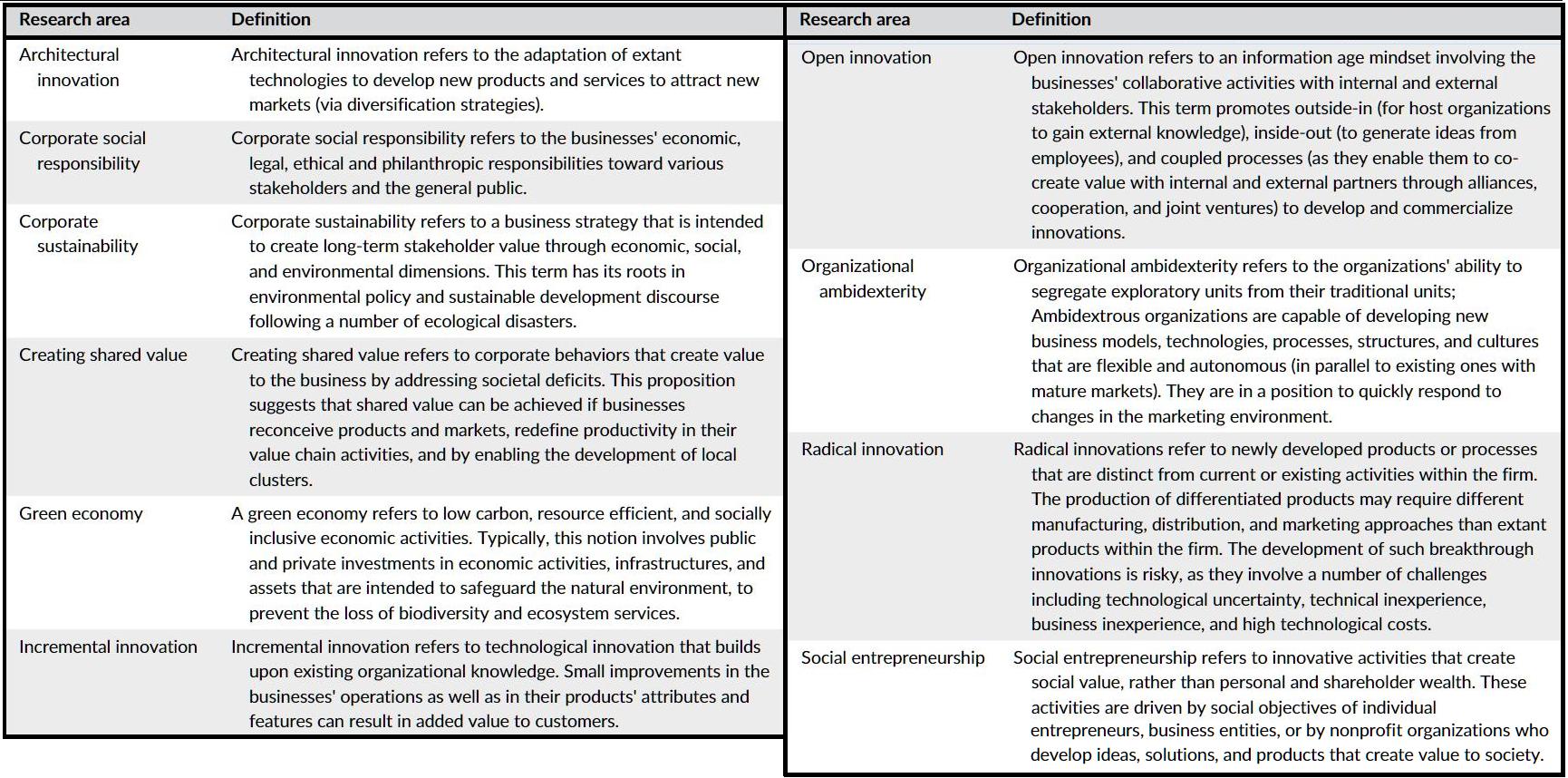
This paper provides a clear definition of the most popular paradigms relating to the intersection of open innovation approaches and corporate sustainability, as reported in Table 1.
Table 1. A list of the most popular paradigms relating to the intersection of open innovation approaches and corporate sustainability
“The following section synthesizes the content that was reported in past contributions. The researchers deliberate about open innovation opportunities and challenges for host organizations as well as for their collaborators”.
Open innovation opportunities
In the main, many commentators noted that open innovation approaches have brought positive outcomes for host organizations and their collaborators. The research questions of the extracted contributions (that are reported in Table 2) indicated that in many cases, companies are striving in their endeavors to build productive relationships with different stakeholders (Mtapuri et al., 2022; Peña-Miranda et al., 2022; Shaikh & Randhawa, 2022), to create value to their businesses as well as to society (Döll et al., 2022; Ghodbane, 2019; Roszkowska-Menkes, 2018). Very often, they confirmed that open innovation practitioners are promoting organizational governance (Aakhus & Bzdak, 2015; Sánchez-Teba et al., 2021), fair labor practices (Chang, 2020; Herrera & de las Heras-Rosas, 2020; Kumar & Srivastava, 2020; Schmidt-Keilich & Schrader, 2019), environmentally responsible investments (Aakhus & Bzdak, 2015; Cigir, 2018; Mendes et al., 2021; van Lieshout et al., 2021; Yang & Roh, 2019), and consumer-related issues (Greco et al., 2022; Loučanová et al., 2022; Wu & Zhu, 2021; Yang & Roh, 2019), among other laudable behaviors.
Many researchers raised awareness on the corporate sustainability paradigm (van Marrewijk, 2003) as they reported about the businesses’ value creating activities that are synonymous with the triple bottom line discourse, in terms of their organizations’ social, environment, and economic performance (Chang, 2020; Döll et al., 2022; Su et al., 2022; van Lieshout et al., 2021; Yang & Roh, 2019).
Other authors identified strategic CSR (Fontana, 2017; Porter & Kramer, 2006) practices and discussed about shared value perspectives (Abdulkader et al., 2020; Porter & Kramer, 2011) that are intended to improve corporate financial performance while enhancing their social and environmental responsibility credentials among stakeholders (Ghodbane, 2019; Roszkowska-Menkes, 2018; Sánchez-Teba et al., 2021).
Mendes et al. (2021) argued that strategic CSR was evidenced through collaborative approaches involving employees and external stakeholders. They maintained that there is scope for businesses to reconceive their communication designs with a wide array of stakeholders. Similarly, Aakhus and Bzdak (2015) contended that stakeholder engagement and open innovation processes led to improved decision making, particularly when host organizations consider investing in resources and infrastructures to be in a better position to address the social, cultural, and environmental concerns.
Firms could implement open innovation approaches to benefit from outsiders’ capabilities and competences (of other organizations, including funders, partners, and beneficiaries, among others) (Alberti & Varon Garrido, 2017). They may benefit from the external stakeholders’ support to diversify their business and/or to develop innovative products and services. Their involvement could help them augment their financial performance in terms of their margins and return on assets (Ben Hassen & Talbi, 2022).
Ongoing investments in open and technological innovations in terms of process and product development can result in virtuous circles and positive multiplier effects for the businesses as well as to society. Practitioners can forge cooperative agreements with social entrepreneurs, for-profit organizations, or with non-profit entities. Many companies are increasingly recruiting consultants who are specialized in sustainable innovations. Alternatively, they engage corporate reporting experts to help them improve their ESG credentials with stakeholders (Holmes & Smart, 2009).
Such open innovation approaches are intrinsically related to key theoretical underpinnings related to CSR including the stakeholder theory, institutional theory, signaling theory, and to the legitimacy theory, among others (Authors; Freudenreich et al., 2020). Firms have a responsibility to bear toward societies where they operate their business (in addition to their economic responsibility to increase profits). Their collaborative stance with knowledgeable professionals may provide an essential impetus for them to improve their corporate reputation and image with customers and prospects.
The open innovation paradigm suggests that it is in the businesses’ interest to engage with stakeholders through outside-in (to benefit from external knowledge and expertise), inside-out (to avail themselves of their extant competences and capabilities), and coupled (cocreation) processes with internal and external stakeholders (Enkel et al., 2009; Roszkowska-Menkes, 2018). Its theorists claim that outside-in processes are intended to enhance the company’s knowledge as they source external information from marketplace stakeholders including suppliers, intermediaries, customers, and even competitors, among others.
Many researchers emphasize that there are a number of benefits resulting from coopetition among cooperative competitors. Their inside-out collaborative processes stimulate innovations, lead to improvements in extant technologies, and provide complementary resources, resulting in new markets and products. Competing businesses can exchange their ideas and innovations with trustworthy stakeholders, outside of their organizations’ boundaries in order to improve their socio-emotional wealth (Herrera & de las Heras-Rosas, 2020). The proponents of open innovation advocate that businesses ought to foster an organizational culture that promotes knowledge transfer, ongoing innovations, and internationalization strategies.
Michelino et al. (2019) held that organizations ought to engage in ambidextrous approaches. These authors commended that practitioners should distinguish between exploratory and traditional units of their business model. They posited that it would be better for them if they segregated the former from the latter ones, especially if they want to develop new processes, products, and technologies in mature markets. The organizations’ exploratory units could be in a better position to flexibly respond to ongoing changes in their marketing environment.
Other researchers noted that it would be better if the businesses’ R&D activities are attuned with the practitioners’ expertise and/or with their stakeholders who are involved in their open innovation knowledge sharing strategies (Talab et al., 2018). Companies can generate new sources of revenue streams, even in areas that are associated with social issues and/or with green economies, if they reach new customers in different markets (Centobelli, Cerchione, & Esposito, 2020; Chang, 2020; Su et al., 2022; Yang & Roh, 2019). They may partner with other organizations to commercialize their (incremental or radical) innovations through licensing fees, franchises, joint ventures, mergers and acquisitions, spinoffs, and so forth.
Many commentators made reference to coupled processes involving a combination of outside-in and inside-out open innovation processes (Roszkowska-Menkes, 2018). The businesses’ transversal alliances involving horizontal and vertical collaborative approaches with external stakeholders can help them co-create ideas to foster innovations (Greco et al., 2022; Rupo et al., 2018). Several open innovation theorists are increasingly raising awareness on how collaborative relationships with stakeholders including consumers, lead users, organizations who may or may not be related to the company per se, universities as well as research institutions, among others, are supporting various businesses in their R&D stages and/or in the design of products (Khan et al., 2022; Naruetharadhol et al., 2022). Very often, their research confirmed that such cocreation processes are utilized in different contexts, for the manufacturing of a wide range of technologies.
The findings from this review reported that, for the time being, just a few researchers are integrating open innovation’s cocreation approaches with corporate sustainability outcomes. A number of contributing authors insisted that there are many advantages for socially and environmentally responsible companies to embrace open innovation approaches (Carayannis et al., 2021; Cigir, 2018; Mendes et al., 2021; Yang & Roh, 2019). In many cases, they argued that the practitioners’ intentions are to broaden their search activities and to avail themselves from talented employees and external experts in exchange for enhanced social legitimacy, thereby availing themselves of innovation capital for future enterprising activities (Greco et al., 2022; Holmes & Smart, 2009).
Hence, businesses may benefit from the competences and capabilities of individual consultants and organizations (from outside their company) to tap into the power of co-creation, to source ideas for social and green innovations (van Lieshout et al., 2021). These alliances are meant to support laudable causes, address the deficits in society, and/or to minimize the businesses’ impact on the natural environment (Altuna et al., 2015; Khan et al., 2022). For-profit organizations can resort to open innovation approaches to avail themselves of resources and infrastructures that are not currently available within their firm. This way they can reduce their costs, risks, and timescales when diversifying into sustainable business ventures, including those related to social entrepreneurship projects (Peredo & McLean, 2006; Shapovalov et al., 2019). They may do so to leverage their business, to gain a competitive advantage over their rivals.
Open innovation challenges
Open innovations could expose the businesses to significant risks and uncertainties associated with enmeshed, permeable relationships with potential collaborators (Gomes et al., 2021; Madanaguli et al., 2023). Various authors contended that practitioners should create an organizational culture that is conducive to open innovation (Herrera & de las Heras-Rosas, 2020; Mohelska & Sokolova, 2017). Generally, they argued that host organizations should communicate and liaise with employees as well as with external partners, during the generation of ideas and in different stages of their R&D projects. Some researchers noted that open innovation practitioners tend to rely on their external stakeholders’ valuable support to diversify their business models, products, or services (Chalvatzis et al., 2019; Park & Tangpong, 2021; Su et al., 2022).
A number of academic commentators argued that practitioners have to set clear, specific, measurable, attainable, relevant, and timely goals to them before they even start working on a project together (Alberti & Varon Garrido, 2017). In many cases, they maintained that host organizations are expected to foster a strong relationship with collaborators. At the same time, they should ensure that the latter ones comply with their modus operandi (Dahlander & Wallin, 2020). In reality, it may prove difficult for the business leaders to trust the new partners. Unlike their employees, the external parties are not subject to the companies’ codes of conduct, rules, and regulations (Chesbrough, 2020; Shamah & Elssawabi, 2015). A few authors indicated that senior management may utilize extrinsic and intrinsic incentives to empower and motivate internal as well as external stakeholders to pursue their organization’s open innovation objectives (Chang, 2020; Greco et al., 2022; Holmes & Smart, 2009; Roszkowska-Menkes, 2018; Schmidt-Keilich & Schrader, 2019).
Some researchers identified possible threats during and after the implementation of joint projects. Very often, they contended that host organizations risk losing their locus of control to external stakeholders who are experts in their respective fields (Madanaguli et al., 2023). The latter ones may possess unique skills and competences that are not readily available within the organization. A few authors cautioned that the practitioners as well as their collaborators are entrusted to safeguard each other’s intangible assets. A number of researchers warned and cautioned that they may risk revealing insider information about sensitive commercial details relating to their intellectual capital (Gomes et al., 2021). As a result, companies may decide to collaborate on a few peripheral tasks as they may be wary of losing their return on investments if they share trade secrets with their new partners, who could easily become their competitors. Their proprietary knowledge concerns are of course real and vital for their future prospects. Therefore, their relationships with internal and external stakeholders should be based on mutual trust and understanding in order to increase the confidence in the projects’ outcomes (Ferraris et al., 2020; Sánchez-Teba et al., 2021).
CONCLUSIONS
The companies’ ongoing engagement with internal and external stakeholders as well as their strategic CSR initiatives and environmentally sustainable innovations can generate economic value, in the long run. This review confirms that for-profit organizations are increasingly using open innovation approaches. At the same time, they are following ethical practices, adopting responsible human resources management policies, and investing in green technologies to gain institutional legitimacy and to create competitive advantages for their business. Many authors reported that their corporate sustainability behaviors can enhance their organizations’ reputation and image among customers as well as with marketplace stakeholders. At the same time, their laudable practices may even improve their corporate financial performance.
During COVID-19, many businesses turned to open innovation’s collaborative approaches. Various stakeholders joined forces and worked with other organizations, including with competitors, on social projects that benefit the communities where they operate their companies. In many cases, practitioners have realized that such partnerships with certain stakeholders (like researchers, knowledgeable experts, creative businesses, and non-governmental institutions, among others) enable their organizations to find new ways to solve pressing problems and at the same time helped them build a positive reputation. Indeed, open innovation approaches can serve as a foundation for future win-win alliances, in line with sociological research demonstrating that trust develops when partners voluntarily go the extra mile, to create value to their business and to society at large.
Yet, this research revealed that there is still a gap in the academic literature that links CSR/corporate sustainability with open collaborative approaches. At the time of writing, this paper, there were only 45 contributions on the intersection of these notions.
This is an excerpt from my latest academic article, entitled; “Using the balanced scorecard as a performance management tool in higher education” that will be published in Sage’s “Management in Education” (Journal).
The higher education institutions (HEIs) are competing in a global marketplace, particularly those which are operating in the contexts of neoliberal policymaking (Fadeeva and Mochizuki, 2010; Deem et al., 2008; Olssen and Peters, 2005; Bleiklie, 2001). Several universities are characterized by their de-centralized leadership as they operate with budget constraints (Smeenk, Teelken, Eisinga and Doorewaard, 2008; Bleiklie, 2001). Notwithstanding, their stakeholders expect their increased accountability and quality assurance, in terms of their efficiency, economy and effectiveness (Witte and López-Torres, 2017; Smeek et al., 2008). Hence, HEIs set norms, standards, benchmarks, and quality controls to measure their performance; as they are increasingly market-led and customer-driven (Jauhiainen, Jauhiainen, Laiho and Lehto, 2015; Billing, 2004; Etzkowitz, et al., 2000). Specifically, the universities’ performance is having a positive effect on the economic development of societies; through the provision of inclusive, democratized access to quality education and high impact research (Arnesen & Lundahl, 2006). Moreover, the educational institutions are also expected to forge strong relationships with marketplace stakeholders, including business and industry (Waring, 2013).
As a result, many universities have adapted, or are trying to adapt to the changing environment as they re-structure their organization and put more emphasis on improving their organizational performance. These developments have inevitably led to the emergence of bureaucratic procedures and processes (Jauhiainen et al., 2015). HEIs have even started using the corporate language as they formulate plans, set objectives, and use performance management criteria to control their resources (Smeenk et al., 2008; Ball, 2003). For instance, the Finnish universities have introduced new steering mechanisms, including the performance systems in budgeting, organizational reforms, management methods and salary systems (Camilleri, 2018; Jauhiainen et al., 2015). Previously, Welch (2007) noted that HEIs were adopting new modes of governance, organizational forms, management styles, and values that were prevalent in the private business sector. The logic behind these new managerial reforms was to improve the HEIs’ value for money principles (Waring, 2013; Deem, 1998). Therefore, the financing of HEIs is a crucial element in an imperfectly competitive, quasi-market model (Marginson, 2013; Olssen and Peters, 2005; Enders, 2004; Dill, 1997).
Academic commentators frequently suggest that the managerial strategies, structures, and values that belong to the ‘private sector’ are leading to significant improvements in the HEIs’ performance (Waring, 2013; Teelken, 2012; Deem and Brehony, 2005; Deem, 1998). On the other hand, critics argue that the ‘managerial’ universities are focusing on human resource management (HRM) practices that affect the quality of their employees’ job performance (Smeenk et al., 2008). Very often, HEIs are employing bureaucratic procedures involving time-consuming activities that could otherwise have been invested in research activities and / or to enhance teaching programs. The HEIs’ management agenda is actually imposed on the academics’ norms of conduct and on their professional behaviors. Therefore, the universities’ leadership can affect the employees’ autonomies as they are expected to comply with their employers’ requirements (Deem and Brehony, 2005). Smeenk et al. (2008) posited that this contentious issue may lead to perennial conflicts between the employees’ values and their university leaders’ managerial values; resulting in lower organizational commitment and reduced productivities.
The HEIs’ managerial model has led to a shift in the balance of power from the academics to their leaders as the universities have developed quality assurance systems to monitor and control their academic employees’ performance (Camilleri, 2018; Cardoso, Tavares and Sin, 2015). This trend towards managerialism can be perceived as a lack of trust in the academic community. However, the rationale behind managerialism is to foster a performative culture among members of staff, as universities need to respond to increased competitive pressures for resources, competences and capabilities (Decramer et al., 2013; Marginson, 2006; 2001; Enders, 2004). These issues have changed the HEIs’ academic cultures and norms in an unprecedented way (Chou and Chan, 2016; Marginson, 2013).
HEIs have resorted to the utilization of measures and key performance indicators to improve their global visibility. Their intention is to raise their institutions’ profile by using metrics that measure productivity. Many universities have developed their own performance measures or followed frameworks that monitor the productivity of academic members of staff (Taylor and Baines, 2012). Very often, their objective is to audit their academic employees’ work. However, their work cannot always be quantified and measured in objective performance evaluations. For instance, Waring (2013) argued that academic employees are expected to comply with their employers’ performance appraisals (PAs) and their form-filling exercises. The rationale behind the use of PAs is to measure the employees’ productivity in the form of quantifiable performance criteria. Hence, the PA is deemed as a vital element for the evaluation of the employees’ performance (Kivistö et al., 2017; Dilts et al., 1994). The PA can be used as part of a holistic performance management approach that measures the academics’ teaching, research and outreach. This performance management tool can possibly determine the employees’ retention, promotion, tenure as well as salary increments (Subbaye, 2018; Ramsden, 1991).
Therefore, PAs ought to be clear and fair. Their administration should involve consistent, rational procedures that make use of appropriate standards. The management’s evaluation of the employees’ performance should be based on tangible evidence. In a similar vein, the employees need to be informed of what is expected from them (Dilts et al., 1994). They should also be knowledgeable about due processes for appeal arising from adverse evaluations, as well as on grievance procedures, if any (Author, 2018). In recent years; the value of the annual performance appraisals (PAs) has increasingly been challenged in favor of more regular ‘performance conversations’ (Aguinis, 2013; Herdlein, Kukemelk and Türk, 2008). Therefore, regular performance feedback or the frequent appraisal of employees still remain a crucial aspect of the performance management cycle. Pace (2015) reported that the PA was used to develop the employees’ skills, rather than for administrative decisions. In a similar vein, the University of Texas (2019) HR page suggests that the appraisers’ role is “to set expectations, gather data, and provide ongoing feedback to employees, to assist them in utilizing their skills, expertise and ideas in a way that produces results”. However, a thorough literature review suggests that there are diverging views among academia and practitioners on the role of the annual PA, the form it should take, and on its effectiveness in the realms of higher education (Herdlein et al., 2008; DeNisi and Pritchard, 2006).
The Performance Management Frameworks
The HEIs’ evaluative systems may include an analysis of the respective universities’ stated intentions, peer opinions, government norms and comparisons, primary procedures from ‘self-evaluation’ through external peer review. These metrics can be drawn from published indicators and ratings, among other frameworks (Billing, 2004). Their performance evaluations can be either internally or externally driven (Cappiello and Pedrini, 2017). The internally driven appraisal systems put more emphasis on self-evaluation and self-regulatory activities (Baxter, 2017; Bednall, Sanders and Runhaar, 2014; Dilts et al., 1994). Alternatively, the externally driven evaluative frameworks may involve appraisal interviews that assess the quality of the employees’ performance in relation to pre-established criteria (DeNisi and Pritchard, 2006; Cederblom, 1982).
Many countries, including the European Union (EU) states have passed relevant legislation, regulatory standards and guidelines for the HEIs’ quality assurance (Baxter, 2017), and for the performance evaluations of their members of staff (Kohoutek et al., 2018; Cardoso et al., 2015; Bleiklie, 2001). Of course, the academic employees’ performance is usually evaluated against their employers’ priorities, commitments, and aims; by using relevant international benchmarks and targets (Lo, 2009). The academics are usually appraised on their research impact, teaching activities and outreach (QS Ranking, 2019; THE, 2019). Their academic services, including their teaching resources, administrative support, and research output all serve as performance indicators that can contribute to the reputation and standing of the HEI that employs them (Geuna and Martin, 2003).
Notwithstanding, several universities have restructured their faculties and departments to enhance their research capabilities. Their intention is to improve their institutional performance in global rankings (Lo, 2014). Therefore, HEIs recruit academics who are prolific authors that publish high-impact research with numerous citations in peer reviewed journals (Wood and Salt, 2018; Author, 2018). They may prefer researchers with scientific or quantitative backgrounds, regardless of their teaching experience (Chou and Chan, 2016). These universities are prioritizing research and promoting their academics’ publications to the detriment of university teaching. Thus, the academics’ contributions in key international journals is the predominant criterion that is used to judge the quality of academia (Billing, 2004). For this reason, the vast majority of scholars are using the English language as a vehicle to publish their research in reputable, high impact journals (Chou and Chan, 2016). Hence, the quantity and quality of their research ought to be evaluated through a number of criteria (Lo, 2014; 2011; Dill and Soo, 2005).
University ranking sites, including (THE) and the QS Rankings, among others, use performance indicators to classify and measure the quality and status of HEIs. This would involve the gathering and analysis of survey data from academic stakeholders. THE and QS, among others clearly define the measures, their relative weight, and the processes by which the quantitative data is collected (Dill and Soo, 2005). The Academic Ranking of World Universities (ARWU) relies on publication-focused indicators as 60 percent of its weighting is assigned to the respective university’s research output. Therefore, these university ranking exercises are surely affecting the policies, cultures and behaviors of HEIs and of their academics (Wood and Salt, 2018; De Cramer et al., 2013; Lo, 2013). For instance, the performance indicators directly encourage the recruitment of international faculty and students. Other examples of quantitative metrics include the students’ enrolment ratios, graduate rates, student drop-out rates, the students’ continuation of studies at the next academic level, and the employability index of graduates, among others. Moreover, qualitative indicators can also provide insightful data on the students’ opinions and perceptions about their learning environment. The HEIs could evaluate the students’ satisfaction with teaching; satisfaction with research opportunities and training; perceptions of international and public engagement opportunities; ease of taking courses across boundaries, and may also determine whether there are administrative / bureaucratic barriers for them (Kivistö et al., 2017; Jauhiainen et al., 2015; Ramsden, 1991). Hence, HEIs ought to continuously re-examine their strategic priorities and initiatives. It is in their interest to regularly analyze their performance management frameworks through financial and non-financial indicators, in order to assess the productivity of their human resources. Therefore, they should regularly review educational programs and course curricula (Kohoutek et al., 2018; Brewer and Brewer, 2010). On a faculty level, the university leaders ought to keep a track record of changes in the size of departments; age and distribution of academic employees; diversity of students and staff, in terms of gender, race and ethnicity, et cetera. In addition, faculties could examine discipline-specific rankings; and determine the expenditures per academic member of staff, among other options (Author, 2018).
The balanced scorecard
The balanced scorecard (BSC) was first introduced by Kaplan and Norton (1992) in their highly cited article, entitled “The Balanced Scorecard: Measures that Drive Performance”. BSC is an integrated results-oriented, performance management tool, consisting of financial and non-financial measures that link the organizations’ mission, core values, and vision for the future with strategies, targets, and initiatives that are designed to bring continuous improvements (Taylor and Baines, 2012; Wu, Lin and Chang, 2011; Beard, 2009; Umashankar and Dutta, 2007; Cullen, Joyce, Hassall and Broadbent, 2003; Kaplan and Norton, 1992). Its four performance indicators play an important role in translating strategy into action; and can be utilized to evaluate the performance of HEIs. BSC provides a balanced performance management system as it comprises a set of performance indices that can assess different organizational perspectives (Taylor and Baines, 2012). For BSC, the financial perspective is a core performance measure. However, the other three perspectives namely: customer (or stakeholder), organizational capacity and internal process ought to be considered in the performance evaluations of HEIs, as reported in the following table:
The balanced scorecard approach in higher education
Cullen et al. (2003) suggested that the UK’s Higher Education Funding Council for England (HEFCE), the Scottish Funding Council (SHEFC), the Higher Education Funding Council for Wales (HEFCW), as well as the Department for Employment and Learning (DELNI) have incorporated the BSC’s targets in their Research Excellence Framework. Furthermore, other HEI targets, including: the students’ completion rates, the research impact of universities, collaborative partnerships with business and industry, among others, are key metrics that are increasingly being used in international benchmarking exercises, like the European Quality Improvement System (EQUIS), among others. Moreover, BSC can be used to measure the academic employees’ commitment towards their employer (Umashankar and Dutta, 2007; McKenzie, and Schweitzer, 2001). Notwithstanding, Wu, Lin and Chang (2011) contended that the BSC’s ‘‘organizational capacity’’ is related to the employee development, innovation and learning. Hence the measurement of the HEIs’ intangible assets, including their intellectual capital is affected by other perspectives, including the financial one (Taylor and Baines, 2012). This table summarizes some of the strengths and weaknesses of the balanced scorecard.
BSC is widely used to appraise the financial and non-financial performance of businesses and public service organizations including HEIs. Many HEI leaders are increasingly following business-like approaches as they are expected to operate in a quasi-market environment (Marginson, 2013). They need to scan their macro environment to be knowledgeable about the opportunities and threats from the political, economic, social and technological factors. Moreover, they have to regularly analyze their microenvironment by evaluating their strengths and weaknesses. Hence, several HEIs are increasingly appraising their employees as they assess their performance on a regular basis. They may even decide to take remedial actions when necessary. Therefore, BSC can also be employed by HEIs to improve their academic employees’ productivity levels (Marginson, 2013; 2000).
A pre-publication version of the full article is available through ResearchGate and Academia.edu.




 Substantia Mea
You must be logged in to post a comment.